How AI fits this role
Podcast Producer
Role Overview
A Podcast Producer manages the end-to-end creation of audio content — from concept development and guest booking to recording logistics, post-production editing, distribution, and audience growth strategy. In practice, the role sits at the intersection of editorial judgment, project management, and technical audio craft.
The most common operational environment is a media company, agency, or brand content studio producing anywhere from one flagship show to a portfolio of 10–30 active feeds. Independent producers working across multiple client accounts represent another significant segment. In both cases, the producer is accountable for episode quality, release cadence, and increasingly, the measurable performance of the show against download, retention, and monetization targets.
The role is not purely creative. A working podcast producer spends significant time on logistics: coordinating recording sessions across time zones, managing remote guest setups, chasing approvals, writing show notes, submitting to directories, and troubleshooting audio quality issues from inconsistent home recording environments. These operational layers are where AI is having the most immediate impact.
How AI Is Transforming This Role
The transformation is not about replacing the producer — it is about compressing the time between recording and publication, and shifting the producer's attention from execution tasks to editorial and strategic ones.
The clearest shift is in post-production. Editing a 45-minute interview episode traditionally required 3–6 hours of work: removing filler words, cutting dead air, balancing levels, adding music beds, and exporting stems for different platforms. AI-assisted editing tools have reduced that to under an hour for a competent producer using the right stack. The craft is still required — the judgment about what to cut, what to keep, and how to shape narrative pacing — but the mechanical labor is largely automated.
A second shift is in content repurposing. Podcast studios are under commercial pressure to extract more value from each episode: audiograms, transcripts, blog posts, newsletters, social clips, chapter markers, and SEO-optimized show notes. Previously this required either a dedicated content team or a producer stretched thin across formats. AI now handles the first draft of all of these outputs from a single transcript, with the producer's role shifting to editing and brand voice alignment rather than creation from scratch.
The third shift is more structural: AI is enabling smaller teams to run larger show portfolios. A two-person production team that previously managed 4–5 shows can now manage 10–12 with comparable quality, because the per-episode labor floor has dropped significantly.
Tasks AI Can Automate
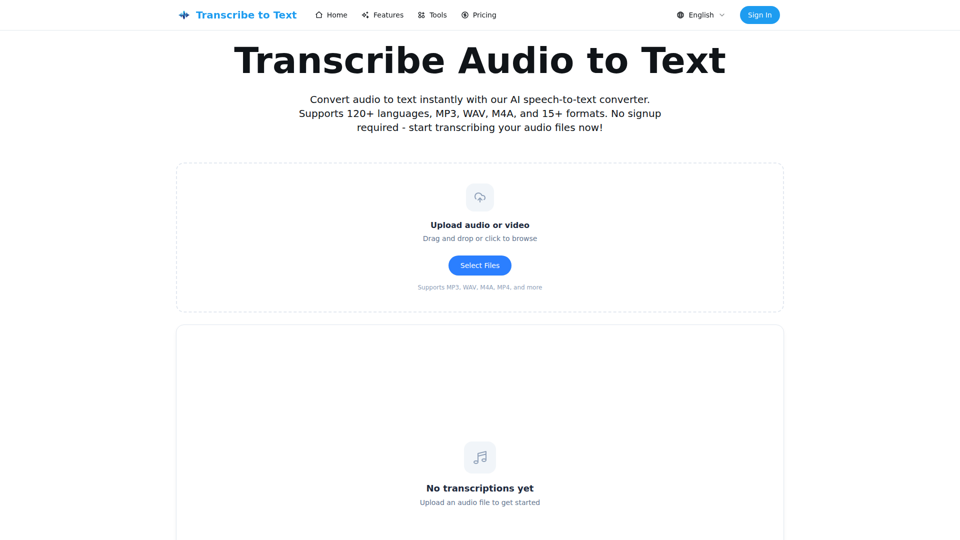
- Transcription — Accurate, speaker-labeled transcripts generated within minutes of upload, replacing manual transcription or expensive human services
- Filler word and silence removal — Automated detection and removal of "um," "uh," repeated phrases, and long pauses, with producer review rather than manual execution
- Audio leveling and noise reduction — AI-driven tools that normalize loudness, reduce background noise, and apply EQ profiles without manual DAW work
- Show notes drafting — First-draft show notes, chapter markers, and episode summaries generated from transcripts, requiring editorial polish rather than original writing
- Social clip identification — AI flagging of high-engagement moments within an episode for short-form video or audiogram extraction
- Guest research briefs — Automated aggregation of a guest's recent interviews, publications, and public statements into a pre-interview brief
- SEO metadata generation — Episode titles, descriptions, and keyword tagging optimized for podcast directory search
- Scheduling and logistics coordination — AI-assisted calendar management and automated guest onboarding sequences
Skills Becoming More Valuable
Editorial judgment and narrative architecture — As mechanical editing becomes automated, the ability to shape a compelling story arc, identify the real insight buried in a 60-minute conversation, and make structural cuts that serve the listener becomes the primary differentiator between average and excellent production.
Audience analytics interpretation — Understanding where listeners drop off, which episode formats retain attention, and how to translate Spotify for Podcasters or Chartable data into programming decisions is increasingly central to the role.
Brand voice stewardship — AI-generated show notes and social copy require a producer who can edit for a specific voice and catch outputs that are technically correct but tonally wrong for the show.
Multi-format content strategy — Producers who understand how a single episode can feed a newsletter, a LinkedIn post, a YouTube clip, and a blog article — and who can direct AI tools to produce those outputs efficiently — are significantly more valuable than those who think only in audio.
Guest relationship management — Booking quality guests, managing their expectations, and building long-term relationships with publicists and agents remains entirely human-dependent and increasingly differentiates shows in crowded categories.
Technical audio quality assessment — Knowing when AI noise reduction has introduced artifacts, when a guest's recording is salvageable versus unusable, and when to push back on a client's home studio setup requires trained ears that AI cannot replicate.
Skills Becoming Less Important
- Manual transcription and time-coding
- Frame-by-frame waveform editing for filler word removal
- Writing show notes from scratch without AI assistance
- Basic audio leveling and loudness normalization as standalone skills
- Manual RSS feed management and directory submission workflows
- Building episode templates and runsheets from scratch each time
These skills are not worthless — understanding them makes a producer better at supervising AI outputs — but they are no longer differentiating competencies in hiring or freelance rate negotiations.
Current AI Adoption in This Industry
Adoption is uneven but accelerating. Independent producers and boutique agencies have moved fastest, driven by the direct economic incentive of reducing per-episode hours. Enterprise brand podcast teams have been slower, often constrained by procurement processes, legal review of AI tool usage, and internal IT restrictions.
The tools with the highest actual adoption among working producers as of 2024–2025 are Descript (editing and transcription), Adobe Podcast Enhance (audio cleanup), Riverside.fm's AI features (remote recording with automated post-processing), and a combination of Claude or ChatGPT for show notes and repurposing copy. Auphonic remains widely used for loudness normalization. Podcastle and Cleanfeed have added AI layers to their existing workflows.
The gap between early adopters and laggards is now measurable in per-episode production cost. Producers using a full AI-assisted stack report per-episode costs 40–60% lower than those using traditional DAW-only workflows, which is creating pricing pressure across the freelance market.
Future Workflow Evolution
The near-term trajectory points toward a hub-and-spoke production model where a single producer operates as the editorial and quality control hub, with AI handling the spoke tasks: transcription, first-pass editing, content repurposing, metadata, and distribution logistics.
Within 18–24 months, the more significant shift will be in real-time production assistance. AI tools are beginning to flag audio quality issues during recording rather than after, suggest follow-up questions to hosts during live sessions, and generate chapter markers as the conversation unfolds. This moves AI from a post-production tool to an active production layer.
Longer term, the role bifurcates. At the commodity end — short-form branded content, internal corporate podcasts, simple interview formats — AI-assisted production with minimal human oversight becomes viable. At the premium end — narrative journalism, investigative audio, high-profile interview shows — the producer's editorial and relationship skills become more valuable precisely because AI has commoditized everything below that threshold.
Common AI Use Cases
Pre-production
- Automated guest research aggregation before interviews
- AI-generated interview question frameworks based on guest background and show format
- Scheduling automation with guest onboarding sequences
Production
- Real-time audio quality monitoring during remote recording sessions
- Automated backup recording and redundancy management
Post-production
- Transcript-based editing in Descript or similar tools
- AI noise reduction and audio enhancement (Adobe Podcast Enhance, Auphonic)
- Automated filler word removal with producer review
- Chapter marker generation from transcript
Distribution and repurposing
- Show notes, episode summaries, and SEO descriptions from transcript
- Social clip identification and audiogram generation
- Newsletter and blog post drafts from episode content
- YouTube auto-chapter and description generation for video podcast feeds
Recommended AI Stack
| Tool | Function | Notes |
|---|---|---|
| Descript | Transcript-based editing, filler removal, show notes drafting | Core workflow tool for most AI-assisted producers |
| Adobe Podcast Enhance | Audio cleanup and voice enhancement | Particularly effective for poor guest recordings |
| Riverside.fm | Remote recording with AI post-processing | Replaces Zencastr/SquadCast for most new setups |
| Auphonic | Loudness normalization, multi-track leveling | Reliable, integrates with most hosting platforms |
| Claude / ChatGPT | Show notes, repurposing copy, guest briefs | Requires prompt discipline and brand voice editing |
| Opus Clip / Munch | Social clip identification and short-form extraction | Useful for video podcast feeds and YouTube Shorts |
| Podcastle | All-in-one recording, editing, and AI enhancement | Strong option for smaller operations |
| Cleanfeed | High-quality remote recording | Preferred for broadcast-quality remote interviews |
The most effective stacks are not the ones with the most tools — they are the ones where the producer has standardized a repeatable workflow that minimizes context-switching between platforms.
Risks & Challenges
Audio artifact introduction — AI noise reduction and voice enhancement can introduce unnatural artifacts, particularly on voices with unusual tonal qualities or in recordings with complex background noise. Producers who rely on AI cleanup without critical listening are shipping degraded audio they cannot hear because they have stopped listening carefully.
Brand voice drift in AI-generated copy — Show notes and social copy generated from transcripts tend toward a neutral, generic register. Without strong editorial oversight, a show's written presence gradually loses the voice that differentiates it, which affects audience connection and SEO distinctiveness.
Over-reliance on automated editing — Filler word removal tools occasionally cut words that sound like fillers but are structurally important to a sentence. Producers who approve AI edits without listening to the output are creating episodes with subtle but jarring cuts.
Commoditization pressure on freelance rates — As AI reduces per-episode hours, clients are beginning to price podcast production based on output rather than time. Producers who have not repositioned their value around editorial strategy and audience growth are facing rate compression.
Data privacy in enterprise contexts — Many AI transcription and editing tools process audio on external servers. For corporate podcast teams handling sensitive internal content or pre-release product announcements, this creates compliance exposure that procurement teams are only beginning to address.
Guest recording quality as a persistent bottleneck — AI can improve a bad recording but cannot fix a fundamentally unusable one. The weakest link in remote podcast production remains the guest's recording environment, and no current AI tool fully solves a guest recording on a laptop microphone in a reverberant room.
Future Outlook (3–5 Years)
The podcast producer role will not disappear, but its composition will change substantially. The producers who thrive will be those who have repositioned from technical execution specialists to editorial strategists who use AI as a production layer.
Several structural shifts are likely within this window:
Show portfolio expansion becomes standard — The economics of AI-assisted production will push agencies and in-house teams to run more shows with the same headcount. Producers who resist multi-show management will find fewer single-show roles available at competitive rates.
Audience intelligence becomes a core competency — As the production cost floor drops, the differentiator between shows will increasingly be programming quality and audience retention. Producers who can read analytics, run format experiments, and make data-informed editorial decisions will command premium positioning.
AI hosts and synthetic voices enter the market — Fully AI-generated podcast episodes are already being produced at scale for low-stakes content categories. This will not displace premium shows, but it will further compress the market for commodity interview and news-recap formats, pushing human producers toward higher-complexity work.
Real-time production AI becomes standard — Tools that assist during recording — flagging audio issues, suggesting follow-up questions, generating live transcripts for host reference — will be standard in professional setups within three years, changing the producer's role during sessions from passive monitor to active AI collaborator.
Monetization strategy becomes part of the role — As podcast advertising markets mature and dynamic ad insertion becomes more sophisticated, producers at independent studios and agencies will be expected to understand CPM benchmarks, host-read versus programmatic trade-offs, and how show format decisions affect monetization potential.
Final Insight
The podcast producer's core value was never really in the editing. It was always in the judgment — knowing which guest conversation is worth 45 minutes of a listener's attention, knowing when a narrative needs restructuring rather than just tightening, knowing when a show's format has run its course and needs reinvention. AI has made that judgment more visible by removing the mechanical work that used to obscure it.
The producers who are struggling with AI adoption are often those who built their identity around technical execution — the ones who took pride in clean edits and fast turnarounds. The producers who are thriving are those who always saw the technical work as a means to an editorial end, and who now have more time to focus on what actually makes a show worth listening to.
The practical implication for anyone in this role: the question is not whether to adopt AI tools, but whether you have developed the editorial and strategic skills that justify your rate once the mechanical work is automated. If the answer is uncertain, that is the gap to close — not by learning more tools, but by developing sharper opinions about what makes audio content genuinely good.