How AI fits this role
Digital Marketing Director
Role Overview
The Digital Marketing Director sits at the intersection of brand strategy, revenue performance, and technology orchestration. In most organizations — whether B2B SaaS, e-commerce, or enterprise retail — this role owns the full digital acquisition and retention funnel: paid media, SEO, content, email, social, and increasingly, product-led growth loops.
Day-to-day, the role is less about execution and more about signal interpretation and resource allocation. A Digital Marketing Director decides where budget moves when a paid channel saturates, why organic traffic dropped after a core update, and whether a conversion rate shift reflects a creative problem or an audience targeting problem. They manage agencies, in-house specialists, and martech stacks that now routinely span 15–30 tools.
The commercial pressure is acute. CFOs increasingly demand attribution clarity that the industry structurally cannot provide. CMOs want pipeline, not impressions. And the deprecation of third-party cookies, the fragmentation of social reach, and the rise of zero-click search have made the job materially harder over the past three years — before AI entered the picture.
How AI Is Transforming This Role
AI is not replacing the Digital Marketing Director. It is, however, eliminating the buffer of junior execution work that used to sit between strategy and output — and that changes the role's internal leverage model significantly.
Historically, a director would brief a copywriter, wait for drafts, iterate, approve, and ship. That cycle now compresses from days to hours. The same compression applies to creative testing, audience segmentation, keyword research, and performance reporting. The result is that directors are expected to make more decisions, faster, with less organizational friction as an excuse for delay.
The more disruptive shift is in media buying. Platforms like Google's Performance Max and Meta's Advantage+ have absorbed manual campaign management into algorithmic black boxes. Directors who built careers on granular bid management and audience sculpting are finding those skills commoditized by the platforms themselves. The new leverage point is upstream: feed quality, creative strategy, and first-party data architecture.
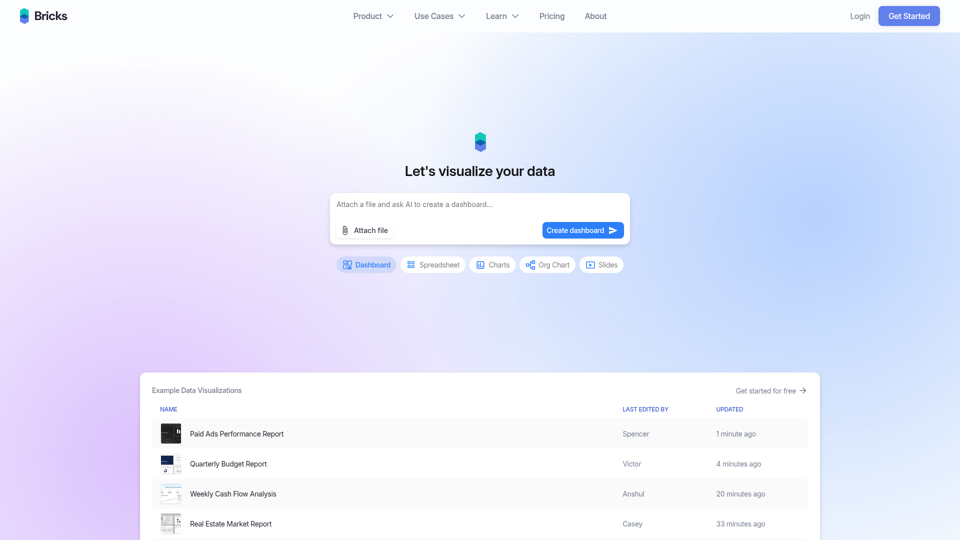
AI is also changing how directors interact with data. Natural language querying of analytics platforms, AI-generated anomaly detection, and automated insight surfacing mean that the director no longer needs an analyst to pull a report — but they do need sharper judgment to evaluate whether the AI's interpretation of that data is correct.
Tasks AI Can Automate
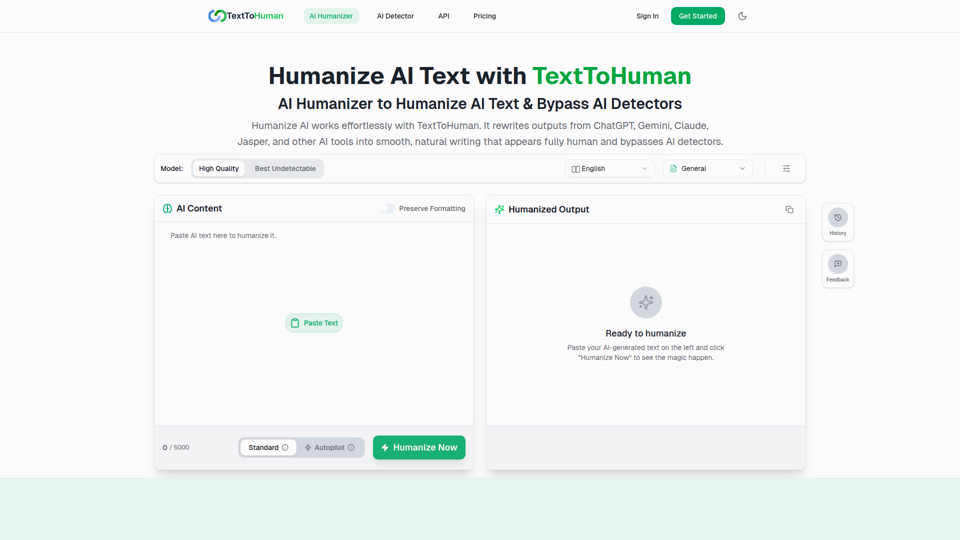
- Performance report generation — Pulling cross-channel data, calculating ROAS, CPA, and LTV trends, and surfacing anomalies no longer requires a dedicated analyst or hours of dashboard work.
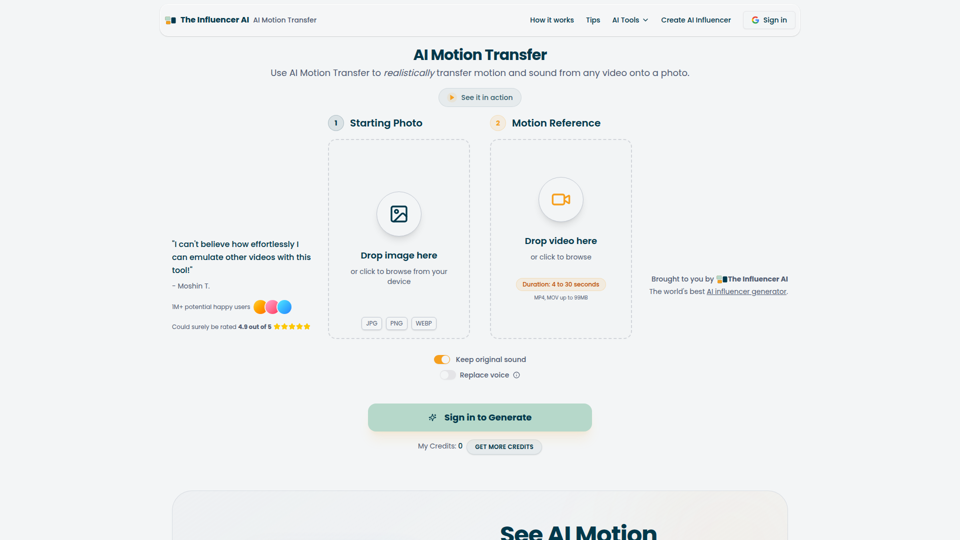
- Ad copy and creative variation production — Generating 20–50 headline and description variants for A/B testing, including tone and audience-specific versions, is now a prompt-level task.
- SEO content briefs and first drafts — Tools like Clearscope, Surfer, and AI writing assistants can produce topically complete first drafts that require editorial refinement rather than creation from scratch.
- Audience segmentation modeling — Predictive segmentation based on behavioral signals, purchase history, and engagement patterns can be automated within CDPs and email platforms.
- Keyword clustering and intent mapping — What used to take an SEO specialist a full day now runs in minutes with AI-assisted clustering tools.
- Email subject line and send-time optimization — Platforms like Klaviyo and Iterable now handle multivariate testing and predictive send-time at scale without manual configuration.
- Competitive ad monitoring — Tracking competitor creative, messaging shifts, and spend signals through tools like Pathmatics or SimilarWeb is increasingly automated.
- UTM tagging and campaign taxonomy management — Routine campaign setup hygiene that consumed coordinator time is now handled through automated workflows.
Skills Becoming More Valuable
First-party data strategy. With signal loss accelerating — iOS privacy changes, cookie deprecation, walled garden attribution gaps — the director who understands how to build, enrich, and activate a first-party data asset is operating at a structural advantage. This means knowing how CDPs work, what data clean rooms enable, and how to negotiate data partnerships.
Creative judgment at scale. When AI can produce 50 ad variants in an hour, the bottleneck shifts to knowing which 5 are worth testing and why. Creative strategy — understanding what resonates with a specific audience at a specific funnel stage — becomes the scarce input.
AI output evaluation. Knowing when an AI-generated insight is directionally correct versus statistically misleading, or when an AI-written piece of content is on-brand versus subtly off — this is a judgment skill that compounds over time and cannot be automated.
Cross-functional influence. As marketing becomes more dependent on product data, engineering resources, and finance alignment, the director's ability to operate across organizational boundaries becomes a primary performance driver.
Experimentation design. Running rigorous tests — controlling variables, sizing samples correctly, avoiding novelty effects — is more important as the volume of testable hypotheses increases. Most AI tools generate hypotheses faster than teams can test them properly.
Prompt engineering and AI workflow design. Not at a developer level, but at the level of knowing how to structure inputs to get reliable, brand-consistent outputs from generative tools — and how to build repeatable workflows around them.
Skills Becoming Less Important
- Manual bid management — Platform automation has absorbed most of the value here. Knowing how to set target CPA in Google Ads is table stakes, not differentiation.
- Basic copywriting execution — Writing the first draft of an email or ad is no longer a meaningful time investment for a director-level role.
- Pulling and formatting reports — If a director is still spending time in spreadsheets formatting performance data, that is a workflow problem, not a skill to maintain.
- Keyword research mechanics — The tactical process of building keyword lists from scratch using volume and difficulty filters is largely automated. Strategic keyword prioritization still matters; the mechanics do not.
- Basic graphic design coordination — Static asset production for standard formats is increasingly handled by AI design tools, reducing the back-and-forth with design teams for routine creative.
- Platform-specific tactical expertise — Deep knowledge of Facebook Ads Manager interface quirks or Google Analytics custom report configuration is depreciating as platforms consolidate and AI layers abstract the interface.
Current AI Adoption in This Industry
Adoption is uneven but accelerating. In e-commerce and DTC brands, AI-assisted creative testing and email personalization are now standard practice — not experimental. In B2B SaaS marketing, AI content production for SEO and demand generation is widespread, though quality control remains a significant operational challenge.
The most mature AI adoption is happening in paid media, where platform-native AI (Performance Max, Advantage+, LinkedIn's Accelerate) has effectively forced adoption by removing manual alternatives. Directors who resisted automation have found their campaigns underperforming against competitors who leaned into algorithmic bidding with better creative and data inputs.
Content and SEO teams are in a more contested phase. AI-generated content at scale has produced measurable short-term traffic gains for some organizations and significant ranking penalties for others following Google's Helpful Content updates. The industry is actively recalibrating what "AI-assisted" versus "AI-generated" means in practice.
Marketing analytics is the area with the largest gap between available AI capability and actual adoption. Most marketing teams are still running on dashboards that require manual interpretation, despite the availability of tools that could automate insight generation. The bottleneck is data infrastructure quality, not tool availability.
Future Workflow Evolution
The Digital Marketing Director's workflow over the next three years will increasingly resemble that of an editor and systems architect rather than a campaign manager.
A realistic future-state workflow looks like this: AI agents monitor campaign performance continuously and surface prioritized recommendations each morning. The director reviews, approves, or overrides — spending 20 minutes on what used to take two hours of analyst prep. Content production runs on a brief-to-publish pipeline where AI handles drafting and SEO optimization, and human editors handle brand voice, factual accuracy, and strategic alignment. Paid media strategy focuses on creative portfolio management and audience data quality rather than platform mechanics.
The director's calendar shifts toward decisions that require organizational context: budget reallocation calls, agency performance reviews, cross-functional alignment on product launches, and board-level reporting on marketing's contribution to pipeline. The execution layer becomes largely automated; the judgment layer becomes the job.
This also means the director manages a different kind of team. Fewer generalist coordinators, more specialists in data, creative strategy, and AI workflow management. The org chart gets flatter but the skill bar per person rises.
Common AI Use Cases
Generative content production — Blog posts, landing page copy, email sequences, and ad creative produced with AI assistance, refined by human editors for brand and accuracy.
Predictive lead scoring and audience modeling — Using historical conversion data to identify high-propensity segments for paid targeting or email nurture prioritization.
Dynamic creative optimization (DCO) — Automatically assembling and serving personalized ad creative combinations based on audience signals, without manual variant management.
Conversational AI for lead capture — AI chat on landing pages and websites qualifying inbound leads, answering product questions, and routing to sales — replacing static forms in high-intent contexts.
AI-powered SEO auditing — Automated identification of content gaps, cannibalization issues, internal linking opportunities, and technical SEO problems at a scale no manual audit can match.
Sentiment and brand monitoring — Real-time analysis of social mentions, review platforms, and earned media to surface reputation signals before they become crises.
Attribution modeling — Data-driven attribution using machine learning to distribute credit across touchpoints more accurately than last-click or linear models.
Personalized email and SMS flows — Behavioral trigger sequences that adapt content, timing, and offer based on individual user signals rather than static segment rules.
Recommended AI Stack
The right stack depends on company size and maturity, but a high-performing Digital Marketing Director in 2025 is typically working with tools across these categories:
Content & Copy
- ChatGPT (GPT-4o) or Claude for strategic drafting, brief development, and ideation
- Jasper or Copy.ai for brand-governed content production at scale
- Surfer SEO or Clearscope for content optimization against search intent
Paid Media & Creative
- Meta Advantage+ and Google Performance Max as the default campaign structures
- Pencil or AdCreative.ai for AI-assisted creative generation and performance prediction
- Motion for creative analytics — understanding which creative concepts are driving performance
Analytics & Insights
- GA4 with Gemini-assisted insights for web analytics
- Northbeam or Triple Whale for cross-channel attribution in e-commerce contexts
- Supermetrics or Funnel.io for data aggregation feeding into AI analysis layers
CRM & Personalization
- Klaviyo (e-commerce) or HubSpot (B2B) with AI-driven segmentation and send optimization
- Segment or mParticle as the CDP layer feeding behavioral data into activation tools
Workflow & Automation
- Make (formerly Integromat) or Zapier for connecting AI outputs into existing workflows
- Notion AI or Confluence AI for internal knowledge management and brief documentation
Risks & Challenges
Brand voice erosion at scale. When AI produces content at volume, the subtle differentiators of brand voice — the specific way a company uses humor, handles objections, or frames its value proposition — tend to flatten toward the mean. Directors who do not invest in explicit brand voice documentation and AI governance frameworks will find their content becoming indistinguishable from competitors.
Attribution illusion. AI-powered attribution models produce confident-looking numbers that can be structurally wrong. A director who trusts a model's channel credit allocation without understanding its assumptions risks misallocating significant budget. The model's confidence interval is not the same as its accuracy.
Platform dependency concentration. Leaning heavily into Performance Max or Advantage+ means ceding campaign control to platforms whose optimization objectives are not perfectly aligned with the advertiser's. When platform algorithms shift — and they do — the director has less ability to diagnose and respond.
AI content and search risk. Google's evolving stance on AI-generated content creates ongoing uncertainty. Organizations that built significant organic traffic on AI-produced content at scale are exposed to algorithmic devaluation. The risk is not theoretical — it has materialized for multiple high-profile publishers.
Data quality as a ceiling. AI tools are only as good as the data they run on. Dirty CRM data, broken tracking implementations, and inconsistent UTM taxonomy produce AI insights that are confidently wrong. The director who invests in AI tools without fixing data infrastructure first is building on sand.
Team skill gap and change resistance. Transitioning a marketing team from execution-heavy to judgment-heavy work requires deliberate reskilling and, often, difficult personnel decisions. The coordinator who was valuable for their speed at manual tasks may not be the same person who thrives in an AI-augmented workflow.
Future Outlook (3–5 Years)
By 2027–2028, the Digital Marketing Director role will exist in most organizations, but its scope and skill profile will have shifted substantially from the 2022 version of the job.
The most significant structural change will be the normalization of AI agents handling routine campaign management autonomously — not just recommending actions, but executing them within defined parameters. Directors will set strategy, define guardrails, and review exceptions rather than approving every tactical decision. This is already partially true in paid media; it will extend to content publishing, email sequencing, and social scheduling.
Search behavior will continue fragmenting. AI-generated answers in Google, ChatGPT, and Perplexity are already reducing click-through rates on informational queries. Directors will need to develop strategies for visibility in AI-mediated search environments — which means optimizing for citation and entity recognition, not just keyword ranking. This is a genuinely new discipline that does not yet have established best practices.
The role's strategic value will increasingly be measured by its ability to build durable audience assets — email lists, community platforms, first-party data depth — rather than its ability to buy attention efficiently. Owned channels become more valuable as paid and organic reach become less predictable.
Organizations that treat the Digital Marketing Director as a campaign executor will find the role increasingly commoditized. Organizations that position the role as a growth systems architect — responsible for the data infrastructure, AI workflow design, and strategic judgment that drives sustainable acquisition — will find it more valuable than ever.
Final Insight
The Digital Marketing Director who thrives in the next five years is not the one who learns the most AI tools. It is the one who develops the clearest judgment about when AI output is trustworthy, when it needs human correction, and when the question being asked is wrong in the first place.
The job is becoming less about knowing how to do things and more about knowing what is worth doing, why a result is happening, and what the organization should do next. Those are judgment problems. AI accelerates the information flow that informs judgment, but it does not replace the judgment itself — particularly when the stakes involve brand reputation, budget allocation, and competitive positioning.
The directors who will struggle are those waiting for AI to stabilize before engaging with it seriously. The tooling will not stabilize. The pace of change is the permanent condition, and the ability to operate effectively inside that condition is now a core competency of the role.