How AI fits this role
Copywriter in the Age of AI: What's Changing, What's Not, and What Comes Next
Role Overview
A copywriter produces persuasive, brand-aligned written content designed to drive a specific action — a purchase, a sign-up, a click, a belief. In the context of digital marketing and advertising, which represents the highest-volume employment environment for this role, copywriters work across paid media (search, social, display), email campaigns, landing pages, product descriptions, brand narratives, and long-form content marketing.
The role sits at the intersection of psychology, brand strategy, and commercial performance. A copywriter is not simply a writer — they are a conversion architect. They translate audience insight, competitive positioning, and business objectives into language that moves people. In agency environments, they collaborate with art directors, strategists, and account managers. In-house, they often operate as a one-person content engine serving multiple stakeholders simultaneously.
The commercial pressure on this role has always been high: copy is directly tied to revenue metrics. Click-through rates, conversion rates, cost-per-acquisition — copywriters live inside these numbers. That accountability has not changed. What has changed is who — or what — is producing the first draft.
How AI Is Transforming This Role
The transformation is not theoretical. As of 2024, the majority of mid-to-large digital marketing teams have integrated generative AI into some part of their copy production workflow. The shift is most visible in three areas.
Volume production has been decoupled from headcount. A single copywriter supported by AI tools can now produce what previously required a team of three or four for high-volume, templated output — product descriptions, ad variant testing, email subject line generation, meta descriptions. This has compressed hiring at the junior end of the market significantly.
The brief-to-draft cycle has collapsed. What once took a day now takes an hour. AI tools can ingest a creative brief, brand guidelines, and audience persona data and return a working draft in minutes. The copywriter's role in that cycle has shifted from drafter to editor, evaluator, and strategic refiner.
A/B testing has become continuous and AI-driven. Platforms like Google's Performance Max and Meta's Advantage+ now generate and test copy variants autonomously, using performance data to optimize in real time. Copywriters are increasingly writing seed copy and guardrails rather than final, fixed assets.
The net effect is a bifurcation of the market: demand for high-volume, low-differentiation copy production is declining, while demand for strategic, brand-defining, and emotionally resonant copy — the kind that requires genuine human judgment — remains strong and is arguably becoming more valuable as AI-generated content floods the internet.
Tasks AI Can Automate
- Product description generation at scale, particularly for e-commerce catalogs with hundreds or thousands of SKUs
- Ad headline and body copy variants for paid search and social, including automated A/B testing frameworks
- Email subject line generation and optimization, including personalization tokens and send-time testing
- SEO meta titles and descriptions based on keyword targeting and page content
- First-draft blog posts and content briefs from keyword clusters or topic outlines
- Social media caption generation across platforms with tone adjustments
- Localization and transcreation scaffolding — AI handles structural adaptation, humans handle cultural nuance
- Repurposing existing content across formats (long-form to social, webinar to email sequence)
- Tone and grammar editing passes via tools like Grammarly, Hemingway, or built-in LLM review
These are not hypothetical capabilities — they are in active production use at agencies and in-house teams globally.
Skills Becoming More Valuable
Strategic messaging architecture. The ability to define a brand's core narrative, value proposition hierarchy, and messaging framework is increasingly the work that separates senior copywriters from AI output. This requires understanding competitive positioning, customer psychology, and business strategy — not just language.
Prompt engineering and AI output evaluation. Knowing how to brief an AI model effectively, recognize its failure modes (hallucination, brand drift, tonal inconsistency), and edit its output to meet professional standards is now a core operational skill.
Voice and tone stewardship. As AI generates more content, maintaining a distinctive, consistent brand voice across touchpoints becomes harder and more important. Copywriters who can define, document, and enforce brand voice — and who can detect when AI output violates it — are increasingly valuable.
Conversion strategy and funnel thinking. Understanding where a piece of copy sits in the customer journey, what psychological lever it needs to pull, and how it connects to upstream and downstream touchpoints is judgment that AI cannot reliably replicate.
Interviewing and source synthesis. For thought leadership, case studies, and expert-driven content, the ability to extract insight from subject matter experts and translate it into compelling narrative is a distinctly human skill that AI cannot substitute.
Creative concepting. The ability to generate an original campaign idea — a concept, a tension, a cultural hook — that hasn't been seen before remains a human advantage, particularly in brand advertising.
Skills Becoming Less Important
- Typing speed and raw drafting throughput — volume production is no longer a differentiator
- Basic grammar and proofreading — AI handles this reliably at scale
- Template-based writing — formulaic structures (AIDA, PAS, FAB) are easily replicated by AI
- Keyword stuffing and mechanical SEO writing — AI does this faster and more consistently
- Formatting and structural editing of first drafts — largely automated
- Maintaining large content calendars manually — AI scheduling and generation tools handle this
The uncomfortable reality for junior copywriters is that many of the tasks that historically served as entry points to the profession — writing product descriptions, drafting social posts, producing first-draft blog content — are now the tasks most aggressively automated.
Current AI Adoption in This Industry
Adoption in digital marketing and advertising is high and accelerating. A 2024 survey by the Content Marketing Institute found that over 70% of B2B content marketers were using AI tools in their content production workflow. In performance marketing specifically, adoption is near-universal at the platform level — Google and Meta have embedded generative AI directly into their ad creation interfaces.
Agency models are under the most acute pressure. Traditional agency billing structures — hourly rates for copy production — are being challenged by clients who understand that AI can produce a first draft in seconds. Agencies are responding by repositioning their value around strategy, creative direction, and quality control rather than production volume.
In-house teams are using AI primarily for scale and speed: generating more content variants for testing, maintaining content freshness across large websites, and reducing dependency on external agencies for routine copy needs.
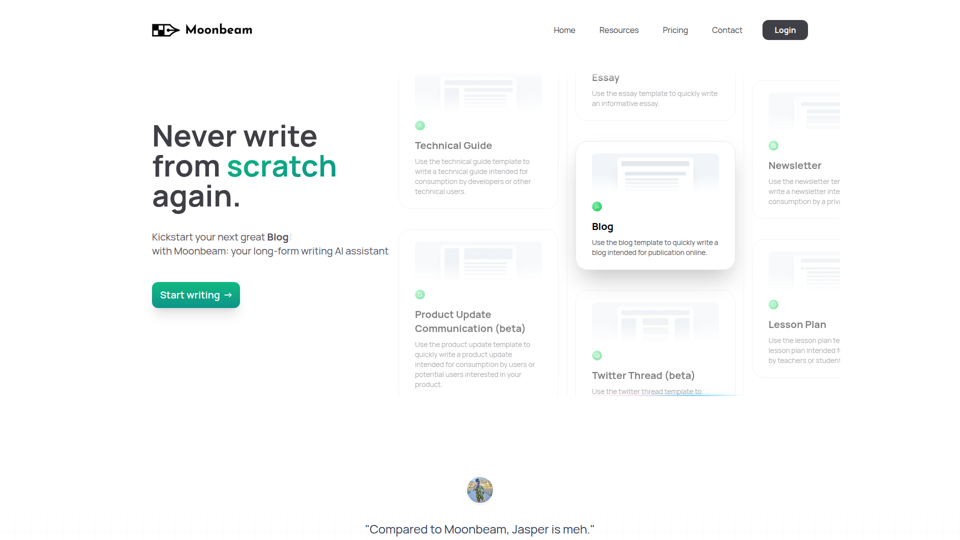
The tools most commonly in active use include ChatGPT (OpenAI), Claude (Anthropic), Jasper, Copy.ai, Writesonic, and platform-native AI features within HubSpot, Salesforce Marketing Cloud, and Adobe Experience Cloud.
Future Workflow Evolution
The copywriter's workflow in 2026–2027 will look structurally different from 2022. The likely evolution follows this pattern:
From: Brief → Research → Draft → Review → Revise → Approve → Publish
To: Brief → AI-assisted research synthesis → Prompt-driven draft generation → Human strategic and brand review → Iterative refinement → Automated variant testing → Performance-informed optimization loop
The human is no longer the primary drafter. They are the strategic director, quality controller, and brand guardian. The work is less about writing sentences and more about making judgment calls: Is this on-brand? Does this reflect the audience's actual language? Is this differentiated from what competitors are saying? Does this feel true?
Copywriters who adapt will increasingly work in what might be called a "creative director" mode — setting direction, evaluating output, and making the calls that require taste, experience, and strategic understanding. Those who don't adapt will find the market for their skills contracting.
Common AI Use Cases
Performance marketing teams use AI to generate dozens of headline and description variants for paid search campaigns, feeding them into automated testing frameworks to identify top performers without manual iteration.
E-commerce operators use AI to generate and maintain product descriptions at scale, often integrating directly with product information management (PIM) systems to auto-populate copy fields from structured data.
Email marketers use AI to generate subject line variants, personalize body copy based on segmentation data, and optimize send sequences based on engagement patterns.
Content marketing teams use AI to produce first-draft long-form content from keyword briefs, then rely on human editors to add original insight, expert quotes, and brand voice.
Brand teams use AI to audit existing content libraries for tone consistency, identify gaps in messaging coverage, and generate localized variants for international markets.
Agencies use AI to compress production timelines on high-volume client work — particularly retail, e-commerce, and financial services clients with large content needs — while repositioning senior copywriters as strategic leads rather than production resources.
Recommended AI Stack
Core generation:
- Claude (Anthropic) — strongest for nuanced brand voice adherence, long-form coherence, and instruction-following on complex briefs
- ChatGPT-4o (OpenAI) — versatile, strong for ideation, variant generation, and iterative refinement
- Gemini Advanced (Google) — useful for search-integrated research and Google Ads ecosystem integration
Specialized copy tools:
- Jasper — purpose-built for marketing copy with brand voice training and team workflow features
- Copy.ai — strong for performance marketing use cases, ad copy, and email sequences
- Anyword — differentiates on predictive performance scoring for copy variants
SEO and content strategy:
- Surfer SEO — integrates AI writing with real-time SEO optimization
- Clearscope — content brief generation and optimization grading
- MarketMuse — topic modeling and content gap analysis
Editing and quality control:
- Grammarly Business — tone detection, brand consistency checks, team style guides
- Hemingway Editor — readability and clarity optimization
Workflow and collaboration:
- Notion AI — brief management, content planning, and AI-assisted drafting within team workflows
- HubSpot AI — for in-house teams already in the HubSpot ecosystem
The most effective stacks are not the ones with the most tools — they are the ones where AI handles volume and structure, and humans handle judgment and voice.
Risks & Challenges
Brand voice erosion. When multiple team members use AI tools without a shared, documented voice framework, output drifts toward a generic, competent-but-bland register. This is one of the most common and least-discussed problems in AI-assisted content production.
Hallucination and factual error. AI models confidently produce inaccurate statistics, misattributed quotes, and fabricated product claims. In regulated industries — financial services, healthcare, legal — this is a compliance risk, not just a quality issue.
Homogenization of content. When competitors in the same industry use the same AI tools with similar prompts, the resulting content converges. Differentiation becomes harder precisely when it matters most.
Junior talent pipeline damage. The compression of entry-level copy roles means fewer people are developing the foundational skills that produce senior-level strategic thinkers. This is a medium-term talent supply problem for the industry.
Over-reliance on AI output quality. Teams that reduce human review cycles to save time are discovering that AI output requires more editorial judgment than anticipated, not less. The cost savings from automation are partially offset by quality control failures.
Intellectual property uncertainty. The legal landscape around AI-generated content — copyright ownership, training data liability — remains unresolved in most jurisdictions. This creates risk for brands using AI-generated copy in commercial contexts.
Future Outlook: 3–5 Years
The copywriter role will not disappear, but it will contract at the junior level and transform at the senior level. The most credible projection for the next three to five years:
Junior and mid-level production roles will continue to decline. The tasks that define these roles — drafting, formatting, variant generation — are the tasks AI handles most reliably. Hiring for these positions will remain suppressed relative to pre-2022 levels.
Senior copywriters will increasingly function as creative strategists. The title may remain "copywriter," but the actual work will be closer to brand strategist, creative director, or messaging architect. The ability to write well will be table stakes; the ability to think strategically about what to say and why will be the differentiator.
AI-native content operations will become the standard. Teams that have not integrated AI into their content workflows by 2026 will be operating at a structural cost and speed disadvantage. The question will shift from "should we use AI?" to "how do we govern AI use effectively?"
Authenticity and originality will command a premium. As AI-generated content saturates search results and social feeds, content that is demonstrably human — original research, genuine expertise, distinctive voice, real narrative — will stand out. Brands that invest in this will have a differentiation advantage.
New hybrid roles will emerge. "AI content strategist," "prompt engineer for marketing," and "brand voice director" are already appearing in job postings. These roles formalize what the best copywriters are already doing informally.
Final Insight
The copywriters who are thriving in this environment share a common characteristic: they stopped competing with AI on its terms. They are not trying to write faster or produce more volume. They are doing the work that AI cannot — building genuine understanding of an audience, making strategic calls about what a brand should and shouldn't say, and producing the kind of writing that feels like it came from a specific human perspective rather than a probability distribution.
The commercial pressure is real, and the market for undifferentiated copy production has genuinely contracted. But the demand for copy that actually works — that converts, that builds brand equity, that earns trust — has not declined. It has become harder to produce, because the bar for what "actually works" keeps rising as the volume of AI-generated noise increases.
The most durable career path for a copywriter in 2025 and beyond is not to become an AI operator. It is to become the person in the room who knows what good looks like, can articulate why, and can make the judgment calls that no model can make reliably. That person is not being automated out of a job. They are becoming more necessary.