How AI fits this role
Content Creator in the Digital Media & Creator Economy Industry
Role Overview
Content creators in the digital media and creator economy occupy a deceptively complex professional role. On the surface, the job is about producing videos, articles, social posts, newsletters, or podcasts. In practice, it involves audience psychology, platform algorithm literacy, brand positioning, editorial judgment, and increasingly, business development.
The highest-volume interpretation of this role sits at the intersection of independent media and brand-sponsored content — creators who build owned audiences across YouTube, Instagram, TikTok, LinkedIn, or Substack, and monetize through sponsorships, subscriptions, digital products, or affiliate revenue. This is not the corporate content marketing manager role, nor the UGC freelancer. It is the professional creator operating as a one-person or small-team media business.
The commercial pressure is real and structural. Platform algorithm changes compress organic reach. Audience attention spans are fragmenting across more surfaces. Sponsorship CPMs fluctuate with ad market cycles. And the volume of content competing for any given niche has increased dramatically — not because more humans entered the space, but because AI-assisted content production lowered the floor for publishing.
This is the defining operational tension for content creators right now: AI has made it cheaper and faster to produce content, which means the signal-to-noise ratio in every niche has worsened, which means the premium on genuine creative differentiation has increased, not decreased.
How AI Is Transforming This Role
The transformation is not uniform. It splits cleanly along a fault line between commodity content and differentiated content.
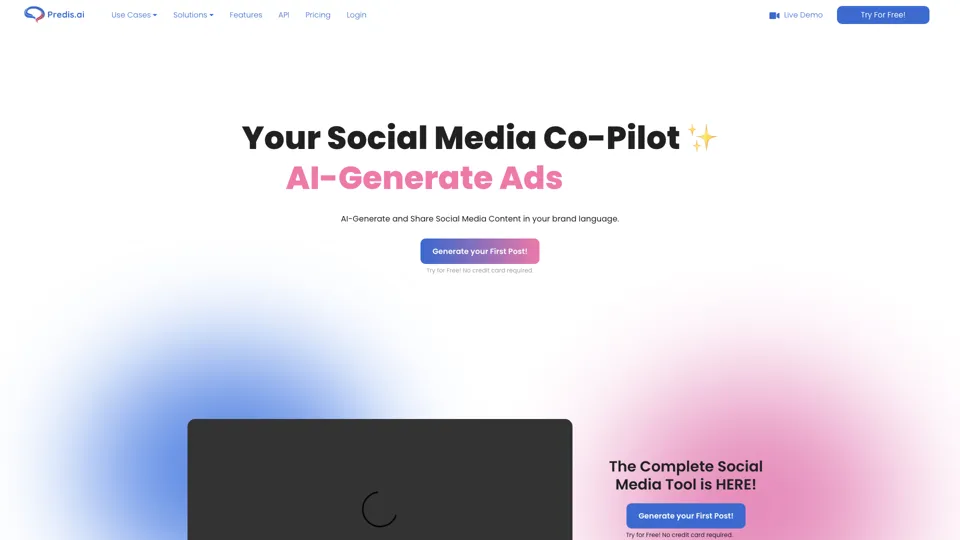
For creators producing high-volume, format-driven content — listicles, explainer videos, trend roundups, product reviews — AI has already restructured the workflow. Tools like ChatGPT, Claude, and Gemini handle first-draft scripting. Descript and Opus Clip handle editing and repurposing. ElevenLabs handles voiceover. Midjourney or Firefly handle thumbnails and visual assets. A creator who previously needed a team of three to maintain a consistent publishing cadence can now operate solo at the same output level.
For creators whose value proposition is perspective, taste, lived experience, or community trust, AI functions differently — as a production accelerator rather than a content generator. These creators use AI to compress the time between idea and published artifact, not to replace the idea itself.
The more consequential transformation is happening at the business layer. AI-powered analytics tools are giving creators granular insight into which content formats, topics, and hooks drive subscriber conversion versus passive views. This is shifting creator strategy from intuition-driven to data-informed without requiring a data analyst on staff.
Platform-side AI is also reshaping distribution. YouTube's recommendation engine, TikTok's interest graph, and LinkedIn's content scoring systems are all increasingly AI-driven, which means creators must understand not just their human audience but the algorithmic intermediary between their content and that audience.
Tasks AI Can Automate
- Script drafting and outline generation from a topic brief or talking points
- Video repurposing — cutting long-form content into short clips, reels, and quote cards using tools like Opus Clip, Munch, or Descript
- Transcription and caption generation with near-human accuracy across major languages
- SEO keyword research and title optimization using tools like VidIQ, TubeBuddy, or Surfer SEO
- Thumbnail A/B testing and performance prediction based on historical CTR data
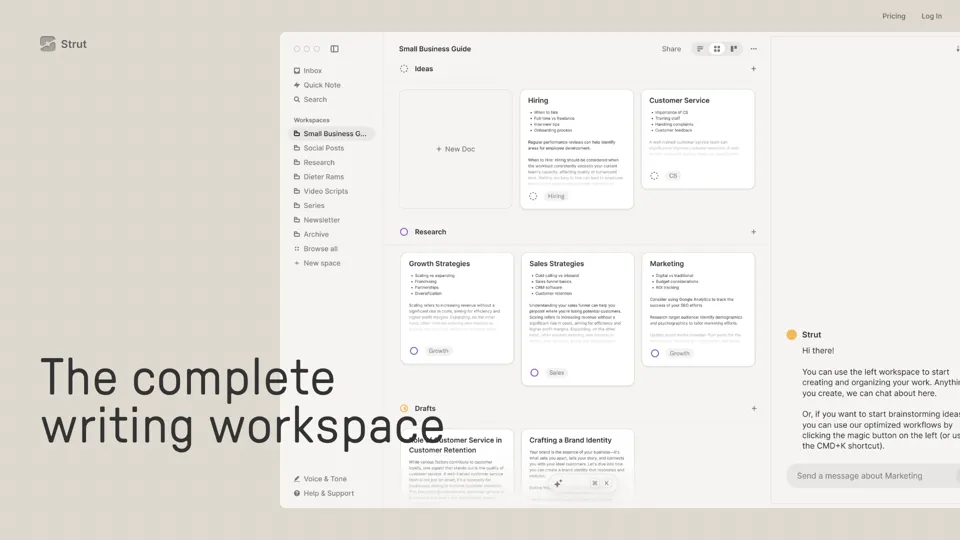
- Email newsletter drafting from a bullet-point brief or recent content archive
- Social post scheduling and variant generation across platforms from a single content piece
- Sponsorship brief summarization and first-draft ad read scripts
- Comment sentiment analysis and audience FAQ extraction from comment sections
- Metadata optimization — tags, descriptions, chapter markers — for discoverability
Skills Becoming More Valuable
Editorial judgment and taste. As AI floods every niche with competent, forgettable content, the ability to identify what is genuinely interesting, surprising, or worth saying becomes the primary differentiator. This is not a soft skill — it is a strategic capability.
On-camera and on-mic presence. Authenticity signals that are difficult to synthesize — vocal cadence, physical expressiveness, genuine reaction — remain human advantages. Audiences are developing sensitivity to AI-generated or AI-scripted delivery.
Audience relationship depth. Parasocial trust built over years of consistent, honest communication is not replicable by AI. Creators who have cultivated genuine community loyalty have a structural moat.
Cross-platform distribution strategy. Understanding how to architect a content ecosystem — where to publish first, how to repurpose without diluting, how to drive audience migration between platforms — is increasingly a competitive skill.
Prompt engineering and AI workflow design. Creators who can build efficient, repeatable AI-assisted production pipelines have a meaningful productivity advantage over those who cannot.
Business development and deal structuring. Negotiating sponsorships, licensing content IP, building paid communities, and structuring digital product launches require commercial judgment that AI cannot substitute.
Skills Becoming Less Important
Manual video editing proficiency. Basic cuts, captions, and B-roll assembly are increasingly handled by AI tools. Deep Adobe Premiere expertise is less necessary for creators who are not producing cinematic content.
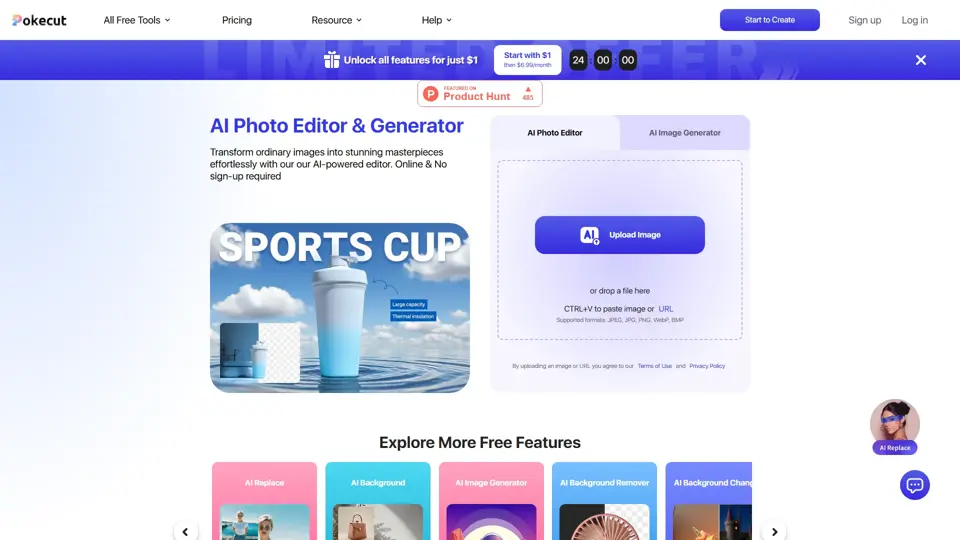
Graphic design for standard content assets. Thumbnail creation, social card design, and simple motion graphics are now accessible without design training through Canva AI, Adobe Firefly, and similar tools.
Keyword research as a manual process. The hours previously spent in spreadsheets mapping search volume and competition are compressed into minutes with AI-assisted SEO tools.
Transcription and show notes writing. These were legitimate time costs in podcast and video production. They are now near-zero effort tasks.
Writing first drafts from scratch. The blank page problem is largely solved for format-driven content. The skill that remains is knowing what to write, not how to start writing it.
Current AI Adoption in This Industry
Adoption is high and accelerating, but uneven in sophistication. A 2024 survey by the Creator Economy Institute found that over 70% of full-time creators use at least one AI tool regularly, but fewer than 20% have integrated AI into a structured, repeatable production workflow.
The most common entry point is text generation — using ChatGPT or Claude for script outlines, email drafts, or caption variations. The next tier is video repurposing, where tools like Opus Clip have achieved strong penetration among YouTube and podcast creators who want TikTok and Reels presence without additional production time.
AI-generated voiceover and synthetic avatars (HeyGen, Synthesia) are being tested by creators for translated content and evergreen explainer videos, but have not yet crossed into mainstream use for primary content due to audience perception concerns.
The business intelligence layer — using AI to analyze audience data, predict content performance, and optimize posting strategy — is the least adopted but arguably the highest-leverage application. Platforms like Spotter Studio and Vidyo are beginning to close this gap for YouTube-native creators.
Future Workflow Evolution
The content creator workflow in three years will look less like a production process and more like an editorial operation. The creator's primary time investment will shift toward:
- Idea sourcing and angle development — identifying what is worth making before making it
- On-camera or on-mic performance — the irreducibly human delivery layer
- Community engagement and relationship management — the trust infrastructure that monetization depends on
- Strategic distribution decisions — where, when, and how to publish across a multi-platform ecosystem
Production tasks — scripting, editing, captioning, repurposing, SEO optimization — will be largely AI-assisted or AI-automated, with the creator functioning as a quality control and brand consistency layer rather than a hands-on producer.
The creators who will struggle are those whose value proposition was production quality or content volume rather than perspective, personality, or community. The creators who will thrive are those who treat AI as a leverage multiplier on their genuine creative and relational assets.
There is also a structural shift coming in content monetization. As AI-generated content saturates ad-supported surfaces, audience willingness to pay for trusted, human-curated content will increase. Subscription models, paid communities, and direct-to-audience products will grow relative to sponsorship and ad revenue as primary income sources.
Common AI Use Cases
- YouTube creators using Opus Clip to generate 10–15 short clips per long-form video, maintaining multi-platform presence without additional filming
- Newsletter writers using Claude or ChatGPT to draft issue outlines from a weekly reading list, then rewriting in their own voice
- Podcast hosts using Descript for transcript-based editing, eliminating the need to scrub audio timelines manually
- Instagram and TikTok creators using CapCut's AI features for auto-captions, background removal, and trend-matched audio syncing
- LinkedIn creators using AI to repurpose long-form articles into post carousels, thread formats, and comment-bait hooks
- Course creators using AI to generate lesson outlines, quiz questions, and workbook templates from existing content libraries
- Brand deal creators using AI to draft media kits, rate cards, and campaign performance reports for sponsor communication
Recommended AI Stack
Content production:
- Claude or ChatGPT — scripting, outlining, email drafts, caption writing
- Descript — transcript-based video and podcast editing
- Opus Clip — long-form to short-form video repurposing
- ElevenLabs — voiceover for translated or evergreen content
Visual and design:
- Midjourney or Adobe Firefly — thumbnail concepts and visual assets
- Canva AI — social cards, carousels, and branded templates
- CapCut — mobile-first short-form video with AI editing features
SEO and discoverability:
- VidIQ or TubeBuddy — YouTube title, tag, and description optimization
- Surfer SEO — article and newsletter SEO for search-driven content
Analytics and strategy:
- Spotter Studio — YouTube content strategy and performance analysis
- Beehiiv AI — newsletter audience analytics and send-time optimization
- Metricool — cross-platform scheduling and performance benchmarking
Audience and community:
- Notion AI — content calendar management and idea organization
- Circle or Skool — community platforms with AI moderation features emerging
Risks & Challenges
Brand voice dilution. Over-reliance on AI-generated text produces content that sounds competent but generic. Audiences who follow a creator for their specific voice and perspective will notice and disengage. The risk is not that AI writes badly — it is that AI writes averagely.
Platform policy and disclosure requirements. The FTC and multiple platform operators are moving toward mandatory AI content disclosure. Creators who do not build disclosure practices now face retroactive compliance risk and audience trust damage.
Algorithmic homogenization. If all creators in a niche use the same AI tools with similar prompts, content converges toward the same formats, hooks, and structures. This is already visible in LinkedIn content and YouTube thumbnail design. Differentiation requires deliberate resistance to AI defaults.
Intellectual property exposure. AI tools trained on existing content create ambiguous IP situations, particularly for creators who use AI to generate music, images, or text that may incorporate protected material without clear licensing.
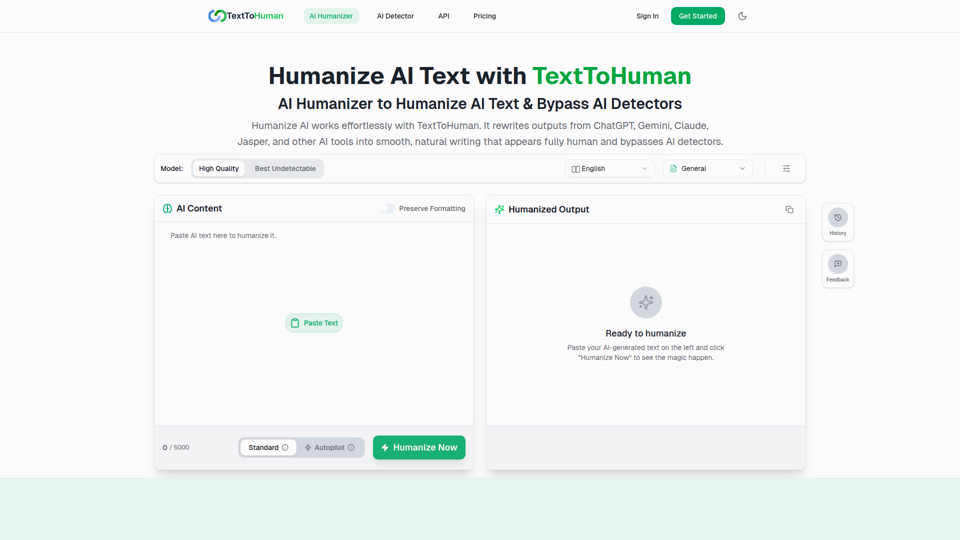
Audience authenticity expectations. As AI-generated content becomes more detectable — through cadence, phrasing patterns, or visual tells — audiences are developing stronger preferences for verifiably human content. Creators who over-automate risk losing the parasocial trust that is their primary commercial asset.
Skill atrophy. Creators who outsource too much of the production process to AI may find their own craft skills degrading. The ability to write, edit, or produce without AI assistance is worth maintaining as a hedge against tool dependency.
Future Outlook (3–5 Years)
The creator economy will bifurcate more sharply than it already has. At one end: AI-native content operations producing high-volume, algorithmically optimized content with minimal human creative input, competing on distribution efficiency and SEO coverage. At the other end: human-first creators whose value is explicitly their perspective, personality, and community relationship, competing on trust and differentiation.
The middle — creators who produce competent, format-driven content with moderate human input — will face the most pressure. This is where AI substitution is most direct and where audience loyalty is thinnest.
Monetization models will continue shifting toward direct audience revenue. Sponsorship markets will remain competitive but increasingly favor creators with highly engaged niche audiences over those with large but passive followings. AI will make it easier to identify and reach niche audiences, which benefits creators who have built genuine expertise in specific domains.
Platform consolidation will continue, but owned audience channels — email lists, paid communities, direct subscription products — will become more strategically important as creators seek distribution independence from algorithm-dependent platforms.
The creators who invest now in building irreplaceable human assets — distinctive voice, deep community trust, genuine domain expertise — will be structurally advantaged in a landscape where AI has commoditized everything else.
Final Insight
The most important thing AI has done for content creators is not make production easier. It is make the question of why you are creating more consequential.
When production friction was high, the barrier to entry filtered out low-commitment creators. Now that barrier is gone. What remains as a differentiator is the reason someone should follow you specifically — your angle, your honesty, your expertise, your community, your taste.
Creators who treat AI as a tool for amplifying a genuine creative identity will find it transformative. Creators who treat AI as a substitute for having something worth saying will produce more content that fewer people care about.
The technology has shifted the bottleneck from production to meaning. That is not a problem AI can solve.