How AI fits this role
Independent Filmmaker in the Age of AI
Role Overview
The independent filmmaker operates at the intersection of creative vision, entrepreneurial hustle, and technical execution. Unlike studio counterparts, indie filmmakers typically control the entire production pipeline — from script development and financing to post-production and distribution — often with budgets ranging from $10,000 to $5 million and skeleton crews.
The operational reality is one of permanent resource constraint. Every dollar spent on a colorist is a dollar not spent on a location. Every week in post is a week not spent pitching the next project. This economic pressure has always forced indie filmmakers to be early adopters of tools that compress cost and time — from the DV revolution of the 1990s to DSLR filmmaking in the 2000s to mirrorless cameras today. AI is the next compression event, and it is arriving faster and with broader scope than any previous technological shift.
The most commercially relevant context for this role sits at the intersection of narrative feature films, documentary production, and short-form content for streaming platforms and festival circuits. These filmmakers are not hobbyists — they are professionals navigating distribution deals, grant applications, co-production agreements, and audience development simultaneously.
How AI Is Transforming This Role
The transformation is not uniform. AI is hitting post-production first and hardest, then moving upstream into development and pre-production. Distribution and marketing are also being reshaped, though more slowly due to platform gatekeeping.
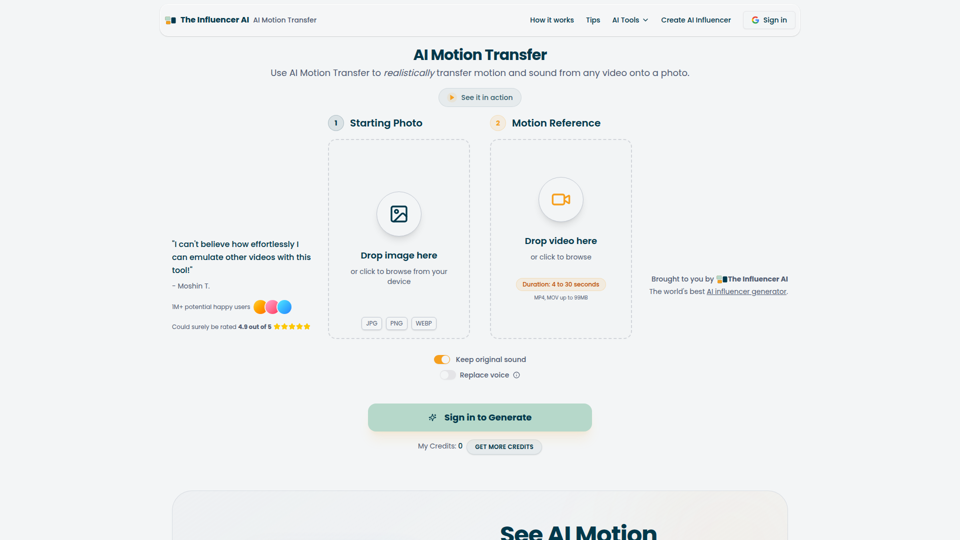
In post-production, tools like Adobe Premiere's AI-assisted editing, DaVinci Resolve's neural engine, and dedicated platforms like Descript and Runway ML are compressing timelines that previously required specialist contractors. A rough cut that once took three weeks with an editor now takes one week with an AI-assisted workflow — not because the editor is replaced, but because assembly, sync, and technical cleanup happen faster.
In development, large language models are being used for script coverage, story structure analysis, and dialogue iteration. This is not replacing the writer's room — indie filmmakers rarely have one — but it is giving solo writer-directors a sounding board that previously required hiring a script consultant at $500–$1,500 per pass.
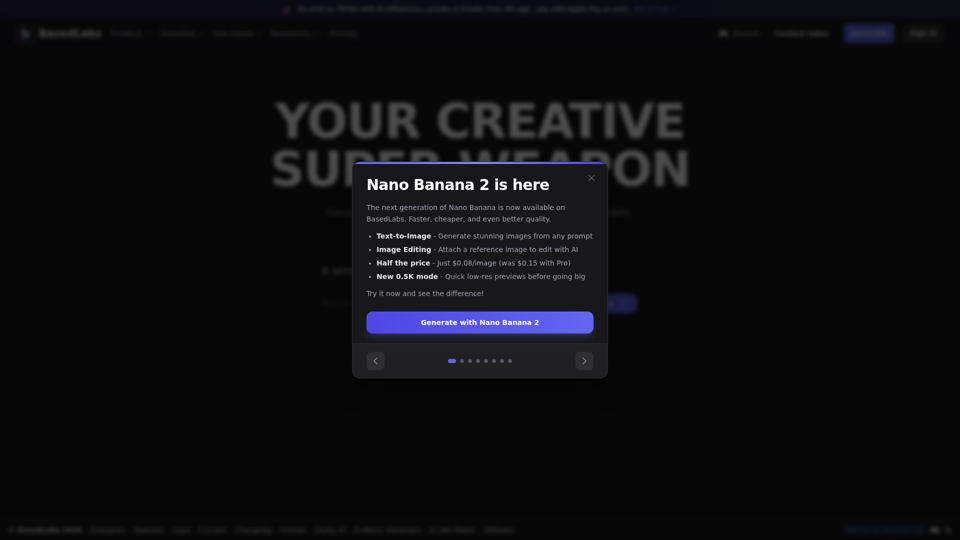
In visual development, text-to-image and text-to-video tools are changing how filmmakers communicate with cinematographers, production designers, and investors. A filmmaker can now generate a visual mood board or rough storyboard in hours rather than commissioning an illustrator for days.
In distribution and marketing, AI is being used to generate localized subtitles, create trailer variants for different platforms, and analyze audience data from festival submissions and streaming platforms to inform release strategy.
The commercial pressure driving adoption is straightforward: streaming platforms have compressed licensing fees for independent content, making budget efficiency a survival requirement rather than a preference.
Tasks AI Can Automate
- Transcription and rough assembly — AI tools like Descript can transcribe all footage, tag speakers, and generate a rough assembly cut from a script or transcript, eliminating the most mechanical phase of editing
- Subtitle and caption generation — multilingual subtitles generated at near-broadcast quality, reducing localization costs that previously ran $800–$2,000 per language
- Color correction passes — DaVinci Resolve's AI-powered color matching can apply a consistent grade across scenes shot under different conditions, reducing the time a colorist spends on technical correction versus creative grading
- Noise reduction and audio cleanup — tools like iZotope RX automate dialogue cleanup, removing wind, hum, and room tone inconsistencies that previously required hours of manual work
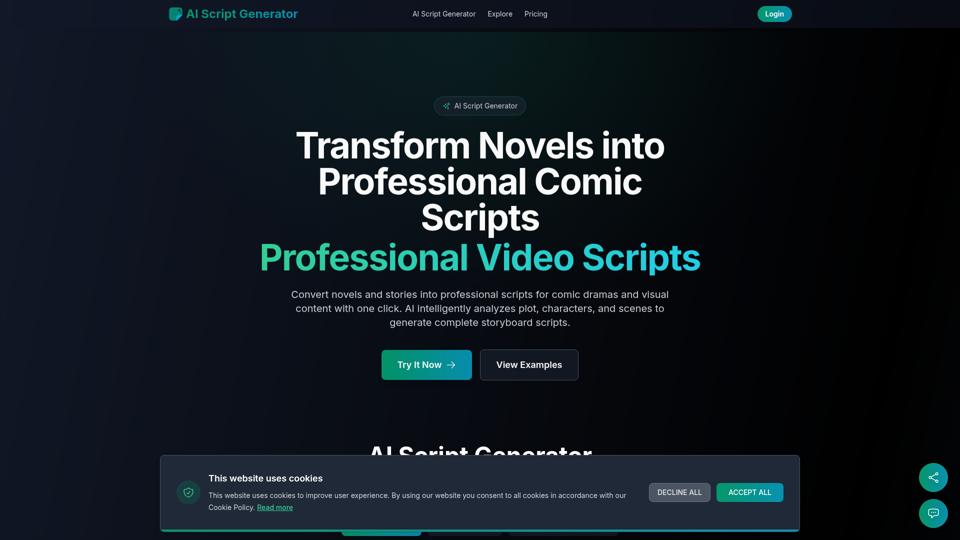
- Script coverage and story notes — LLMs can generate structural analysis, identify pacing issues, and flag plot holes across a feature-length script in minutes
- Visual effects compositing — Runway ML and similar tools can handle rotoscoping, background removal, and basic VFX tasks that previously required a dedicated compositor
- Social media asset generation — AI can generate platform-specific cuts, thumbnail variants, and promotional copy from existing footage and materials
- Grant and pitch document drafting — first-draft generation for funding applications, loglines, and treatment documents based on project briefs
- Metadata and deliverable preparation — automated generation of technical metadata, closed captions, and platform-specific delivery specs
Skills Becoming More Valuable
Taste and editorial judgment — as AI handles assembly and technical cleanup, the filmmaker's ability to make nuanced decisions about pacing, tone, and emotional rhythm becomes the primary differentiator. Anyone can generate a cut; not everyone can recognize when a scene needs to breathe.
Story architecture — the ability to construct narratives that work structurally and emotionally is becoming more valuable as AI tools expose how many projects fail at the script level. AI can identify problems; it cannot reliably solve them.
Prompt literacy and AI tool orchestration — knowing which AI tool to use at which stage, how to prompt it effectively, and how to evaluate its output critically is a genuine skill that separates efficient filmmakers from those who waste time on poor AI outputs.
Audience and distribution strategy — understanding how to position a film for specific platforms, festivals, and audiences is increasingly important as the distribution landscape fragments. AI can surface data; the filmmaker must interpret it.
Collaboration and communication — with smaller crews relying on AI tools to fill gaps, the filmmaker's ability to clearly communicate vision to a leaner team becomes more critical, not less.
Financial and business literacy — managing co-production agreements, understanding streaming deal structures, and navigating rights in an AI-generated content landscape requires business acumen that was previously optional for creative-focused filmmakers.
Skills Becoming Less Important
- Manual transcription and logging — spending hours logging footage by hand is no longer a viable use of time when AI handles it in minutes
- Basic color correction — technical exposure matching and scene-to-scene consistency correction is increasingly automated; the creative colorist role survives, but the technical assistant role shrinks
- Rote script formatting — Final Draft and AI-assisted tools handle formatting compliance automatically; knowing slug line conventions by heart is no longer a differentiator
- Manual subtitle timing — frame-accurate subtitle timing was a specialized skill; AI handles it at acceptable quality for most distribution contexts
- Basic motion graphics — template-driven title sequences and lower thirds are now generated by AI tools at a quality level that meets most indie production standards
- Cold outreach copywriting for distribution — AI drafts the initial pitch emails, festival submission letters, and press releases that filmmakers previously spent significant time crafting from scratch
Current AI Adoption in This Industry
Adoption is uneven and largely self-directed. There is no industry-wide standard or institutional guidance — independent filmmakers are adopting AI tools based on peer recommendations, YouTube tutorials, and trial and error.
The most widespread adoption is in post-production audio and transcription, where tools like Descript, Adobe Podcast, and iZotope RX have become near-standard in professional indie workflows. Colorists and editors working with indie clients report that AI-assisted tools are now expected rather than exceptional.
In pre-production, adoption is growing but inconsistent. Filmmakers using AI for storyboarding and visual development tend to be younger or more technically oriented. Many established indie directors remain skeptical of AI in the creative development phase, viewing it as a threat to authorial voice rather than a tool.
Distribution-side AI adoption is largely platform-driven rather than filmmaker-driven. Netflix, Amazon, and MUBI use AI in their acquisition and recommendation systems, which indirectly shapes what kinds of films get traction — a pressure filmmakers are beginning to account for in development decisions.
The festival circuit has been slower to engage with AI questions, though Sundance, SXSW, and Tribeca have all begun addressing AI disclosure in submission guidelines, signaling that the industry is moving toward formal policy rather than informal norms.
Future Workflow Evolution
The indie filmmaker's workflow in three years will look structurally different from today's, even if the creative fundamentals remain unchanged.
Development will involve AI as a continuous collaborator — not a co-writer, but a structural analyst and research assistant that can rapidly surface comparable films, identify market positioning, and stress-test story logic. The filmmaker will spend more time on vision and less time on research and formatting.
Pre-production will see AI-generated previsualization become standard for pitching to investors and department heads. The gap between a filmmaker's mental image and what they can show a collaborator will narrow significantly, reducing miscommunication and expensive on-set surprises.
Production will change the least in the near term. The camera, the performance, and the physical world remain irreducibly human. However, AI-assisted on-set tools for continuity checking, real-time color monitoring, and script supervision will reduce crew size requirements for certain roles.
Post-production will be the most transformed phase. The traditional post pipeline — offline edit, online conform, color grade, sound mix, VFX, deliverables — will compress into a more fluid, iterative process where AI handles technical layers continuously rather than sequentially. The filmmaker will spend more time on creative decisions and less time waiting for technical processes to complete.
Distribution will require filmmakers to engage directly with data in ways they currently outsource to sales agents and distributors. AI tools will make audience analytics, platform performance data, and rights management more accessible to filmmakers without dedicated business teams.
Common AI Use Cases
- Generating a visual lookbook for investor presentations using Midjourney or Adobe Firefly based on reference images and written descriptions
- Using Descript to transcribe and rough-cut a documentary from 40 hours of interview footage in two days rather than two weeks
- Running a feature script through an LLM to identify structural weaknesses before paying for a script consultant
- Using Runway ML to remove a modern car from a period-set background shot that would otherwise require a reshoot
- Generating multilingual subtitles for festival submissions targeting European markets
- Creating a 30-second vertical cut of a trailer for Instagram using AI-assisted reframing tools
- Using AI audio tools to salvage location sound recorded in a noisy environment that would otherwise require ADR
- Analyzing comparable film performance data to inform festival submission strategy and release timing
Recommended AI Stack
Script and Development
- ChatGPT or Claude — script analysis, coverage, pitch document drafting
- Sudowrite — narrative development and dialogue iteration (better suited to fiction than general LLMs)
Pre-Production and Visualization
- Midjourney or Adobe Firefly — mood boards, visual development, storyboard reference
- FrameForge or ShotDeck — AI-assisted shot planning and reference matching
Post-Production — Editing
- Descript — transcript-based editing, rough assembly, podcast-style documentary workflows
- Adobe Premiere Pro with Sensei AI — scene detection, auto-reframe, speech-to-text
Post-Production — Color and VFX
- DaVinci Resolve (neural engine) — color matching, noise reduction, face refinement
- Runway ML — rotoscoping, background removal, generative VFX for low-budget productions
- Topaz Video AI — upscaling, frame interpolation, noise reduction for archival or low-quality footage
Audio
- iZotope RX — dialogue cleanup, noise reduction, audio restoration
- Adobe Podcast (Enhance Speech) — quick location sound cleanup for interview-heavy content
Distribution and Marketing
- Opus Clip — AI-assisted short-form clip generation from long-form content
- Submagic or Captions — social-ready subtitle and caption generation
- ChatGPT — press kit copy, festival submission letters, grant application drafts
Risks & Challenges
Creative homogenization is the most serious long-term risk. If filmmakers use the same AI tools to generate visual references, analyze story structure, and optimize for platform algorithms, the result is a narrowing of aesthetic and narrative diversity — the opposite of what independent film exists to provide. This is not hypothetical; it is already visible in the convergence of visual styles in AI-assisted content.
Rights and ownership ambiguity remains legally unresolved. AI-generated elements in a film — a background, a sound effect, a piece of music — may carry unclear ownership status depending on jurisdiction and the training data used by the tool. Filmmakers using AI-generated content in commercial productions face potential liability that the industry has not yet standardized.
Over-reliance on AI in development risks producing technically competent but emotionally hollow work. LLMs are trained on existing narratives and will tend toward conventional story structures. A filmmaker who uses AI to fix every structural problem may end up with a script that passes coverage but lacks the idiosyncratic quality that makes independent film worth watching.
Crew displacement and ethical tension is a real pressure. Using AI to eliminate the need for a colorist, a subtitle translator, or a script supervisor has direct economic consequences for the freelance ecosystem that indie film depends on. Filmmakers are navigating this without clear industry guidance.
Platform algorithm dependency is growing. As AI shapes what streaming platforms surface and recommend, filmmakers face pressure to make creative decisions based on algorithmic preferences rather than artistic intent — a dynamic that has already reshaped the music industry and is beginning to affect film.
Future Outlook (3–5 Years)
The independent filmmaker role will not be automated. It will be restructured.
The filmmaker who thrives in 2027–2029 will be one who has integrated AI into their workflow without surrendering the creative judgment that AI cannot replicate. They will produce more projects, at lower cost, with smaller crews — but the quality ceiling will be determined by the same human factors it always has been: story, performance, and point of view.
The most significant structural change will be the compression of the development-to-distribution timeline. Projects that currently take 3–5 years from concept to release will move through the pipeline in 18–24 months for filmmakers who adopt AI effectively. This will increase output but also increase competition, as the barrier to producing a technically competent film continues to fall.
Festivals and distributors will develop more sophisticated AI disclosure requirements, and filmmakers will need to be transparent about which elements of their work involved AI generation. This will create a new axis of differentiation — films that are entirely human-made will carry a different market positioning than hybrid productions.
The financing landscape will shift as AI reduces the cost of proof-of-concept materials. Filmmakers will be able to show investors a more complete picture of a project earlier in development, which may democratize access to financing for filmmakers who previously lacked the resources to produce compelling pitch materials.
The greatest risk is not that AI replaces the independent filmmaker. It is that the economic pressure to use AI tools to compete on volume and cost erodes the conditions — time, resources, creative risk — that produce genuinely original work.
Final Insight
Independent filmmaking has always been defined by the tension between creative ambition and resource constraint. AI does not resolve that tension — it shifts where the constraint falls. The filmmaker who previously couldn't afford a colorist can now afford one for the creative work, because AI handles the technical pass. The filmmaker who previously spent three weeks in rough cut can now spend that time on a second project or a deeper edit of the first.
But the tools do not make the film. The filmmaker who uses AI to generate a mood board still has to know what mood they are after. The filmmaker who uses an LLM to stress-test their script still has to know what the script is trying to say. The filmmaker who uses AI to analyze comparable films still has to decide whether to follow the data or ignore it.
What AI is doing to independent filmmaking is what every previous technology wave did: it is raising the floor and leaving the ceiling exactly where it was. The floor — technical competence, basic production quality, distribution access — is rising fast. The ceiling — the thing that makes a film matter to an audience — remains stubbornly, irreducibly human.
The filmmakers who understand this distinction will use AI as leverage. The ones who don't will use it as a crutch, and the work will show it.