How AI fits this role
Music Lover in the Age of AI: How Artificial Intelligence Is Reshaping How We Discover, Create, and Experience Music
Role Overview
The "music lover" is not a professional title in the traditional sense, but it represents one of the most commercially significant audience segments in the entertainment economy. Music lovers — defined here as active, engaged listeners who curate playlists, attend live events, follow artists, purchase merchandise, and participate in fan communities — are the demand engine that drives a $28+ billion recorded music industry and a live events market that exceeded $30 billion globally in 2023.
Within the music industry ecosystem, the music lover occupies a dual role: as a consumer whose behavior shapes algorithmic systems, and as an increasingly active participant in music culture through social platforms, fan-driven content, and community curation. Streaming platforms, labels, artist managers, and concert promoters all model their commercial strategies around understanding and predicting what music lovers want next.
This is the role AI is now most aggressively targeting — not to replace the music lover, but to anticipate them, influence them, and increasingly, to create for them.
How AI Is Transforming This Role
The transformation of the music lover's experience is happening at every touchpoint of the listening journey, and much of it is invisible by design.
Algorithmic curation has replaced human discovery. Spotify's Discover Weekly, Apple Music's personalized radio, and YouTube Music's autoplay systems now account for the majority of new artist discovery for most listeners. These systems are trained on behavioral data — skip rates, replay counts, playlist additions, time-of-day listening patterns — and they are becoming more accurate at predicting what a listener will engage with before the listener consciously knows it themselves.
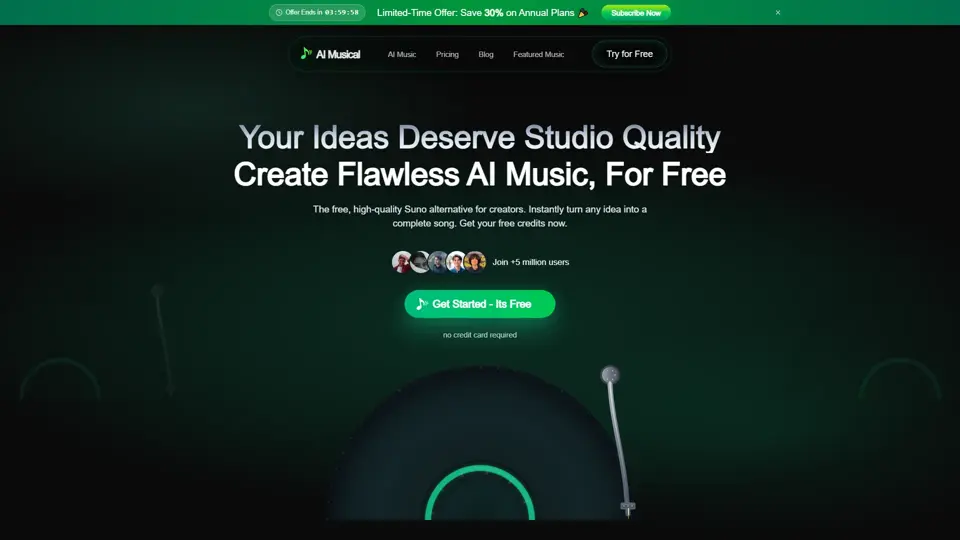
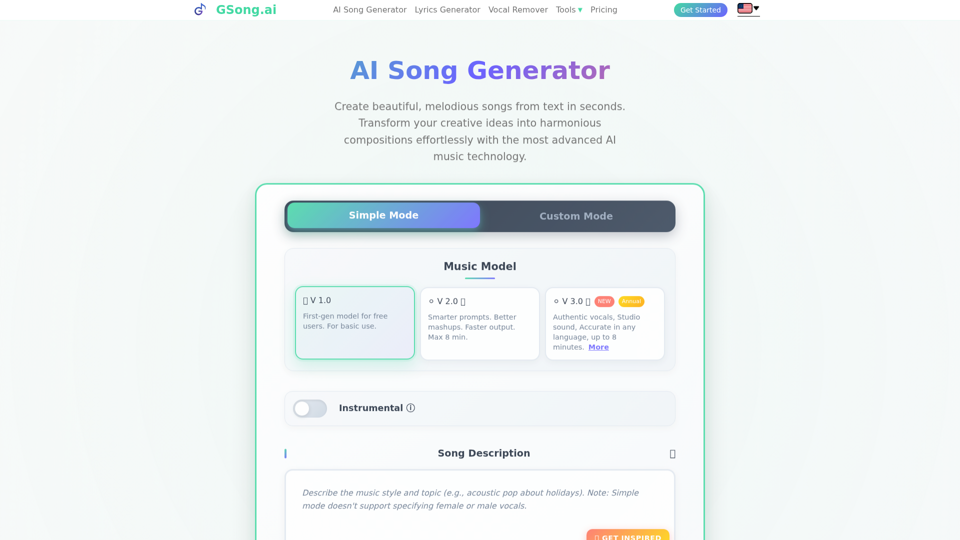
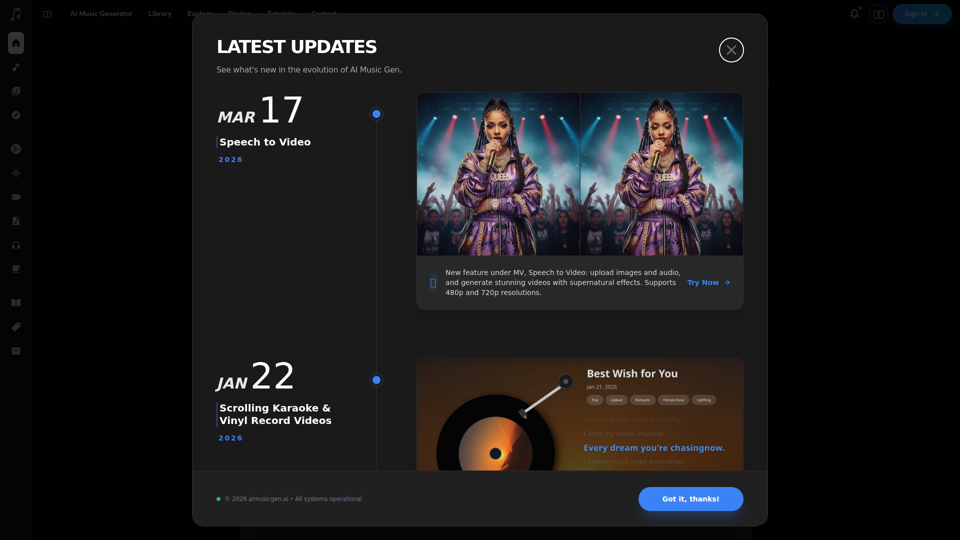
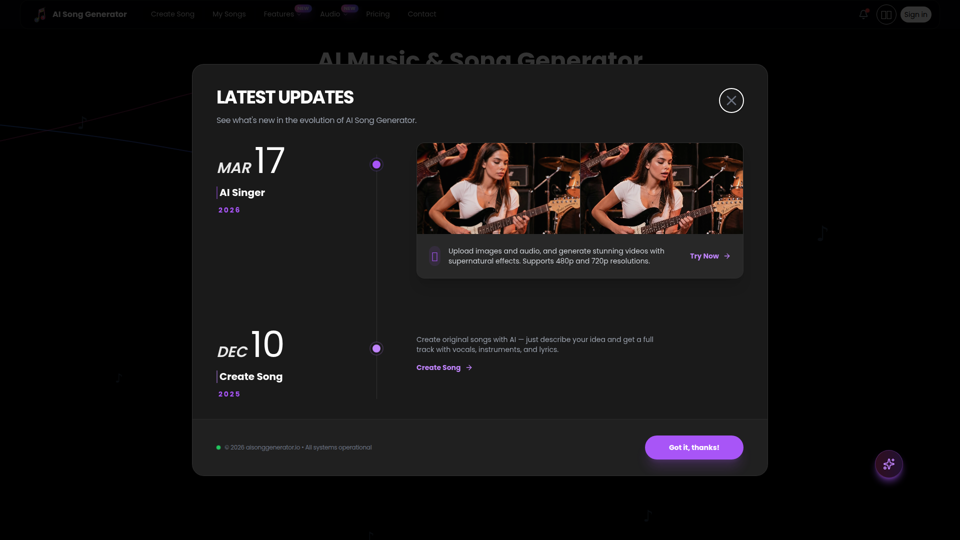
Generative AI is entering the content stream. AI-generated music is no longer a novelty. Platforms like Suno, Udio, and Stability Audio allow anyone to generate full-length, production-quality tracks in seconds. This creates a new pressure on music lovers: distinguishing between human-made and AI-generated music is becoming harder, and the emotional and ethical weight of that distinction is becoming a live cultural debate.
Fan engagement is being automated. AI-powered chatbots now simulate artist interactions on platforms like Community and Discord. Some artists use AI voice cloning to generate personalized fan messages at scale. The parasocial relationship between artist and fan — historically one of the most emotionally potent forces in music culture — is being partially mediated by systems that simulate intimacy without delivering it.
Live experience personalization is accelerating. Concert recommendation engines, dynamic ticket pricing algorithms, and AI-driven setlist optimization tools are changing how music lovers interact with live music. Ticketmaster's dynamic pricing, powered by demand-prediction models, has made the economics of live attendance more volatile and less predictable for fans.
Tasks AI Can Automate
- Playlist generation based on mood, activity, time of day, or social context — without manual curation input from the listener
- New artist recommendations derived from micro-behavioral signals rather than explicit user preferences
- Lyric and chord transcription from audio, enabling instant access to sheet music or karaoke content
- Concert and event discovery matched to listener location, genre preferences, and historical attendance patterns
- Merchandise and release notifications personalized to individual fan engagement history
- Music identification (Shazam-style) extended to hum recognition, partial melody matching, and mood-based search
- Podcast and interview summarization for fans who want artist context without consuming long-form content
- Social listening aggregation — AI tools that surface what artists, albums, or trends are gaining momentum in a fan's network before they go mainstream
Skills Becoming More Valuable
Critical listening and taste formation. As algorithmic curation becomes the default, the ability to actively seek out music outside recommendation bubbles — through record stores, independent blogs, live venues, and word-of-mouth — becomes a differentiating cultural skill. Music lovers who develop genuine, self-directed taste are increasingly rare and culturally influential.
Community building and fan organization. Human-led fan communities — those that organize around shared values, coordinate fan projects, and create genuine social bonds — are more resilient and commercially valuable than algorithmically assembled audiences. The ability to build and sustain these communities is a skill that AI cannot replicate.
Cross-genre and cross-cultural fluency. Understanding how musical traditions connect across genres and geographies — and being able to articulate those connections — is a form of cultural intelligence that AI systems approximate but do not possess. Music lovers with this fluency are valuable to labels, curators, and media platforms.
Live music advocacy and event culture. The ability to champion live music experiences, support independent venues, and participate in the economic ecosystem of touring artists is a form of cultural stewardship that has no AI equivalent.
Music journalism and criticism. Long-form, contextually rich music writing that connects an album to its historical moment, its artist's biography, and its cultural significance remains a deeply human skill. AI can summarize; it cannot interpret with authority.
Skills Becoming Less Important
- Manual playlist curation for personal use — AI does this better and faster for most casual listeners
- Memorizing release dates, chart positions, or catalog details — all instantly retrievable via AI assistants
- Basic music theory identification by ear — AI transcription tools handle this with high accuracy
- Navigating streaming platform interfaces — voice and conversational AI interfaces are replacing manual browsing
- Tracking artist touring schedules — automated notification systems handle this with greater reliability than manual monitoring
Current AI Adoption in This Industry
The recorded music and streaming industry is among the most advanced sectors in consumer-facing AI deployment, largely because the data infrastructure was already in place.
Spotify has over 600 million users generating continuous behavioral data, and its recommendation engine is one of the most sophisticated consumer AI systems in existence. The platform's DJ feature — an AI-generated radio host that narrates personalized listening sessions — represents a new category of AI-human interface in music consumption.
Apple Music has invested heavily in editorial curation as a counterweight to pure algorithmic recommendation, but its underlying discovery systems are AI-driven. The tension between human editorial voice and machine recommendation is a live strategic debate inside every major streaming platform.
YouTube Music and Amazon Music are leveraging their parent companies' AI infrastructure — Google's DeepMind research and Amazon's Alexa ecosystem respectively — to build more contextually aware music experiences.
On the generative side, Universal Music Group, Sony Music, and Warner Music have all filed or are pursuing legal action against AI music generation platforms, signaling that the commercial stakes of AI-generated content are now high enough to trigger industry-wide legal mobilization.
Future Workflow Evolution
The music lover's relationship with music is shifting from passive consumption to active co-creation, whether they choose it or not.
Within three to five years, the typical music listening session will likely involve AI-generated or AI-remixed content alongside human-made recordings, often without clear labeling. Platforms are already experimenting with "stems" — isolated vocal or instrumental tracks — that allow listeners to remix songs in real time. AI will make this capability universal and frictionless.
Fan communities will increasingly operate as creative collaborators. AI tools will allow fans to generate alternate versions of songs, create visual content synchronized to music, and build immersive experiences around artist catalogs. The boundary between fan and creator will continue to erode.
Concert experiences will bifurcate. High-end live events will emphasize the irreplaceable human presence of the artist as a premium, scarcity-driven product. Lower-tier live experiences will incorporate AI-generated visuals, holographic performances, and algorithmically optimized setlists. The economics of each tier will diverge sharply.
Music discovery will become more social and more AI-mediated simultaneously. Platforms are building social layers on top of algorithmic recommendation — sharing what friends are listening to, collaborative playlist building, real-time listening parties — while using AI to optimize the social signals that drive those interactions.
Common AI Use Cases
For casual listeners:
- Mood-based playlist generation ("something for a rainy Sunday afternoon")
- Voice-activated music search and playback
- Automatic concert alerts based on listening history
- AI-generated "radio" experiences with personalized narration
For engaged fans:
- AI-powered fan wikis and artist knowledge bases
- Setlist prediction tools based on recent tour data
- Merchandise drop alerts and resale price tracking
- Community sentiment analysis around new releases
For music enthusiasts and semi-professionals:
- AI-assisted music theory learning (tools like Hooktheory, Musescore's AI features)
- Ear training applications with adaptive AI difficulty
- AI-generated backing tracks for home practice sessions
- Catalog exploration tools that map genre genealogies and influence networks
Recommended AI Stack
| Tool | Use Case | Notes |
|---|---|---|
| Spotify DJ / Discover Weekly | Personalized listening and discovery | Best-in-class behavioral recommendation |
| Suno / Udio | AI music generation for creative exploration | Useful for understanding AI music capabilities; raises attribution questions |
| Shazam / SoundHound | Real-time music identification | Now includes hum-to-search and mood matching |
| Setlist.fm + AI aggregators | Concert history and setlist prediction | Community-driven with AI pattern analysis |
| Musixmatch | AI-powered lyric sync and translation | Useful for cross-language music exploration |
| Last.fm | Listening history tracking and social discovery | Long-standing scrobbling platform with AI-enhanced recommendations |
| Bandcamp | Direct artist support with discovery features | Human-curated editorial alongside algorithmic tools |
| Gemini / ChatGPT | Music research, history, and context queries | Useful for deep-dive artist and genre research |
Risks & Challenges
Algorithmic homogenization. When billions of listeners are guided by the same recommendation systems optimized for engagement, the result is a narrowing of the musical landscape. Niche genres, experimental artists, and culturally specific music traditions are systematically underserved by engagement-maximizing algorithms. Music lovers who rely entirely on algorithmic discovery are at risk of inhabiting a curated bubble that feels personalized but is commercially constrained.
AI-generated music saturation. The volume of AI-generated music being uploaded to streaming platforms is growing exponentially. Spotify removed tens of thousands of AI-generated tracks in 2024 after identifying bot-driven streaming fraud. Music lovers face a genuine challenge in navigating a content environment where quality signals are being diluted.
Emotional manipulation through personalization. AI systems that know a listener's emotional state — inferred from listening patterns, time of day, and behavioral data — can serve music that deepens or prolongs emotional states in ways that serve platform engagement metrics rather than listener wellbeing. This is an underexamined risk in the music streaming industry.
Artist compensation erosion. As AI-generated music competes with human-made music for streaming royalties, the per-stream economics for human artists deteriorate further. Music lovers who care about sustaining the artists they love face a structural tension between the convenience of streaming and the economic reality of how little it pays.
Loss of serendipitous discovery. The record store browse, the late-night radio DJ, the friend's mixtape — these discovery mechanisms produced unexpected, life-changing musical encounters that algorithmic systems are not designed to replicate. The infrastructure for serendipitous discovery is shrinking.
Future Outlook (3–5 Years)
By 2027–2028, the music lover's experience will be shaped by several converging forces:
Personalized AI music generation will become mainstream. Tools that generate music tailored to a specific listener's taste profile — not just recommending existing music but creating new music in real time — will be commercially available and integrated into major platforms. The question of whether listeners want this, and what it means for their relationship with music, is genuinely open.
Artist authenticity will become a premium product. As AI-generated content floods the market, the verified human origin of music will carry commercial and emotional premium. Blockchain-based provenance systems, artist-authenticated releases, and live performance as proof-of-humanity will become more commercially significant.
Fan communities will become creative economies. The most engaged fan communities will operate as creative and economic ecosystems — generating content, funding projects, and co-creating with artists in ways that AI tools enable but human relationships sustain. Platforms that facilitate this will capture significant value.
Music education will be transformed. AI-powered learning tools will make music theory, instrument practice, and composition accessible to a far larger population. The number of people who can create music will expand dramatically, changing the relationship between music lover and music maker.
The legal landscape will reshape the industry. Ongoing litigation around AI training data, voice cloning, and generative music will produce regulatory frameworks that determine how AI music tools operate commercially. The outcome of these cases will significantly affect what AI music experiences are available to listeners.
Final Insight
The music lover is not being replaced by AI — but the conditions under which music love forms and deepens are being fundamentally restructured. The discovery of a song that changes your life, the loyalty to an artist who speaks to your experience, the community of people who share your obsession — these are human phenomena that AI systems are now actively mediating, monetizing, and in some cases simulating.
The music lovers who will navigate this era most richly are those who treat algorithmic recommendation as a starting point rather than a destination, who invest in the economic ecosystems of the artists they care about, and who maintain the capacity for the kind of active, intentional listening that no recommendation engine can manufacture.
The technology is accelerating. The music still requires a human to mean something.