How AI fits this role
Industrial Designer in the Age of AI
Role Overview
Industrial designers are the professionals who bridge engineering constraints and human experience — shaping the physical products that people use, buy, and interact with daily. In practice, this means working across consumer electronics, furniture, medical devices, automotive interiors, packaging, and household appliances, translating functional requirements into manufacturable, ergonomic, and commercially viable forms.
The role sits at the intersection of aesthetics, materials science, manufacturing process knowledge, and user psychology. A senior industrial designer at a consumer electronics firm isn't just sketching enclosures — they're negotiating tolerances with mechanical engineers, reviewing DFM (design for manufacturability) feedback from contract manufacturers in Shenzhen, and pressure-testing form factors against retail shelf constraints and unboxing experience expectations.
The highest-volume commercial context for this role is consumer product development — spanning CE, home goods, and personal care — where design cycles are compressed, SKU proliferation is relentless, and the cost of a tooling mistake runs into six figures. That's the operational environment where AI is hitting hardest and fastest.
How AI Is Transforming This Role
The transformation isn't about AI replacing sketching. It's about AI compressing the front end of the design process so aggressively that the bottleneck has shifted from ideation to judgment.
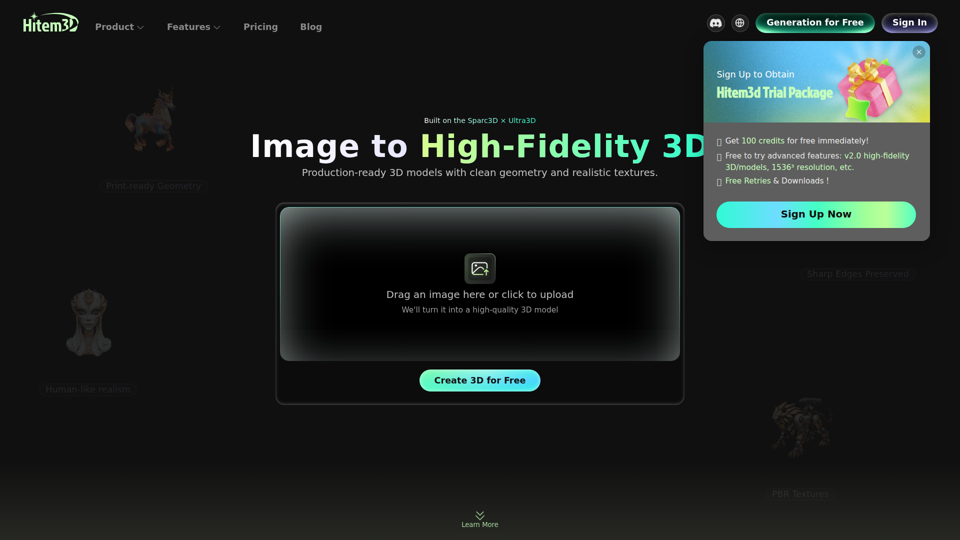
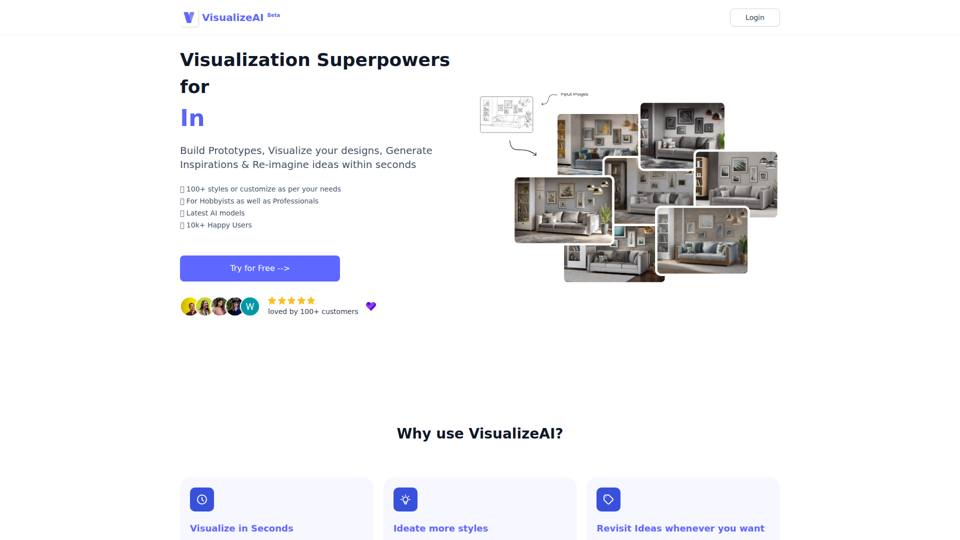
Three years ago, a designer might spend two weeks generating concept directions, building rough foam models, and iterating on proportions before presenting to stakeholders. Today, generative AI tools can produce dozens of photorealistic concept renders in hours. The designer's job in that phase has shifted from making to curating, directing, and critically evaluating — which requires deeper taste and sharper strategic instincts, not less skill.
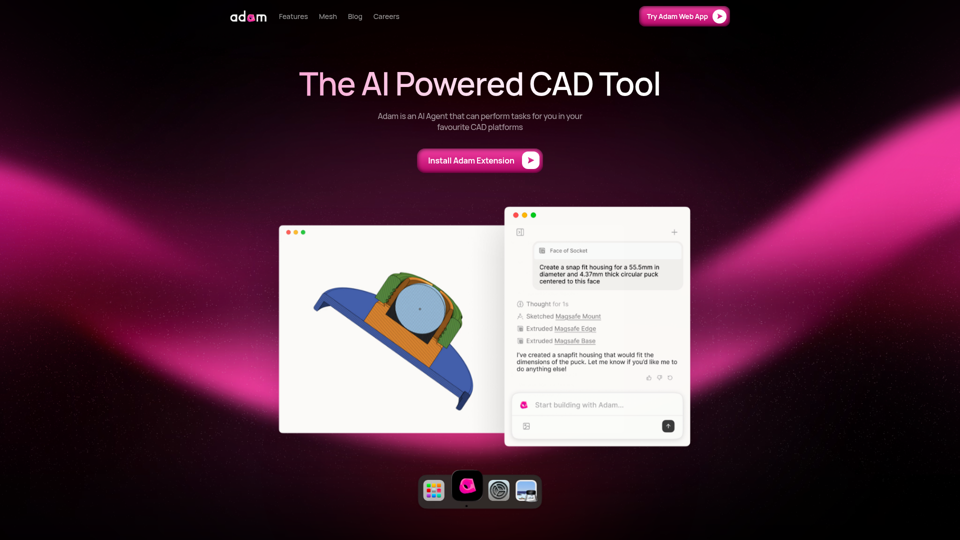
The more disruptive shift is happening in parametric and generative design for manufacturing. Tools like Autodesk Fusion 360's generative design engine and nTopology are allowing designers to input load cases, material constraints, and manufacturing method parameters, then receive structurally optimized geometries that no human would sketch intuitively. This is changing the relationship between industrial designers and mechanical engineers — the boundary between the two disciplines is blurring in ways that create both opportunity and organizational friction.
Commercial pressure is accelerating adoption. Brands competing in fast-moving consumer categories — personal care, kitchen appliances, wearables — are under pressure to cut concept-to-tooling timelines from 18 months to under 12. AI-assisted workflows are one of the few levers available that don't require headcount increases.
Tasks AI Can Automate
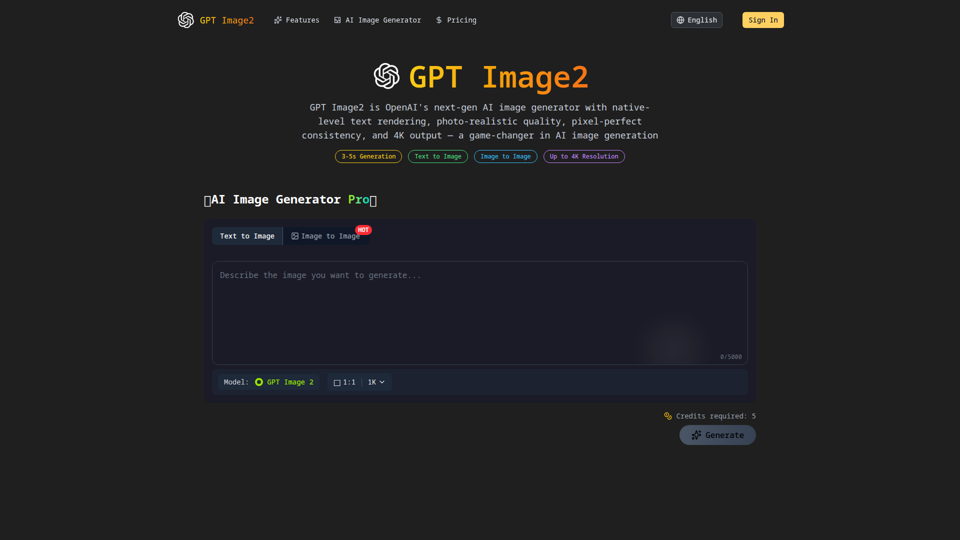
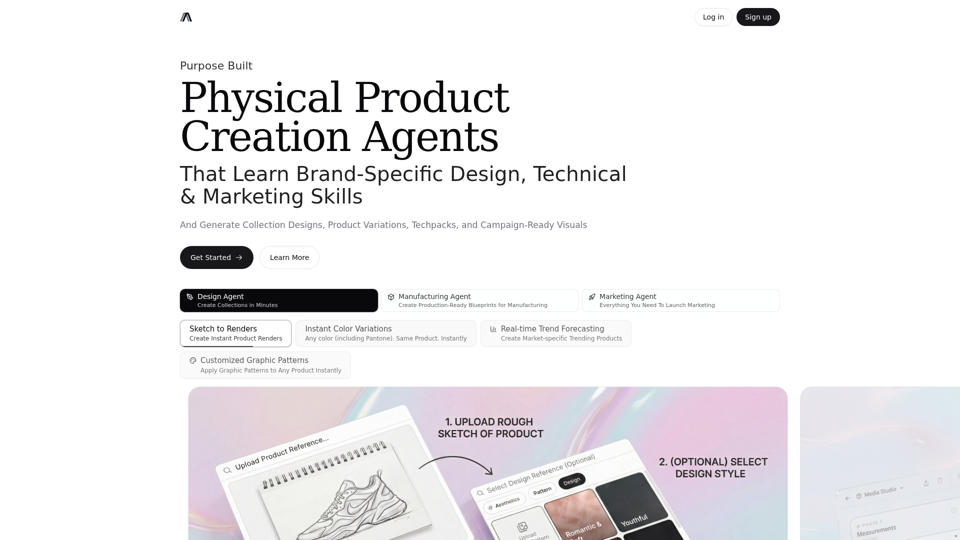
- Concept visualization at volume — generating 20–50 visual directions from a brief using tools like Midjourney, Adobe Firefly, or Vizcom, reducing the time from brief to first stakeholder review from days to hours
- Proportional and ergonomic variation generation — parametric tools can auto-generate size variants across a product family once a master geometry is established, eliminating manual rescaling work
- Rendering and scene composition — AI-assisted rendering in KeyShot and similar tools now handles lighting, material simulation, and environment setup with minimal manual input
- Design documentation drafting — AI can generate first-draft spec sheets, BOM annotations, and design rationale documents from CAD metadata and designer notes
- Trend and competitive landscape scanning — tools trained on patent databases, retail imagery, and design publications can surface emerging form language and material trends faster than manual research
- Basic DFM flagging — AI integrated into CAD environments can flag wall thickness violations, undercuts, and draft angle issues in real time during modeling, catching errors that previously required a dedicated review cycle
- User research synthesis — NLP tools can process interview transcripts, survey data, and usability test notes into structured insight summaries, compressing research synthesis from days to hours
Skills Becoming More Valuable
Design direction and curation at speed. When AI can generate 50 concepts, the ability to quickly identify which three are worth developing — and articulate why in terms of brand fit, manufacturing feasibility, and user insight — becomes the core competency. This is taste operating under time pressure, and it can't be automated.
Cross-disciplinary fluency. As generative design tools blur the line between industrial design and mechanical engineering, designers who can read FEA outputs, understand injection molding economics, and speak credibly with tooling engineers are significantly more valuable than those who operate purely in the aesthetic domain.
Brief writing and AI prompt craft. The quality of AI-generated concepts is directly proportional to the quality of the input. Designers who can write precise, constraint-rich briefs — specifying target user, manufacturing method, brand vocabulary, and competitive differentiation in a way that guides generative tools — produce dramatically better outputs than those who prompt loosely.
Systems thinking across a product portfolio. AI makes it easy to generate one-off concepts. It's much harder to use AI to maintain coherent design language across a 40-SKU product line over five years. That systems-level thinking remains a human responsibility.
Stakeholder communication and design advocacy. As more of the visible "making" gets automated, the designer's ability to explain decisions, defend rationale, and align cross-functional teams becomes a larger share of the actual job.
Sustainability and materials expertise. Regulatory pressure (EU Ecodesign, extended producer responsibility legislation) and brand sustainability commitments are creating demand for designers who understand material lifecycles, recyclability constraints, and bio-based material properties — knowledge that AI tools can surface but not apply with contextual judgment.
Skills Becoming Less Important
- Manual rendering and visualization craft — photorealistic hand-rendering and even traditional KeyShot scene-building are becoming less differentiating as AI rendering tools close the quality gap
- Repetitive CAD operations — surfacing cleanup, variant generation, and standard component placement are increasingly handled by AI-assisted CAD features
- Basic trend research compilation — assembling mood boards and trend decks from public sources is largely automatable; the value is now in interpreting and applying trends, not finding them
- Isolated 2D sketching as a primary deliverable — while sketching remains valuable for thinking, it's no longer a primary communication tool in many organizations where AI visualization has become the default for early-stage stakeholder alignment
- Manual DFM review cycles — catching obvious manufacturability errors is increasingly handled in-tool, reducing the need for dedicated early-stage DFM review meetings
Current AI Adoption in This Industry
Adoption is uneven but accelerating. The clearest leading edge is in consumer electronics and personal care, where companies like Dyson, Samsung Design, and mid-market appliance brands have integrated generative visualization into their concept phase workflows. Contract design consultancies — IDEO, Frog, Ammunition, and their regional equivalents — are under client pressure to show faster concept velocity, and most have adopted AI visualization tools as a standard part of their process.
In medical device design, adoption is slower due to regulatory documentation requirements and the liability implications of AI-generated geometry in load-bearing or patient-contact applications. The FDA's evolving guidance on AI in device development is creating caution, though AI is being used in non-regulated aspects of the workflow like user research synthesis and packaging design.
Automotive interior design is seeing significant AI investment at the OEM level, particularly in generative design for structural components and AI-assisted CMF (color, material, finish) exploration. Stellantis, BMW, and several Chinese OEMs have publicly discussed AI integration in their design studios.
The tooling ecosystem has consolidated around a few key platforms: Vizcom for AI-assisted sketch rendering, Midjourney and Adobe Firefly for concept visualization, Autodesk Fusion 360 and nTopology for generative/parametric design, and Spline and Gravity Sketch for 3D concept exploration in VR. Most professional workflows now involve at least two of these tools.
Future Workflow Evolution
The industrial design workflow of 2027 will look structurally different from 2022 in three specific ways.
The concept phase will be AI-first. Rather than a designer generating concepts and then using AI to visualize them, the process will invert: AI generates a broad solution space from a structured brief, and the designer's role is to navigate, filter, and redirect that space. This requires designers to develop strong brief-writing discipline and a clear point of view on what "good" looks like before the AI starts generating.
Physical prototyping will be later and more decisive. Because AI visualization and simulation can resolve more questions earlier, the first physical prototype will be built later in the process — but it will need to answer harder questions. Designers will need stronger instincts about what can be validated digitally versus what genuinely requires physical form.
Design and engineering will share more tooling. As generative design tools become the common ground between industrial designers and mechanical engineers, organizational workflows will need to adapt. Design reviews will increasingly happen inside shared parametric environments rather than in presentation decks, and the handoff between design and engineering will become a continuous collaboration rather than a discrete phase transition.
Common AI Use Cases
- Concept direction generation from brand briefs — using Midjourney or Firefly with structured prompts to generate 30–50 visual directions in a single session, then curating to 5–8 for stakeholder review
- Ergonomic variant generation — parametric tools generating grip size variants, handle angle options, or control layout alternatives across a defined constraint set
- CMF exploration — AI tools generating material and finish combinations across a product family to evaluate visual coherence and manufacturing cost implications
- Competitive benchmarking — AI-assisted image analysis of competitor products to identify form language patterns, feature placement conventions, and differentiation opportunities
- Packaging structure optimization — generative tools optimizing packaging geometry for material efficiency, shipping density, and structural integrity simultaneously
- User research synthesis — LLM-based tools processing usability test transcripts to extract pain points, mental model patterns, and design opportunity areas
- Sustainability impact modeling — AI tools estimating carbon footprint, recyclability score, and material cost implications of design decisions during the concept phase
Recommended AI Stack
Concept visualization
- Vizcom — purpose-built for industrial design sketch rendering; understands product form language better than general image generators
- Adobe Firefly — integrated into Creative Cloud workflows; strong for CMF and packaging exploration
- Midjourney — highest ceiling for photorealistic concept imagery when prompted with precision
3D design and generative geometry
- Autodesk Fusion 360 with generative design — best for structurally optimized component design with manufacturing method constraints
- nTopology — advanced lattice and topology optimization for complex geometries, particularly relevant for additive manufacturing applications
- Gravity Sketch — VR-based 3D sketching that integrates with downstream CAD tools; accelerates early form exploration
Research and synthesis
- Notion AI or similar LLM-integrated knowledge tools — for synthesizing user research, brief development, and design rationale documentation
- Perplexity or similar research tools — for competitive landscape and materials trend research
Rendering and presentation
- KeyShot with AI-assisted scene setup — still the industry standard for final product visualization
- Spline — for interactive 3D presentations to stakeholders who need to explore form in real time
Risks & Challenges
Homogenization of form language. When many designers use the same generative tools trained on the same visual datasets, the risk is convergence — products that look like they came from the same AI rather than from distinct brand identities. This is already visible in certain consumer electronics categories where AI-assisted design has produced a wave of visually similar products.
Loss of manufacturing intuition. Designers who rely heavily on AI-generated geometry may develop weaker intuitions about what's actually manufacturable, what a tool steel insert feels like, or why a parting line placement matters. This knowledge gap becomes a liability when AI tools produce geometries that are theoretically optimized but practically difficult to produce at scale.
IP and ownership ambiguity. The legal status of AI-generated design elements remains unresolved in most jurisdictions. Designs that incorporate substantial AI-generated geometry may face challenges in patent prosecution or design registration, creating risk for companies that haven't thought through their IP strategy.
Client expectation inflation. As AI tools make concept generation faster, clients and internal stakeholders are beginning to expect more concepts, faster, at the same or lower cost. This creates margin pressure on design consultancies and internal teams without necessarily improving design quality.
Over-reliance on visual plausibility. AI-generated renders look finished and credible even when the underlying design hasn't been validated for ergonomics, manufacturing, or user behavior. There's a real risk of organizations making tooling commitments based on visually compelling AI renders that haven't been stress-tested against real constraints.
Future Outlook (3–5 Years)
By 2028, the industrial designer role will have bifurcated more sharply than it has today. One track will be AI-augmented generalist designers who operate across the full product development workflow, using AI tools to compress timelines and expand their effective output — functioning more like design directors than traditional hands-on designers, even at mid-career levels. The other track will be deep-craft specialists — designers with exceptional expertise in a specific domain (medical device human factors, automotive CMF, sustainable materials) whose value comes from knowledge that AI tools can't replicate from training data alone.
The middle ground — competent generalist designers who do solid work across the standard toolkit without deep specialization or strong AI fluency — will face the most displacement pressure. This is where the volume of the profession currently sits, and it's where the economic case for AI substitution is strongest.
Firms that figure out how to use AI to run leaner design teams without sacrificing design quality will have a structural cost advantage. The question for individual designers is whether they're building toward the specialist track or the AI-fluent generalist track — because the undifferentiated middle is where the risk concentrates.
The physical world still requires physical judgment. AI cannot yet feel the weight of a prototype, notice the way a surface catches light in a retail environment, or read the body language of a user struggling with a product in a usability session. These remain human advantages, and they're likely to remain so within the five-year horizon.
Final Insight
The industrial designers who will thrive in the next five years aren't the ones who resist AI tools or the ones who outsource their judgment to them. They're the ones who use AI to operate at a higher level of abstraction — spending less time on execution and more time on the decisions that actually determine whether a product succeeds in the market.
That shift requires something AI can't provide: a point of view. A clear sense of what good design looks like in a specific context, for a specific user, within specific constraints. The designers who have that — and who can articulate it precisely enough to direct both AI tools and cross-functional teams — are becoming more valuable, not less. The ones who defined their professional identity around execution skills alone are facing a genuine reckoning.
The tools have changed. The judgment required to use them well hasn't.