
Image Layer Tool - Separate Images into Editable Layers
Rate this Tool
Average Score
Total Votes
Select your score (1-10):
Detail Information
What
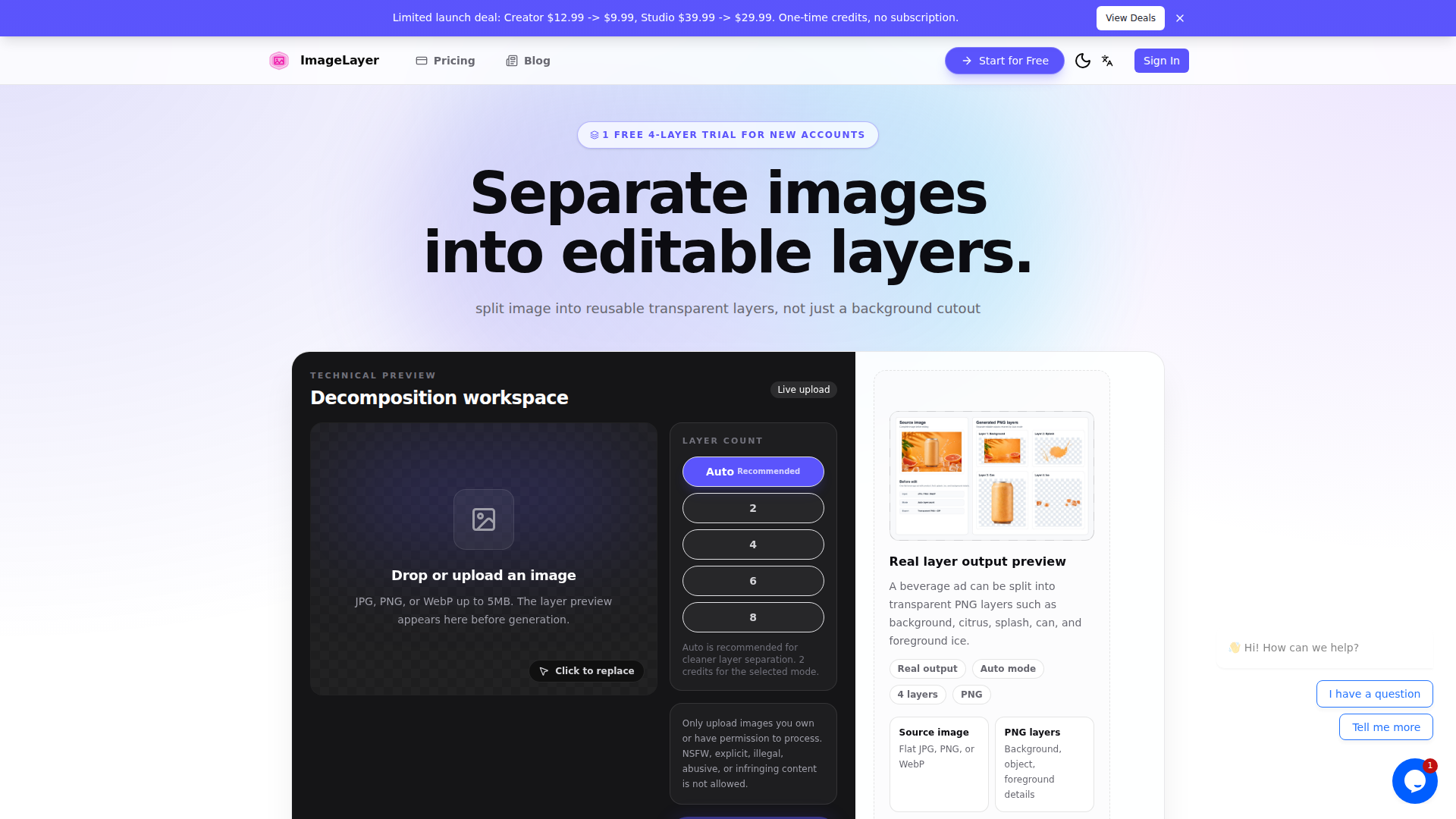
ImageLayer is an image decomposition tool that turns a flat JPG, PNG, or WebP file into multiple editable transparent PNG layers. It is aimed at designers, e-commerce sellers, and content creators who need reusable parts from a finished image when the original layered source file is unavailable. Its positioning appears to be broader than a background remover, focusing on multi-part layer separation for editing and reuse.
Features
- Multi-layer image separation: Splits one flat image into several transparent layers such as background, objects, and foreground details, which helps with reuse and layout changes.
- Selectable layer counts: Supports Auto, 2, 4, 6, or 8 layers, letting users balance cleaner separation against credit usage.
- In-browser layer preview: Shows generated layers before export and allows visibility toggling, so users can inspect separation quality before downloading.
- PNG and ZIP export: Downloads layers individually as transparent PNGs or bundles them in a ZIP for editing handoff and production workflows.
- Credit-based usage model: Uses one-time credits with no subscription, and failed generations are refunded automatically.
Helpful Tips
- Use clear images with visible edges and simple overlaps; the page indicates these conditions usually produce stronger layer separation.
- Start with Auto when the number of meaningful parts is unclear, since the tool recommends it for cleaner results.
- Treat outputs as editable assets rather than full replacements for original PSD or Figma files; the site’s FAQ framing suggests limits to AI layer separation.
- Check the online preview carefully before downloading, especially for small text, shadows, or overlapping details that may be harder to separate cleanly.
OpenClaw Skills
A likely OpenClaw use case would be a creative-ops or e-commerce asset workflow that routes flat marketing images through ImageLayer, reviews generated parts, and organizes approved PNG layers for downstream editing, catalog updates, or campaign localization. Although the page does not mention native integrations, plausible OpenClaw skills could include asset intake, image triage, layer-quality review, naming and packaging workflows, and handoff agents for design teams. Combined with OpenClaw, this could reduce manual rebuild work for designers and marketplace teams that often inherit only flattened image files.
Embed Code
Share this AI tool on your website or blog by copying and pasting the code below. The embedded widget will automatically update with the latest information.
<iframe src="https://aimyflow.com/ai/imagelayer/embed" width="100%" height="400" frameborder="0"></iframe>
Explore Similar Tools
Versive
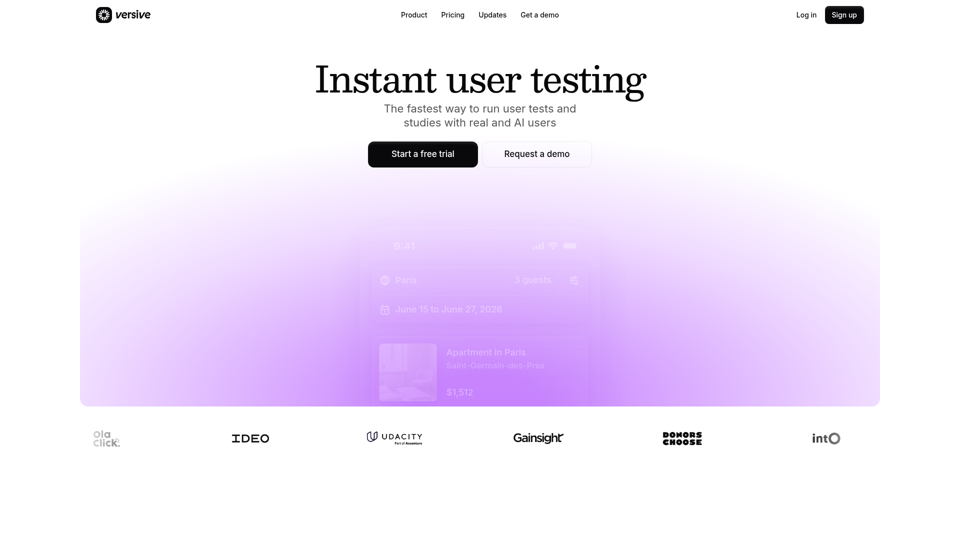
Versive is an AI-powered user research and testing platform that helps product teams design, run, and synthesize usability studies with real and simulated users, especially for product managers, UX researchers, and designers. In AI-assisted product development, it can help these teams validate interface decisions faster by generating transcripts, screenshots, summaries, and actionable recommendations in minutes.
Challenges | Test Your AI Prompting Skills
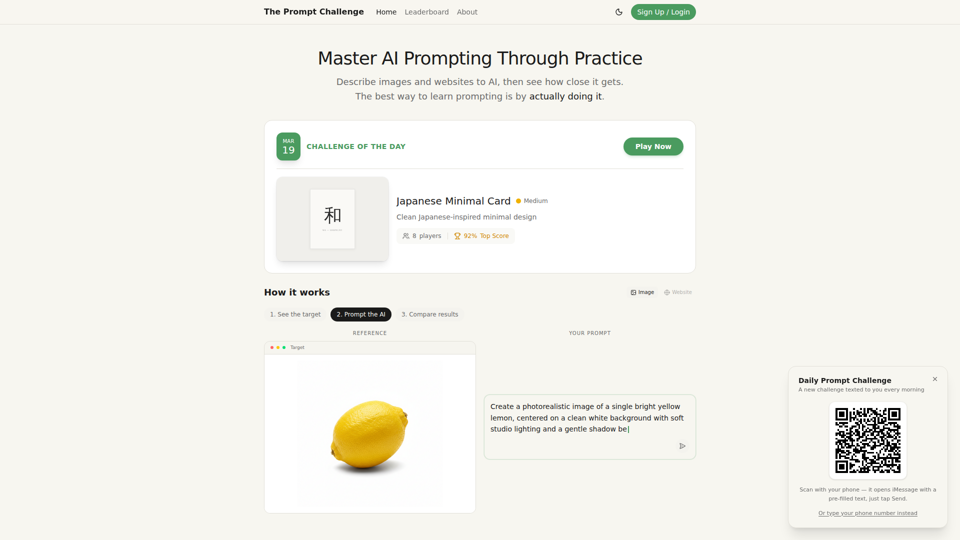
The Prompt Challenge is a practice platform that helps users improve AI prompting by describing images and websites, comparing AI-generated results to references, and competing on scores, mainly for people learning prompt engineering and hands-on AI creation. For designers, developers, and AI practitioners, this kind of repeatable prompt testing can sharpen instruction-writing skills and improve consistency when using generative tools for visual and interface work.
AI Infographic Generator
GraphicInfo is an AI infographic generator that helps users turn ideas and content into professional, customizable infographics quickly, mainly for creators and people producing website or social media content. In AI-driven content workflows, it can help marketers, content teams, and designers speed up visual asset creation while still refining text and images for specific brand needs.
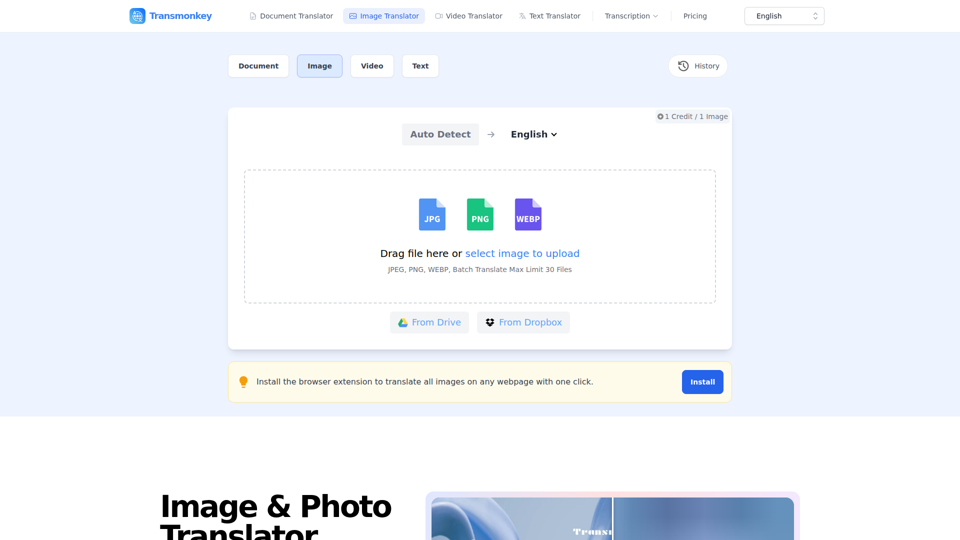
Image & Photo Translator Online – Try Free | Transmonkey
Transmonkey is an AI image translator that translates text in images across 130+ languages while preserving original backgrounds, designed for creators, marketers, and global businesses. By pairing optical character recognition with large language models, it streamlines visual localization without requiring manual graphic redesigns.
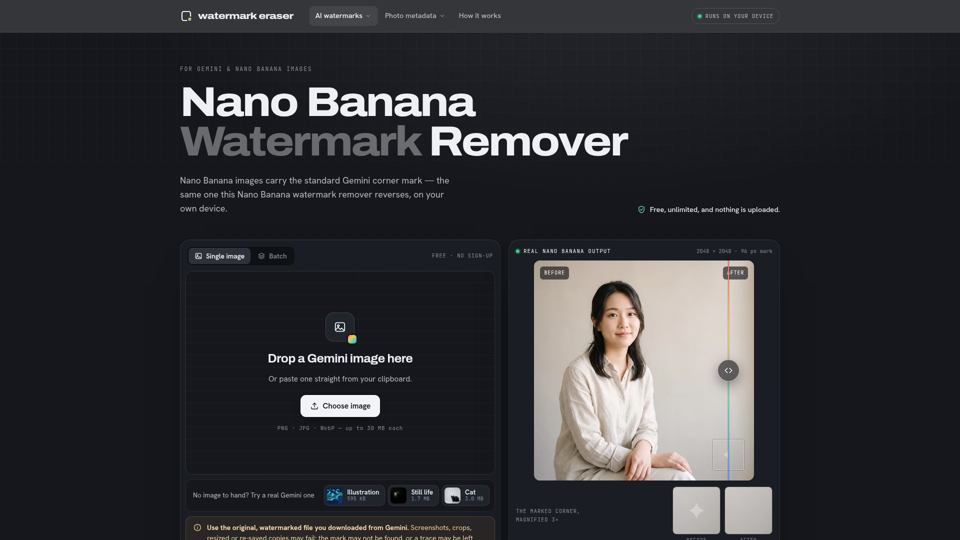
Nano Banana Watermark Remover — Free & Local
Nano Banana Watermark Remover is a browser-based tool that removes visible corner marks from Google Gemini images for digital creators. By processing files locally without compression, it helps designers prepare clean AI-generated assets efficiently for production workflows.
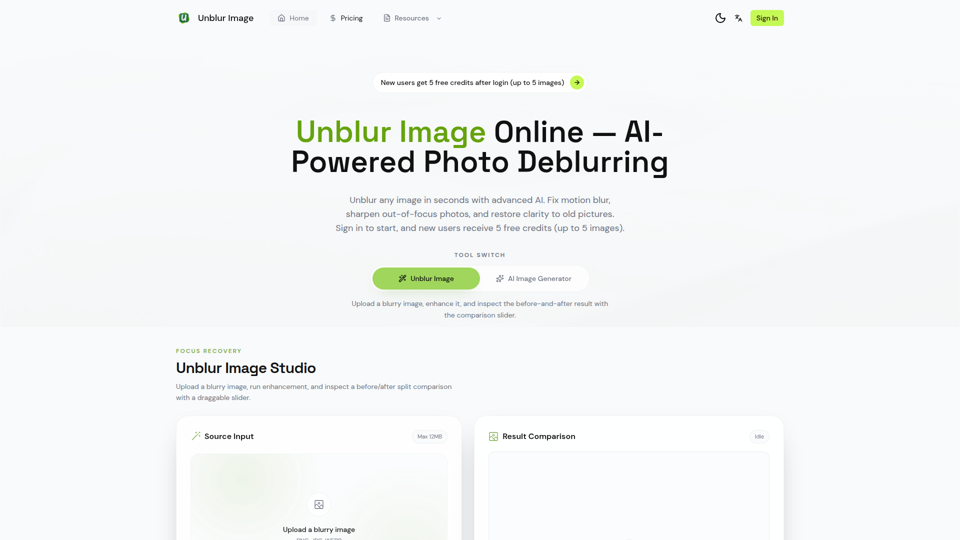
Unblur Image — Make Blurry Photos Clear with AI
Unblur Image is an AI-powered online photo deblurring tool that helps users fix motion blur, sharpen out-of-focus images, restore old photos, and improve text clarity, mainly for people who need quick image enhancement without manual editing skills. In AI-era workflows, it can help photographers, content teams, and document-heavy professionals recover usable visuals and readable assets faster from imperfect source images.
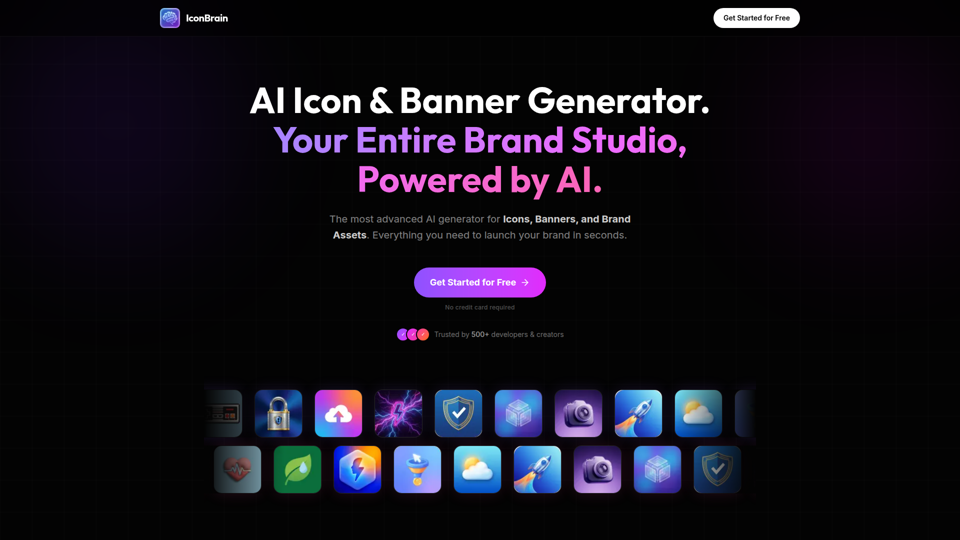
IconBrain | AI Icon Generator for Apps & Brands
IconBrain is an AI icon, banner, and brand asset generator that helps users create and edit production-ready visuals from text prompts or brand context, mainly for developers and creators launching apps or brands. For product, marketing, and design work, it can speed up early brand asset creation while helping teams keep visual styles more consistent across platforms.
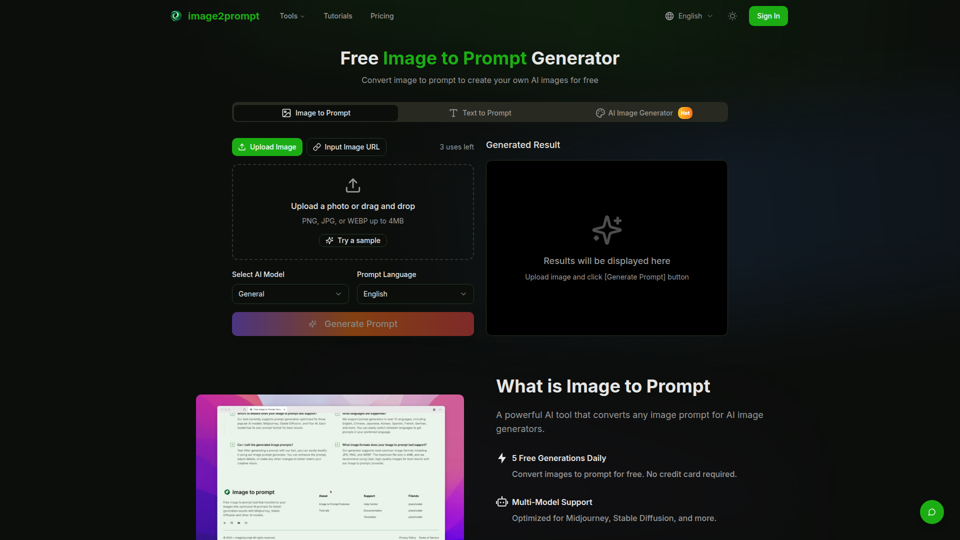
Free Image to Prompt Generator - image2prompt.net
image2prompt.net is a free AI image-to-prompt generator that analyzes uploaded images or image URLs and turns them into editable prompts for Midjourney, Stable Diffusion, Flux, and similar models, mainly for AI artists, designers, and creators. For creative professionals, it can speed prompt drafting, support style consistency, and reduce manual prompt rewriting across different image generation workflows.