How AI fits this role
Theoretical Physicist in the Age of AI
Role Overview
Theoretical physicists develop mathematical frameworks and conceptual models to explain how the universe behaves at every scale — from quantum fields to cosmological structure. Unlike experimental physicists, their primary tools are pen, paper, and computation. They work in academic institutions, national laboratories (CERN, Fermilab, SLAC, DESY), government research agencies, and increasingly in quantitative finance, semiconductor R&D, and advanced materials companies.
The role sits at the intersection of deep mathematics, physical intuition, and computational modeling. A typical workday involves deriving equations, running symbolic calculations, writing simulation code, reviewing literature, collaborating with experimentalists, and writing papers or grant proposals. The work is nonlinear — breakthroughs often come from months of failed approaches, and the value of a theoretical physicist lies as much in knowing which questions to ask as in solving them.
The industry context is primarily academic and national laboratory research, where funding pressure, publication velocity, and cross-disciplinary collaboration are intensifying. Simultaneously, a growing cohort of theoretical physicists are being recruited into AI research itself — particularly in areas like statistical mechanics applied to neural network theory, quantum computing, and materials informatics.
How AI Is Transforming This Role
The transformation is not about replacing physical intuition — it is about compressing the distance between a hypothesis and a testable result. AI is changing where theoretical physicists spend their cognitive effort.
Historically, a significant portion of a theorist's time went into symbolic manipulation, literature synthesis, and writing boilerplate simulation infrastructure. AI tools are absorbing those tasks at an accelerating rate. What remains — and what is becoming more central — is the judgment layer: deciding which models are physically meaningful, which approximations are defensible, and which results are worth pursuing.
The more disruptive shift is in the relationship between theory and data. Machine learning models trained on experimental outputs (particle collision data, astrophysical surveys, condensed matter measurements) are now generating empirical patterns that precede theoretical explanation. This inverts the traditional workflow. Theorists are increasingly being asked to explain what a neural network found, rather than predict what an experiment should find. This is a structural change in the epistemology of the field, not just a tooling upgrade.
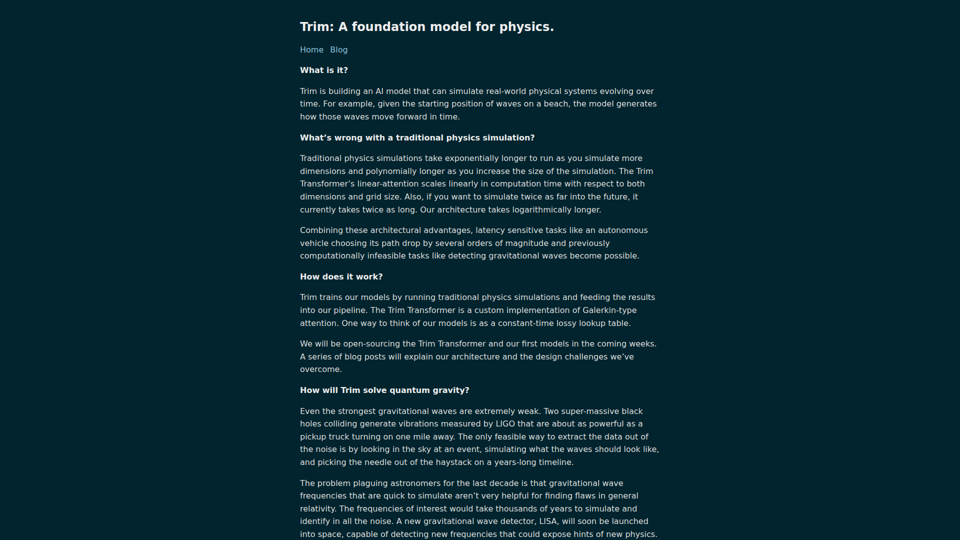
In quantum field theory and string theory, AI-assisted symbolic computation is enabling exploration of solution spaces that were previously intractable. In cosmology, neural posterior estimation is replacing MCMC chains for parameter inference. In condensed matter, graph neural networks are predicting phase transitions and material properties faster than perturbative methods. Each of these represents a workflow change with real consequences for how theorists allocate their time and what they need to know.
Tasks AI Can Automate
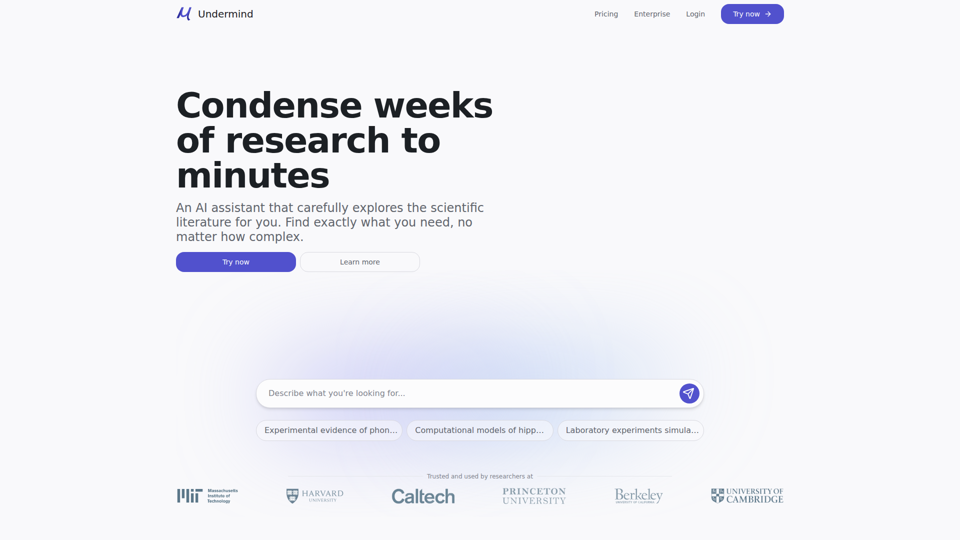
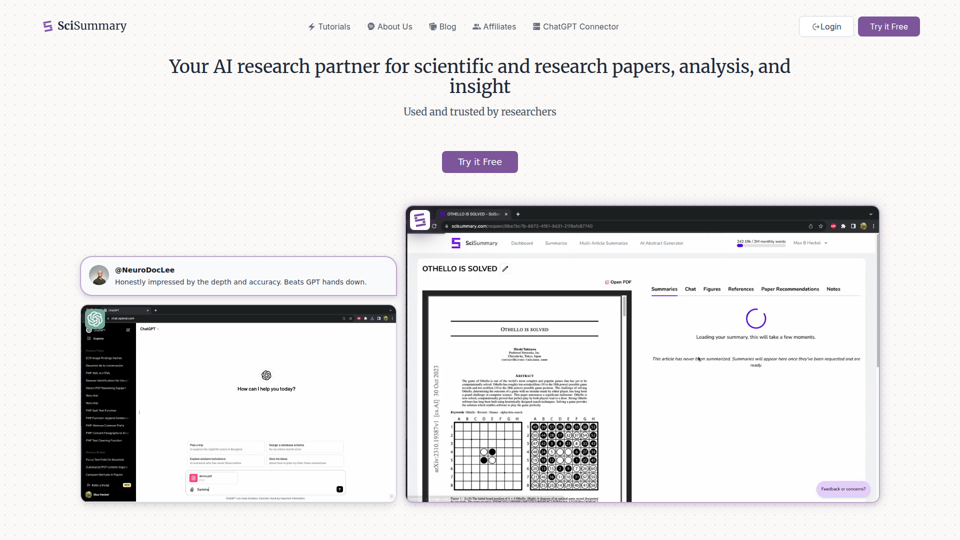
- Literature synthesis and gap identification — Large language models fine-tuned on arXiv can now summarize the state of a subfield, identify contradictions between papers, and flag under-explored directions with reasonable accuracy. Tools like Semantic Scholar's AI features and Elicit are already used for this.
- Symbolic algebra and tensor manipulation — AI-assisted CAS (computer algebra systems) extensions, including LLM-augmented Mathematica and SymPy workflows, can handle routine index gymnastics, Feynman diagram evaluation, and perturbative expansions with less manual scaffolding.
- Boilerplate simulation code generation — Writing Monte Carlo samplers, numerical integrators, or lattice QCD setup code is increasingly handled by code-generation models, reducing the time from idea to running simulation.
- Parameter space scanning — Bayesian optimization and surrogate models can replace brute-force grid searches over model parameter spaces, identifying regions of interest orders of magnitude faster.
- Equation formatting and paper drafting — Structuring results sections, generating LaTeX from notes, and drafting standard methodology descriptions are tasks where LLMs provide genuine time savings without compromising scientific content.
- Anomaly detection in simulation outputs — Identifying numerical artifacts, convergence failures, or unexpected features in large simulation datasets is increasingly handled by automated monitoring pipelines.
Skills Becoming More Valuable
Physical intuition and model selection judgment — As AI generates more candidate solutions and patterns, the ability to evaluate which results are physically meaningful versus mathematically coincidental becomes the critical differentiator. This cannot be automated because it requires understanding what the physics should look like before the calculation is done.
Cross-domain fluency — Theoretical physicists who can operate at the boundary of ML theory, quantum information, and materials science are disproportionately valuable. The ability to translate between formalisms — statistical mechanics and information theory, for instance — is increasingly commercially relevant.
Probabilistic reasoning and uncertainty quantification — As simulation pipelines become more automated, the ability to reason carefully about what a model's uncertainty actually means, and whether it is well-calibrated, is a skill that separates rigorous researchers from those who treat AI outputs as ground truth.
Experimental collaboration and data literacy — Theorists who can work directly with experimental datasets, understand detector systematics, and engage with data pipelines are more valuable than those who only work with idealized models.
Scientific communication and grant strategy — With more researchers competing for flat or declining public research budgets, the ability to frame theoretical work in terms of downstream impact — for quantum computing, energy, or materials — is a career-critical skill.
Prompt engineering and AI workflow design — Knowing how to structure a research workflow around AI tools, validate their outputs, and identify where they fail is becoming a baseline professional competency.
Skills Becoming Less Important
- Manual symbolic computation — Spending days on index contraction or loop integral evaluation by hand is increasingly a sign of inefficient workflow rather than rigor. CAS tools and AI assistants handle this faster and with fewer errors.
- Rote numerical methods implementation — Writing a Runge-Kutta solver or a basic MCMC sampler from scratch is no longer a differentiating skill. Standard libraries and code generation handle this.
- Exhaustive literature reading as a primary discovery method — Reading every paper in a subfield sequentially is being replaced by AI-assisted synthesis. The skill shifts from reading volume to evaluating AI-generated summaries critically.
- Single-tool specialization — Deep expertise in one simulation package or one programming language without broader computational fluency is a narrowing asset as research environments become more polyglot.
- Isolated theoretical work — The archetype of the theorist working alone on a single grand problem for years is increasingly misaligned with how funding, collaboration, and publication cycles actually work.
Current AI Adoption in This Industry
Adoption is uneven and faster than most academic institutions officially acknowledge. At the working level, the picture is clear:
- arXiv preprint culture has accelerated AI tool adoption because researchers are under pressure to publish faster and more broadly. LLMs are widely used for drafting, editing, and translating papers, though rarely disclosed.
- CERN and major national labs have active ML research groups embedded within theoretical divisions. The ATLAS and CMS collaborations use deep learning for event classification, jet tagging, and anomaly detection — and theorists are expected to understand these methods to engage with experimental results.
- Cosmology and astrophysics are among the most AI-forward subfields. Simulation-based inference (SBI) using neural density estimators has largely replaced traditional MCMC for certain parameter estimation problems. Tools like
sbi,pydelfi, andmargarineare in active use. - Condensed matter theory has seen significant adoption of graph neural networks and equivariant architectures for predicting material properties, driven partly by commercial interest from battery, semiconductor, and pharmaceutical companies.
- Quantum computing theory is a growth area where AI is used both as a research subject and as a tool — reinforcement learning for circuit optimization, ML for error correction code design.
- Institutional resistance remains real. Many senior theorists are skeptical of AI-generated results and maintain high bars for what counts as a proof or a derivation. This creates a generational divide in workflow norms.
Future Workflow Evolution
The theoretical physicist's workflow in five years will look less like solitary derivation and more like directed orchestration. The researcher will spend more time defining the problem precisely, selecting the right computational strategy, and interpreting results — and less time executing the mechanics of that strategy.
Concretely, this means:
- Hypothesis generation will be collaborative with AI — not in the sense that AI proposes theories autonomously, but that AI-assisted literature analysis and pattern recognition will surface candidate directions that a researcher then evaluates and pursues.
- Simulation pipelines will be more automated and more interpretable — the bottleneck shifts from running simulations to understanding what they mean. Theorists will need stronger skills in interpretability and uncertainty quantification.
- The theory-experiment interface will tighten — as experimental datasets grow (LHC Run 4, LSST, next-generation CMB experiments), theorists will be expected to engage with data more directly, using ML-based inference tools as standard equipment.
- Collaborative structures will change — large-scale theoretical projects will increasingly resemble software engineering teams, with version control, modular code, and distributed contribution, rather than the traditional small-group or solo model.
- Publication norms will evolve — reproducibility requirements, code sharing mandates, and AI disclosure policies are already being introduced by major journals. Theorists who build reproducible, well-documented computational workflows will have a structural advantage.
Common AI Use Cases
| Use Case | Tool/Method | Maturity |
|---|---|---|
| Literature review and synthesis | Elicit, Semantic Scholar, LLM-based summarization | Widely adopted |
| Symbolic computation assistance | LLM-augmented Mathematica, SymPy + GPT | Growing |
| Simulation-based inference | sbi, neural posterior estimation | Mature in cosmology |
| Code generation for simulations | GitHub Copilot, Claude, GPT-4 | Widely adopted |
| Anomaly detection in HEP data | Autoencoders, normalizing flows | Production use at CERN |
| Material property prediction | GNNs, equivariant neural networks | Active in condensed matter |
| Parameter space exploration | Bayesian optimization, surrogate models | Growing |
| Paper drafting and editing | LLMs (Claude, GPT-4) | Widespread, often undisclosed |
| Equation-to-code translation | LLMs with physics context | Early stage |
| Quantum circuit optimization | Reinforcement learning | Research stage |
Recommended AI Stack
Research and literature
- Elicit — structured literature search with claim extraction
- Semantic Scholar — citation graph analysis and paper recommendations
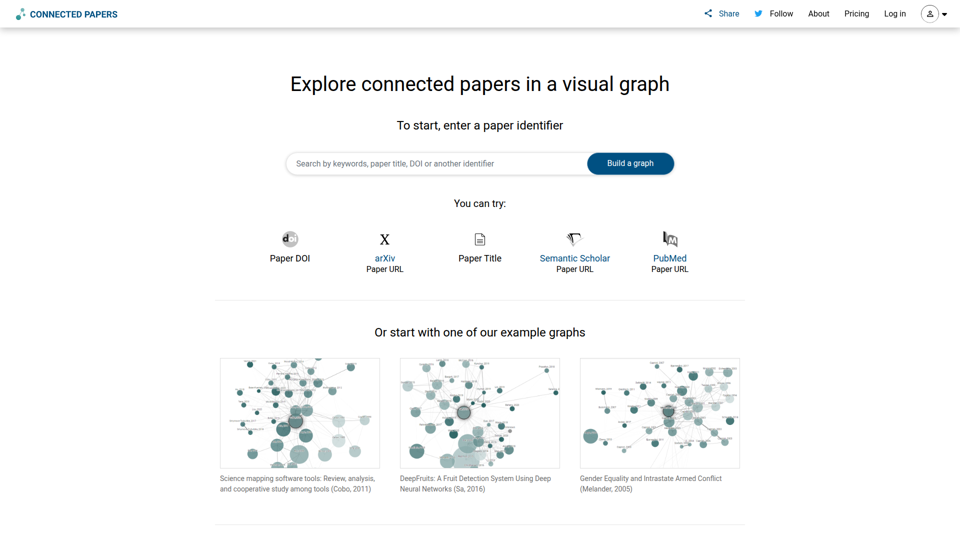
- Connected Papers — visual literature mapping for subfield orientation
Computation and symbolic work
- Mathematica with LLM integration — symbolic algebra with AI-assisted step generation
- SymPy + GPT-4 API — open-source symbolic computation with LLM scaffolding
- Wolfram Alpha Pro — quick sanity checks on analytical results
Simulation and inference
sbi(simulation-based inference) — neural posterior estimation for parameter inference- JAX + Flax — high-performance differentiable simulation, increasingly standard in physics ML
- PyTorch Geometric — graph neural networks for lattice and material problems
Code generation and development
- GitHub Copilot or Cursor — in-editor code completion for simulation scripts
- Claude or GPT-4 — longer-context code generation, debugging, and documentation
Writing and communication
- Claude — long-form scientific writing, grant proposal drafting, paper editing
- Grammarly or LanguageTool — copy-level editing for non-native English writers
Risks & Challenges
Hallucination in scientific contexts — LLMs confidently produce plausible-looking but incorrect equations, citations, and derivations. In a field where a sign error can invalidate a result, uncritical use of AI-generated mathematics is a genuine risk. Verification workflows are not yet standardized.
Reproducibility and attribution — As AI tools become embedded in research workflows, questions about what counts as original contribution, how to cite AI assistance, and how to reproduce AI-assisted results are unresolved. Journal policies are inconsistent and evolving.
Skill atrophy in foundational methods — Researchers who rely heavily on AI for symbolic computation and code generation may develop gaps in their ability to catch errors, understand edge cases, or work in environments where AI tools are unavailable or unreliable.
Funding misalignment — Grant agencies are beginning to fund AI-in-physics projects heavily, which creates pressure to frame theoretical work in AI terms even when the science does not warrant it. This distorts research priorities.
Data access inequality — AI-assisted research advantages are not evenly distributed. Researchers at well-funded institutions with access to large compute clusters and proprietary datasets have a structural advantage over those at smaller institutions.
Epistemic risk in ML-driven discovery — When a neural network identifies a pattern in experimental data that precedes theoretical explanation, there is a real risk of pursuing spurious correlations. The field does not yet have robust norms for how much evidential weight to assign to ML-discovered patterns.
Future Outlook (3–5 Years)
The theoretical physicist role will not be automated — but it will be restructured around a different set of bottlenecks. The researchers who thrive will be those who treat AI as a research collaborator that requires careful supervision, not a tool that produces reliable outputs on demand.
Several concrete shifts are likely within this window:
- AI-assisted conjecture generation will become a recognized research method in mathematics-adjacent areas of physics, following the pattern set by DeepMind's work with mathematicians. This will be controversial but productive.
- Simulation-based inference will become standard across most data-intensive subfields, replacing traditional statistical methods for parameter estimation. Theorists who cannot engage with these methods will be at a disadvantage in experimental collaborations.
- The boundary between theoretical and computational physics will blur further — the distinction between a theorist and a physicist who builds ML models for physical systems will become less meaningful as a career category.
- Industry demand will grow — quantum computing companies, advanced materials firms, and AI research labs will continue recruiting theoretical physicists, particularly those with ML fluency. This will create salary pressure on academic institutions and accelerate the brain drain from pure research.
- New subfields will emerge at the intersection of AI and physics — AI for quantum error correction, physics-informed neural networks for engineering applications, and ML-based approaches to the sign problem in lattice QCD are already coalescing into distinct research communities.
Final Insight
The deepest challenge AI poses to theoretical physics is not computational — it is epistemological. When a machine learning model identifies a pattern in data that no existing theory predicts, the field must decide whether that pattern is a discovery, an artifact, or a question. That decision requires exactly the kind of physical judgment, historical knowledge, and conceptual clarity that theoretical physicists are trained to exercise.
The theorists who will define the next decade of physics are not those who resist AI tools, nor those who defer to them uncritically. They are those who understand both the physics and the machine well enough to know when the machine is right, when it is wrong, and — most importantly — when it is asking a question that nobody has thought to ask before.
That combination of deep domain knowledge and AI fluency is rare, valuable, and not yet well-supported by most graduate training programs. The institutions that close that gap first will have a structural advantage in the next generation of fundamental research.