
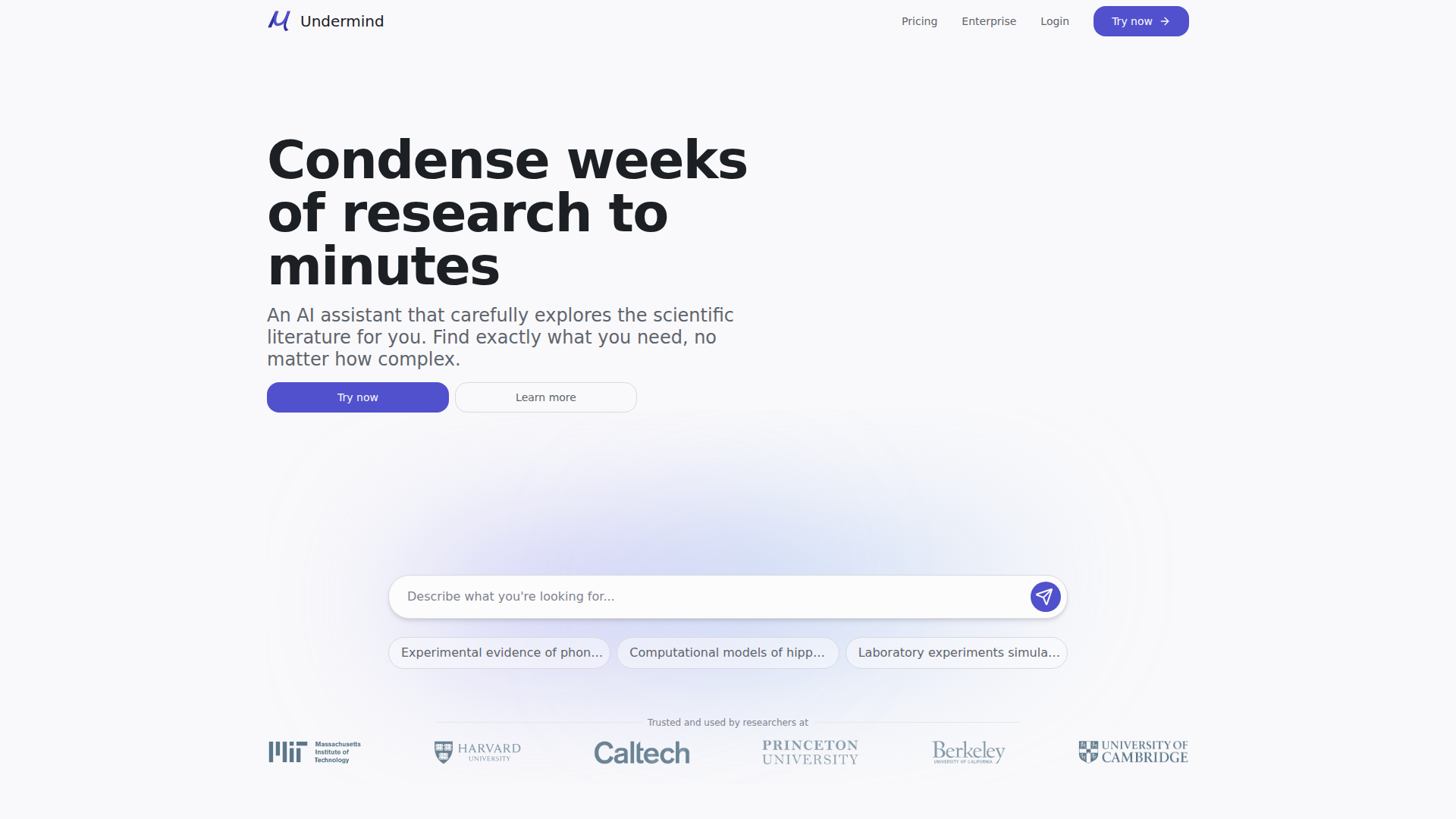
Undermind - Radically better research and discovery
Rate this Tool
Average Score
Total Votes
Select your score (1-10):
Detail Information
What
Undermind is an AI research assistant for scientific literature discovery and review. It is designed for researchers and R&D teams who need to investigate complex, niche, or cross-disciplinary questions and reduce manual literature-scanning time.
The workflow shown is: define a research question in chat, let Undermind run a recursive literature search across citation networks, then review results with citations, filtering, summaries, and ongoing alerts for new relevant papers. Its positioning appears to be a depth-first alternative to standard academic search tools, with emphasis on thoroughness and relevance evaluation.
Features
- Recursive literature exploration: It adapts search strategy as it reads and traverses citation graphs, which helps uncover relevant papers beyond simple keyword matching.
- Large-scale paper review: The product states it can read thousands of papers and evaluate relevance, supporting broad and deep topic mapping.
- Inline citation traceability: Responses can be checked against cited source papers, improving verification and auditability of claims.
- Relevance sorting and filtering: Users can quickly gauge whether papers match a specific research question and organize findings for faster triage.
- Research chat and insight generation: An AI expert mode helps brainstorm and generate custom tables from the reviewed literature.
- Monitoring for new publications: It can notify users when new relevant papers appear, supporting continuous horizon scanning.
Helpful Tips
- Start with a tightly scoped prompt (population, mechanism, methods, timeframe) to improve retrieval precision before expanding to broader exploration.
- Use citation traceability as a standard review step for high-stakes conclusions, especially when deciding novelty or research direction.
- Validate coverage by checking whether known cornerstone papers appear; if not, refine terminology and rerun with alternative phrasing.
- For teams, define shared tagging/filtering conventions early so outputs are comparable across projects and easier to operationalize.
- Plan usage by tier: the page indicates meaningful differences between abstract-only and fuller-text analysis capabilities.
OpenClaw Skills
Undermind could likely be a strong upstream research engine in an OpenClaw workflow for science and technical strategy teams. A practical OpenClaw skill could ingest Undermind outputs (reports, citations, relevance-ranked papers) and convert them into structured evidence maps, hypothesis backlogs, and experiment-priority briefs. Another likely skill could track publication updates and route changes to specific owners (e.g., biology, chemistry, clinical, materials) based on topic taxonomies.
Where native integration is not explicitly stated on the page, this should be treated as a likely use case rather than confirmed functionality. In that model, OpenClaw agents could add downstream orchestration: automated novelty checks before project kickoff, recurring “literature gap” digests for portfolio reviews, and cross-disciplinary signal detection that links methods or datasets from one field to another. This combination could shift research organizations from periodic literature reviews to continuous, operationalized intelligence loops.
Embed Code
Share this AI tool on your website or blog by copying and pasting the code below. The embedded widget will automatically update with the latest information.
<iframe src="https://aimyflow.com/ai/undermind-ai/embed" width="100%" height="400" frameborder="0"></iframe>
Explore Similar Tools
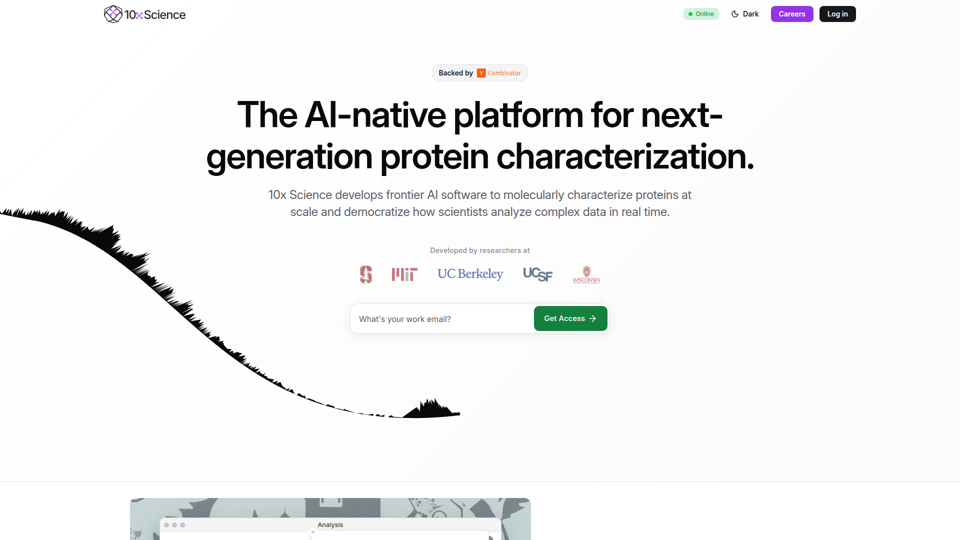
10x Science: AI-Native Software for Scientists
10x Science is AI-native software for scientists that helps characterize proteins and analyze omics data at scale, with features for peptide mapping, de novo sequencing, PTM detection, and proteoform analysis, especially for protein therapeutics workflows. For protein scientists and analytical teams, this can speed interpretation of complex mass spectrometry data and help reveal sequence variants or modifications that conventional tools may miss.
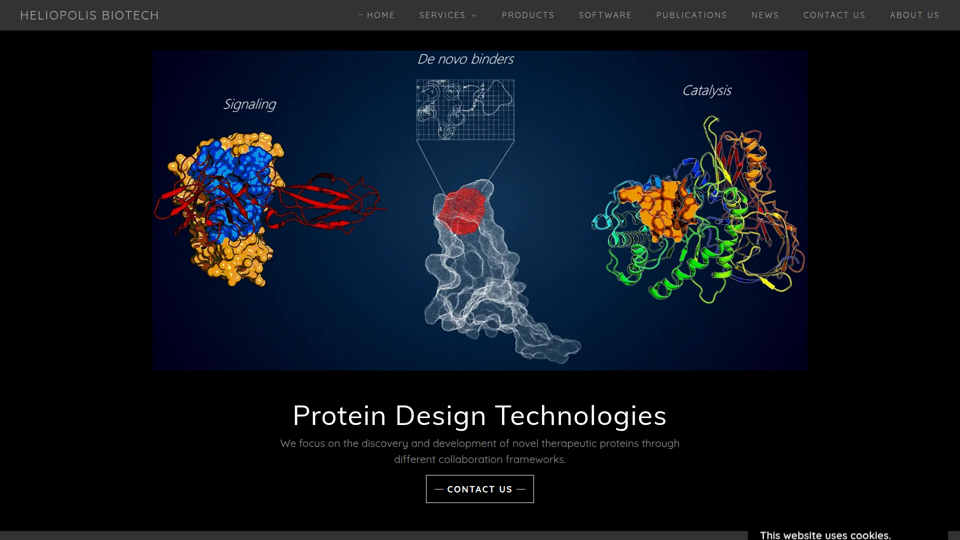
HELIOPOLIS BIOTECH - Protein Design, Antibody Design
Heliopolis Biotech is a protein and antibody design company that uses computational algorithms and experimental characterization to help biotechnology and drug discovery teams develop novel therapeutic proteins, binders, and redesigned proteins. In AI-driven therapeutic R&D, this kind of platform can help protein engineers and discovery scientists move faster from molecular design to preclinical candidate evaluation.
Anthrogen
Anthrogen is an AI research lab that builds protein language models and experimental validation systems to generate and develop biologics and molecular machines, mainly for scientists working in drug discovery, biotechnology, and related research. By combining multimodal protein design with massively parallelized experimentation, it can help research and platform teams evaluate candidates faster and support more efficient biologics development workflows.
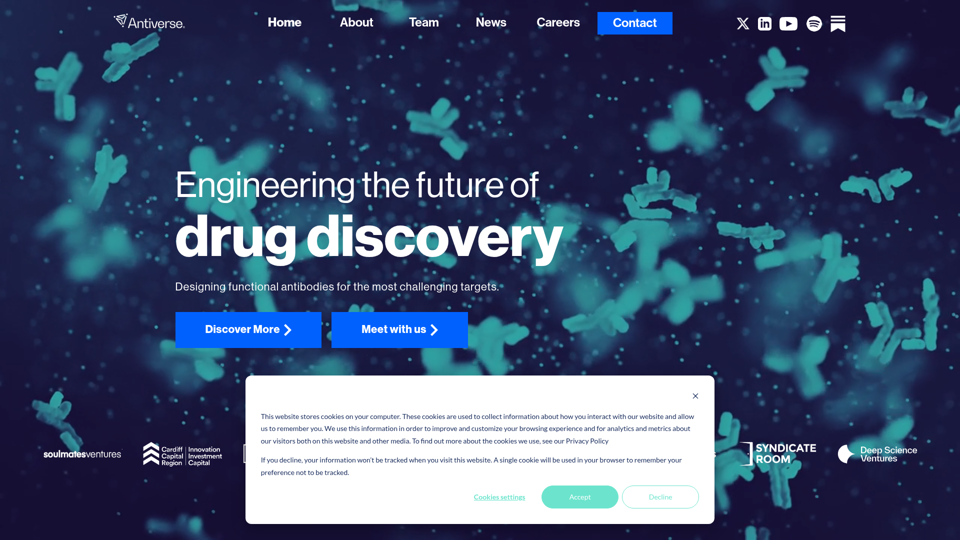
Antiverse: Designing Antibodies For Challenging Targets
Antiverse is a machine learning-driven antibody design platform focused on helping drug discovery teams design antibodies for challenging targets in therapeutic development. In AI-enabled biologics R&D, this can help antibody discovery scientists and computational biology teams prioritize candidates more efficiently when tackling hard-to-address targets.
Blank Bio | RNA Intelligence for Precision Medicine
Blank Bio is an RNA intelligence platform that uses foundation models combining isoform, mutation, and expression signals to improve patient stratification, diagnostics, target discovery, and therapeutic design for precision medicine teams and researchers. For clinical researchers and biomarker teams, this AI approach can uncover transcript-level patterns that gene-level RNA analysis may miss, helping refine subgroup identification and disease classification from routine RNA-seq data.
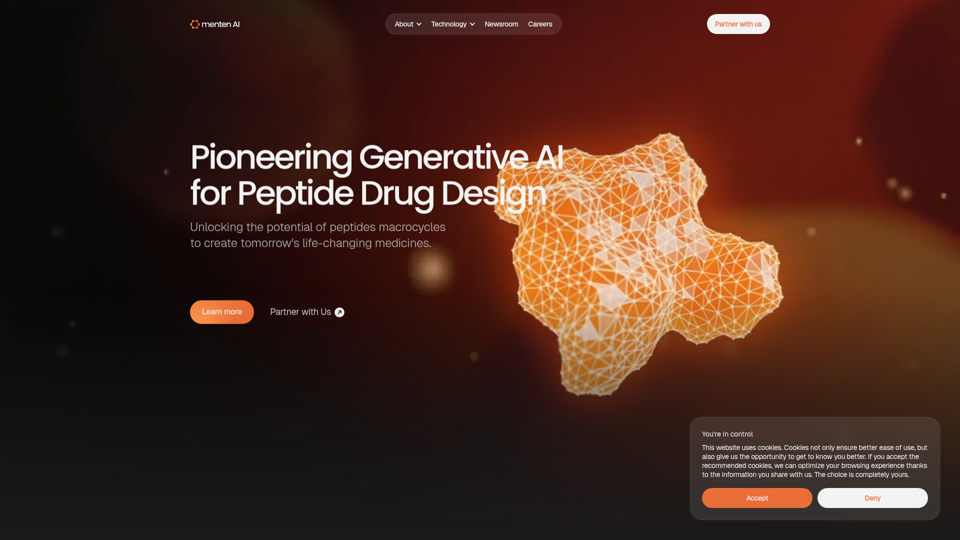
Menten AI
Menten AI is a generative AI platform for peptide macrocycle drug design that helps teams design and optimize peptides for complex targets, mainly for pharmaceutical and drug discovery researchers. For medicinal chemists and computational biology teams, it can speed preclinical candidate discovery by combining generative models with physics-based and quantum simulations.
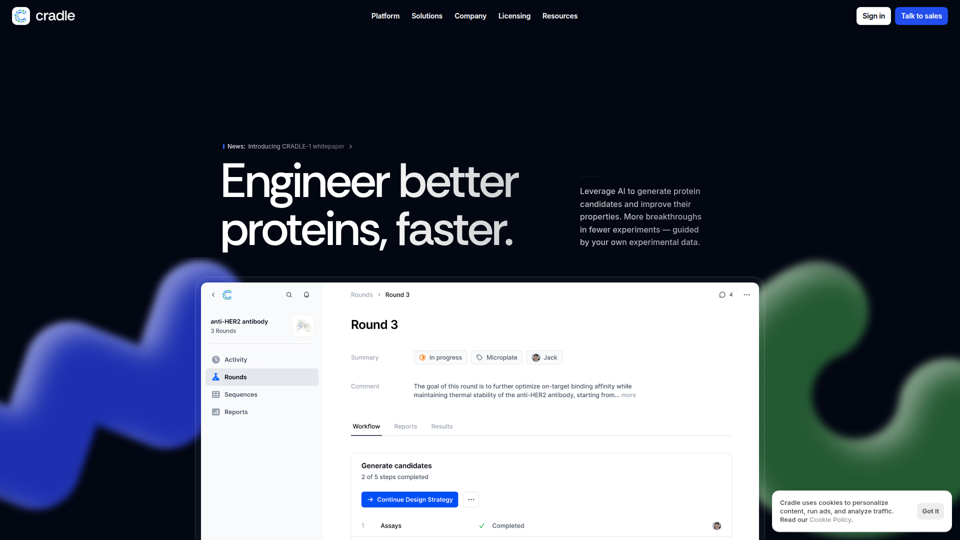
Cradle
Cradle is an AI platform for protein engineering that helps biopharma and industrial bio R&D teams generate and optimize protein candidates using their own experimental data. For protein engineers and R&D scientists, it can shorten design-build-test cycles by learning from each assay round to support faster multi-property optimization with fewer experiments.
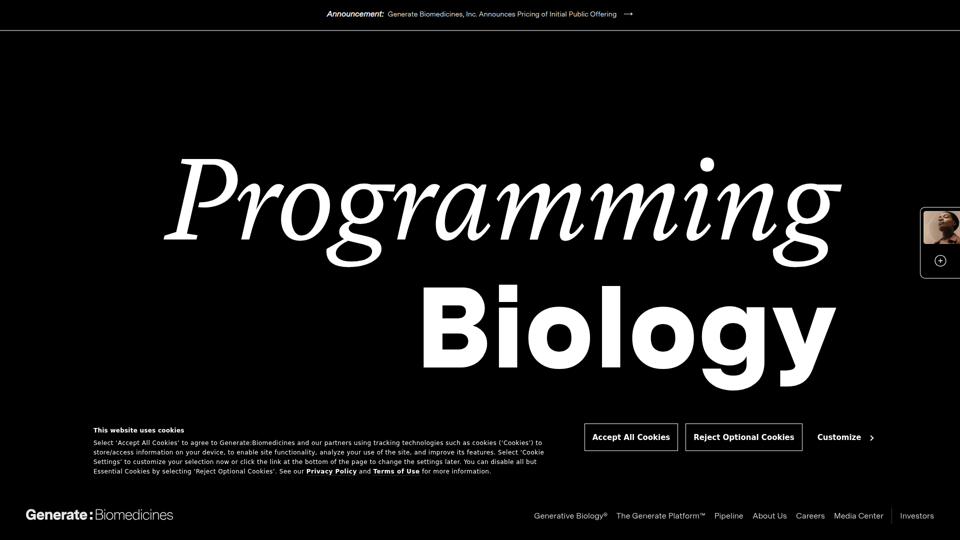
Generate:Biomedicines | Home
Generate:Biomedicines is a therapeutics company that uses machine learning, biological engineering, and medicine through its Generate Platform to design and develop novel protein-based medicines, mainly for drug discovery and biopharma teams. For researchers and therapeutic developers, this AI-driven generative biology approach can shorten design-test cycles and support more targeted protein engineering in medicine development.