
10x Science: AI-Native Software for Scientists
Rate this Tool
Average Score
Total Votes
Select your score (1-10):
Detail Information
What
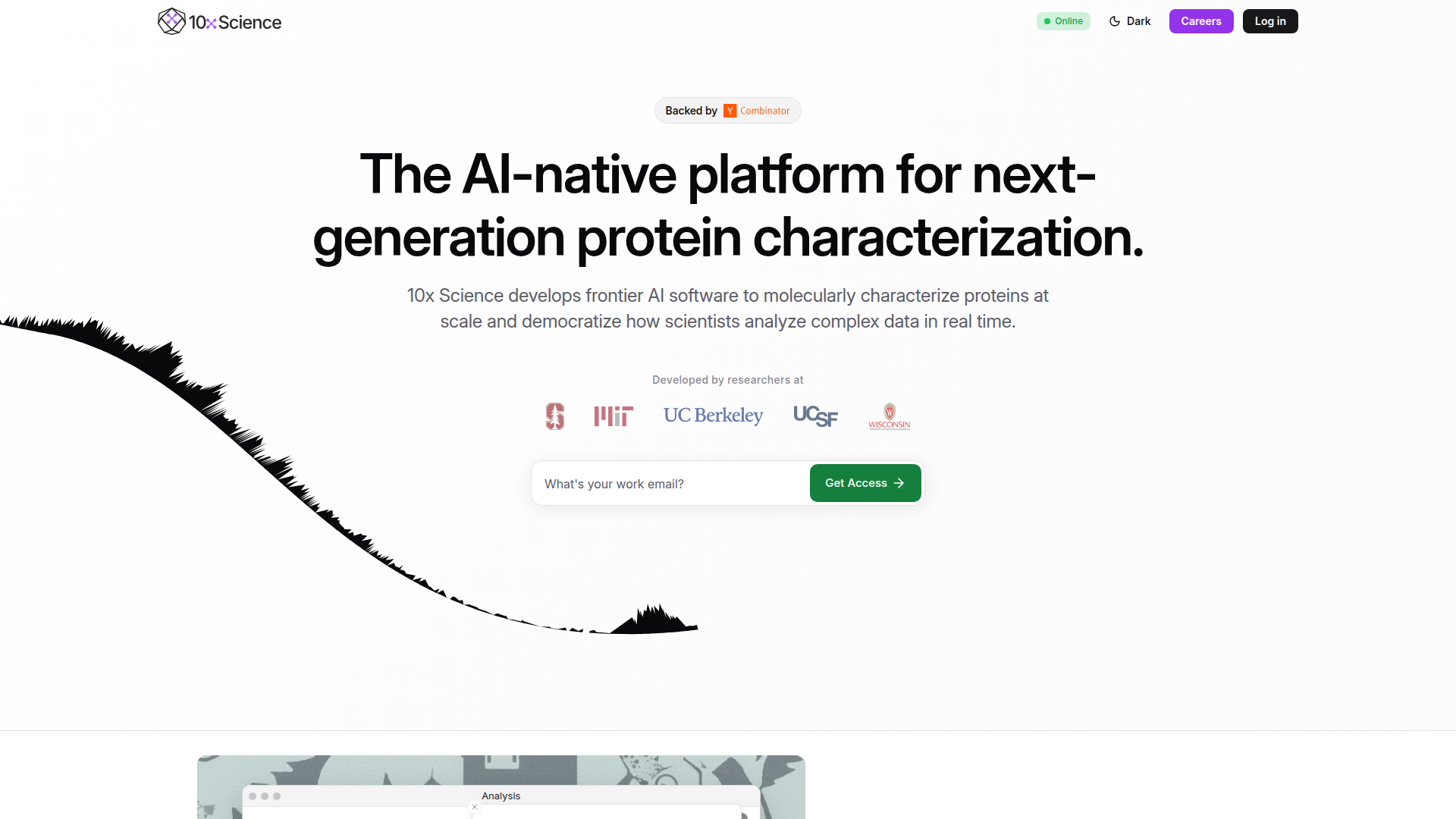
10x Science is an AI-native software platform for protein characterization and omics analysis. Based on the page, it is designed for scientists working with complex protein data, especially in workflows involving top-down, middle-down, targeted-protein, and peptide mapping analysis.
The product appears positioned as advanced research software for protein therapeutics and proteoform analysis, with emphasis on resolving post-translational modifications, sequence variants, and unknown modifications at scale. It also presents itself as vendor-neutral and built to reduce workflow friction by supporting native file handling, local asynchronous processing, and cloud database streaming.
Features
- Proteoform-resolved analysis — Resolves complex combinatorial PTMs such as glycosylation, helping researchers characterize protein forms that standard approaches may miss.
- De novo top-down sequencing and unknown modification search — Supports discovery-oriented workflows for identifying sequence features and modifications without relying only on predefined expectations.
- AI-native peptide mapping for protein therapeutics — Helps confirm target identity, quantify PTMs, and detect unexpected sequence variants in therapeutic proteins.
- Support for top-down, middle-down, and targeted workflows — Covers multiple protein analysis strategies in one environment, which can reduce tool switching across characterization tasks.
- Vendor-neutral file support — Accepts
.rawand.mzMLfiles with no stated file conversion requirement, which can simplify adoption in mixed-instrument environments. - Integrated research data organization — Includes project, search library, proteoform family, and modification-building views that support structured analysis and review of experimental results.
Helpful Tips
- Validate fit against your specific proteomics workflow — The page strongly supports protein characterization use cases, but teams should confirm whether their exact assay types, instruments, and reporting needs are covered.
- Assess explainability for regulated or high-stakes research contexts — Since the product emphasizes AI-native analysis, buyers should review how results are inspected, annotated, and verified by scientists.
- Test native file handling with real lab data — The platform claims low-friction ingestion and vendor neutrality, so a practical evaluation should focus on actual raw data from your instruments.
- Prioritize use cases involving PTMs and proteoform complexity — The clearest differentiated value appears in difficult characterization problems such as glycosylation, unknown modifications, and sequence variant analysis.
- Review collaboration and deployment expectations early — The page mentions local asynchronous processing and cloud database streaming, so teams should clarify operational requirements, data flow, and IT fit during evaluation.
OpenClaw Skills
Within the OpenClaw ecosystem, 10x Science could likely serve as a specialized analysis engine for protein characterization workflows. Likely OpenClaw skills could include agents that triage raw mass spectrometry files, route samples into top-down or peptide mapping workflows, summarize PTM findings, and generate structured experiment briefs for research teams. The site does not state a native OpenClaw integration, so this should be treated as a workflow design opportunity rather than a confirmed product capability.
That combination could be especially useful in biopharma, proteomics, and translational research settings. For example, OpenClaw agents could likely monitor incoming experiment queues, compare proteoform findings across projects, flag unexpected sequence variants for scientist review, and prepare decision-ready summaries for antibody or enzyme characterization programs. In practice, this could shift researcher time away from manual data handling and toward interpretation, method refinement, and candidate evaluation.
Embed Code
Share this AI tool on your website or blog by copying and pasting the code below. The embedded widget will automatically update with the latest information.
<iframe src="https://aimyflow.com/ai/10xscience-com/embed" width="100%" height="400" frameborder="0"></iframe>
Explore Similar Tools
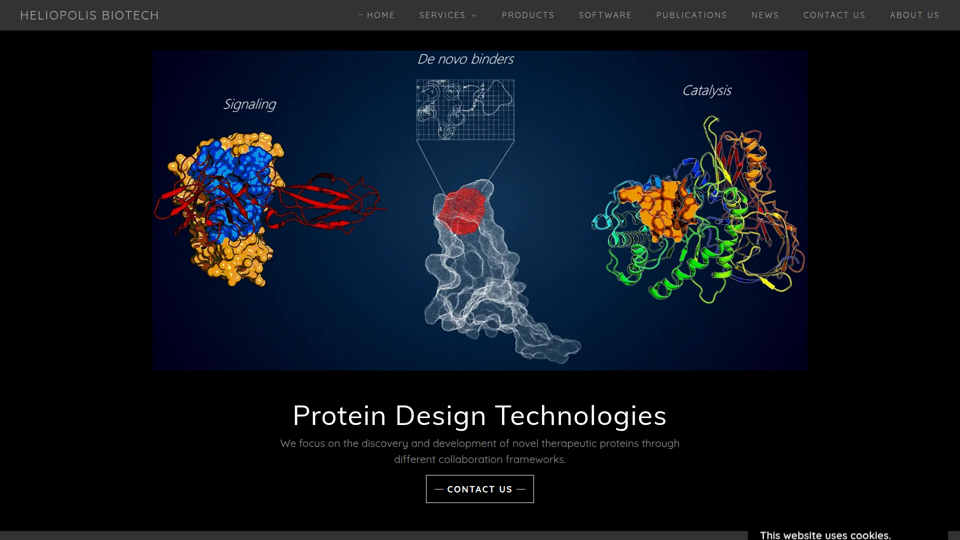
HELIOPOLIS BIOTECH - Protein Design, Antibody Design
Heliopolis Biotech is a protein and antibody design company that uses computational algorithms and experimental characterization to help biotechnology and drug discovery teams develop novel therapeutic proteins, binders, and redesigned proteins. In AI-driven therapeutic R&D, this kind of platform can help protein engineers and discovery scientists move faster from molecular design to preclinical candidate evaluation.
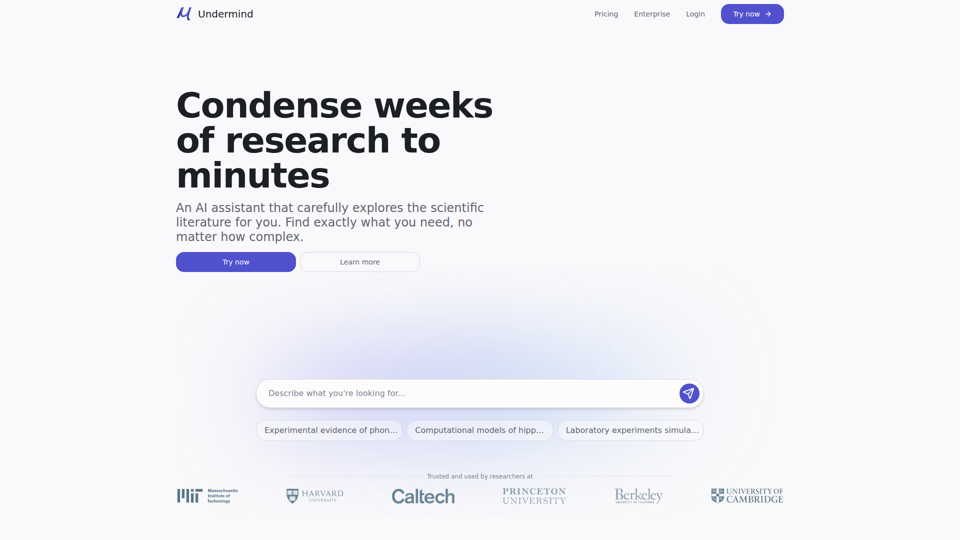
Undermind - Radically better research and discovery
Undermind is an AI-powered scientific literature research assistant that explores papers and citation networks to help researchers and R&D teams quickly find relevant evidence, assess novelty, and understand complex topics. In AI-enabled research workflows, it can help scientists, research leads, and technical teams reduce time spent on manual literature review while improving traceability through source-linked answers and relevance filtering.
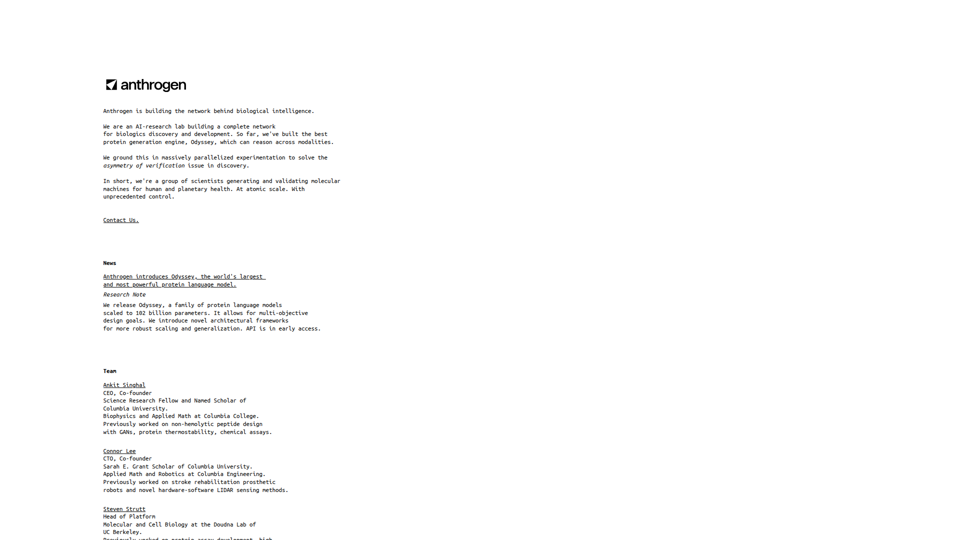
Anthrogen
Anthrogen is an AI research lab that builds protein language models and experimental validation systems to generate and develop biologics and molecular machines, mainly for scientists working in drug discovery, biotechnology, and related research. By combining multimodal protein design with massively parallelized experimentation, it can help research and platform teams evaluate candidates faster and support more efficient biologics development workflows.
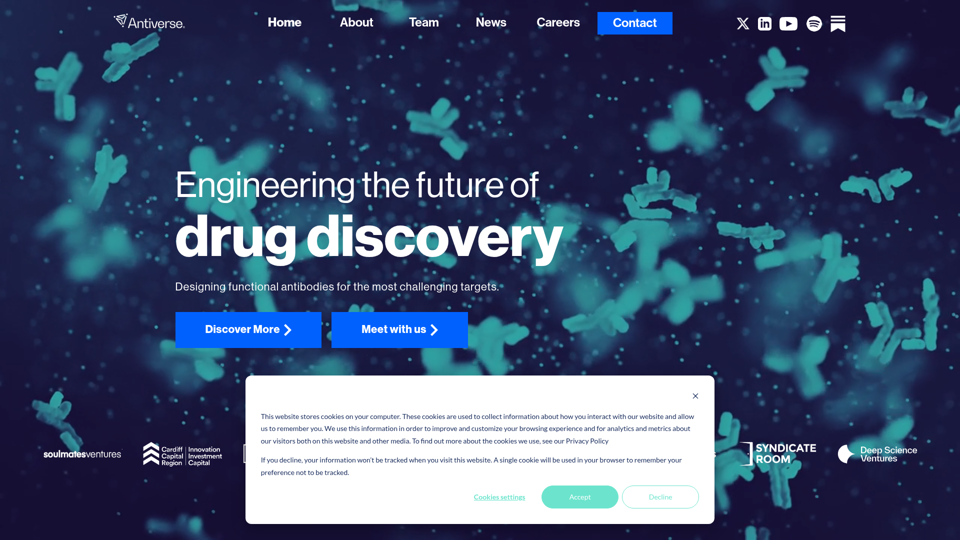
Antiverse: Designing Antibodies For Challenging Targets
Antiverse is a machine learning-driven antibody design platform focused on helping drug discovery teams design antibodies for challenging targets in therapeutic development. In AI-enabled biologics R&D, this can help antibody discovery scientists and computational biology teams prioritize candidates more efficiently when tackling hard-to-address targets.
Blank Bio | RNA Intelligence for Precision Medicine
Blank Bio is an RNA intelligence platform that uses foundation models combining isoform, mutation, and expression signals to improve patient stratification, diagnostics, target discovery, and therapeutic design for precision medicine teams and researchers. For clinical researchers and biomarker teams, this AI approach can uncover transcript-level patterns that gene-level RNA analysis may miss, helping refine subgroup identification and disease classification from routine RNA-seq data.
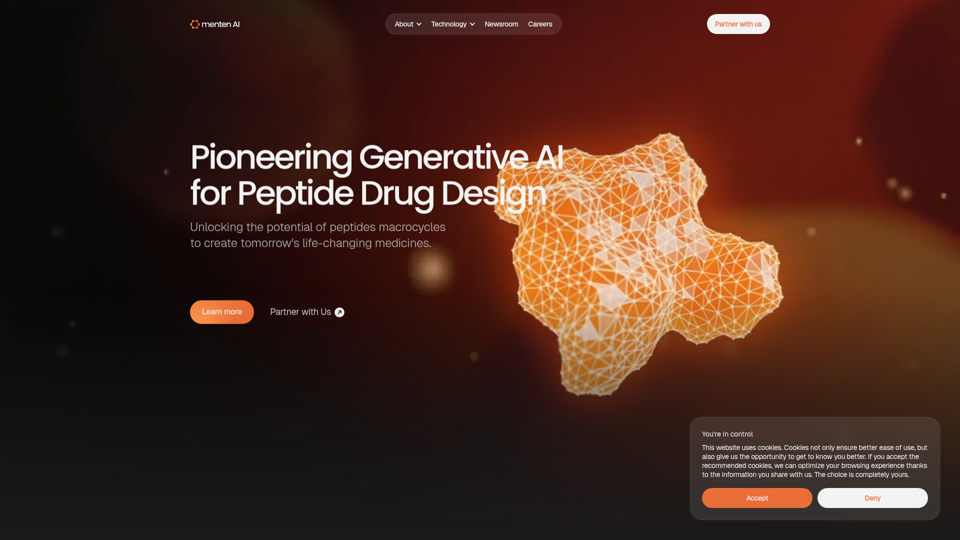
Menten AI
Menten AI is a generative AI platform for peptide macrocycle drug design that helps teams design and optimize peptides for complex targets, mainly for pharmaceutical and drug discovery researchers. For medicinal chemists and computational biology teams, it can speed preclinical candidate discovery by combining generative models with physics-based and quantum simulations.
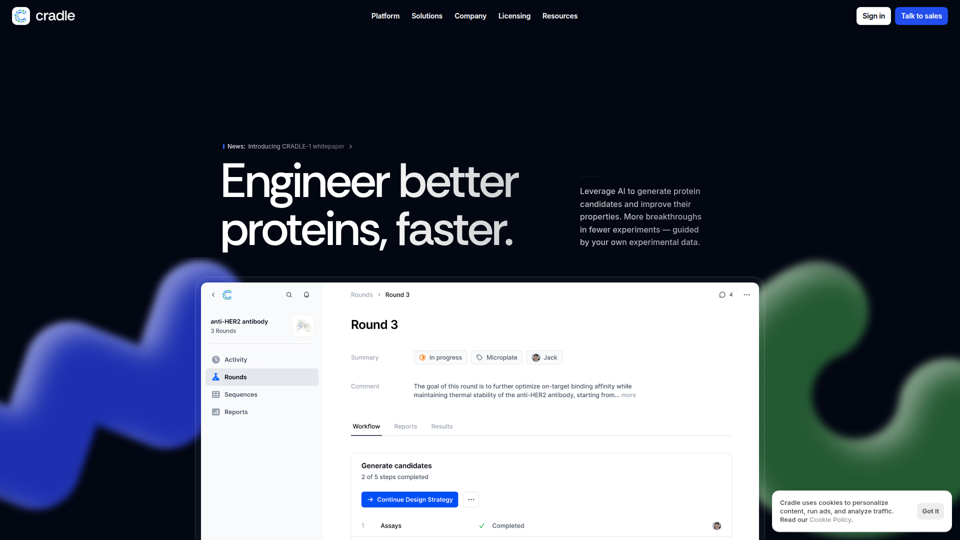
Cradle
Cradle is an AI platform for protein engineering that helps biopharma and industrial bio R&D teams generate and optimize protein candidates using their own experimental data. For protein engineers and R&D scientists, it can shorten design-build-test cycles by learning from each assay round to support faster multi-property optimization with fewer experiments.
Generate:Biomedicines | Home
Generate:Biomedicines is a therapeutics company that uses machine learning, biological engineering, and medicine through its Generate Platform to design and develop novel protein-based medicines, mainly for drug discovery and biopharma teams. For researchers and therapeutic developers, this AI-driven generative biology approach can shorten design-test cycles and support more targeted protein engineering in medicine development.