
Connected Papers | Find and explore academic papers
Rate this Tool
Average Score
Total Votes
Select your score (1-10):
Detail Information
What
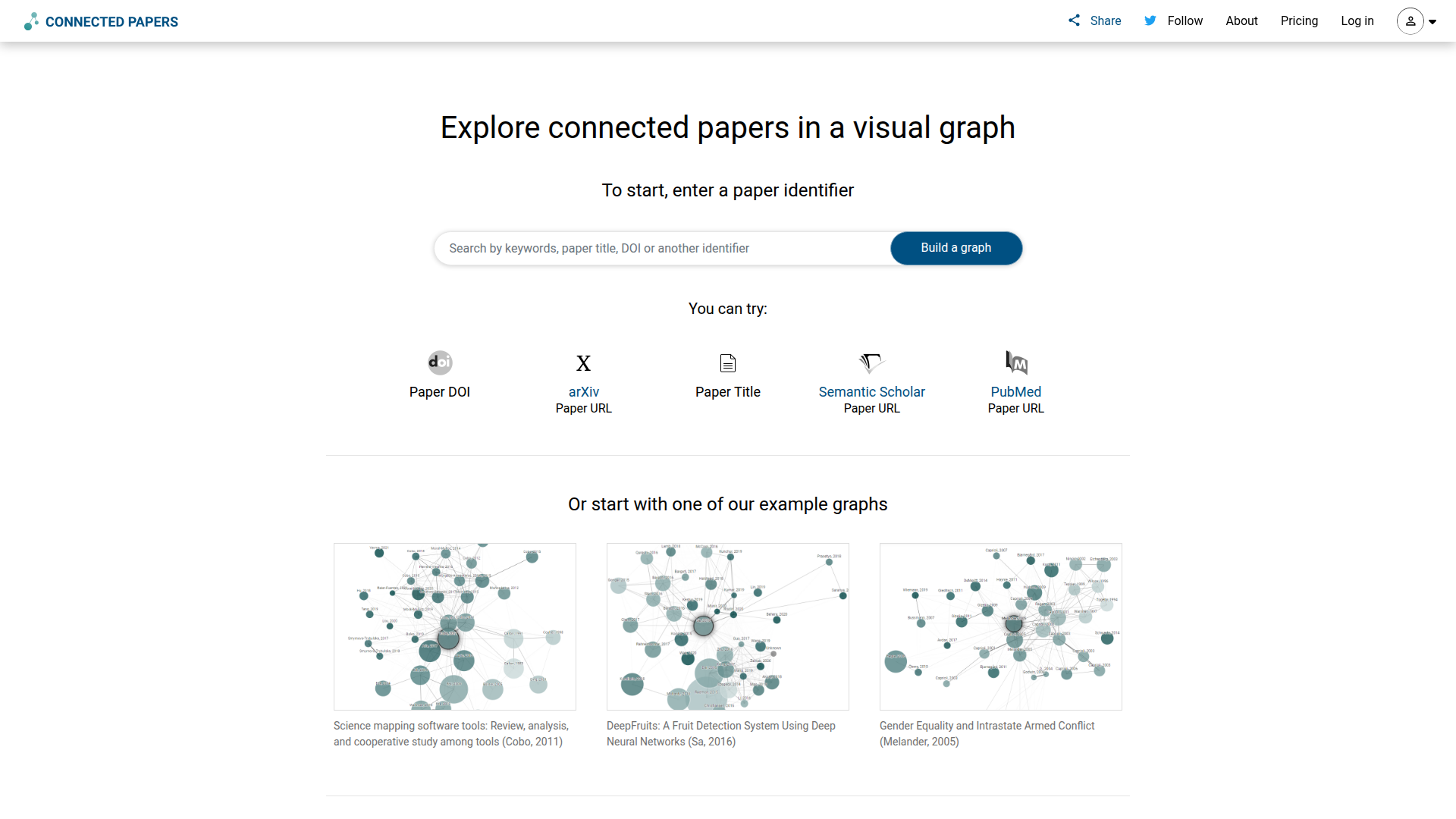
Connected Papers is a literature exploration tool that helps people find and examine academic papers through a visual graph. A user starts by entering a paper identifier such as a DOI, arXiv link, PubMed URL, Semantic Scholar URL, paper URL, or paper title, and the product builds a graph of similar papers around that starting point.
The product appears to serve researchers, students, and other academic users who need to understand a field, identify important papers, and expand a bibliography. Based on the page content, its positioning is likely as a research discovery and mapping interface layered on top of the Semantic Scholar database rather than a full reference manager or end-to-end academic writing platform.
Features
- Visual paper graph generation: Users can enter a known paper and get a graph of related papers, which helps them quickly see the structure and dynamics of a research area.
- Multiple input methods: The tool accepts DOI, arXiv, PubMed, Semantic Scholar, paper URL, and paper title inputs, making it easier to start from whatever citation format a user already has.
- Field overview exploration: It can be used to get a visual overview of a new academic field, which is useful when entering unfamiliar literature domains.
- Important paper discovery: The product helps users identify relevant and recent papers they may have missed, especially in fast-moving fields.
- Prior Works and Derivative Works views: These views support discovery of earlier foundational papers and later follow-on works such as literature reviews and state-of-the-art publications.
- Broad scientific coverage via Semantic Scholar: The platform states that it uses the Semantic Scholar database, suggesting coverage across many disciplines rather than a narrow subject focus.
Helpful Tips
- Start with a representative seed paper: The quality of the graph will depend heavily on the first paper you choose, so begin with a well-known or clearly relevant paper in your topic.
- Use the graph for discovery, not final judgment: Visual proximity and relatedness are useful signals, but paper selection should still be validated by reading abstracts, methods, and citations.
- Pair it with a citation workflow: Since the page emphasizes exploration and bibliography building, it is best used alongside a separate note-taking or reference management process if you need structured citation handling.
- Use prior and derivative views strategically: Prior works can help build historical context, while derivative works can help locate reviews and newer summaries of a topic.
- Confirm coverage for niche topics: Although the site states broad support across scientific fields through Semantic Scholar, users in highly specialized areas should verify that their literature is adequately represented.
OpenClaw Skills
Connected Papers could likely fit into the OpenClaw ecosystem as a research discovery layer inside broader knowledge workflows. Likely OpenClaw skills could include a literature scouting agent that takes a topic or seed paper, retrieves a Connected Papers graph, extracts key clusters, and turns them into structured research briefs for analysts, graduate students, or innovation teams.
A broader OpenClaw workflow could likely combine Connected Papers with agents for paper summarization, bibliography gap analysis, review drafting, and trend monitoring. While the page does not describe a native integration, this combination could materially improve how research-heavy professions work by shifting time away from manual paper hunting and toward synthesis, critique, and decision-making.
Embed Code
Share this AI tool on your website or blog by copying and pasting the code below. The embedded widget will automatically update with the latest information.
<iframe src="https://aimyflow.com/ai/connectedpapers-com/embed" width="100%" height="400" frameborder="0"></iframe>
Explore Similar Tools
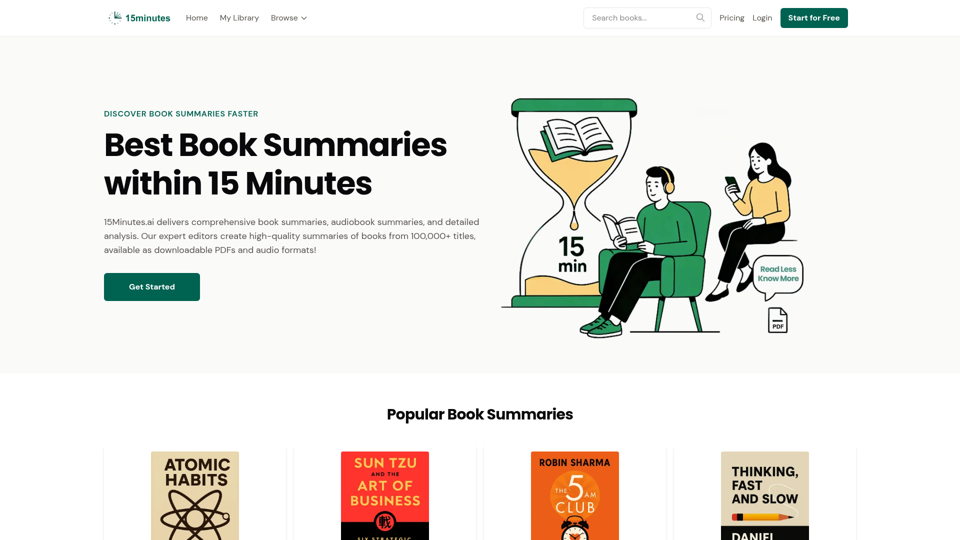
15Minutes | Book Summaries & Analysis PDF – Over 5000 Books
15Minutes is a book summary and analysis platform with over 5,000 titles that helps readers quickly understand books through 15-minute reads, PDFs, audiobooks, and chapter synopses, mainly for students, professionals, and general readers. In AI-shaped workflows, it can help knowledge workers, educators, and researchers review more sources faster before deciding what to read in full.
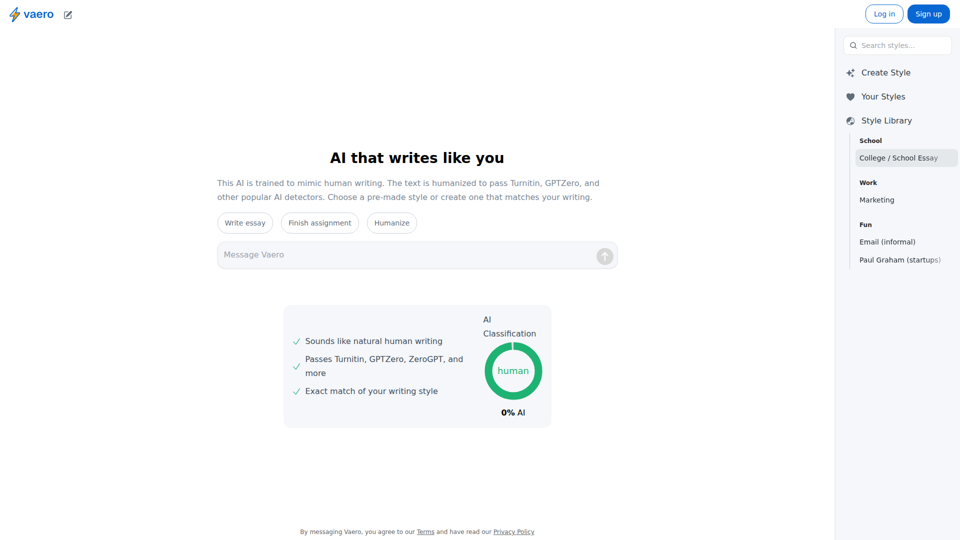
Vaero
Vaero is an AI writing tool that helps users generate and humanize text to match their personal writing style, mainly for students working on school and college essays or assignments. For education-focused writing tasks, it can help students and academic support professionals produce more natural-sounding drafts that align closely with an individual’s usual voice.
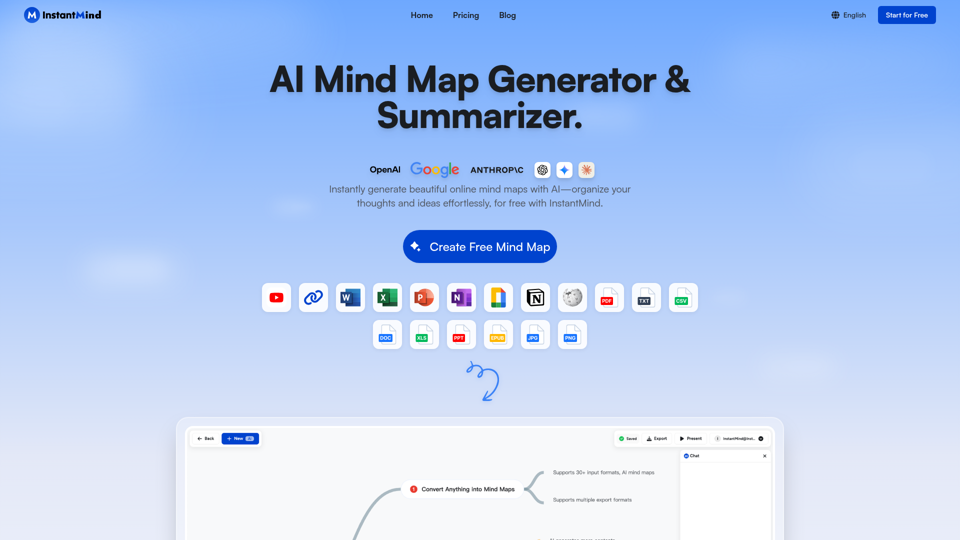
InstantMind: AI Mind Map Generator & Summarizer - MindMap AI
InstantMind is an AI mind map generator and summarizer that turns text, documents, images, web pages, and YouTube videos into visual mind maps, outlines, and content summaries for students, researchers, and other knowledge workers. In AI-driven research, study, and planning workflows, it can help these users extract key points faster, explore source material through contextual chat, and present complex information more clearly.
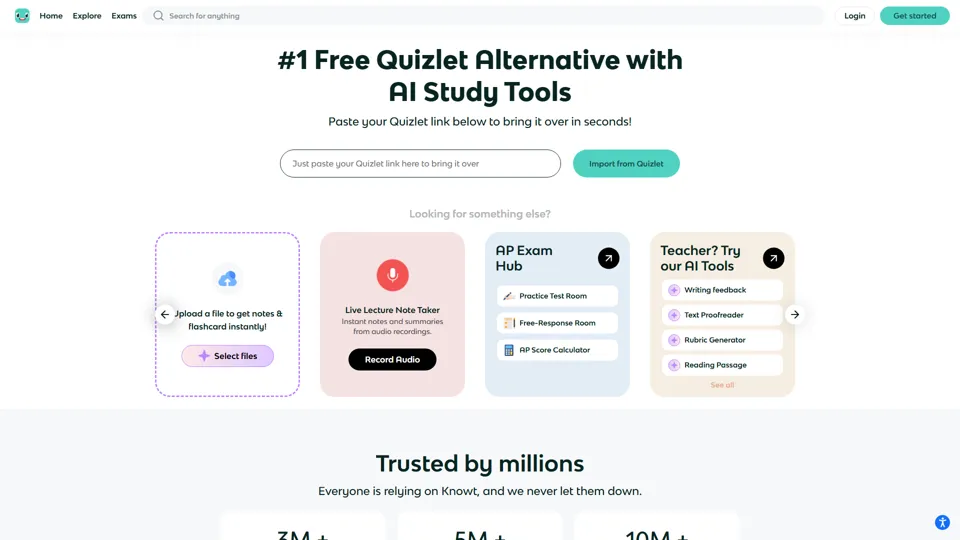
#1 Free Quizlet Alternative | Knowt
Knowt is a study platform and Quizlet alternative that helps students and teachers create, import, and practice flashcards with multiple study modes. It supports modern learning workflows by making study content easier to reuse, review, and scale across classes.
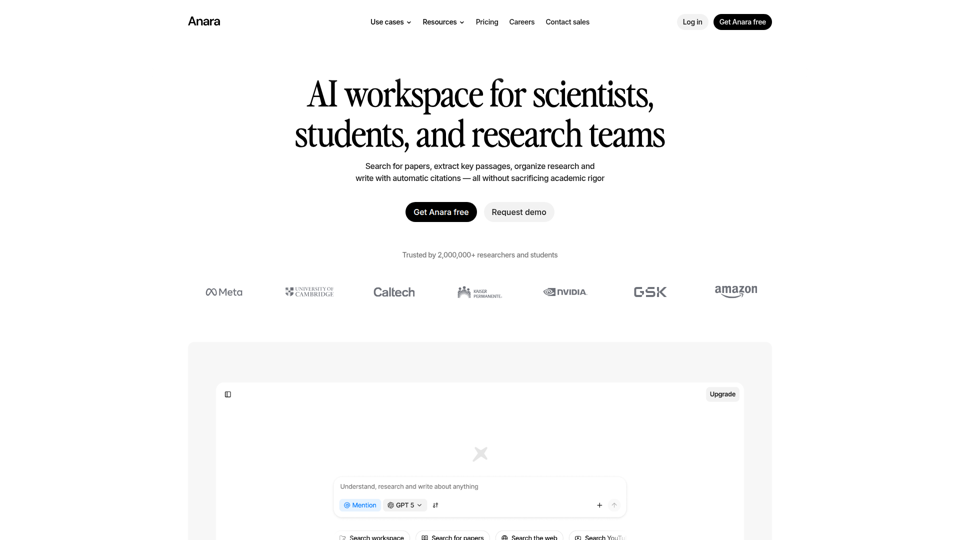
Anara | AI you can trust
Anara is an AI research workspace that helps scientists, students, and research teams search academic literature, analyze uploaded files, organize sources, and write with automatic citations and source verification. For researchers, academics, and clinical or technical teams, it can speed literature reviews and drafting while keeping answers grounded in original documents and academic databases.
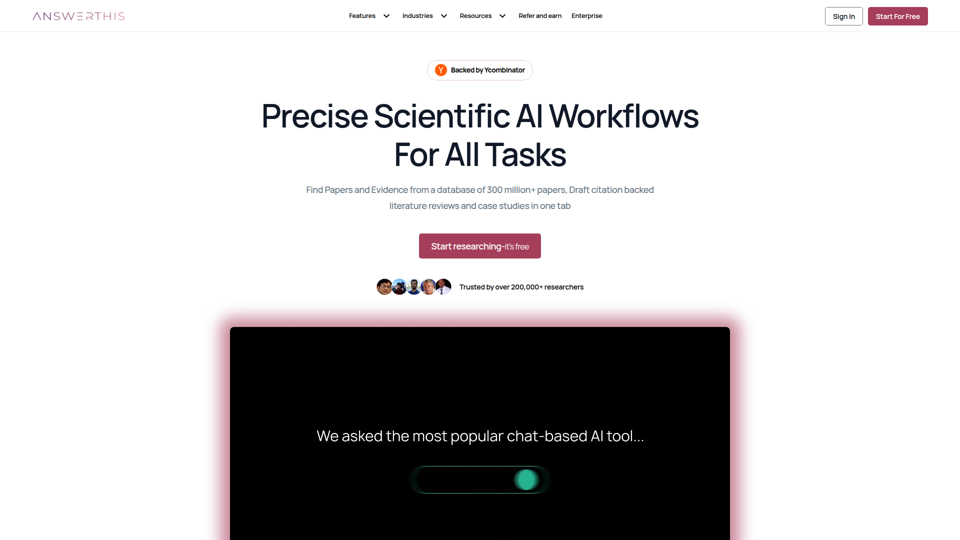
AnswerThis
AnswerThis is an AI research assistant that helps researchers, academics, students, and medical professionals find evidence, draft citation-backed literature reviews and case studies, organize papers, and write with sources using a large scientific paper database. In AI-assisted research workflows, it can help scholars and evidence-focused professionals speed up literature discovery, source verification, and draft preparation while keeping citations tied to the underlying papers.
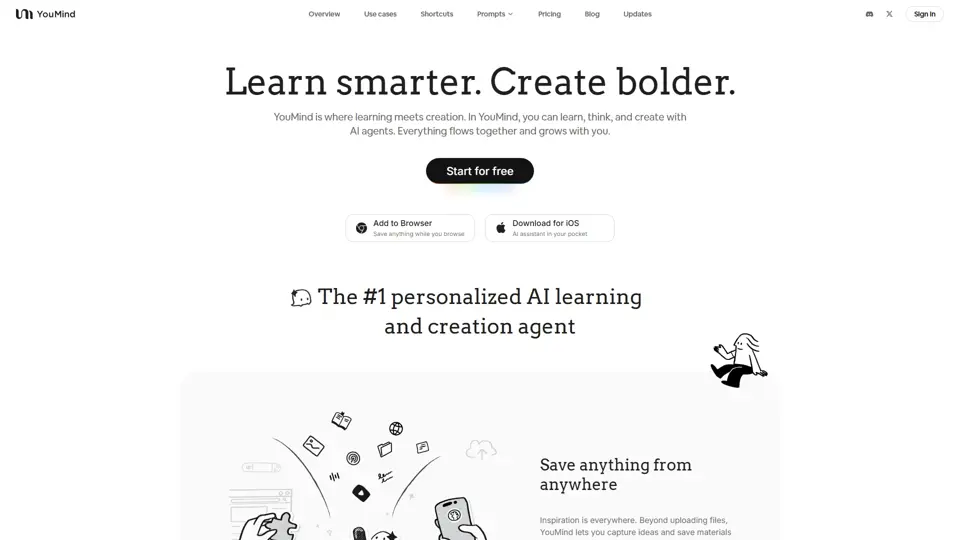
YouMind - AI Creation Agent
YouMind is an AI creation agent that helps users turn diverse source materials into new creative outputs, making it useful for creators, researchers, and knowledge-driven professionals. In the AI era, it accelerates synthesis work so creative roles can move from gathering inputs to producing drafts more quickly.
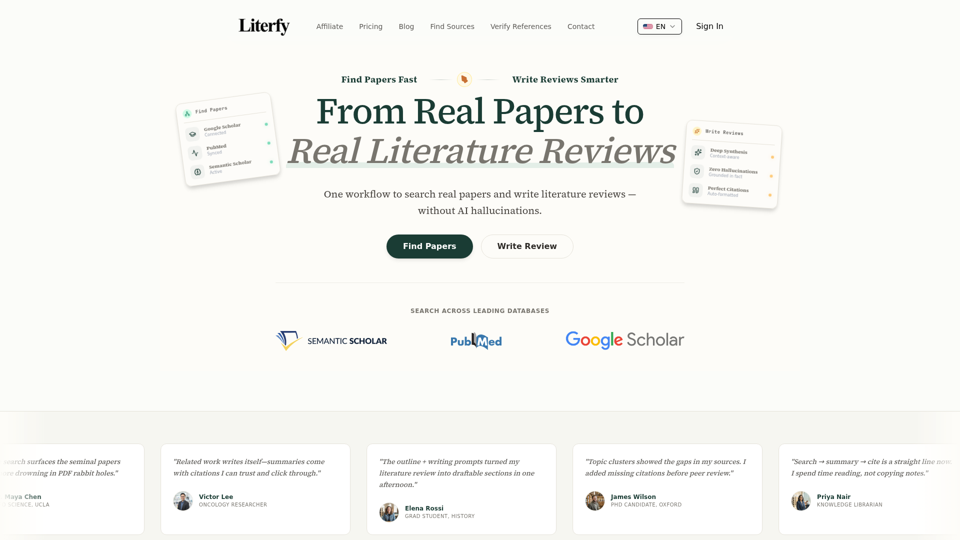
Literfy.ai | AI Literature Review Generator
Literfy.ai is an AI literature review generator that helps researchers, graduate students, and academic analysts search papers across major databases, organize sources, and draft citation-linked literature reviews from real papers. In AI-assisted research workflows, it can help scholars and librarians reduce manual searching, outlining, and citation formatting while keeping review writing grounded in verifiable sources.