How AI fits this role
Cardiologist
Role Overview
A cardiologist is a physician specializing in the diagnosis, treatment, and prevention of diseases and conditions affecting the heart and vascular system. Within the healthcare industry, cardiologists operate across a spectrum of subspecialties — interventional cardiology, electrophysiology, heart failure management, preventive cardiology, and imaging — each with distinct workflows, decision frameworks, and patient populations.
The operational environment spans academic medical centers, community hospitals, private cardiology practices, and increasingly, hybrid telehealth models. Cardiologists interpret diagnostic data from ECGs, echocardiograms, cardiac MRIs, nuclear stress tests, and hemodynamic monitoring systems. They manage complex, often comorbid patients — balancing anticoagulation regimens, device therapy (pacemakers, ICDs, CRT), and surgical referral decisions under significant time pressure and documentation burden.
Commercially, cardiology sits at the intersection of high clinical stakes and high cost. Cardiovascular disease remains the leading cause of death globally, and cardiology departments are among the highest revenue-generating service lines in hospital systems. This creates both institutional pressure to optimize throughput and a strong business case for AI investment in the specialty.
How AI Is Transforming This Role
The transformation in cardiology is not theoretical — it is already embedded in clinical workflows at major health systems. The shift is most visible in three areas: diagnostic augmentation, population health surveillance, and administrative compression.
Diagnostic augmentation is the most mature application. AI algorithms embedded in ECG platforms (such as those from AliveCor, Apple, and Mayo Clinic's own models) now flag atrial fibrillation, left ventricular dysfunction, and even early signs of hypertrophic cardiomyopathy from a standard 12-lead ECG — findings that previously required specialist review or additional imaging. Echocardiography platforms like Caption AI and EchoGo automate image acquisition guidance and left ventricular ejection fraction (LVEF) measurement, reducing inter-reader variability and enabling non-cardiologist staff to perform preliminary assessments.
Population health surveillance is reshaping how cardiologists interact with patient panels. AI-driven risk stratification tools integrated into EHR systems (Epic's predictive models, Optum's analytics layer) surface patients at elevated risk for readmission, decompensated heart failure, or sudden cardiac death — before a clinical event triggers a visit. This shifts the cardiologist's role from reactive responder to proactive risk manager.
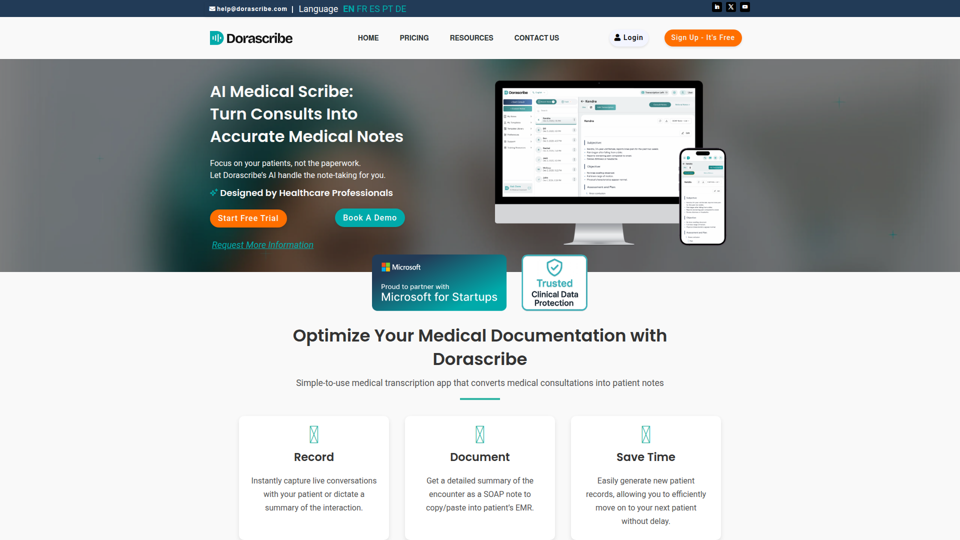
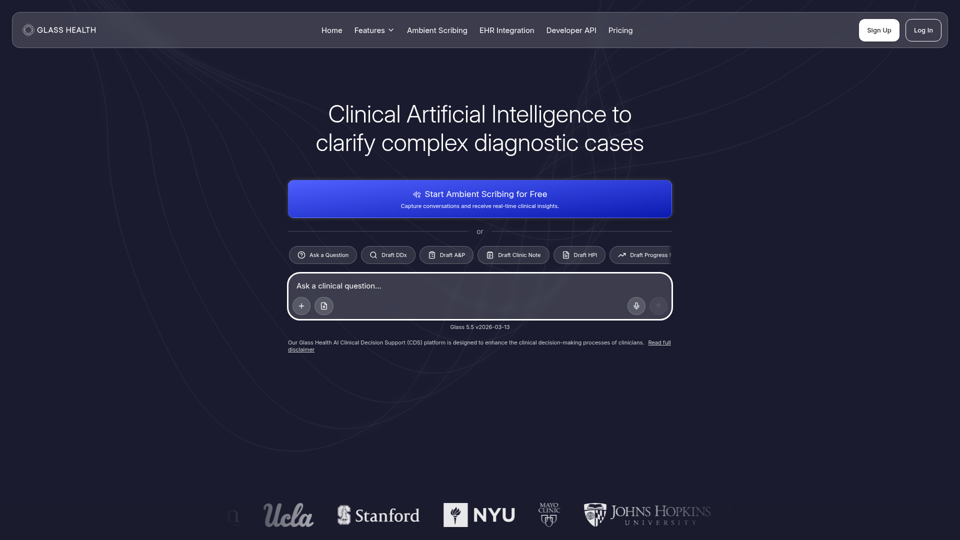
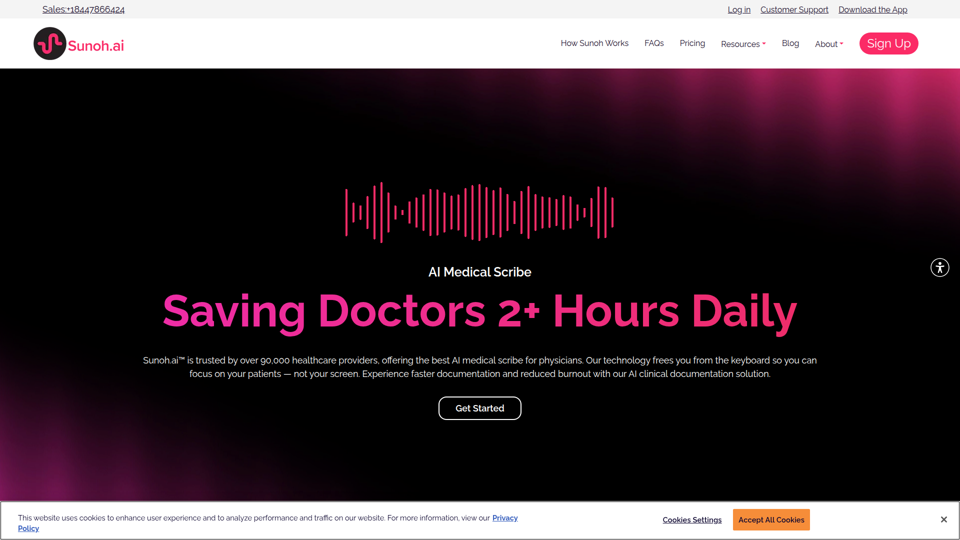
Administrative compression is where AI is reducing the most friction. Ambient clinical documentation tools (Nuance DAX, Suki, Abridge) transcribe and structure clinical encounters in real time, cutting documentation time by 30–50% in cardiology practices that have deployed them. This is not a minor efficiency gain — documentation burden is a primary driver of cardiologist burnout, and its reduction has measurable effects on patient throughput and physician retention.
Tasks AI Can Automate
- ECG interpretation for common arrhythmias — AF detection, QT prolongation flagging, STEMI identification in emergency triage contexts
- LVEF measurement from echocardiograms — automated segmentation and calculation, reducing manual tracing time
- Risk score calculation — HEART score, CHA₂DS₂-VASc, STS surgical risk, TIMI — auto-populated from structured EHR data
- Prior authorization drafting — AI tools generating clinical justification letters for procedures and medications based on chart data
- Appointment scheduling and triage routing — symptom-based intake tools directing patients to appropriate care levels
- Medication reconciliation flagging — identifying drug interactions, contraindications, and dosing anomalies in complex polypharmacy patients
- Discharge summary generation — structured summaries drafted from encounter notes, labs, and imaging reports
- Remote monitoring alert triage — AI filtering of implantable device transmissions (Medtronic CareLink, Abbott Merlin.net) to surface clinically actionable alerts from noise
Skills Becoming More Valuable
Clinical judgment in ambiguous cases. AI performs well on pattern recognition within its training distribution. It struggles with atypical presentations, rare conditions, and patients whose clinical picture conflicts with algorithmic predictions. The cardiologist's ability to integrate contextual information — patient history, functional status, social determinants, patient preferences — becomes the differentiating skill.
Interventional and procedural expertise. Catheterization, ablation, structural heart interventions, and device implantation remain firmly in human hands. AI assists with pre-procedural planning (CT-derived FFR, 3D valve modeling) but does not perform the procedure. Technical procedural skill, particularly in complex cases, is not at risk of automation.
Communicating risk and uncertainty to patients. As AI generates more probabilistic outputs — "this patient has a 34% five-year risk of MACE" — cardiologists must translate statistical risk into actionable, personalized guidance. This requires communication skills, empathy, and the ability to navigate patient values and health literacy.
Interpreting AI outputs critically. Understanding the limitations of specific algorithms — their training populations, failure modes, and confidence thresholds — is becoming a core clinical competency. A cardiologist who accepts AI outputs uncritically is a liability; one who can interrogate them is an asset.
Cross-disciplinary care coordination. Heart failure, structural heart disease, and cardiac oncology increasingly require coordinated teams. Cardiologists who can lead multidisciplinary decision-making — integrating input from cardiac surgery, nephrology, palliative care, and pharmacy — are more valuable than those operating in isolation.
Skills Becoming Less Important
- Manual ECG interpretation of common, high-volume patterns — AF, LBBB, sinus tachycardia — where AI achieves diagnostic parity or superiority in speed
- Rote risk score calculation — memorizing and manually computing validated risk scores that EHR-integrated tools now auto-populate
- Routine echocardiogram measurement tracing — LVEF, wall motion scoring in straightforward cases increasingly handled by automated platforms
- Dictating and manually structuring clinical notes — ambient AI documentation reduces the cognitive load of note construction
- Searching literature for standard-of-care protocols — AI-assisted clinical decision support surfaces guideline-concordant recommendations at the point of care
Current AI Adoption in This Industry
Cardiology is among the most AI-mature specialties in medicine, driven by the availability of large structured datasets (ECG waveforms, imaging, device telemetry) and the commercial incentive to reduce diagnostic delays in high-acuity conditions.
FDA-cleared AI tools are already in clinical use: iRhythm's Zio patch uses AI for arrhythmia detection; Eko Health's AI stethoscope detects murmurs and AF; Viz.ai routes STEMI and large vessel occlusion alerts to care teams in real time; HeartFlow's FFRCT provides non-invasive coronary physiology assessment from CT angiography, reducing the need for diagnostic catheterization in stable CAD.
EHR-embedded predictive models are live in major health systems. Epic's sepsis and deterioration models have cardiology-relevant applications; more targeted cardiac readmission and decompensation models are deployed at institutions including Cleveland Clinic, Mayo Clinic, and Mass General Brigham.
Remote monitoring AI is scaling rapidly. The volume of implantable device transmissions has outpaced the capacity of device clinic staff to review them manually. AI triage layers from Medtronic, Abbott, and Boston Scientific now pre-filter transmissions, flagging only those requiring clinician review — a workflow change that is already standard at high-volume electrophysiology programs.
Adoption is uneven. Academic centers and large integrated health systems are ahead. Community cardiology practices and rural hospitals lag significantly, constrained by EHR fragmentation, budget limitations, and the absence of dedicated informatics infrastructure.
Future Workflow Evolution
The cardiology workflow of 2028 will look structurally different from today's in several respects.
The diagnostic funnel will invert. Rather than patients presenting with symptoms that trigger diagnostic workup, continuous passive monitoring — through wearables, implantables, and ambient sensors — will generate a stream of data that AI triages before clinical contact. Cardiologists will increasingly review AI-generated summaries of longitudinal monitoring data rather than conducting de novo diagnostic evaluations.
Procedural planning will be AI-assisted by default. CT-derived hemodynamic modeling, AI-generated valve sizing for TAVR, and computational simulation of ablation lesion sets will be standard pre-procedural inputs. The cardiologist's role shifts from measurement and calculation to validation and judgment.
The visit structure will change. With documentation automated and risk stratification pre-computed, clinic visits will compress the time spent on data gathering and expand the time available for patient-centered discussion, shared decision-making, and care planning. This is a structural shift in how cardiologist time is allocated — not just a productivity gain.
Subspecialty boundaries will blur. AI tools that perform preliminary reads across imaging modalities (echo, CT, MRI, nuclear) will reduce the hard boundaries between cardiac imaging subspecialties. General cardiologists will be expected to engage with AI-assisted multimodal imaging outputs rather than deferring entirely to subspecialists for routine cases.
Common AI Use Cases
| Use Case | Tool/Platform | Maturity |
|---|---|---|
| AF detection from ECG/wearable | AliveCor KardiaMobile, Apple Watch, iRhythm Zio | Deployed at scale |
| STEMI routing and alert | Viz.ai | Deployed at scale |
| Automated LVEF measurement | EchoGo, Caption AI | Deployed, growing |
| CT-derived FFR (FFRCT) | HeartFlow | Deployed, reimbursed |
| Ambient clinical documentation | Nuance DAX, Abridge | Rapid adoption |
| Device transmission triage | Medtronic CareLink AI, Abbott Merlin | Deployed at EP programs |
| Heart failure readmission prediction | Epic, Optum, Health Catalyst | Deployed at large systems |
| AI murmur detection | Eko Health | Deployed in primary care/cardiology |
| Cardiac MRI segmentation | Arterys, Circle CVI42 AI | Deployed in imaging centers |
| Pre-procedural TAVR planning | Materialise, 3mensio | Deployed in structural programs |
Recommended AI Stack
For clinical practice:
- Nuance DAX or Abridge — ambient documentation; the highest-ROI AI investment for practicing cardiologists in terms of time recovery
- HeartFlow FFRCT — for stable CAD workup; reduces diagnostic cath volume and has strong reimbursement coverage in the US and EU
- Viz.ai — for STEMI and large vessel occlusion programs; integrates with existing PACS and EHR alert infrastructure
- EchoGo or Caption AI — for echo labs looking to standardize LVEF measurement and enable point-of-care echo by non-cardiologist staff
For health system / population health:
- Epic Cardiac Risk Models or Health Catalyst — for heart failure readmission prevention and panel management
- iRhythm Zio or BioTelemetry — for ambulatory arrhythmia monitoring with AI-assisted interpretation
For electrophysiology programs:
- Medtronic CareLink Network with AI triage or Abbott Merlin.net — for remote device monitoring at scale
- Biosense Webster CARTO with AI lesion assessment — for ablation procedure guidance
Risks & Challenges
Algorithmic bias and training data gaps. Most FDA-cleared cardiac AI tools were trained predominantly on data from white male patients. Performance on women, patients of color, and those with atypical presentations is demonstrably lower for several validated algorithms. Deploying these tools without awareness of their demographic limitations creates real clinical risk.
Alert fatigue from AI-generated notifications. Remote monitoring AI and EHR-embedded risk models generate alerts. Without careful calibration of thresholds and clear ownership of alert response workflows, AI can add cognitive burden rather than reduce it — a problem already documented in early Viz.ai and sepsis model deployments.
Liability and accountability gaps. When an AI tool misses a diagnosis or generates an erroneous recommendation that influences clinical care, the legal and ethical accountability framework is unresolved. Cardiologists who rely on AI outputs without independent clinical judgment face both patient safety and medicolegal exposure.
EHR integration friction. Many high-value AI tools operate as point solutions that do not integrate cleanly with existing EHR workflows. Data silos, HL7 FHIR implementation gaps, and vendor lock-in create operational complexity that limits real-world adoption, particularly in community settings.
Deskilling risk in trainees. Cardiology fellows who learn to interpret ECGs and echocardiograms with AI assistance may develop shallower foundational skills. When AI tools fail — in edge cases, rare conditions, or system outages — the clinician's ability to function independently matters. Training programs are only beginning to grapple with this.
Reimbursement uncertainty. Several AI-assisted diagnostic pathways lack clear, stable reimbursement codes. HeartFlow FFRCT has achieved coverage; many others have not. The business case for AI adoption in private practice remains fragile until reimbursement pathways mature.
Future Outlook (3–5 Years)
Over the next three to five years, the cardiologist's role will not be displaced — but it will be substantially restructured around AI-mediated workflows.
The volume of AI-generated diagnostic inputs will increase faster than the current clinical infrastructure can absorb. Health systems will need to build new roles — cardiac AI coordinators, device monitoring nurses with AI triage training, clinical informatics cardiologists — to manage the operational layer between AI outputs and physician decision-making.
Multimodal foundation models trained on cardiac imaging, waveform data, genomics, and longitudinal EHR records will begin to enter clinical validation. These models will not replace subspecialty expertise, but they will compress the time required for diagnostic synthesis in routine cases, shifting cardiologist attention toward complex, high-uncertainty, and high-stakes decisions.
Regulatory frameworks will tighten. The FDA's evolving guidance on AI/ML-based software as a medical device (SaMD) will require more rigorous post-market surveillance, performance monitoring across demographic subgroups, and transparency in algorithm updates. Cardiologists at institutions deploying these tools will increasingly be expected to participate in governance and oversight — a new professional responsibility.
Preventive cardiology will expand its scope. AI-driven risk stratification from consumer wearables, combined with polygenic risk scores and imaging biomarkers, will identify cardiovascular risk earlier and more precisely than current clinical thresholds. This will drive demand for preventive cardiology expertise and shift the specialty's center of gravity toward earlier intervention.
Final Insight
Cardiology is not a specialty where AI will gradually creep in at the margins — it is already a specialty where AI is embedded in core diagnostic and monitoring workflows, and the pace of integration is accelerating. The cardiologists who will thrive are not those who resist this shift or those who defer entirely to algorithmic outputs, but those who develop a sophisticated, critical relationship with AI tools: understanding what they measure, where they fail, and what they cannot replace.
The irreducible core of cardiology — procedural skill, clinical judgment in complex and ambiguous cases, patient communication, and ethical decision-making under uncertainty — is not threatened by current or near-term AI. What is changing is the cognitive and administrative scaffolding around that core. Cardiologists who shed the low-value cognitive work that AI can handle, and invest that recovered capacity in the high-judgment work that AI cannot, will be more effective clinicians and more resilient professionals in the decade ahead.