
AI Medical Scribe for Doctors | Real-Time Charting AI - DoraScribe
Rate this Tool
Average Score
Total Votes
Select your score (1-10):
Detail Information
What
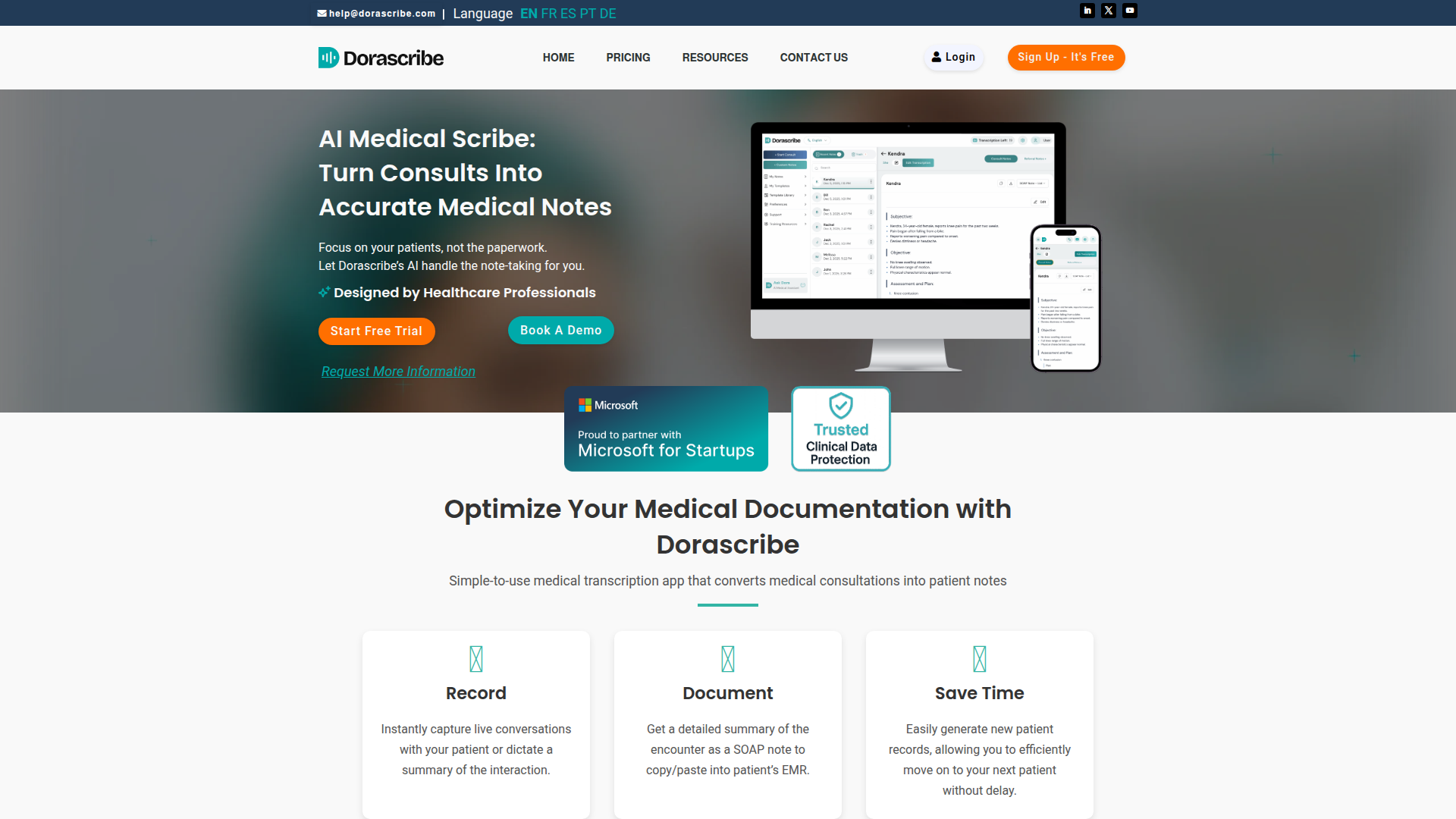
Dorascribe is an AI medical scribe and transcription tool for clinicians who need to convert patient consultations into structured medical notes. Its main workflow is to record a live consultation or dictated summary, generate a written note such as a SOAP note, and then let the clinician review, edit, and copy the result into an EMR.
The product appears positioned as a documentation efficiency tool for doctors and other healthcare professionals who want to reduce manual charting and stay more focused during patient encounters. The site also presents it as a broader clinical support platform through “Ask Dora” and “Dora Evidence,” though the primary use case is still medical note generation.
Features
- Consultation recording and dictation: Captures live patient conversations or clinician summaries to create a source transcript for documentation.
- AI-generated chart notes: Transforms speech into structured notes, including SOAP notes, helping clinicians move from conversation to chart-ready text faster.
- Editable documentation output: Lets users review and edit generated notes before copying them into an EMR workflow.
- Custom note templates: Higher-tier plans include customizable templates so practices can align documentation with their preferred formats.
- Clinical decision support via Ask Dora / Dora Evidence: Provides answers to medical research questions with cited peer-reviewed sources, based on the site’s description.
- Cross-device mobile access: Available on smartphones, tablets, and computers, with iOS and Android apps for recording, editing notes, and using Ask Dora on the go.
Helpful Tips
- Validate note quality against your specialty workflow: Since documentation needs vary by specialty, test the output on typical encounters and edge cases before broad rollout.
- Review EMR handoff steps carefully: The site emphasizes copy/paste into EMRs, so teams should confirm how this fits their charting process and quality controls.
- Use templates to standardize adoption: If custom templates are available on your plan, they can reduce editing time and improve consistency across providers.
- Assess the decision-support feature separately from scribing: Ask Dora and Dora Evidence may be useful, but buyers should evaluate note generation and evidence lookup as distinct workflows.
- Confirm security and retention policies internally: The site states HIPAA-compliant protocols, temporary note retention, encryption, anonymization, and secure sign-in, but healthcare organizations should still verify fit with internal governance requirements.
OpenClaw Skills
Within an OpenClaw ecosystem, Dorascribe could likely serve as a source system for clinical documentation workflows. An OpenClaw skill or agent could watch for completed notes, classify encounter types, extract structured fields from SOAP notes, and route outputs into downstream tasks such as follow-up checklists, referral packet assembly, or internal coding review. These are likely use cases rather than confirmed native integrations, since the page does not describe direct OpenClaw connectivity.
More advanced OpenClaw agents could be built around practice operations: for example, a documentation QA agent that flags missing sections before EMR entry, a patient follow-up workflow that turns note content into reminders or education tasks, or a research assistant that uses Dora Evidence outputs to prepare concise literature briefs for clinicians. In ambulatory care, specialty clinics, or telehealth settings, that combination could shift clinicians and support staff away from repetitive documentation handling toward higher-value review, patient communication, and care coordination.
Embed Code
Share this AI tool on your website or blog by copying and pasting the code below. The embedded widget will automatically update with the latest information.
<iframe src="https://aimyflow.com/ai/dorascribe-ai/embed" width="100%" height="400" frameborder="0"></iframe>
Explore Similar Tools
Vera Health - Evidence-Based Clinical Answers
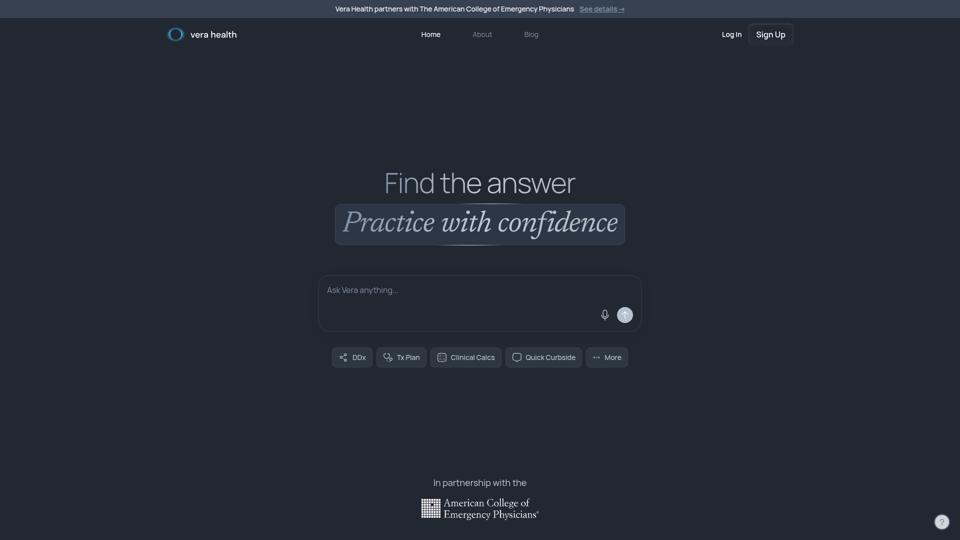
Vera Health is an AI clinical decision-support search engine that helps licensed clinicians and trainees find concise, evidence-based answers, differential diagnoses, treatment plans, and clinical calculations from peer-reviewed medical literature and guidelines. For physicians, PAs, pharmacists, and other bedside clinicians, it can speed up question resolution while keeping recommendations auditable through linked sources and evidence grading.
Clara — Your AI Doctor for a Longer, Healthier Life
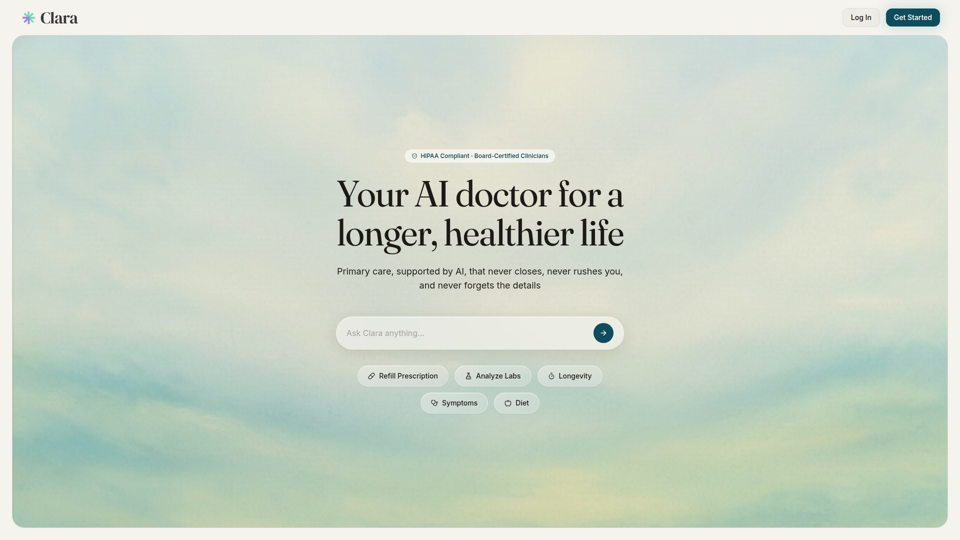
Clara is an AI-supported primary care tool that helps patients review symptoms, analyze labs, manage prescriptions, and import medical history, with clinician verification for care-related actions. For clinicians and care teams, it can streamline chart review and surface longitudinal patterns in patient data, helping them make faster, more informed decisions.
ClinFolio — Clinical Portfolio Platform for Doctors
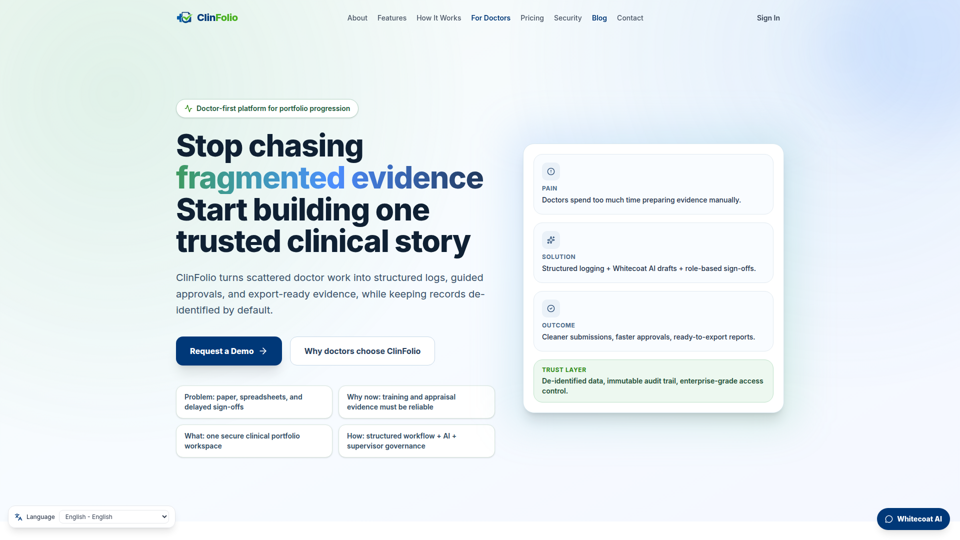
ClinFolio is a secure clinical portfolio platform that helps doctors log procedures and other clinical activities, get supervisor sign-offs, track CPD, and export evidence-ready reports with de-identified records by default. For doctors, trainees, and supervising clinicians, its AI-assisted drafting and audit-ready workflows can reduce documentation time and improve the quality and consistency of appraisal and training submissions.
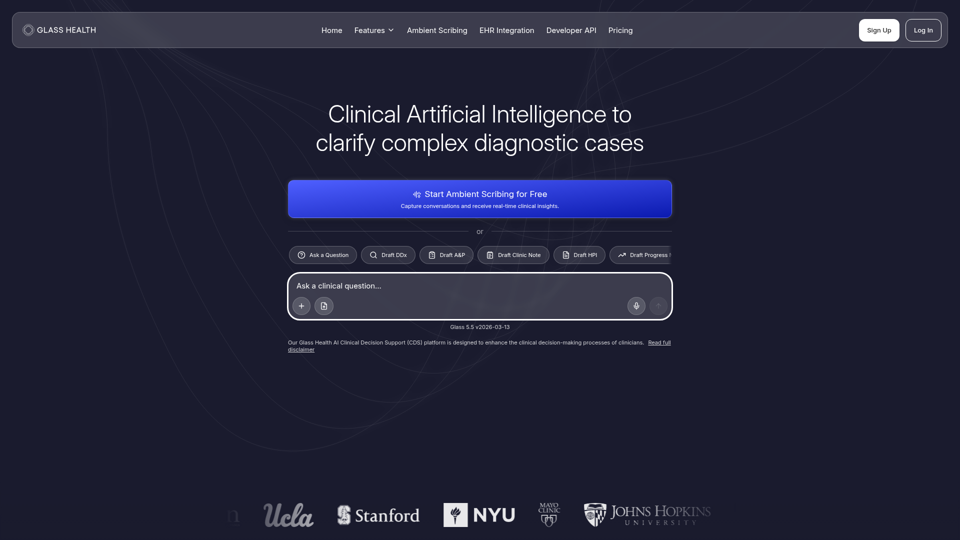
Glass Health | Ambient Scribing & Clinical Decision Support
Glass Health is an AI platform for ambient scribing and clinical decision support that helps clinicians capture patient conversations, draft medical documentation, and support diagnosis and treatment planning at the point of care. For physicians and other clinical staff, this kind of AI can reduce documentation burden while surfacing evidence-based questions, differentials, and next steps during encounters.
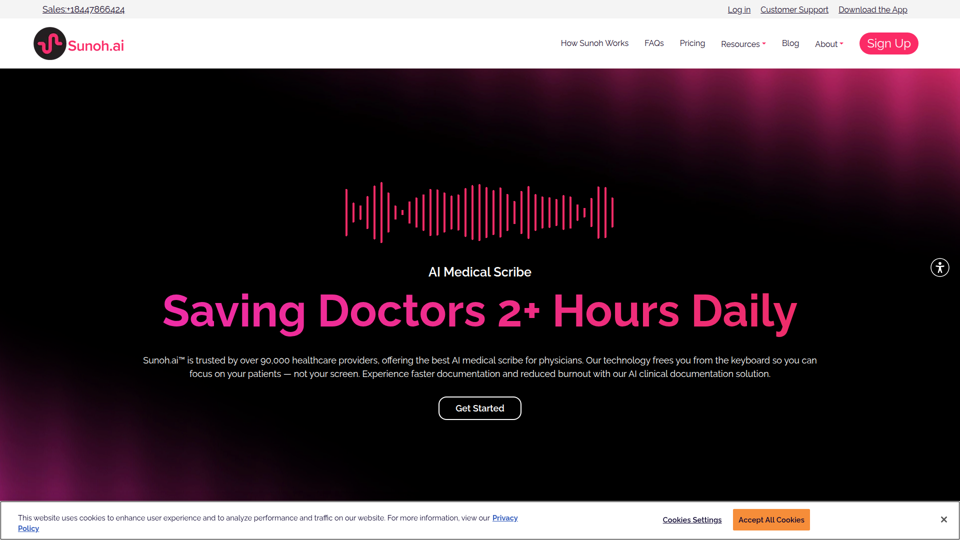
AI Medical Scribe | #1 Trusted by 90k+ Doctors | Sunoh.ai
Sunoh.ai is an AI medical scribe that listens to patient-provider conversations, generates clinical note drafts and order details, and integrates with EHRs for physicians and other healthcare providers. For clinicians and practice operations teams, this can reduce documentation time and after-hours charting while improving note completeness and consistency across workflows.