How AI fits this role
Wellness Coach in the Age of AI: Role Transformation Analysis
Role Overview
Wellness coaches work at the intersection of behavioral psychology, lifestyle medicine, and motivational practice. In the highest-volume operational context — corporate wellness programs, digital health platforms, and private coaching practices — they guide clients through sustainable behavior change across domains including stress management, sleep, nutrition habits, physical activity, and mental resilience.
The role is fundamentally relational. A wellness coach is not a therapist, dietitian, or personal trainer, though their work overlaps with all three. Their core function is accountability architecture: helping clients identify what they want, understand what's blocking them, and build systems that make change stick. This requires reading emotional subtext, navigating ambivalence, and adjusting approach in real time — capabilities that remain deeply human.
Commercially, wellness coaches operate in a market under significant structural pressure. Corporate HR departments are buying wellness platforms at scale. Digital-first coaching apps like Noom, Headspace for Work, and Calm Business are commoditizing entry-level coaching interactions. At the same time, demand for credentialed, high-touch coaching is growing among executives, high-performance professionals, and chronic condition management programs. The market is bifurcating: automated wellness at the bottom, premium human coaching at the top.
How AI Is Transforming This Role
The transformation is not about replacing the coaching conversation. It's about what happens before, between, and after sessions — and how AI is compressing the administrative and diagnostic overhead that used to consume 30–40% of a coach's working week.
Intake and assessment used to mean lengthy questionnaires, manual scoring, and pattern recognition done by the coach from scratch. AI-powered intake tools now synthesize health history, lifestyle data, and psychometric inputs into structured client profiles before the first session. Coaches arrive at session one with a behavioral baseline, not a blank page.
Between-session engagement has historically been the weakest link in coaching outcomes. Clients drift between weekly check-ins. AI-driven nudge systems — integrated into wearables, apps, and messaging platforms — now maintain behavioral momentum between human touchpoints. The coach's role shifts from being the primary accountability mechanism to being the strategic interpreter of what the AI-tracked data reveals.
Progress tracking and reporting in corporate wellness programs required coaches to manually compile engagement metrics, goal completion rates, and outcome summaries for HR stakeholders. This is now largely automated, with dashboards pulling from wearable integrations, app engagement logs, and self-reported check-ins.
What AI cannot replicate is the moment a client discloses that their stress isn't about workload — it's about a failing marriage. Or the ability to recognize that a client's resistance to a nutrition goal is rooted in a history with disordered eating that they haven't named yet. The clinical intuition, the relational trust, the capacity to hold complexity without rushing to a framework — that remains the coach's irreplaceable contribution.
Tasks AI Can Automate
- Initial health and lifestyle assessments — AI tools can administer, score, and summarize standardized instruments (PHQ-2, GAD-7, lifestyle inventories) and flag risk indicators before the coach reviews them.
- Goal-setting templates and habit stacking frameworks — generative tools can produce personalized behavior change plans based on client inputs, which coaches then refine rather than build from scratch.
- Session scheduling, reminders, and follow-up messaging — automated workflows handle logistics and low-stakes check-in prompts without coach involvement.
- Progress report generation for corporate clients — aggregate dashboards and auto-generated summaries replace manual reporting for HR and benefits teams.
- Content curation and psychoeducation delivery — AI can match clients to relevant articles, meditations, or micro-learning modules based on their current focus area, removing the coach's role as content librarian.
- Wearable data interpretation at surface level — sleep score trends, HRV patterns, and step consistency can be summarized automatically, surfacing anomalies for the coach to contextualize.
- Billing, invoicing, and CRM updates — administrative overhead in private practice settings is increasingly handled by AI-integrated practice management tools.
Skills Becoming More Valuable
Motivational interviewing depth. As AI handles surface-level accountability, the coach's value concentrates in the quality of the conversation itself. MI competency — particularly reflective listening, rolling with resistance, and evoking change talk — becomes the primary differentiator.
Trauma-informed practice awareness. Wellness coaches increasingly encounter clients whose lifestyle challenges are downstream of adverse experiences. Knowing when to hold space, when to refer, and how to avoid retraumatizing through goal-setting pressure is a skill that AI cannot approximate.
Data literacy and interpretation. Coaches who can read a client's HRV trend alongside their reported stress narrative — and synthesize both into a coherent coaching hypothesis — will outperform those who treat wearable data as noise or gospel.
Behavior change science fluency. Understanding the mechanisms behind habit formation, self-determination theory, and implementation intentions allows coaches to use AI-generated plans as starting points rather than scripts.
Niche clinical adjacency. Coaches who develop deep expertise in specific populations — oncology recovery, perimenopause, executive burnout, neurodivergent adults — command premium positioning that generalist AI tools cannot serve.
Group facilitation and community design. Corporate wellness programs are shifting toward cohort-based models. Coaches who can design and facilitate group experiences, not just one-on-one sessions, are more commercially viable.
Skills Becoming Less Important
- Manual intake form design and administration — standardized digital tools handle this more consistently.
- Basic psychoeducation delivery — explaining what cortisol does or how sleep cycles work is now handled by app content libraries; coaches don't need to be the primary educator on foundational concepts.
- Session note transcription — AI transcription and summarization tools (integrated into platforms like Practice Better or SimplePractice) are eliminating manual note-taking.
- Generic goal-setting facilitation — SMART goal frameworks applied without clinical nuance are being replicated by AI coaching bots; coaches who only offer this are competing with software.
- Broad generalist positioning — the "I help people live healthier lives" value proposition is increasingly indistinguishable from what a wellness app offers. Undifferentiated generalism is a commercial liability.
Current AI Adoption in This Industry
Adoption is uneven and moving fast in the corporate segment. Large employers contracting with platforms like Virgin Pulse, Wellhub (formerly Gympass), or Lyra Health are already operating in AI-augmented environments where coaches are one layer in a multi-modal system — not the primary delivery mechanism.
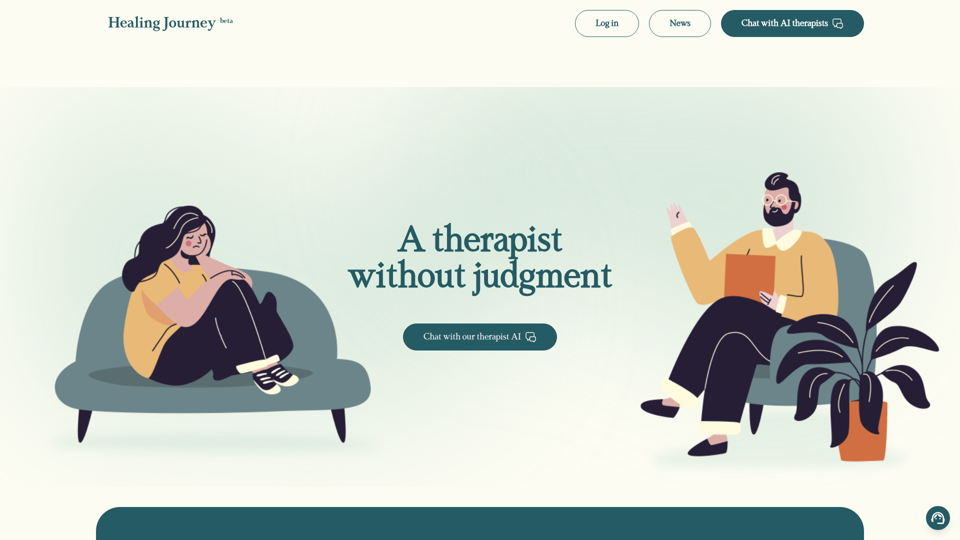
Digital coaching apps have deployed conversational AI for habit coaching at scale. Noom's AI coach handles the majority of user interactions; human coaches are reserved for escalation and high-engagement users. This is the operational template spreading across the industry.
In private practice, adoption lags. Most independent wellness coaches are using AI primarily for content creation and scheduling, not for clinical workflow augmentation. The gap between what's available and what's being used is significant — and represents both a risk (being outcompeted by tech-enabled peers) and an opportunity (early adopters can build differentiated practices).
Wearable integration is the fastest-moving frontier. Apple Health, Garmin Connect, Oura, and WHOOP all offer API access that coaching platforms are beginning to leverage. Coaches who understand how to incorporate longitudinal biometric data into their practice are ahead of the curve.
Future Workflow Evolution
The coaching session itself will remain human-led, but it will be increasingly data-informed and AI-prepared. The workflow evolution looks like this:
Pre-session: AI aggregates the past week's wearable data, app engagement, mood logs, and any flagged anomalies. It generates a session brief — not a script, but a structured summary of what's changed, what's consistent, and what warrants exploration. The coach reviews this in five minutes rather than spending twenty minutes manually reviewing notes.
During session: The coach operates with richer context and can spend the full session on what matters — the client's inner experience, their ambivalence, their narrative. AI is not in the room. The conversation remains private and relational.
Post-session: AI transcription captures key themes, action items, and client commitments. The coach reviews and edits rather than writes from scratch. The system automatically schedules follow-up nudges aligned with the session's focus.
Between sessions: AI-driven check-ins maintain engagement. If a client's sleep degrades significantly or they miss three consecutive habit completions, the system flags it for the coach — who can then send a personalized message or schedule an unplanned touchpoint.
This workflow compresses administrative time, increases the coach's client capacity without diluting quality, and creates a richer longitudinal record that improves coaching outcomes over time.
Common AI Use Cases
- AI-assisted intake and onboarding — platforms like Quenza or custom-built flows using Typeform + AI summarization create structured client profiles automatically.
- Conversational AI for between-session check-ins — chatbot-style interactions that collect mood, habit completion, and energy data without requiring coach time.
- Wearable data dashboards — integrations with Oura, WHOOP, or Apple Health that surface trends the coach can reference in session.
- AI session note summarization — tools like Notion AI, Otter.ai, or platform-native transcription that convert session recordings into structured notes.
- Personalized content recommendations — AI matching clients to specific meditations, articles, or exercises based on their current focus and engagement history.
- Predictive disengagement alerts — platforms that identify clients at risk of dropping off based on engagement patterns, prompting proactive coach outreach.
- Generative plan drafting — using tools like ChatGPT or Claude to draft initial behavior change plans that the coach personalizes and refines.
- Corporate reporting automation — dashboards that auto-generate utilization and outcome summaries for HR stakeholders.
Recommended AI Stack
Practice management with AI features:
- Practice Better — session notes, client portal, habit tracking, with growing AI integrations
- SimplePractice — scheduling, notes, billing automation for private practice coaches
Session documentation:
- Otter.ai or Fireflies.ai — transcription and summarization of coaching sessions (with client consent protocols)
- Notion AI — structured note organization and synthesis
Client engagement and habit tracking:
- Nudge Coach — white-label coaching app with automated check-ins and wearable integration
- CoachAccountable — goal tracking, habit logging, and automated accountability messaging
Wearable data integration:
- Terra API — aggregates data from multiple wearable platforms into a single feed
- Oura or WHOOP for clients — HRV, sleep, and readiness data with coaching-relevant metrics
Content and plan generation:
- Claude or ChatGPT — drafting behavior change plans, psychoeducation summaries, and session prep briefs
- Canva AI — client-facing materials and program content
Corporate wellness platforms (for employed coaches):
- Wellhub, Virgin Pulse, Lyra Health — understand the AI architecture of the platform you're operating within
Risks & Challenges
Over-reliance on data at the expense of the relationship. Wearable data and AI-generated summaries can create an illusion of understanding. A client whose HRV looks fine may be in crisis. Coaches who let data substitute for attentive listening will miss what matters most.
Privacy and consent complexity. Integrating wearable data, AI transcription, and third-party platforms creates a complex data trail. Coaches operating outside large platforms need explicit consent frameworks and must understand what data is stored where — particularly under HIPAA-adjacent standards for health coaching.
Commoditization pressure on generalist coaches. AI coaching bots are genuinely good at habit tracking, psychoeducation, and accountability nudges. Coaches who haven't differentiated their practice will face direct price competition from software that costs $20/month.
Platform dependency risk. Coaches building their practice inside a corporate wellness platform are exposed to contract changes, algorithm shifts, and platform consolidation. The industry has seen significant M&A activity; coaches embedded in acquired platforms have lost client relationships overnight.
Scope creep and clinical boundary erosion. As AI tools surface mental health indicators (PHQ scores, mood trends, sleep disruption patterns), coaches face pressure to respond to clinical signals they're not trained to treat. Clear referral protocols and scope-of-practice discipline become more important, not less, as data richness increases.
Client trust in AI-mediated interactions. Some clients will disengage if they feel their coach is outsourcing the relationship to software. Transparency about what's automated and what's human is both an ethical obligation and a retention strategy.
Future Outlook: 3–5 Years
The wellness coaching market will consolidate around two viable models. The first is the platform-embedded coach — operating within corporate wellness ecosystems, handling escalations and high-complexity cases that AI triage routes to human support. This role will require comfort with AI-generated client briefs, platform-specific tooling, and outcome metrics tied to employer health spend. It will look more like a clinical care coordinator than a traditional coach.
The second is the premium specialist coach — operating independently or in small group practices, serving clients who specifically want human-led, high-touch engagement. These coaches will command higher rates precisely because they are not AI. Their differentiation will come from niche expertise, relational depth, and the ability to work with complexity that algorithms flatten.
The middle — generalist coaches offering standard habit coaching at mid-market prices — will face the most disruption. This segment is where AI substitution is most direct and most commercially viable for platforms.
Credentialing will matter more. As the market bifurcates, clients and employers will use credentials (NBC-HWC, ICF, ACE) as proxies for quality in a crowded field. Coaches without recognized credentials will struggle to justify premium positioning.
AI will also enable new practice models: group coaching at scale, asynchronous coaching programs, and hybrid human-AI coaching packages where the coach designs the system and the AI delivers the daily touchpoints. Coaches who understand how to architect these models — not just deliver sessions — will have a structural advantage.
Final Insight
The wellness coach who thrives in an AI-augmented environment is not the one who uses the most tools. It's the one who has the clearest answer to a question that AI cannot answer for them: what do I offer that a well-designed algorithm genuinely cannot?
For most coaches, that answer lives in the quality of presence they bring to a conversation — the capacity to sit with a client's ambivalence without rushing to a solution, to notice what isn't being said, to hold a long-term vision for someone who can't yet hold it for themselves. These are not soft skills. They are the technical core of behavior change work, and they are the last things to be automated.
The practical implication is this: invest in AI to compress everything that isn't that. Use it to handle intake, documentation, scheduling, content, and between-session logistics. Then show up to the session with full attention, richer context, and nothing left to do but the work that only a human can do.
That's not a defensive posture toward AI. It's a strategic one.