
Script Doctor | Fix Your Short Film Script Before You Shoot
Rate this Tool
Average Score
Total Votes
Select your score (1-10):
Detail Information
What
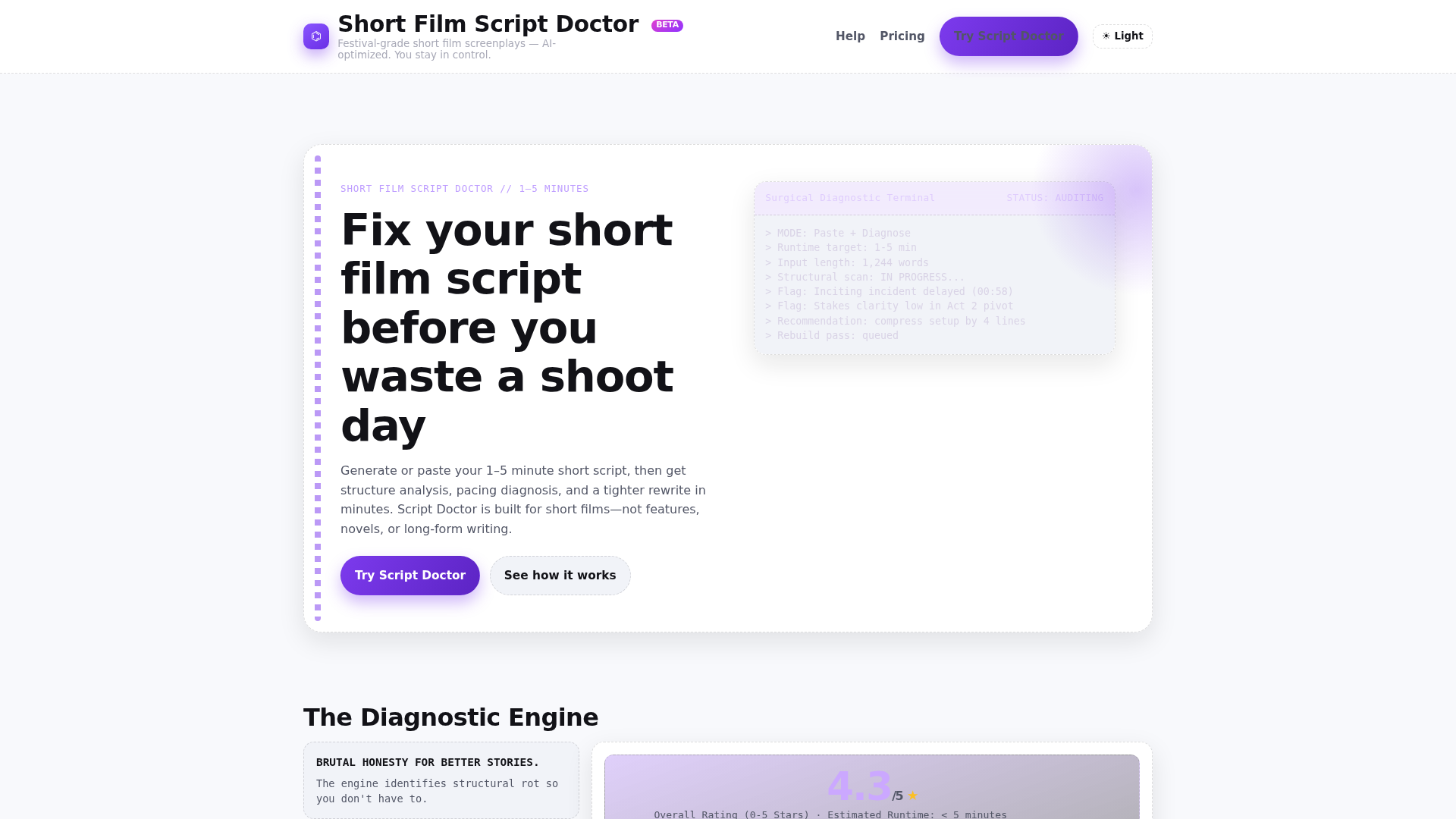
Script Doctor is an AI-assisted script analysis and rewriting tool focused specifically on 1–5 minute short film screenplays. It helps users either generate a short script from inputs like genre, tone, runtime, and logline, or paste an existing script for diagnosis and revision. The product concentrates on common short-form problems such as slow setup, vague stakes, heavy dialogue, and weak pacing.
It appears positioned for creators working under tight production constraints, including indie filmmakers, film students, AI filmmakers, and YouTube short creators. Its workflow is built around short-form structure enforcement, iterative analysis and rewrite cycles, and practical script tightening intended to make pages more production-friendly before a shoot.
Features
- Short-script generation and refinement: Users can generate a first draft for a 1–5 minute short from basic creative inputs, then refine it through repeated analysis and rewrite passes.
- Paste-and-diagnose workflow: Existing scripts up to around 2,000 words can be pasted in for structure, pacing, stakes, and clarity review.
- Short-film structure enforcement: The tool applies compressed 3-act logic and modified Hero’s Journey framing to keep very short scripts aligned with short-form storytelling constraints.
- Beat and pacing diagnosis: It flags issues such as late inciting incidents, slow openings, and overloaded scenes so writers can tighten runtime efficiency.
- Dialogue and clarity improvements: Script Doctor identifies over-explanatory dialogue, weak motivations, and unclear outcomes, then suggests or generates tighter rewrites.
- Shootable draft focus: The product emphasizes concise, production-friendly pages intended to translate more cleanly from script to set.
Helpful Tips
- Use it for short-form work only: The product is explicitly designed for 1–5 minute scripts, so teams evaluating it for longer narrative formats should expect scope limitations.
- Treat rewrites as guided revisions, not final authority: The site clearly states the tool will not make a script perfect, so human editorial judgment remains important.
- Best fit is high-clarity storytelling: The product itself notes stronger fit for genres like thriller, sci-fi, horror, comedy, and drama; more experimental work may need heavier manual shaping.
- Assess workflow needs against run limits: Since each new output counts as a run, buyers should estimate how many generate, diagnose, and rewrite cycles their process typically requires.
- Consider its role in pre-production: The strongest value appears before money is committed to filming, when structure and pacing issues can still be fixed cheaply.
OpenClaw Skills
Within an OpenClaw ecosystem, Script Doctor could likely serve as a specialized story development node for short-form video workflows. A likely OpenClaw setup would use one skill to collect concept inputs, another to pass a draft into Script Doctor-style analysis, and additional agents to turn the revised script into production planning assets such as beat summaries, scene objectives, or creative review checklists. The site mentions a companion tool called AI Shot Director, but it does not confirm a native integration with external platforms.
A practical OpenClaw use case would be an automated short-film pipeline for indie creators, film schools, or small content studios: idea intake, script generation, diagnosis, rewrite comparison, and handoff into shot-planning or scheduling agents. That combination could reduce friction between writing and production, especially for teams making fast-turnaround shorts, branded micro-narratives, or social video stories where compressed structure and efficient pacing matter more than long-form worldbuilding.
Embed Code
Share this AI tool on your website or blog by copying and pasting the code below. The embedded widget will automatically update with the latest information.
<iframe src="https://aimyflow.com/ai/film-ai-io/embed" width="100%" height="400" frameborder="0"></iframe>
Explore Similar Tools

Flow
Flow is an AI creative studio and filmmaking tool from Google that helps creatives generate, refine, and compose cinematic videos and images, mainly for filmmakers and visual storytellers. In AI-assisted production, it can speed up ideation and scene iteration for directors, editors, and content creators by enabling controlled changes like object swaps, video extension, and camera direction.
Autodesk Flow Studio | Buy Official Flow Studio
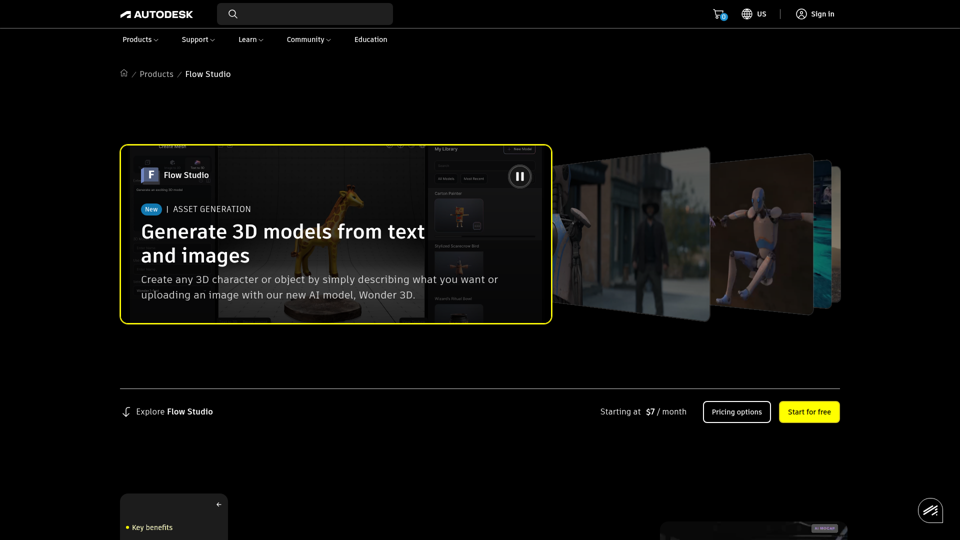
Autodesk Flow Studio is a cloud-based AI 3D and VFX toolset that helps filmmakers, VFX artists, and creators turn live-action footage, text, and images into editable CG scenes, motion capture, and 3D assets. For VFX and animation teams, it can shorten manual mocap, camera tracking, and compositing work while preserving editable outputs for refinement in tools like Maya, Blender, and Unreal.
DeepMotion - AI Motion Capture & Body Tracking
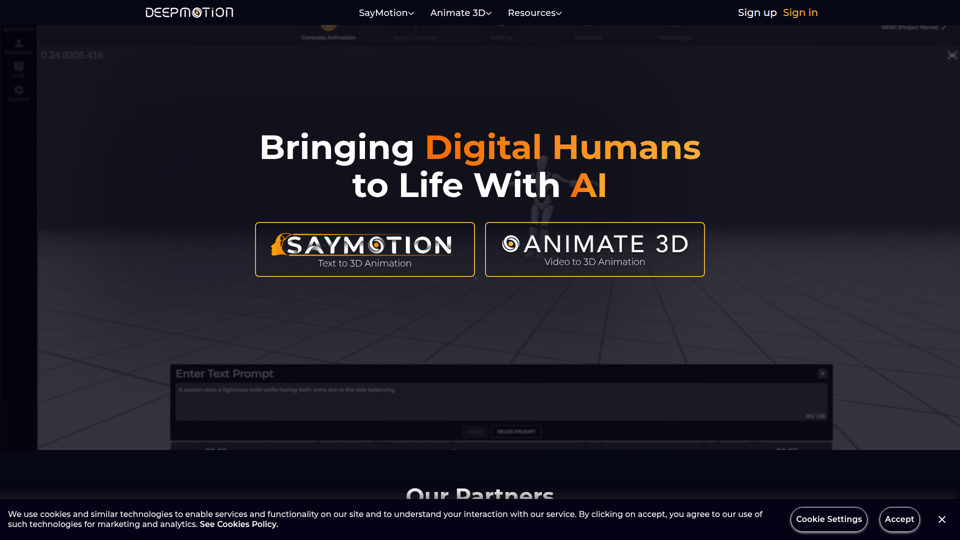
DeepMotion is an AI motion capture and body tracking platform that helps users turn text or video into 3D character animation in a web browser, mainly for animators, game developers, filmmakers, and digital artists. In AI-driven production workflows, it can speed character animation and lower the technical barrier for creative and technical teams building digital humans.
AI Video Generator | Direct with Seedance 2.0 & Sora - Stuvio
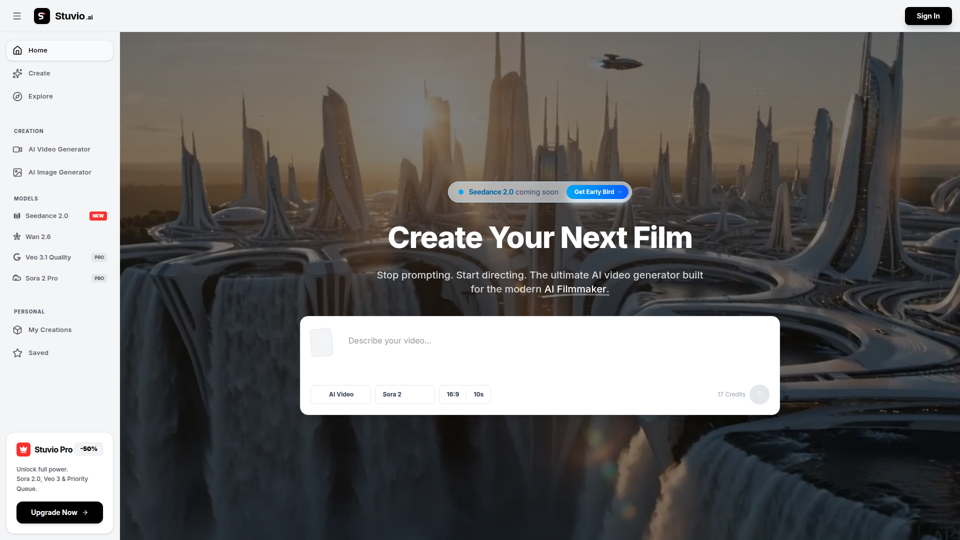
Stuvio is an AI video generator platform that helps users create and refine cinematic videos across models like Seedance, Sora, Veo, and Wan, mainly for AI filmmakers and professional video creators. For filmmakers, creative directors, and editors, its model comparison and prompt-routing workflow can speed shot testing, improve control over motion and lighting, and reduce time spent switching between separate tools.
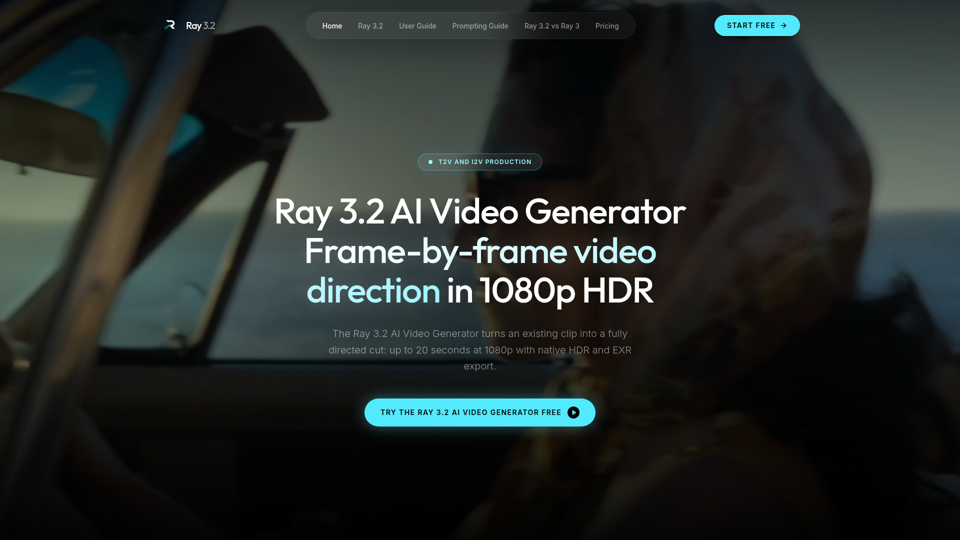
Ray 3.2 AI Video Generator — Frame-by-Frame in 1080p HDR
Use the Ray 3.2 AI Video Generator to direct video frame by frame. 16 keyframes, 1080p HDR, 20-second clips, EXR export. Free starter credits, no card needed.
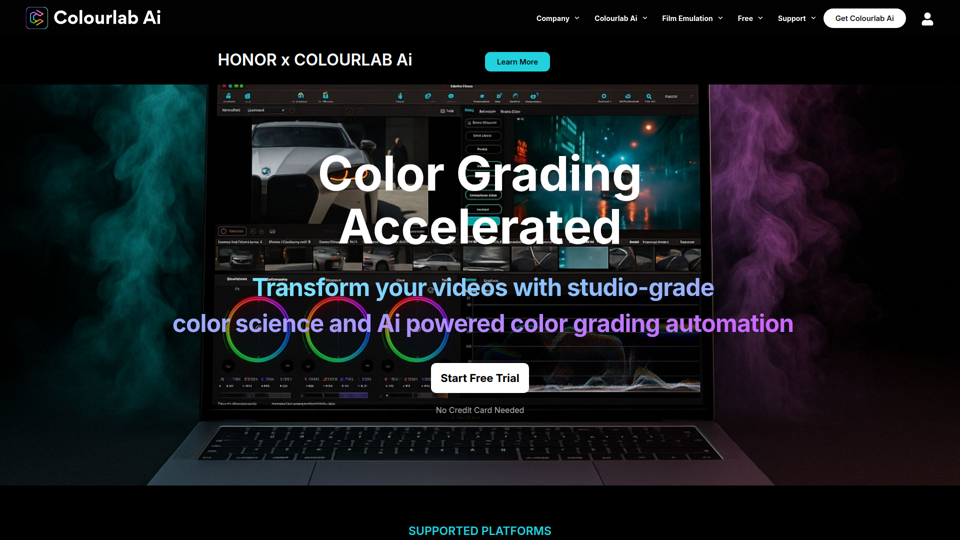
Colourlab AI now 22x faster - Colourlab.ai
Colourlab AI is an AI-powered color grading tool that helps editors, filmmakers, colorists, and post-production teams automate shot matching, auto balance, white balance, and look matching across video timelines. For video editors and finishing artists, it can reduce manual grading time and speed up consistent first-pass color work so they can focus more on creative decisions.
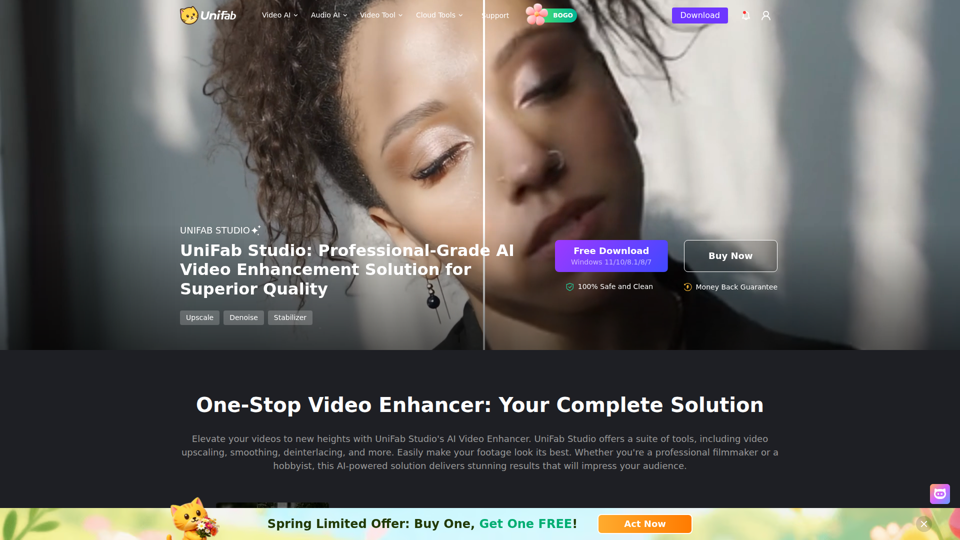
UniFab Studio: One-Stop Professional AI Video Enhancer
UniFab Studio is an AI video enhancement software suite that helps users upscale, denoise, deinterlace, stabilize, smooth motion, and convert SDR video to HDR, mainly for professional video creators and editors seeking higher-quality footage. In AI-driven post-production workflows, it can help video teams improve older, shaky, or low-resolution source material more efficiently while maintaining consistent output across batch projects.
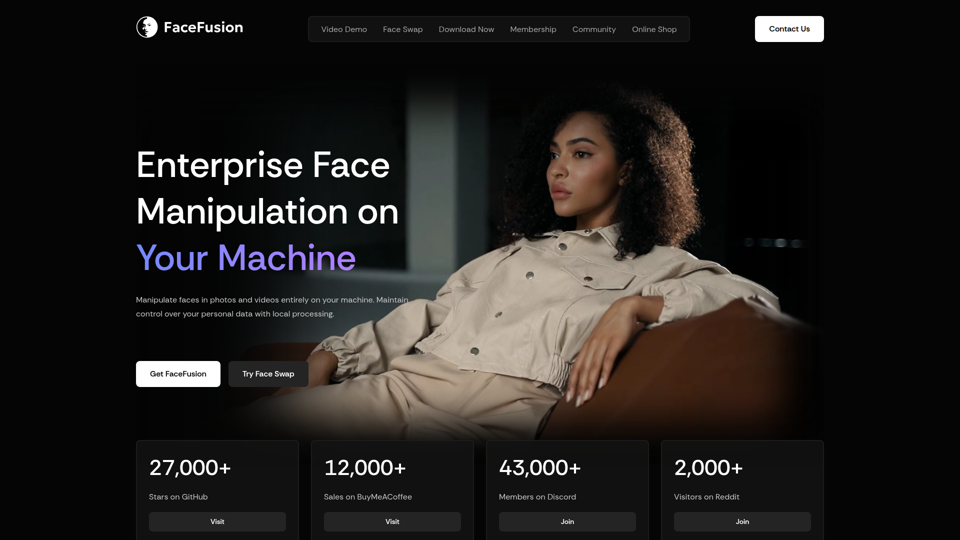
FaceFusion
FaceFusion is a local-first face manipulation platform for photos and videos that helps users swap faces, edit expressions, enhance frames, and sync lips, mainly for film studios, VFX artists, and content creators. In AI production workflows, its on-device processing and detailed controls can help post-production teams handle privacy-sensitive footage while refining facial edits with more precision.