How AI fits this role
Financial Analyst
Role Overview
Financial analysts sit at the intersection of data interpretation and business decision-making. In corporate finance, investment banking, asset management, and FP&A functions, they translate raw financial data into actionable intelligence — building models, stress-testing assumptions, and communicating findings to stakeholders who need to act on them.
The role spans a wide operational range. At the junior end, analysts spend the majority of their time in Excel, pulling data from ERP systems, reconciling figures, and maintaining models built by someone else. At the senior end, the work shifts toward framing the right questions, challenging assumptions embedded in forecasts, and advising on capital allocation, M&A targets, or portfolio positioning.
In corporate FP&A specifically — the highest-volume interpretation of this role — analysts are embedded in the budget cycle, variance analysis, and management reporting. They are the connective tissue between finance and the business units that generate the numbers. The pressure is cyclical and relentless: month-end close, quarterly forecasts, annual budgets, and ad hoc requests from leadership that arrive with short deadlines and high visibility.
The commercial reality is that financial analysts have always been data-heavy workers in a field where data quality, model integrity, and interpretive accuracy carry real financial consequences. That makes the role both a natural target for AI automation and a domain where errors are expensive — which shapes exactly how AI is being adopted.
How AI Is Transforming This Role
The transformation is not arriving as a single disruptive event. It is accumulating through incremental workflow changes that are quietly compressing the time junior analysts spend on mechanical tasks while raising expectations for what senior analysts produce.
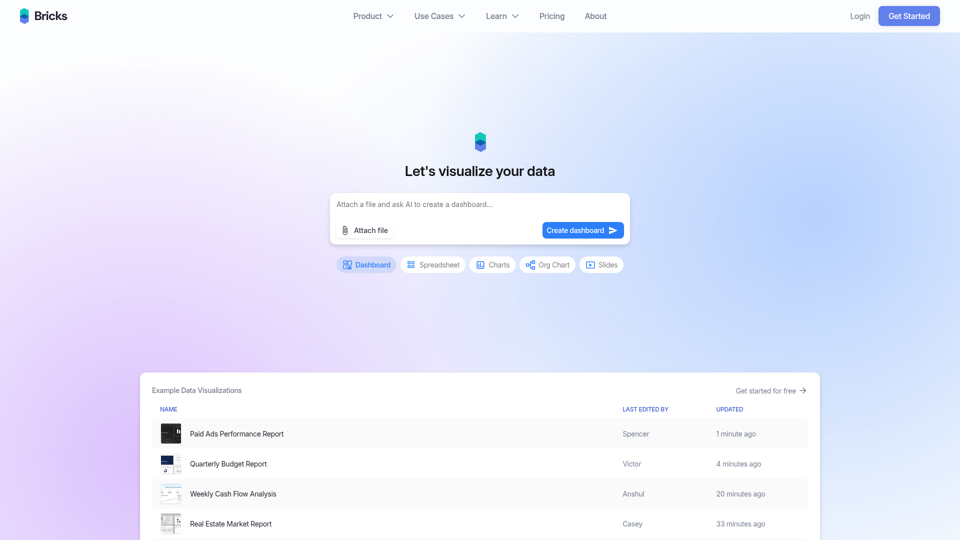
Automated data pipelines are replacing manual pulls. Analysts who previously spent hours each week extracting data from SAP, Oracle, or Workday, cleaning it in Excel, and loading it into models are increasingly working with pre-built connectors and automated refresh logic. Tools like Workiva, Anaplan, and Pigment maintain live data links, which means the model is always current — but it also means the analyst's value is no longer in the extraction, it is in the interpretation.
Narrative generation is being partially automated. Platforms like Microsoft Copilot for Finance, Narrative Science (now part of Salesforce), and built-in AI features in tools like Workiva can draft variance commentary — "Revenue was $2.3M below forecast, driven primarily by a shortfall in the EMEA segment" — directly from the underlying data. This does not eliminate the analyst's role in commentary, but it shifts it from drafting to editing and judgment.
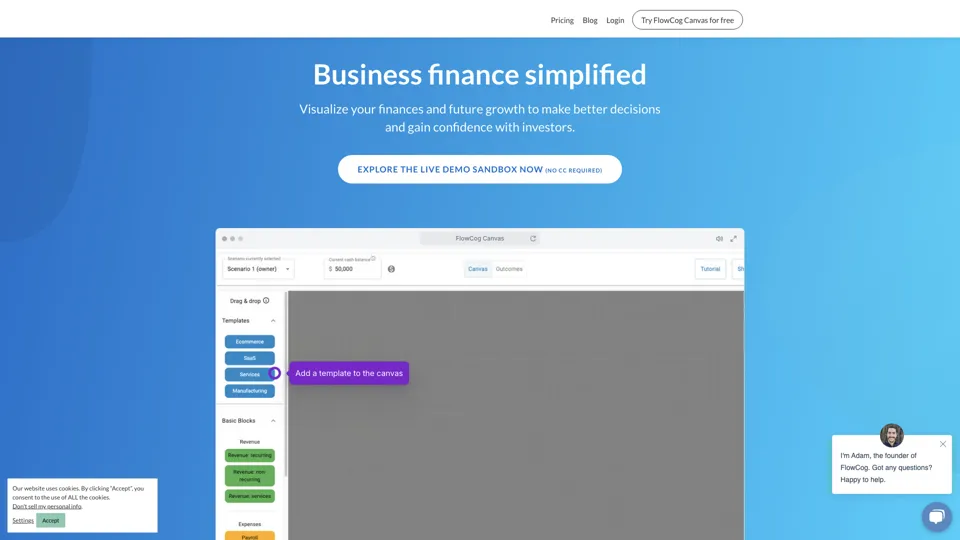
Scenario modeling is becoming faster and more iterative. AI-assisted planning tools can generate multiple forecast scenarios in minutes based on parameter changes, where previously an analyst might spend days rebuilding a model to reflect a new assumption set. The bottleneck is shifting from model construction to scenario selection and business logic validation.
Anomaly detection is surfacing issues analysts would previously have missed. Machine learning models embedded in ERP and FP&A platforms flag statistical outliers in transaction data, budget variances, and cash flow patterns before the analyst runs their monthly review. This changes the analyst's workflow from discovery to triage.
The net effect is a role that is becoming less about data assembly and more about financial judgment, stakeholder communication, and the ability to ask better questions of increasingly automated outputs.
Tasks AI Can Automate
- Variance commentary drafting — generating first-pass explanations of budget vs. actual differences from structured data
- Data extraction and reconciliation — pulling figures from ERP systems, consolidating across business units, and flagging discrepancies
- Standard report generation — producing monthly P&L summaries, cash flow statements, and KPI dashboards on a scheduled basis
- Forecast baseline construction — applying historical trend models and seasonality adjustments to generate initial forecast drafts
- Transaction categorization — classifying expenses and revenue lines using ML-based pattern recognition
- Covenant and compliance monitoring — tracking financial ratios against debt covenants and alerting when thresholds are approached
- Peer benchmarking data aggregation — pulling and structuring competitor financial data from public filings and market data providers
- Sensitivity table generation — running parameter sweeps across discount rates, growth assumptions, and margin scenarios in DCF models
- Meeting prep summaries — synthesizing financial performance data into briefing documents ahead of business reviews
Skills Becoming More Valuable
Financial judgment under uncertainty. As AI handles the mechanical production of forecasts and reports, the analyst's differentiating value lies in knowing when a model's output is wrong — not because the math is wrong, but because the business context has changed in a way the model cannot see. This requires deep familiarity with the business, not just the spreadsheet.
Structured communication with non-finance stakeholders. The ability to translate a complex variance analysis or capital allocation recommendation into a clear narrative for a CFO, a board, or a business unit leader is increasingly the primary deliverable. AI can draft the numbers; it cannot yet read the room.
Prompt engineering and AI output validation. Analysts who understand how to query AI tools effectively — and more importantly, how to audit their outputs for financial accuracy — are becoming significantly more productive than those who do not. This is not a technical skill so much as a critical thinking skill applied to a new interface.
Cross-functional business acumen. Understanding why the numbers moved — not just that they moved — requires knowledge of sales cycles, supply chain dynamics, headcount decisions, and pricing strategy. This contextual intelligence is what separates a financial analyst from a financial reporting tool.
Advanced data modeling in modern platforms. Proficiency in Anaplan, Adaptive Insights, or Power BI is increasingly expected alongside Excel. Analysts who can build and maintain connected planning models are more valuable than those who work exclusively in static spreadsheets.
Scenario framing and decision support. The ability to structure a decision — defining the right scenarios, the relevant sensitivities, and the decision criteria — is becoming more important as the mechanical execution of those scenarios becomes automated.
Skills Becoming Less Important
- Manual data extraction and ETL work — connecting to source systems and cleaning data is increasingly handled by automated pipelines
- Basic Excel modeling from scratch — template-based and AI-assisted model construction is reducing the premium on building standard models manually
- Rote variance commentary writing — first-draft narrative generation is being absorbed by AI tools embedded in reporting platforms
- Memorizing financial formulas and accounting rules — AI assistants surface these on demand; recall is less valuable than application
- Static report formatting and presentation assembly — automated reporting tools handle layout, charting, and distribution
- Routine covenant and ratio tracking — rule-based monitoring is fully automatable and increasingly handled by treasury management systems
Current AI Adoption in This Industry
AI adoption in corporate finance and FP&A is at an inflection point. It is past the pilot stage at large enterprises and moving into standard tooling, but implementation quality varies enormously.
Where adoption is most mature: Large-cap companies using integrated planning platforms (Anaplan, Workday Adaptive Planning, OneStream) have the most automated data flows and are beginning to deploy AI-generated commentary and anomaly detection at scale. Investment banks have deployed AI for document analysis, comparable company screening, and credit memo drafting.
Where adoption is still fragmented: Mid-market FP&A teams often run on Excel and legacy ERP exports, with AI adoption limited to Copilot features in Microsoft 365 or ad hoc use of ChatGPT for drafting. The data infrastructure required to make AI genuinely useful — clean, connected, consistently structured financial data — does not exist in many organizations.
The data quality bottleneck is real. AI tools in finance are only as reliable as the data they operate on. Organizations with inconsistent chart of accounts structures, manual journal entry processes, or fragmented ERP environments find that AI surfaces noise as readily as signal. This is the primary reason adoption has not moved faster.
Regulatory caution is a factor. In financial services specifically, AI outputs used in client-facing analysis, credit decisions, or investment recommendations face scrutiny under existing model risk management frameworks (SR 11-7 in the US, equivalent guidance in the EU). This slows deployment in regulated contexts even where the technology is ready.
Future Workflow Evolution
The financial analyst's workflow over the next three to five years will look less like a production role and more like an editorial and advisory role.
The monthly close cycle — currently a labor-intensive process of data collection, reconciliation, and report assembly — will compress significantly as continuous accounting and automated consolidation become standard. Analysts will spend less time producing the close and more time interpreting it.
Forecasting will shift from a periodic, analyst-driven exercise to a continuous, model-driven process with human oversight. The analyst's job will be to maintain the business logic embedded in the forecast model, challenge outputs that do not reflect operational reality, and communicate the implications of the forecast to decision-makers.
The FP&A function will increasingly operate as an internal consulting capability rather than a reporting function. Business unit leaders will have direct access to self-service dashboards and AI-generated performance summaries. The analyst's value will be in the conversations those dashboards trigger, not in producing the dashboards themselves.
Junior analyst roles will bifurcate. Some organizations will reduce headcount at the entry level as automation absorbs routine work. Others will redeploy junior analysts into higher-value activities earlier in their careers — closer to business partnering and decision support — compressing the traditional apprenticeship model.
Common AI Use Cases
Automated management reporting packs — AI assembles monthly or quarterly reporting packages from live data, including charts, tables, and variance commentary, reducing production time from days to hours.
Rolling forecast automation — AI-driven planning tools update rolling forecasts based on actuals as they are posted, with analysts reviewing and adjusting rather than rebuilding.
Natural language querying of financial data — Analysts ask questions like "What drove the margin decline in Q3 in the North America segment?" and receive structured answers drawn from the underlying data, without writing queries.
AI-assisted DCF and LBO modeling — Tools like FinChat, Visible Alpha, and emerging features in Bloomberg Terminal assist with pulling comparable company data, populating model inputs, and running sensitivity analyses.
Earnings call and filing analysis — NLP tools extract key financial metrics, guidance changes, and risk disclosures from earnings transcripts and 10-K/10-Q filings at scale.
Expense anomaly detection — ML models flag unusual spending patterns, duplicate invoices, or out-of-policy transactions before they reach the analyst's review queue.
Credit risk scoring — In lending and treasury contexts, AI models assess counterparty credit risk using a broader feature set than traditional ratio analysis.
Board and investor presentation drafting — AI tools generate first drafts of financial narrative sections in board decks, which analysts then edit for accuracy and strategic framing.
Recommended AI Stack
Planning and forecasting
- Anaplan or Workday Adaptive Planning — for connected planning with AI-assisted forecasting
- Pigment — for scenario modeling with strong visualization and collaboration features
- OneStream — for enterprise financial consolidation with embedded AI analytics
Reporting and narrative
- Workiva — for automated financial reporting with AI commentary features
- Microsoft Copilot for Finance — for Excel and Teams-integrated AI assistance in FP&A workflows
- Tableau or Power BI with AI features — for self-service analytics and anomaly detection
Research and market intelligence
- Bloomberg Terminal with AI search — for financial data, filings analysis, and market intelligence
- FinChat or Visible Alpha — for AI-assisted equity research and comparable analysis
- Tegus or AlphaSense — for expert network and document intelligence in investment contexts
General productivity
- ChatGPT (GPT-4o) or Claude — for drafting, summarizing, and structuring financial narratives and memos
- Notion AI or Confluence AI — for internal knowledge management and meeting documentation
Data infrastructure (enabling layer)
- dbt + Snowflake or Databricks — for clean, governed financial data pipelines that make AI tools reliable
Risks & Challenges
Model hallucination in financial contexts. AI tools can generate plausible-sounding but numerically incorrect outputs. An analyst who does not verify AI-generated figures before they enter a board presentation or investor report creates real financial and reputational risk. The risk is proportional to how much the analyst trusts the output without checking it.
Data governance gaps. AI tools are only as reliable as the data they access. Organizations that have not invested in clean, consistently structured financial data will find that AI amplifies their data quality problems rather than solving them.
Skill atrophy at the junior level. If junior analysts stop building models from scratch and writing their own commentary, they may not develop the foundational financial intuition that makes senior analysts valuable. The apprenticeship model in finance has historically relied on doing the mechanical work to understand the underlying logic.
Overconfidence in automated outputs. Forecast models and anomaly detection tools can create a false sense of precision. AI-generated forecasts are still based on historical patterns and encoded assumptions — they do not know that a key customer is about to churn or that a competitor is about to cut prices.
Regulatory and audit risk. AI-generated financial statements, commentary, and models used in regulated contexts (public company reporting, bank capital calculations, investment recommendations) face scrutiny that manual processes do not. Audit trails, model documentation, and explainability requirements add compliance overhead.
Vendor concentration risk. As FP&A teams standardize on a small number of AI-enabled planning platforms, they become dependent on vendor roadmaps, pricing decisions, and data security practices in ways that are difficult to reverse.
Future Outlook (3–5 Years)
The financial analyst role will not disappear, but its composition will change substantially. The ratio of time spent on data production versus data interpretation will invert for most analysts in well-resourced organizations.
By 2027–2028, it is reasonable to expect that:
- Continuous close processes will be standard at large enterprises, eliminating the month-end crunch as a primary driver of analyst workload
- AI-generated first drafts of variance commentary, forecast narratives, and board reporting will be the norm, with analysts functioning as editors and validators
- Headcount in routine FP&A roles will compress at large companies, while demand for analysts with strong business partnering and strategic finance skills will grow
- The entry-level analyst role will require AI literacy as a baseline competency — not optional upskilling but a hiring prerequisite
- Investment banking and equity research will see the most significant structural change, as AI compresses the time required for comparable analysis, model population, and document review — functions that currently justify large analyst pools
The analysts who thrive will be those who use AI to produce more rigorous analysis faster, not those who use it to produce the same analysis with less effort. The competitive advantage will belong to professionals who combine financial judgment, business context, and the ability to interrogate AI outputs critically.
Final Insight
The financial analyst role is undergoing a structural shift that mirrors what happened to research roles when Bloomberg terminals replaced manual data collection, and what happened to accounting roles when ERP systems replaced manual ledgers. The work does not disappear — it moves up the value chain.
What AI is exposing is a distinction that has always existed but was obscured by the volume of mechanical work: the difference between analysts who understand finance and analysts who are good at financial tasks. The former will find their scope expanding as AI handles the latter.
The organizations that will extract the most value from this transition are not those that use AI to cut analyst headcount, but those that redeploy analyst capacity toward the judgment-intensive, relationship-dependent, and strategically consequential work that AI cannot yet do — and may never do as well as a skilled human who knows the business.