How AI fits this role
CFO (Chief Financial Officer)
Role Overview
The CFO sits at the intersection of financial stewardship and strategic leadership. In most mid-to-large enterprises — spanning manufacturing, technology, financial services, and professional services — the CFO owns the full financial architecture of the business: capital allocation, treasury management, financial reporting, investor relations, risk governance, and increasingly, enterprise data strategy.
The modern CFO is not primarily an accountant. The role has evolved into a co-pilot to the CEO, responsible for translating operational complexity into financial clarity and advising the board on where to deploy capital, when to raise it, and how to protect it. In publicly traded companies, the CFO is also a public-facing figure accountable to analysts, institutional investors, and regulators.
The operational environment is defined by quarterly reporting cycles, audit obligations, covenant compliance, M&A activity, and the constant pressure to do more with leaner finance teams. In high-growth or PE-backed environments, the CFO is expected to build financial infrastructure from scratch while simultaneously running the business.
How AI Is Transforming This Role
The transformation of the CFO role through AI is not about replacing financial judgment — it is about compressing the time between raw data and decision-ready insight, and shifting the finance function from a reporting engine into a forward-looking analytical capability.
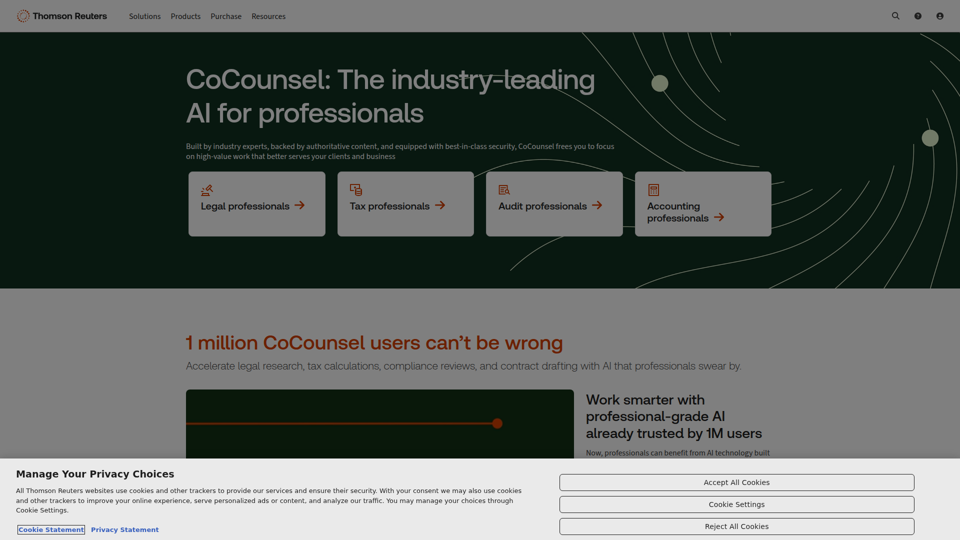
Historically, a significant portion of the finance team's bandwidth was consumed by data aggregation, reconciliation, and report production. A CFO would receive a monthly close package days after period end, built from spreadsheets stitched together by analysts working overnight. AI-powered financial platforms are collapsing that cycle. Real-time consolidation, automated variance analysis, and AI-generated narrative commentary are now standard features in platforms like Workday Adaptive Planning, Anaplan, and Oracle Fusion.
The more consequential shift is in forecasting. Traditional FP&A relied on static models updated monthly, driven by historical trends and management assumptions. AI-driven forecasting tools now ingest ERP data, CRM pipeline signals, macroeconomic feeds, and operational KPIs simultaneously, producing probabilistic forecasts with scenario ranges rather than single-point estimates. This changes what the CFO presents to the board — and what the board expects.
There is also a structural shift in the CFO's relationship with the rest of the C-suite. As AI surfaces financial signals faster and more granularly, CFOs are being pulled into real-time operational decisions — pricing changes, headcount adjustments, supply chain trade-offs — that previously would have been flagged only at month-end review.
Tasks AI Can Automate
- Financial close acceleration: Automated journal entries, intercompany eliminations, and reconciliation matching reduce close cycles from 10+ days to under five in well-configured ERP environments.
- Variance analysis narration: Tools like Microsoft Copilot for Finance and Workiva can auto-generate written commentary explaining budget-to-actual variances, pulling directly from ledger data.
- Cash flow forecasting: AI models trained on historical payment behavior, AR aging, and seasonal patterns generate rolling 13-week cash forecasts with minimal manual input.
- Expense categorization and anomaly detection: ML classifiers flag misrouted expenses, duplicate invoices, and policy violations before they reach the CFO's desk.
- Covenant monitoring: Automated dashboards track debt covenant ratios in real time against live ERP data, replacing manual spreadsheet checks.
- Board and investor reporting templates: AI drafts first versions of board decks, MD&A sections, and earnings call talking points from structured financial data.
- Tax provision calculations: Platforms like Thomson Reuters ONESOURCE automate deferred tax calculations and provision-to-return reconciliations.
- Audit preparation: AI tools pre-populate PBC (prepared by client) lists, organize supporting documentation, and flag high-risk accounts for auditor attention.
Skills Becoming More Valuable
Strategic capital allocation judgment — As routine analysis is automated, the CFO's value concentrates in decisions that require weighing incomplete information, organizational context, and long-term risk: where to invest, what to divest, when to raise debt versus equity.
Narrative and communication fluency — The ability to translate financial complexity into compelling stories for boards, investors, and employees is increasingly differentiating. AI can produce the numbers; it cannot yet read the room in an earnings call or manage a nervous audit committee.
Cross-functional operational literacy — CFOs who understand the unit economics of product, the cost drivers in supply chain, and the revenue mechanics of sales are better positioned to act on AI-generated signals. Financial insight without operational context produces bad decisions faster.
AI model governance and data architecture — CFOs are increasingly responsible for the integrity of the data feeding AI systems. Understanding model assumptions, data lineage, and forecast bias is now a core competency, not an IT concern.
Scenario planning and probabilistic thinking — As AI shifts forecasting from point estimates to probability distributions, CFOs need to be comfortable presenting and defending range-based outlooks to boards that were trained on single-number budgets.
M&A and integration execution — Due diligence, synergy modeling, and post-merger integration remain deeply human-intensive processes where judgment, negotiation, and organizational reading matter more than computation.
Skills Becoming Less Important
- Manual spreadsheet modeling as a primary analytical tool — Excel proficiency remains useful, but building complex models from scratch in Excel is increasingly a sign of infrastructure debt, not analytical rigor.
- Hands-on transaction processing and reconciliation — These tasks are being absorbed by ERP automation and AI agents; CFOs who still spend time here are operating below their leverage point.
- Static annual budgeting as the primary planning mechanism — The annual budget cycle is losing relevance in organizations that have adopted rolling forecasts and continuous planning platforms.
- Deep technical accounting for routine transactions — While technical accounting judgment remains critical for complex areas (revenue recognition, lease accounting, business combinations), routine application is increasingly handled by automated rules engines.
- Report production and data assembly — The finance team's role in manually compiling reports is shrinking; the value is in interpreting and acting on what the reports surface.
Current AI Adoption in This Industry
Adoption is uneven but accelerating. In enterprise and mid-market companies with modern ERP infrastructure (SAP S/4HANA, Oracle Cloud, Workday), AI-assisted forecasting and close automation are already in production. In smaller businesses or those running legacy systems, the bottleneck is data quality and integration, not AI availability.
The most mature AI deployments in finance are in:
- Accounts payable automation (Tipalti, Stampli, Coupa) — high ROI, low implementation risk, widely adopted
- FP&A and planning (Anaplan, Adaptive Planning, Pigment) — growing fast in companies with dedicated FP&A teams
- Treasury and cash management (Kyriba, HighRadius) — strong adoption in companies with complex multi-entity or multi-currency structures
- Audit and compliance (Workiva, AuditBoard) — AI-assisted risk assessment and documentation is now standard in Big Four audit workflows
Where adoption lags: strategic finance decisions, M&A modeling, investor relations, and any process that requires integrating unstructured qualitative context with financial data.
Future Workflow Evolution
The CFO's weekly workflow in 2027 will look structurally different from today. The close cycle will be largely continuous rather than periodic — AI agents will post accruals, flag anomalies, and update forecasts in near real-time, with human review concentrated on exceptions and judgment calls.
The FP&A function will shrink in headcount but increase in analytical output. A team of five analysts supported by AI planning tools will produce the analytical throughput that previously required fifteen. The remaining analysts will spend more time on business partnering — embedded in commercial and operational teams — and less time building models.
The CFO will spend more time in three areas: capital markets and investor relationships, enterprise risk and scenario planning, and cross-functional strategic decisions where financial framing shapes the outcome. The CFO will also become more directly accountable for AI governance in finance — ensuring that the models driving forecasts and decisions are auditable, unbiased, and aligned with regulatory expectations.
Board reporting will shift from backward-looking financial summaries to forward-looking scenario dashboards. The CFO will present three or four probabilistic scenarios with explicit assumptions rather than a single budget variance analysis.
Common AI Use Cases
Rolling forecast automation — AI ingests sales pipeline data from CRM, headcount data from HRIS, and spend data from ERP to produce an updated 12-month forecast weekly without manual analyst intervention.
Intelligent cash positioning — Treasury AI models predict daily cash positions across entities, recommend intercompany sweeps, and flag liquidity risks before they materialize.
Revenue recognition compliance — AI rules engines apply ASC 606 / IFRS 15 logic to contract data, flagging edge cases for human review and automating standard recognition entries.
Fraud and anomaly detection — ML models trained on transaction history flag unusual payment patterns, vendor master changes, and expense submissions that deviate from peer benchmarks.
Earnings call preparation — AI tools analyze analyst consensus models, prior call transcripts, and current financial results to draft anticipated Q&A scenarios and suggested responses.
FX and commodity hedging analysis — AI models simulate hedge effectiveness under multiple macro scenarios, supporting treasury decisions on hedge ratios and instrument selection.
Investor sentiment monitoring — NLP tools track analyst reports, earnings call transcripts, and financial news to surface shifts in investor sentiment before they appear in the stock price.
Recommended AI Stack
| Function | Tools |
|---|---|
| FP&A and planning | Anaplan, Workday Adaptive Planning, Pigment, Mosaic |
| Financial close | BlackLine, FloQast, Trintech |
| Treasury and cash | Kyriba, HighRadius, GTreasury |
| AP automation | Tipalti, Coupa, Stampli |
| Reporting and narrative | Workiva, Microsoft Copilot for Finance |
| Audit and compliance | AuditBoard, Diligent, Galvanize |
| Tax | Thomson Reuters ONESOURCE, Vertex |
| Data and analytics | Tableau, Power BI, Sigma (connected to ERP/data warehouse) |
| AI assistants | Microsoft Copilot (M365 integration), Glean (enterprise search) |
The most effective stacks are not the ones with the most tools — they are the ones where ERP data flows cleanly into planning and reporting layers without manual extraction. Data architecture is the CFO's most important infrastructure investment.
Risks & Challenges
Model opacity and auditability — AI-generated forecasts and journal entries must be explainable to auditors and regulators. Black-box outputs create audit risk and erode board confidence. CFOs need to demand model documentation and override capabilities from vendors.
Data quality as a constraint — AI amplifies whatever is in the underlying data. Organizations with fragmented ERP systems, inconsistent chart of accounts, or poor master data governance will get unreliable AI outputs. Garbage in, garbage out at machine speed.
Over-reliance on probabilistic forecasts — Scenario-based AI forecasting is more sophisticated than point estimates, but it can create false precision. CFOs need to maintain judgment about when the model's training data is no longer representative of current conditions — particularly during macro disruptions.
Talent displacement and team morale — Automating reconciliation and report production eliminates entry-level finance roles that historically served as training grounds. CFOs face a genuine challenge in building the next generation of finance talent when the apprenticeship model is being disrupted.
Vendor concentration risk — Finance functions are becoming dependent on a small number of AI-enabled platforms. Switching costs are high, and vendor failures or pricing changes carry significant operational risk.
Regulatory uncertainty — AI use in financial reporting, tax, and audit is subject to evolving regulatory guidance. The SEC, PCAOB, and IASB are all developing positions on AI-generated disclosures and audit evidence. CFOs operating in regulated industries need to monitor this actively.
Future Outlook (3–5 Years)
By 2028, the finance function in most mid-to-large enterprises will operate with 20–35% fewer headcount in transactional and reporting roles, offset by increased investment in financial data engineering, AI governance, and strategic business partnering.
The CFO role itself will bifurcate. In operationally complex businesses — manufacturing, logistics, multi-entity retail — the CFO will become more of a data and operations strategist, deeply embedded in real-time business performance management. In capital-intensive or highly regulated businesses — financial services, healthcare, energy — the CFO will remain primarily a risk, compliance, and capital markets leader, with AI serving as an analytical accelerant rather than a structural replacement.
The most significant structural change will be in FP&A. The traditional FP&A team — analysts building models, producing variance reports, and running budget cycles — will be largely replaced by a smaller team of financial strategists who configure, govern, and interpret AI planning systems. The output will be higher quality and more frequent; the team will be smaller and more senior.
CFOs who invest now in data infrastructure, AI literacy within their teams, and governance frameworks for AI-generated financial outputs will have a structural advantage. Those who treat AI as a cost-reduction tool rather than a capability-building investment will find themselves with cheaper but less capable finance functions.
Final Insight
The CFO's core value proposition has always been judgment under uncertainty — the ability to synthesize incomplete information, organizational context, and external conditions into decisions that protect and grow the enterprise. AI does not replace that. It removes the friction that prevented CFOs from exercising that judgment at the speed and granularity the business actually requires.
The CFOs who will define the next decade are not the ones who know the most about AI tools. They are the ones who understand what questions to ask of AI-generated outputs, who can build finance organizations that combine machine speed with human accountability, and who can communicate probabilistic financial realities to boards and investors still expecting certainty.
The finance function is not being automated. It is being restructured around a different kind of human contribution — one that is harder to develop, harder to replace, and more directly connected to enterprise value creation.