How AI fits this role
Corporate Tax Manager
Role Overview
A Corporate Tax Manager sits at the intersection of financial compliance, strategic planning, and regulatory risk. In most organizations — particularly mid-to-large enterprises in financial services, manufacturing, technology, and professional services — this role owns the end-to-end corporate income tax function: from quarterly provision calculations and deferred tax accounting under ASC 740 or IFRS, to managing external audits, transfer pricing documentation, and tax authority examinations.
The day-to-day reality is less glamorous than the title suggests. A significant portion of the role involves reconciling tax data pulled from ERP systems, coordinating with accounting teams to close the tax provision on tight deadlines, and maintaining workpapers that satisfy both internal controls and external auditors. The Corporate Tax Manager also serves as the internal subject matter expert when business units propose transactions — acquisitions, restructurings, intercompany arrangements — that carry tax consequences.
In most corporate environments, this role reports to a VP of Tax or Chief Tax Officer and manages a small team of tax analysts or senior associates. The pressure is structural: tax law changes constantly, audit cycles are long and adversarial, and the cost of errors — penalties, interest, reputational exposure — is asymmetric. Getting it right is expected; getting it wrong is visible.
How AI Is Transforming This Role
The transformation happening in corporate tax is not about replacing judgment — it is about eliminating the data assembly work that has historically consumed most of the role's bandwidth.
Corporate Tax Managers have traditionally spent 40–60% of their time on data gathering: pulling trial balances, reconciling book-to-tax differences, chasing down fixed asset schedules, and reformatting outputs from ERP systems into workpaper templates. AI-assisted data pipelines and intelligent document processing tools are compressing this work dramatically. What took two weeks of provision prep is increasingly a two-day review cycle.
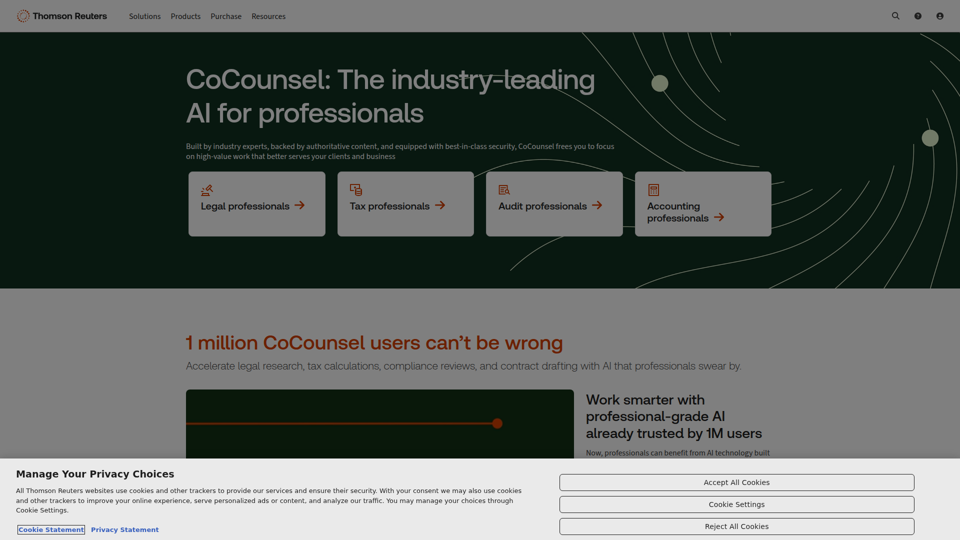
The more consequential shift is in tax research. Large language models trained on tax code, IRS guidance, Treasury regulations, and case law — tools like Bloomberg Tax's AI assistant, Thomson Reuters Checkpoint Edge with CoCounsel, and Taxologist — are changing how tax professionals locate and synthesize authority. A research memo that required three hours of Checkpoint navigation and manual synthesis now has a credible first draft in 30 minutes. The manager's job shifts from finding the answer to evaluating whether the answer is correct and complete.
Transfer pricing is another area seeing real workflow change. AI tools can now benchmark intercompany transactions against comparable databases, flag anomalies in intercompany pricing relative to arm's-length ranges, and draft initial sections of local file documentation. This does not eliminate the need for a tax professional to own the analysis — regulators in most jurisdictions still expect human sign-off and defensible judgment — but it removes the mechanical scaffolding work.
The commercial pressure accelerating adoption is real: Big Four advisory fees have increased substantially, and CFOs are asking tax departments to do more with flat headcount. AI tooling is increasingly positioned as the answer to that gap.
Tasks AI Can Automate
- Tax provision data assembly: Extracting trial balance data, mapping chart of accounts to tax categories, and populating provision workpapers from ERP outputs (SAP, Oracle, Workday).
- Book-to-tax difference identification: Flagging timing differences, permanent differences, and unusual variances against prior-period patterns using anomaly detection.
- Tax return data population: Pre-populating federal and state return schedules from financial data, reducing manual entry in platforms like OneSource or CorpTax.
- Research memo first drafts: Generating structured summaries of applicable code sections, regulations, and relevant rulings for a defined tax question.
- Transfer pricing benchmarking: Running comparable company searches in databases like Bureau van Dijk and generating initial arm's-length range outputs.
- Notices and correspondence triage: Classifying incoming IRS and state notices by type, urgency, and required response, and drafting initial response letters.
- Deferred tax rollforward: Automating the period-over-period rollforward of deferred tax assets and liabilities with variance explanations.
- State apportionment calculations: Applying apportionment formulas across jurisdictions based on payroll, property, and sales factor data.
- Deadline and filing calendar management: Tracking extension deadlines, estimated payment due dates, and audit response windows across multiple entities and jurisdictions.
Skills Becoming More Valuable
Tax technical judgment under ambiguity. When AI surfaces a research answer, someone still has to decide whether it is the right answer for this specific fact pattern, this specific entity, and this specific risk tolerance. That judgment — knowing when a position is defensible versus aggressive, when to disclose versus not — is not automatable.
Audit and controversy management. IRS examinations and state audits are adversarial processes that require negotiation, strategic sequencing of document production, and relationship management with revenue agents. AI can help organize the record; it cannot sit across the table.
Cross-functional translation. The ability to explain tax consequences to a CFO, a deal team, or a board audit committee in plain language — and to understand what business teams are actually trying to accomplish before advising on structure — is increasingly the differentiating skill.
AI output validation. As AI tools generate more of the first-draft work, the ability to critically evaluate those outputs — spotting hallucinated citations, incomplete authority, or misapplied standards — becomes a core competency rather than a nice-to-have.
Tax technology fluency. Understanding how data flows from ERP to provision software to return preparation platforms, and being able to configure or troubleshoot those integrations, is now a practical requirement in most mid-to-large tax departments.
International tax structuring. OECD Pillar Two, BEPS compliance, and the increasing complexity of cross-border structures require deep technical knowledge that AI tools can support but not replace.
Skills Becoming Less Important
Manual workpaper construction. Building Excel-based provision models from scratch, manually linking schedules, and formatting workpapers for auditor review — this work is being absorbed by purpose-built tax technology platforms.
Rote tax research navigation. Knowing how to navigate Checkpoint or Bloomberg Tax's legacy search interfaces, construct Boolean queries, and manually compile authority is less valuable when AI assistants can do the retrieval and initial synthesis.
Data reformatting and reconciliation. Manually reconciling ERP outputs to tax workpapers, reformatting trial balances, and cleaning data for return preparation are tasks that intelligent data pipelines are eliminating.
Memorization of rate tables and phase-out thresholds. With AI-assisted research tools providing instant lookups, the value of carrying detailed rate schedules in memory has declined.
Routine correspondence drafting. Standard response letters to notices, extension requests, and information document requests are increasingly template-driven and AI-assisted.
Current AI Adoption in This Industry
Adoption in corporate tax is real but uneven, and the gap between large and mid-market organizations is significant.
At Fortune 500 companies and large multinationals, AI-assisted provision tools (Longview Tax, OneSource Tax Provision with AI features, Corptax) are already in production. Thomson Reuters' CoCounsel integration into Checkpoint is being piloted by Big Four firms and their largest clients. Transfer pricing teams at major multinationals are using AI-assisted benchmarking workflows. The Big Four themselves have invested heavily in proprietary AI tooling — Deloitte's DT Assist, PwC's ChatPwC, EY's EY.ai — and are deploying these in client engagements.
At mid-market companies (revenue $500M–$5B), adoption is more fragmented. Many tax departments are still running provision processes in Excel with limited automation. The constraint is not awareness — tax managers at this level know the tools exist — it is integration complexity, IT prioritization, and budget. A $2M OneSource implementation competes with other enterprise software priorities.
At smaller companies, the most visible AI adoption is in the research layer: tax professionals using ChatGPT, Claude, or Checkpoint Edge for research acceleration, even without formal enterprise deployment. This is happening informally and ahead of policy in many organizations.
The audit and controversy space has seen less AI penetration, largely because the adversarial and judgment-intensive nature of examination work does not lend itself to automation in the same way.
Future Workflow Evolution
The corporate tax function in 2027–2028 will look structurally different from today, with the provision cycle as the clearest example of the shift.
Today's provision process is largely sequential: accounting closes the books, tax pulls the data, tax builds the provision, tax reviews and adjusts, external auditors review. Each handoff introduces delay and manual reconciliation. The emerging model is a continuous close: AI-assisted tools monitor the general ledger in near-real-time, flag book-to-tax differences as they arise, and maintain a rolling provision estimate that is updated automatically as transactions post. The quarterly close becomes a review and sign-off exercise rather than a construction exercise.
Return preparation will follow a similar pattern. As data pipelines between ERP systems and return preparation platforms mature, the return will increasingly be pre-populated and the tax manager's role will shift to reviewing, adjusting for non-standard items, and approving.
The research and planning workflow will bifurcate. Routine research questions — rate lookups, standard deduction calculations, basic compliance questions — will be handled by AI with minimal human involvement. Complex, fact-specific questions involving novel transactions, aggressive positions, or significant uncertainty will remain human-led, with AI providing research support rather than conclusions.
The headcount implication is real. Tax departments that currently employ three analysts to support a Tax Manager will likely operate with one or two, with AI tools absorbing the data assembly and routine research work. The Tax Manager role itself will not disappear, but it will require a different skill profile — more judgment, more technology fluency, less tolerance for manual process.
Common AI Use Cases
- Provision automation: AI-assisted tools like Longview and OneSource maintaining rolling deferred tax calculations updated from live ERP data.
- Research acceleration: CoCounsel or Checkpoint Edge generating structured research memos with cited authority for specific tax questions.
- Anomaly detection in tax data: Machine learning models flagging unusual book-to-tax differences, unexpected deferred tax movements, or apportionment factor anomalies.
- Transfer pricing documentation: AI drafting local file sections, running benchmarking analyses, and flagging intercompany transactions outside arm's-length ranges.
- Notice management: Intelligent document processing classifying and routing IRS and state notices, with AI-drafted initial responses for standard notice types.
- Tax planning scenario modeling: AI-assisted modeling of the tax impact of proposed transactions, restructurings, or elections across multiple jurisdictions.
- Pillar Two compliance: AI tools calculating GloBE income, jurisdictional effective tax rates, and top-up tax obligations under OECD Pillar Two rules.
- Audit support: AI organizing document production, identifying responsive documents, and summarizing large volumes of correspondence for examination management.
Recommended AI Stack
Tax research and analysis
- Thomson Reuters Checkpoint Edge with CoCounsel — the most mature AI research assistant in the tax space, with cited authority and workflow integration
- Bloomberg Tax with AI-assisted research — strong for legislative history and regulatory tracking
Provision and compliance
- OneSource Tax Provision (Thomson Reuters) — enterprise provision platform with AI-assisted data ingestion and variance analysis
- Longview Tax (insightsoftware) — strong for large multinationals with complex entity structures
- Corptax — established return preparation platform with growing automation features
Transfer pricing
- Bureau van Dijk Orbis with AI-assisted benchmarking — standard for comparable company searches
- Taxologist — emerging platform for transfer pricing documentation automation
Document and data processing
- Workiva — for workpaper management, audit trail, and cross-document linking
- Alteryx or Microsoft Power Query — for ERP data extraction and transformation pipelines
General AI assistance
- Microsoft Copilot (within M365 environment) — for drafting, summarization, and internal communication
- Claude or GPT-4 — for research synthesis and scenario analysis, with appropriate verification protocols
Risks & Challenges
Hallucinated tax authority. AI research tools can generate plausible-sounding but incorrect citations — citing a revenue ruling that does not exist, or mischaracterizing the holding of a case. In tax, a position supported by fabricated authority is worse than no position at all. Verification protocols are not optional.
Over-reliance on AI-generated positions. There is a real risk that tax managers, under time pressure, accept AI research outputs without adequate scrutiny. The professional and legal responsibility for a tax position rests with the human signatory, not the AI tool.
Data integration complexity. The promise of automated provision and return preparation depends on clean, well-structured ERP data. Most mid-market companies have messy charts of accounts, inconsistent entity coding, and legacy data issues that make automated pipelines harder to implement than vendors suggest.
Regulatory and ethical uncertainty. Tax authorities are beginning to ask questions about AI use in tax compliance. The IRS has not yet issued formal guidance on AI-assisted return preparation, and the professional responsibility implications for CPAs using AI tools are still being worked out by state boards and the AICPA.
Vendor lock-in and integration risk. The major tax technology platforms are moving aggressively to bundle AI features, creating pressure to consolidate on a single vendor's ecosystem. This creates switching costs and dependency risk.
Talent transition friction. Tax professionals who built their careers on manual process expertise may resist AI adoption or lack the technical fluency to use new tools effectively. Managing this transition — particularly for senior staff — is a real organizational challenge.
Future Outlook (3–5 Years)
The Corporate Tax Manager role will persist, but the job description will be substantially rewritten by 2028.
The provision cycle will be largely automated at companies that have invested in modern tax technology infrastructure. The Tax Manager's involvement in provision will shift from construction to review, exception handling, and judgment calls on non-standard items. Quarterly close timelines will compress.
Transfer pricing documentation will be AI-assisted as a baseline expectation, not a differentiator. The human value-add will be in defending positions under examination and making strategic decisions about intercompany pricing policy — not in drafting boilerplate local file sections.
The research function will bifurcate sharply. Routine compliance research will be AI-handled. Complex planning research — novel transactions, aggressive positions, cross-border structures — will remain human-led with AI support. The premium on deep technical judgment will increase as the routine work disappears.
Headcount in corporate tax departments will likely decline modestly at the analyst and senior associate level, with the Tax Manager role becoming more strategic and less operational. Companies that currently outsource significant compliance work to Big Four or regional firms may bring more work in-house as AI tools reduce the labor intensity of compliance.
The Tax Manager who thrives in this environment will be one who can operate as a technology-enabled strategist: fluent in the tools, rigorous about AI output validation, and capable of providing the judgment and advocacy that no AI system can replicate.
Final Insight
The Corporate Tax Manager role is not being automated — it is being restructured. The work that AI is absorbing is real and significant: data assembly, routine research, mechanical calculations, standard correspondence. But the work that remains — judgment under ambiguity, audit advocacy, cross-functional advising, technology governance — is more valuable, not less.
The professionals who will struggle are those who have built their identity around technical process mastery: knowing how to build the provision model, knowing how to navigate Checkpoint, knowing how to format the workpapers. That expertise is not worthless, but it is no longer the differentiator.
The professionals who will thrive are those who treat AI tools as a leverage mechanism for their judgment — who can evaluate a research memo critically, spot a flawed benchmarking analysis, and explain a complex tax position to a CFO who does not want to hear about IRC Section 482. The technical foundation still matters; it just needs to be paired with the kind of strategic and communicative capability that the role has historically undervalued.
The window for building that capability is now. Tax departments that wait for the technology to mature before developing AI fluency will find themselves behind — not in tools, but in the organizational habits and professional skills that make those tools useful.