How AI fits this role
Community College Instructor in the Age of AI
Role Overview
Community college instructors occupy a structurally distinct position in American higher education. Unlike four-year university faculty, they carry heavier teaching loads — typically four to five courses per semester — with minimal research obligations, limited administrative support, and student populations that skew toward first-generation college students, working adults, career changers, and learners with significant remediation needs.
The role spans two primary tracks: transfer-pathway instruction (English composition, introductory psychology, calculus, biology) and workforce development (medical assisting, HVAC, welding, cybersecurity, early childhood education). Both tracks are under simultaneous pressure from declining enrollment trends, state funding tied to completion metrics, and employer demands for graduates with demonstrable, current skills.
Instructors are expected to design curriculum, deliver instruction, assess learning, advise students, and increasingly serve as the first line of intervention for students at risk of dropping out. Many are adjunct faculty — roughly 70% of community college instruction is delivered by contingent workers — which means the AI transformation of this role is playing out across a workforce with limited institutional support, inconsistent access to professional development, and real economic precarity.
How AI Is Transforming This Role
The transformation is not arriving as a single disruptive event. It is accumulating through a series of operational shifts that individually seem manageable but collectively are restructuring what instructors spend their time on.
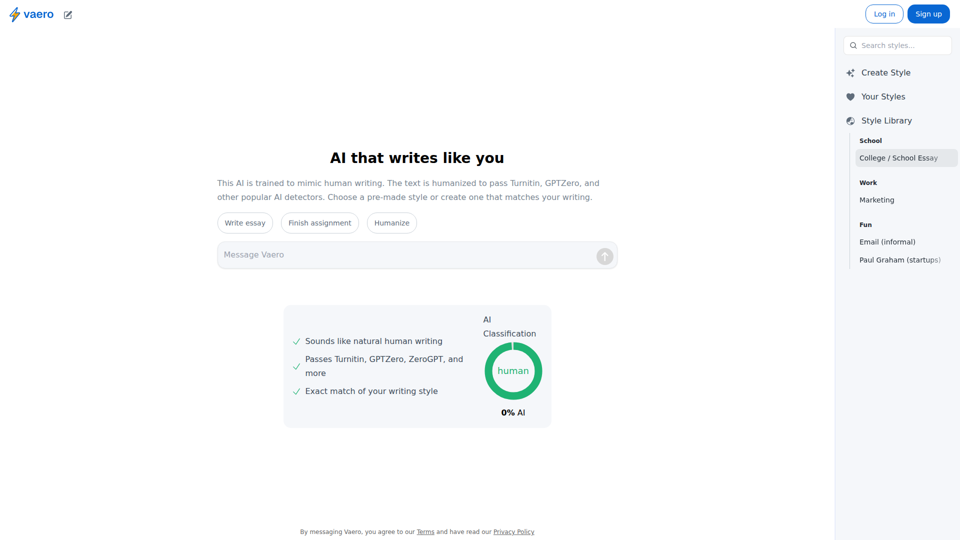
Grading and feedback pipelines are changing first. Tools like Turnitin's AI feedback layer, Gradescope, and Khanmigo are being adopted at the institutional level, often without instructor input. Instructors are finding that students arrive having already received AI-generated feedback on drafts before submitting — which changes the nature of what a grade represents and what instructor feedback is supposed to add.
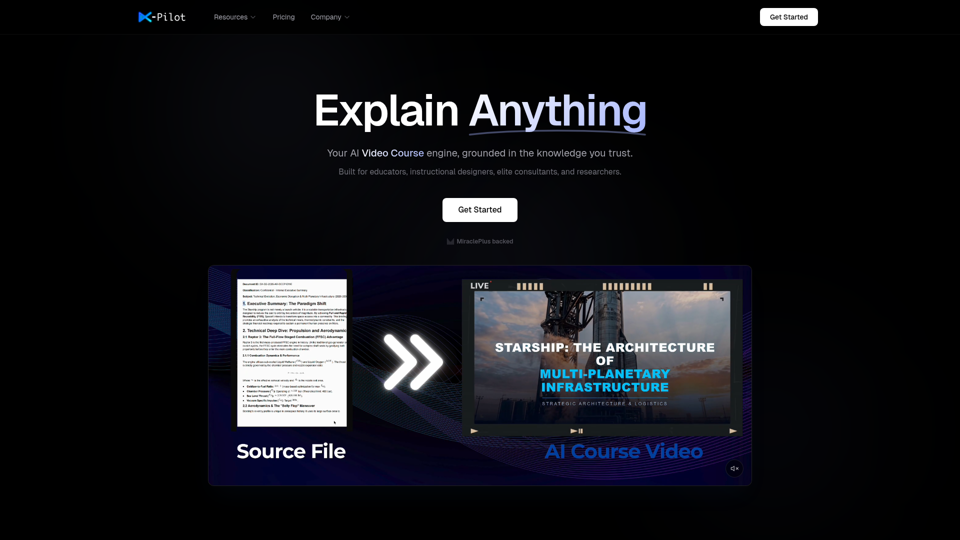
Course content generation is being centralized. Some community college systems — particularly large multi-campus districts in California, Texas, and Florida — are piloting centrally produced AI-assisted course shells that adjuncts are expected to deliver rather than design. This mirrors the "teacher-proof curriculum" debates of K-12 education and raises parallel concerns about deskilling.
Student communication volume has increased, not decreased. AI-powered chatbots handle tier-one advising queries (registration deadlines, financial aid status, course prerequisites), but this has shifted student expectations toward faster response times across all channels, including direct instructor communication. Instructors report higher asynchronous communication loads, not lower.
Proctoring and academic integrity infrastructure has expanded. Respondus, Honorlock, and similar tools are now standard in many online sections, creating a surveillance layer that instructors must manage, interpret, and adjudicate — a new administrative burden that did not exist five years ago.
Tasks AI Can Automate
- Generating first-draft rubrics for standard assignment types (argumentative essays, lab reports, case analyses)
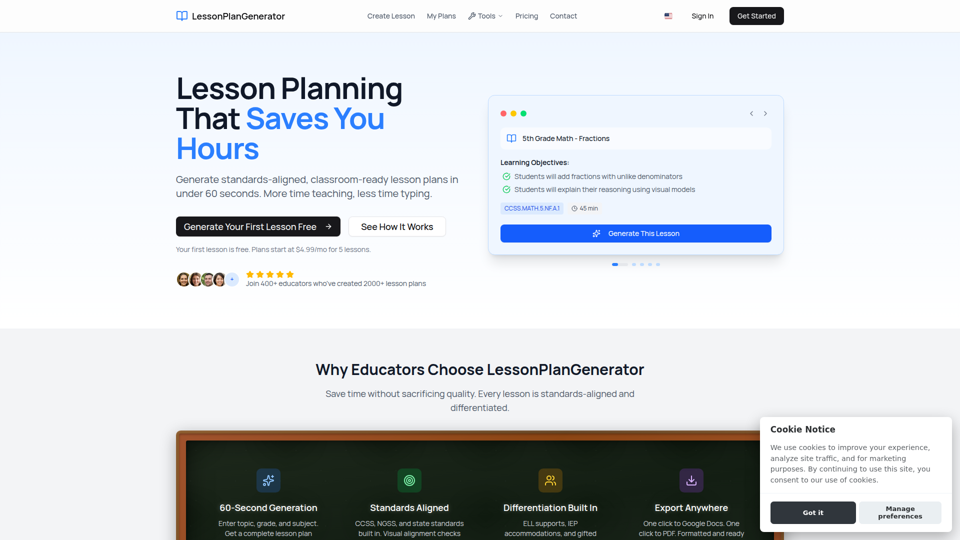
- Producing multiple versions of quiz questions from a learning objective or textbook chapter
- Summarizing student performance data across a course section to surface struggling learners early
- Drafting course announcements, syllabus language, and policy explanations
- Generating accessible alt-text for course images and auto-captioning lecture recordings
- Translating course materials into Spanish, Vietnamese, Tagalog, and other languages common in community college student populations
- Flagging potential academic integrity issues in submitted work for instructor review
- Creating practice problem sets with worked solutions for quantitative courses
- Producing initial drafts of course learning outcomes aligned to accreditation frameworks (ACCJC, HLC)
Skills Becoming More Valuable
Diagnostic teaching judgment. The ability to identify why a specific student is struggling — not just that they are — becomes more valuable as AI handles surface-level performance flagging. Distinguishing between a student who lacks prerequisite knowledge, one who is dealing with food insecurity, and one who is disengaged requires human pattern recognition built from direct interaction.
Curriculum coherence and sequencing. As AI tools make it easy to generate individual lesson components, the skill of assembling those components into a coherent learning arc — one that accounts for the specific population, the transfer or workforce destination, and the institutional context — becomes a genuine differentiator.
Facilitation of high-stakes discussion. In courses covering ethics, social issues, health, and civic topics, the ability to hold productive disagreement in a classroom of adults with divergent life experiences is not automatable. This is a craft skill that experienced instructors develop over years.
AI output evaluation and editing. Instructors who can critically assess AI-generated content — identifying factual errors, disciplinary inaccuracies, inappropriate reading levels, or cultural blind spots — are more valuable than those who either reject AI entirely or accept its output uncritically.
Intrinsic motivation and persistence coaching. Community college students face dropout pressures that are largely non-academic: childcare failures, shift schedule changes, transportation breakdowns, financial shocks. Instructors who can recognize these signals and connect students to resources — or simply provide the human acknowledgment that keeps someone enrolled through a hard week — are performing work that no AI system replicates.
Skills Becoming Less Important
- Manual quiz and test construction from scratch for standard content areas
- Formatting and layout work for course documents and presentations
- Searching for and compiling supplementary reading lists (AI can generate annotated bibliographies faster than manual library searches)
- Writing boilerplate correspondence: absence policy reminders, grade dispute process explanations, late work request responses
- Basic data entry and gradebook maintenance in LMS platforms
- Producing closed captions and transcripts manually for recorded lectures
- Translating standard course documents without specialized terminology
Current AI Adoption in This Industry
Adoption is uneven and institution-driven rather than instructor-driven. The pattern emerging across community college systems looks roughly like this:
Early adopters (roughly 15–20% of institutions): Have deployed AI writing feedback tools, AI-assisted early alert systems integrated into their LMS (Canvas, Blackboard, D2L), and piloted AI tutoring tools like Khanmigo or Coursera's AI coaching features. Some have formal AI literacy requirements embedded in general education.
Middle majority (roughly 50–60%): Have updated academic integrity policies to address generative AI, are running faculty professional development workshops, and have individual instructors experimenting independently — but lack coordinated institutional strategy.
Laggards (roughly 20–30%): Are still primarily responding to AI through prohibition policies, have not updated curriculum or assessment design, and are experiencing the consequences in the form of widespread undetected AI-assisted work submission.
The California Community Colleges system, which enrolls over 1.8 million students, has been among the more active in developing AI guidance frameworks. The American Association of Community Colleges (AACC) published its first AI position statement in 2023, but implementation remains local.
Future Workflow Evolution
The community college instructor's workflow in 2027 will likely look like this:
Before the semester: AI tools generate a draft course shell — syllabus, weekly schedule, assignment prompts, rubrics, quiz banks — aligned to the course's official learning outcomes. The instructor's job is to audit this draft for accuracy, adjust it for their specific student population and local labor market context, and add the elements that require human judgment: the sequencing logic, the discussion design, the real-world case studies drawn from local industry.
During the semester: An AI-powered early alert dashboard surfaces students showing risk indicators (missed submissions, declining quiz scores, LMS login gaps) before the instructor would notice manually. The instructor uses this to prioritize outreach. AI handles first-pass feedback on drafts; instructor feedback focuses on higher-order issues the AI cannot reliably address — argument structure, disciplinary reasoning, conceptual misunderstanding.
Assessment: Instructors shift toward assessment designs that are harder to complete with AI alone: oral defenses, in-class demonstrations, portfolio reflections on process, collaborative projects with observable individual contributions. This is not primarily about catching cheating — it is about designing assessments that actually measure what the course is supposed to develop.
Administrative: AI drafts responses to common student emails; instructors review and send. AI generates the data summaries required for program review and accreditation; instructors interpret and contextualize them.
Common AI Use Cases
- Early alert and retention: Platforms like Civitas Learning and EAB Navigate use predictive analytics to flag at-risk students; instructors receive prioritized outreach lists rather than raw grade data
- Writing feedback at scale: Tools like Turnitin Feedback Studio with AI layers, Grammarly Business, and Writable provide students with immediate draft feedback, allowing instructor feedback to focus on revision strategy rather than surface errors
- AI tutoring for high-DFW courses: Math and English — the two highest-failure-rate subjects in community colleges — are the primary deployment targets for tools like Carnegie Learning's MATHia and Khan Academy's Khanmigo
- Accessibility automation: Ally (integrated with Canvas and Blackboard) automatically generates alternative formats for course files and scores accessibility; instructors see a dashboard of materials needing remediation
- Curriculum alignment tools: Some institutions are piloting AI tools that map course content to program learning outcomes and accreditation standards, surfacing gaps that would previously require manual curriculum mapping
- Workforce program currency: In CTE programs, AI tools that monitor job posting data (Lightcast, formerly EMSI Burning Glass) help instructors identify when curriculum is drifting from current employer skill demands
Recommended AI Stack
These tools reflect what is actually being deployed in community college environments, not aspirational enterprise software:
LMS-integrated tools (lowest friction to adopt):
- Canvas with AI-powered analytics and Ally for accessibility
- Turnitin with AI feedback and integrity detection
- Honorlock or Respondus for proctored assessments
Student support and retention:
- EAB Navigate or Civitas Learning for early alert
- Khanmigo or Carnegie Learning MATHia for math tutoring
- Packback for AI-facilitated discussion boards with quality scoring
Instructor productivity:
- ChatGPT (GPT-4o) or Claude for rubric drafting, quiz generation, and course material drafting — used directly by instructors, not institutionally deployed
- Otter.ai or Microsoft Copilot for transcribing office hours and lecture recordings
- Canva AI for accessible visual course materials
Workforce program intelligence:
- Lightcast (EMSI Burning Glass) for labor market data integration into CTE curriculum
Risks & Challenges
Deskilling of adjunct faculty. If AI-generated course shells become the norm and adjuncts are positioned as delivery mechanisms rather than curriculum designers, the professional knowledge base of the contingent workforce erodes. This creates long-term fragility: when AI-generated content is wrong or inappropriate, there may be fewer instructors with the disciplinary depth to catch it.
Equity in AI access. Students at community colleges are disproportionately likely to be using AI tools on mobile devices with limited data plans, in shared housing without quiet study space, and without the digital literacy to use AI tools critically. Instructors who design AI-integrated coursework without accounting for this create new access barriers.
Academic integrity framework collapse. Current AI detection tools have meaningful false positive rates and are being successfully challenged in academic integrity proceedings. Institutions that built their integrity infrastructure around detection are discovering it is not sustainable. The shift toward assessment redesign is the right response, but it requires significant faculty development investment that many institutions are not making.
Vendor dependency and data privacy. Community colleges are signing multi-year contracts with AI tool vendors without adequate data governance frameworks. Student interaction data with AI tutoring tools, early alert systems, and proctoring platforms is being used to train commercial models under terms that most faculty and students have not read.
Workload redistribution, not reduction. The evidence from early adopters suggests AI tools are not reducing instructor workload — they are shifting it. Less time on routine grading; more time on academic integrity adjudication, AI tool management, and the higher-complexity student interactions that AI surfaces but cannot resolve.
Future Outlook (3–5 Years)
The structural pressure on community college instruction will intensify before it stabilizes. Several dynamics are converging:
Enrollment demographics are shifting toward older, working adults who have stronger preferences for flexible, competency-based, and stackable credential pathways — formats that AI-assisted personalized learning is better suited to support than traditional semester-length courses.
State funding models are moving toward outcomes-based funding tied to completion, transfer, and employment rates. This creates institutional pressure to use AI tools that improve these metrics, regardless of whether they improve learning.
The workforce development side of community colleges faces direct competition from employer-run training programs, bootcamps, and platform-based credentials (Google Career Certificates, AWS certifications, Coursera for Business). These alternatives are increasingly AI-personalized and employer-validated. Community colleges that cannot demonstrate faster time-to-credential and stronger employer alignment will lose enrollment in CTE programs.
The transfer pathway faces different pressure: four-year institutions are scrutinizing the quality of transfer preparation more carefully as their own enrollment pressures increase. Instructors in transfer-pathway courses will face more external accountability for learning outcomes.
The instructors who will be most secure in this environment are those who have developed expertise in a specific workforce domain (not just a discipline), can design assessments that AI cannot trivially complete, and can work effectively with the non-academic barriers that prevent community college students from completing. These are human capabilities that AI augments but does not replace.
Final Insight
The community college instructor role is not being automated — it is being stratified. The routine, reproducible components of the job (content delivery, basic feedback, quiz construction, document formatting) are being absorbed by AI tools at an accelerating pace. What remains — and what becomes more valuable — is the judgment-intensive, relationship-dependent, context-specific work that the student population actually needs most.
The risk is not that AI replaces instructors. The risk is that institutions use AI to justify larger class sizes, heavier adjunct loads, and reduced investment in faculty development, while the students who most need skilled human instruction — first-generation students, working adults, learners with remediation needs — receive less of it. That is a policy and governance failure, not a technological inevitability.
Instructors who understand this distinction, who can articulate what they do that AI cannot, and who can redesign their courses and assessments accordingly, are not threatened by this transition. They are positioned to define what quality community college instruction means in the next decade.