
Sinaptic.AI - Data Protection Extension | Prevent PII Leakage to AI Tools
Rate this Tool
Average Score
Total Votes
Select your score (1-10):
Detail Information
What
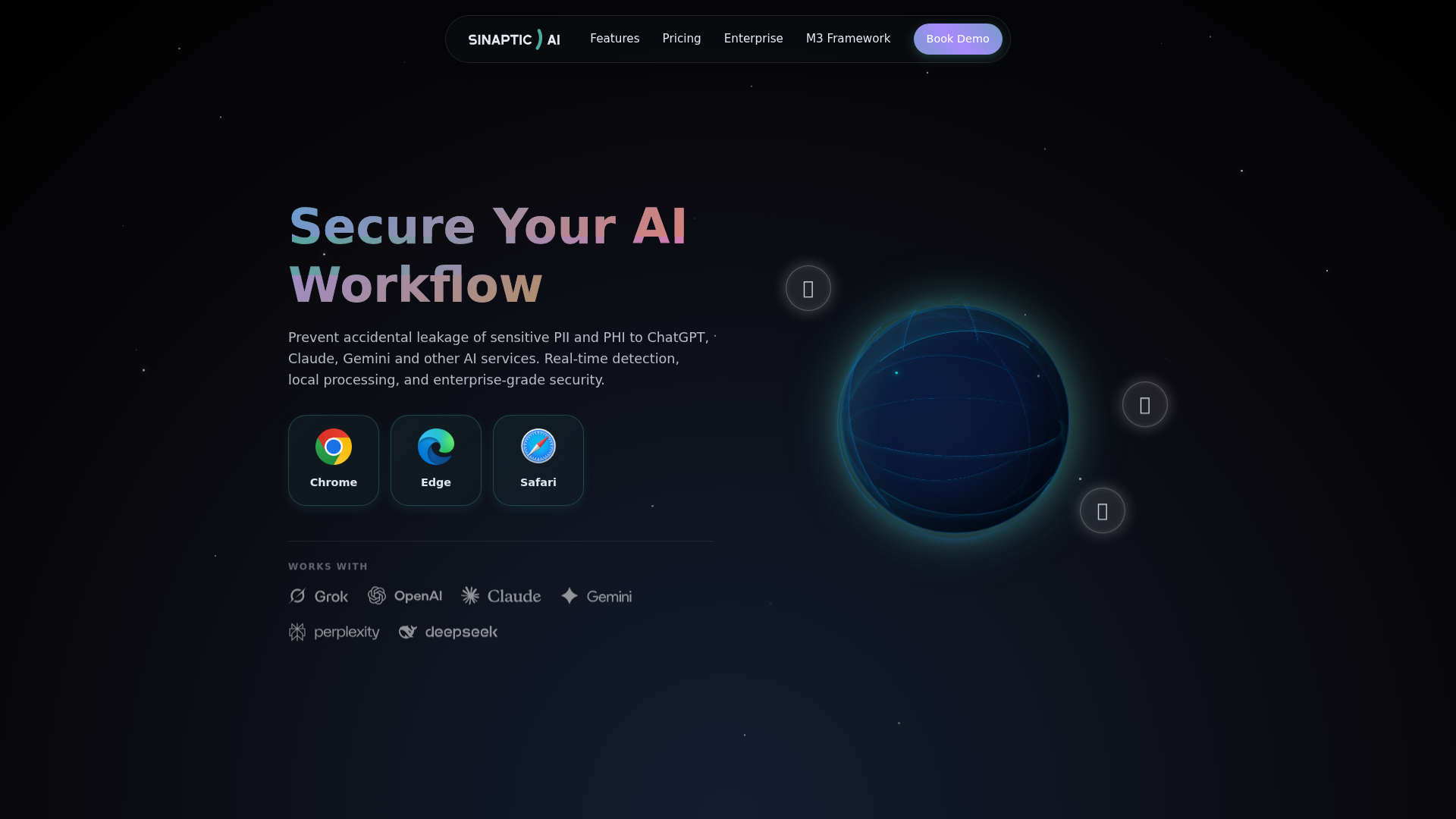
Sinaptic.AI Data Protection Extension is a browser extension designed to prevent accidental sharing of sensitive information with AI tools such as ChatGPT, Claude, Gemini, and other web-based services. It focuses on detecting personally identifiable information (PII) and protected health information (PHI) in real time before data leaves the browser.
The product appears to serve both individual users and enterprise security, privacy, and compliance teams. Its core workflow is to scan text entered into AI interfaces, identify sensitive data locally on the device, warn the user visually, and intercept outbound requests when needed; in positioning terms, it sits between browser-based AI usage and organizational data protection controls.
Features
- Real-time input scanning: Detects PII and PHI instantly using a combination of regex and NLP so sensitive content can be identified before submission.
- Smart validation logic: Uses methods such as the Luhn algorithm and contextual checks to reduce false positives and better distinguish actual sensitive data from benign strings.
- Network request interception: Injects into page context to intercept and block sensitive data transmission at the browser level, which helps stop leakage at the source.
- Inline visual warnings: Marks sensitive text with subtle underlines and tooltips directly in the text area, helping users understand and correct issues in place.
- Custom rule controls: Supports exclusion rules, monitor-all mode, and domain whitelisting so teams can tune protection to their environments and workflows.
- Local processing and logging: Keeps detection on-device and stores hashed local logs with masked values, supporting privacy-first operation and basic incident review.
Helpful Tips
- Evaluate detection quality against your actual data patterns, especially if teams work with structured IDs, health information, or internal secrets that may need custom rule tuning.
- For enterprise rollout, clarify how centralized policy management, SIEM ingestion, SSO, and silent deployment fit into existing browser management and security operations processes.
- Use visual feedback features as part of user education, since inline warnings can help reduce repeat mistakes without fully blocking every workflow.
- Review local log retention and incident reporting behavior carefully to confirm they match internal privacy, audit, and evidence-handling requirements.
- If AI usage spans many approved and unapproved tools, prioritize products like this that operate at the browser layer, since coverage may depend less on native vendor integrations.
OpenClaw Skills
Within the OpenClaw ecosystem, this product could likely support skills focused on AI usage governance, prompt hygiene, and browser-level data loss prevention workflows. A practical agent layer could summarize local or enterprise incident signals, recommend rule updates, classify leak attempts by type such as payment data or credentials, and route policy exceptions to security or compliance reviewers. These are likely use cases rather than confirmed native integrations, since the page does not describe OpenClaw connectivity directly.
Combined with OpenClaw, Sinaptic.AI could help create workflows for secure AI enablement in regulated or risk-sensitive environments. For example, an OpenClaw skill could likely monitor recurring blocked patterns, generate department-specific guidance, map incidents to frameworks such as GDPR or HIPAA in an advisory manner, and help operations teams standardize safe AI adoption. In professions such as security, compliance, legal operations, and healthcare administration, that combination could shift AI oversight from reactive policy enforcement toward more continuous, user-level risk prevention.
Embed Code
Share this AI tool on your website or blog by copying and pasting the code below. The embedded widget will automatically update with the latest information.
<iframe src="https://aimyflow.com/ai/sinaptic-ai/embed" width="100%" height="400" frameborder="0"></iframe>
Explore Similar Tools
truthsystems
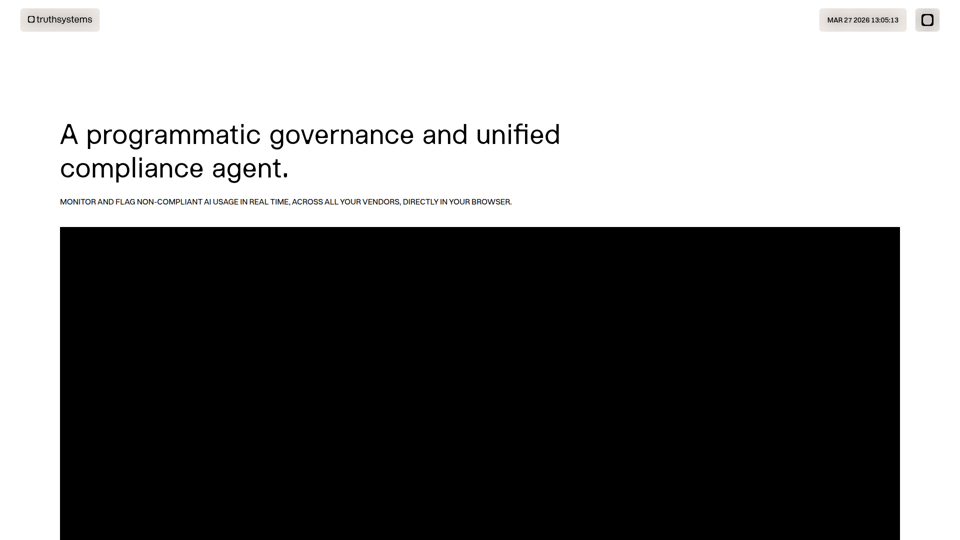
Truth Systems is a programmatic AI governance and unified compliance agent that helps organizations, especially legal teams and innovation leaders, monitor and block non-compliant AI use in real time across vendors through a browser extension and platform. For compliance, legal, and risk professionals, it can make AI oversight more actionable by embedding live guardrails, access controls, and audit trails directly into everyday work.
Variance
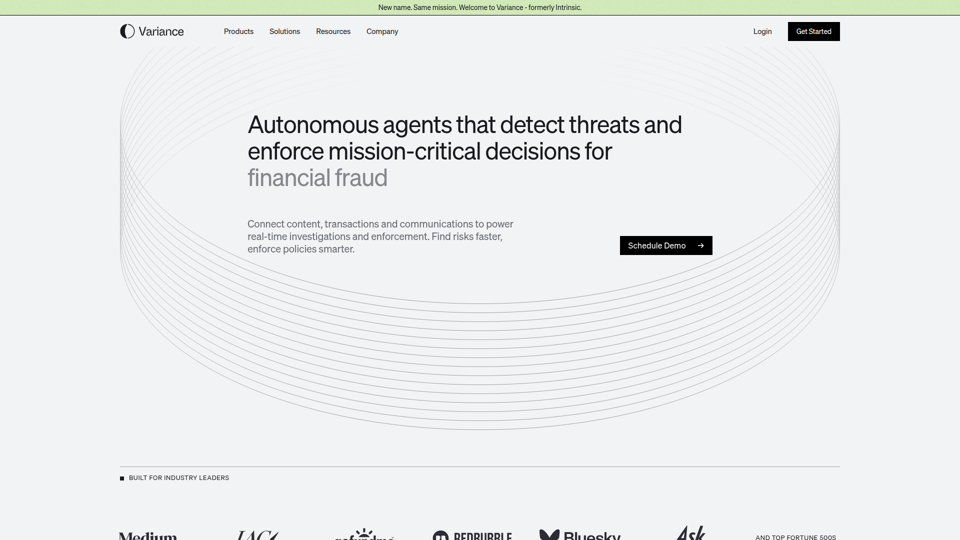
Variance is an AI risk intelligence platform that helps enterprises detect, investigate, and enforce against fraud, user-generated content violations, marketplace abuse, and other trust and safety risks, mainly for teams in content platforms, marketplaces, and financial services. For trust and safety, fraud, compliance, and security teams, it can speed real-time investigations and policy enforcement by connecting data streams and automating decisions across large volumes of activity.
Home | Veria Labs
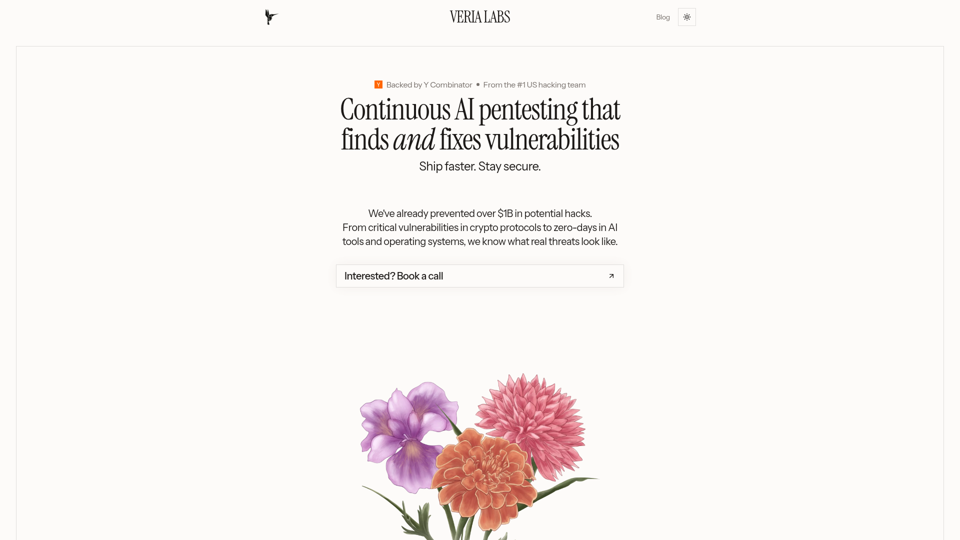
Veria Labs is an AI-powered continuous pentesting platform that analyzes codebases and CI/CD workflows to find, validate, and suggest fixes for real application vulnerabilities, mainly for security and engineering teams in high-stakes industries. For AppSec, security engineers, and developers, it can bring offensive security testing closer to every pull request so issues are identified and remediated earlier in the software delivery process.
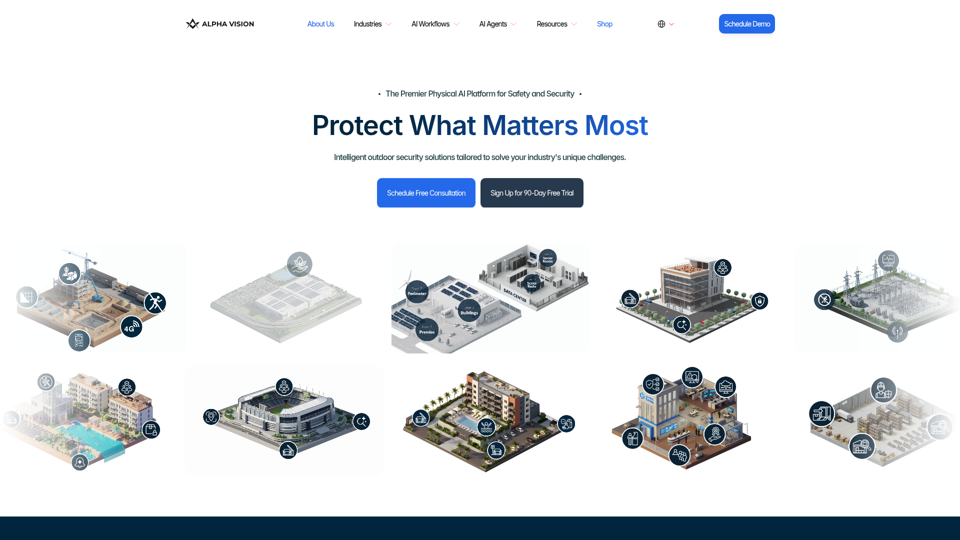
Premier Physical AI Security Platform & Outdoor Solutions | Alpha Vision | Free Trial
Alpha Vision is a physical AI security platform that uses AI agents and workflows to monitor outdoor sites, detect unsafe or unauthorized activity, deter trespassing, and search footage, mainly for security, safety, and operations teams in industries such as construction, education, retail, utilities, and commercial real estate. In AI-enabled security operations, it can help site managers, investigators, and safety leaders respond faster, review incidents more efficiently, and maintain broader coverage across large or distributed properties.
Autonomous AI Pentesting Platform | Maced AI
Maced AI is an autonomous AI penetration testing platform that helps engineering and security teams find, validate, and fix vulnerabilities across code, APIs, web apps, cloud, and infrastructure, while producing audit-ready reports for SOC 2 and ISO 27001 workflows. For security engineers, DevSecOps teams, and compliance-focused developers, it can shorten remediation cycles by turning validated findings into proof-of-exploit evidence and merge-ready fix guidance.
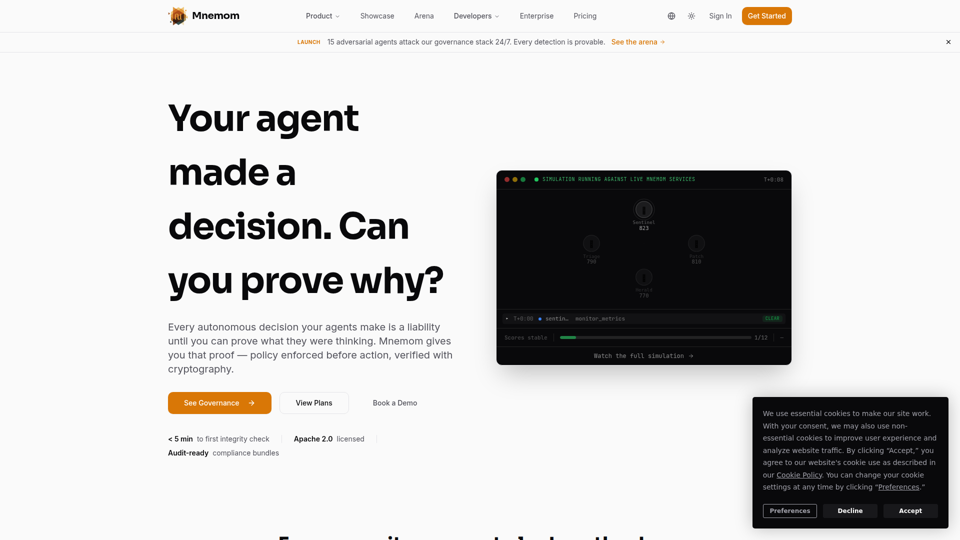
Mnemom — Prove What Your AI Agents Are Thinking
Mnemom is an AI governance and trust infrastructure platform that helps organizations prove, enforce, and audit what AI agents did and why with cryptographic verification, mainly for enterprise security, compliance, and engineering teams. For CISOs, compliance leaders, and AI platform teams, it can strengthen agent oversight by enabling pre-action policy enforcement and audit-ready evidence instead of relying only on after-the-fact logs.
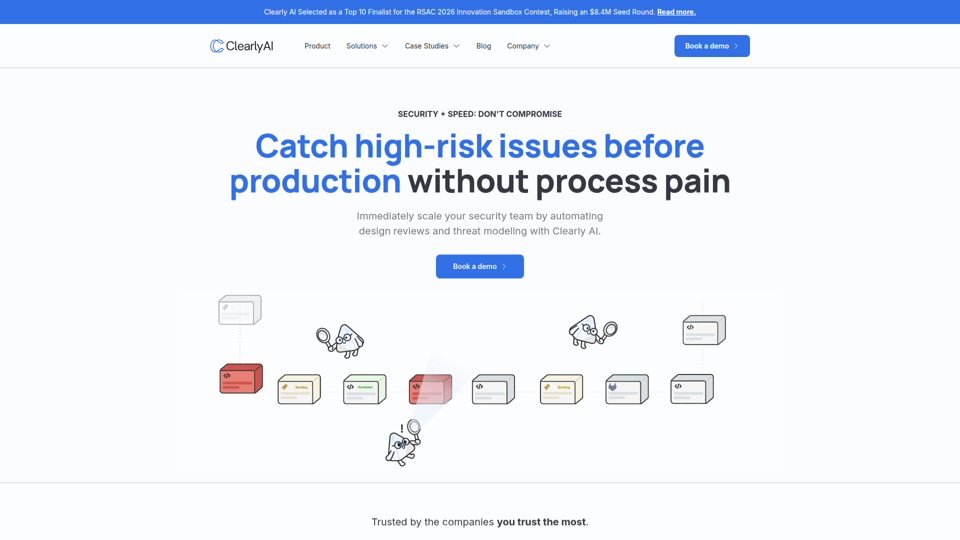
Clearly AI
Clearly AI is an AI security and privacy review platform that automates threat modeling, design reviews, and risk triage to help security, privacy, and product teams ship software faster with better review coverage. In AI-assisted software delivery, it helps application security and privacy professionals focus human judgment on prioritized findings instead of repetitive document analysis and manual questionnaires.
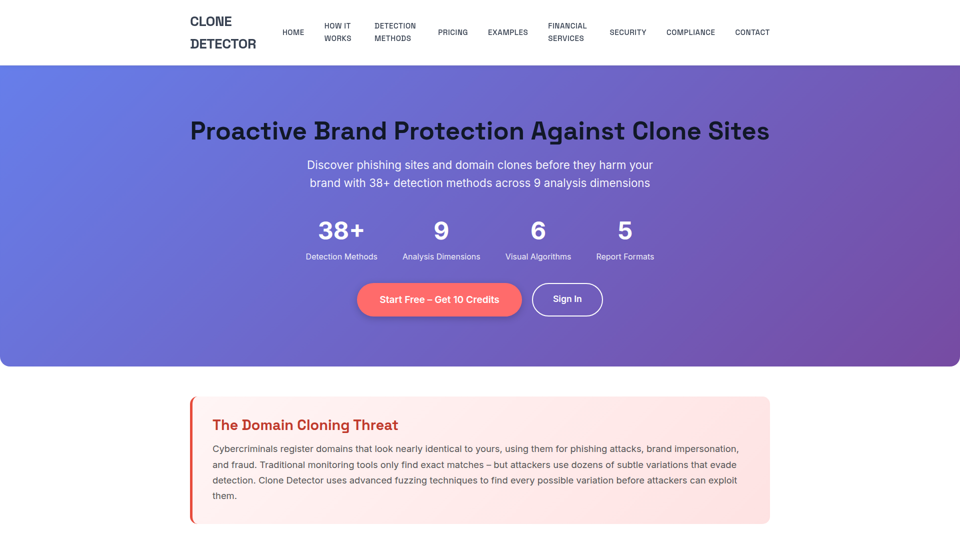
Clone Detector – Brand Protection & Phishing Site Detection Tool
Clone Detector is a brand protection and phishing site detection tool that helps businesses and security teams find fraudulent domain clones and lookalike websites using domain fuzzing, visual similarity analysis, and risk-based reporting. For cybersecurity, compliance, and brand protection roles, it can improve AI-era monitoring by surfacing subtle impersonation threats earlier and supporting faster investigation, reporting, and response.