
Clone Detector – Brand Protection & Phishing Site Detection Tool
Rate this Tool
Average Score
Total Votes
Select your score (1-10):
Detail Information
What
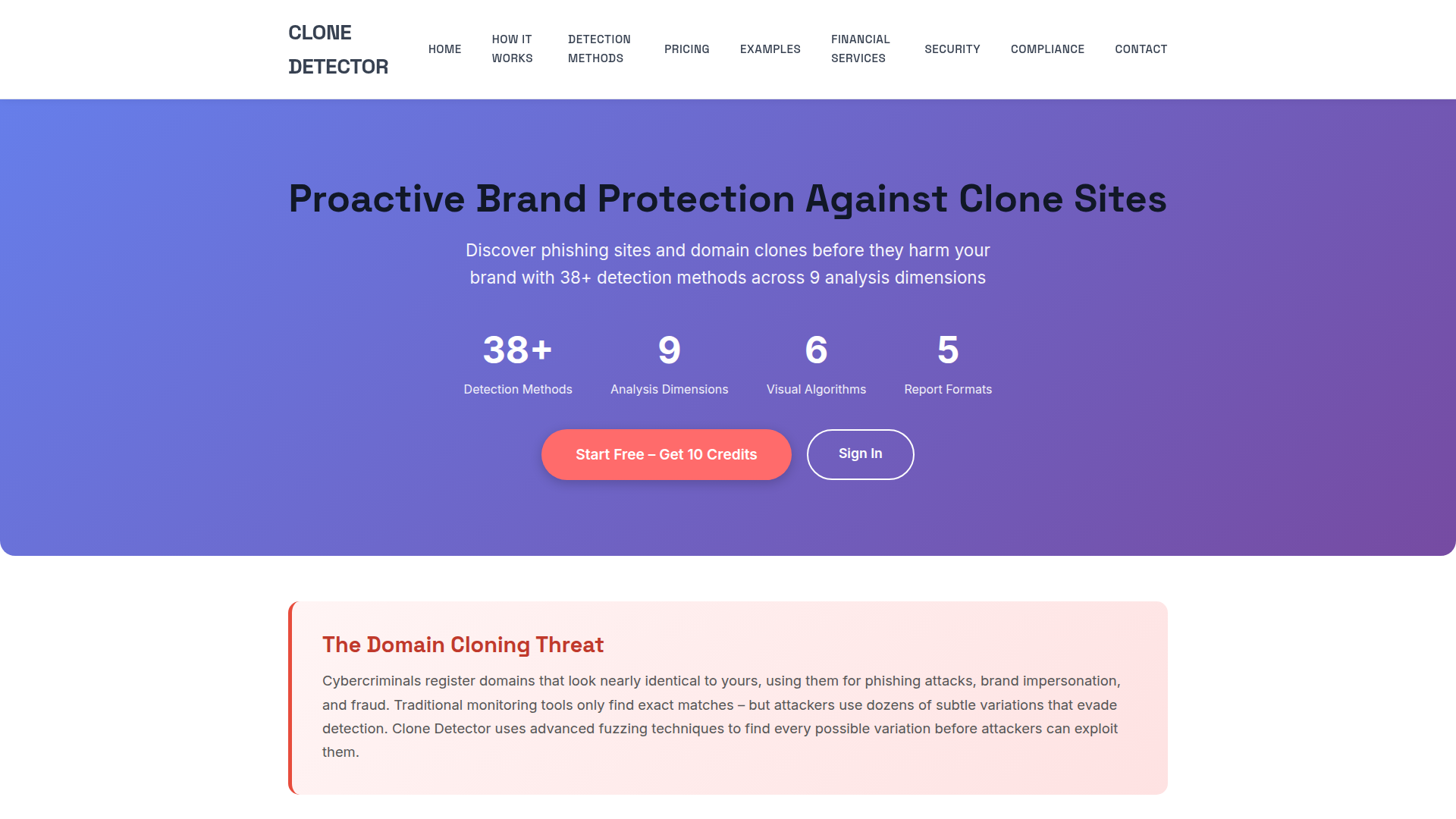
Clone Detector is a brand protection and phishing site detection tool focused on finding domains and websites that imitate a legitimate brand. It is designed for organizations that want to detect domain clones, phishing infrastructure, and fraudulent lookalike sites before they are used to harm customers or damage reputation.
The product’s workflow starts with a monitored domain, generates many likely variations through domain fuzzing, analyzes each variation across multiple technical and visual signals, and returns a risk-scored report. Based on the page, it appears positioned as a proactive monitoring tool for security, fraud prevention, and brand protection teams, with particular relevance for businesses exposed to phishing and impersonation risk.
Features
- 38+ domain clone detection methods — Finds lookalike domains using techniques such as homoglyph attacks, bitsquatting, character substitution, omission, repetition, and TLD manipulation to uncover variations that simple exact-match monitoring can miss.
- 9 analysis dimensions — Evaluates discovered domains using visual similarity, domain intelligence, certificate analysis, content inspection, behavioural indicators, and threat intelligence to support more complete risk assessment.
- 6 visual comparison algorithms — Uses methods including SSDeep, pHash, wHash, aHash, SIFT, and color histogram analysis to detect visual similarity between sites even when underlying code differs.
- Configurable scan depth — Supports Quick, Standard, Deep, and Complete scans so teams can choose broader or more intensive analysis depending on urgency and monitoring needs.
- Live and scheduled scanning — Shows scan progress in real time and supports daily, weekly, or monthly automated scans for ongoing monitoring.
- Multiple report outputs and API access — Exports findings in HTML, PDF, JSON, CSV, and XML, and offers a REST API for adding scan results into existing security workflows.
Helpful Tips
- Validate fit against your monitoring scope — This type of tool is most useful when your organization has a meaningful phishing, impersonation, or domain abuse exposure across multiple brands, products, or regions.
- Prioritize triage workflows early — Detection volume can be high when fuzzing generates many variations, so define who reviews alerts, how risk scores are used, and when legal, security, or registrar actions begin.
- Use visual and domain signals together — Lookalike domains are not always active threats, so combining screenshot similarity, domain data, and content indicators is important for reducing false positives.
- Match scan frequency to threat profile — Higher-risk sectors such as finance or consumer-facing services may benefit from more frequent scanning, while lower-risk environments may start with weekly or monthly monitoring.
- Confirm downstream response capabilities — The page shows detection, reporting, and API access, but it does not state that takedown, enforcement, or registrar remediation are native services, so buyers should verify how response work will be handled.
OpenClaw Skills
Within the OpenClaw ecosystem, Clone Detector could likely serve as a threat signal source for brand abuse and phishing monitoring workflows. An OpenClaw skill could ingest scan reports or API outputs, classify findings by severity, enrich them with internal brand asset data, and route incidents to security, legal, fraud, or communications teams. While the site confirms API access and reporting, any deeper OpenClaw connection would be a likely implementation pattern rather than a confirmed native integration.
A broader OpenClaw agent layer could turn Clone Detector findings into operational workflows for security operations and digital risk teams. Likely use cases include automated watchlists for newly discovered lookalike domains, analyst summaries of visual and certificate-based evidence, domain portfolio gap analysis, and executive reporting on impersonation risk trends. In industries such as financial services, this combination could shift teams from periodic manual brand monitoring to a more continuous, evidence-based process for detecting and prioritizing external phishing threats.
Embed Code
Share this AI tool on your website or blog by copying and pasting the code below. The embedded widget will automatically update with the latest information.
<iframe src="https://aimyflow.com/ai/clonedetector-com/embed" width="100%" height="400" frameborder="0"></iframe>
Explore Similar Tools
truthsystems
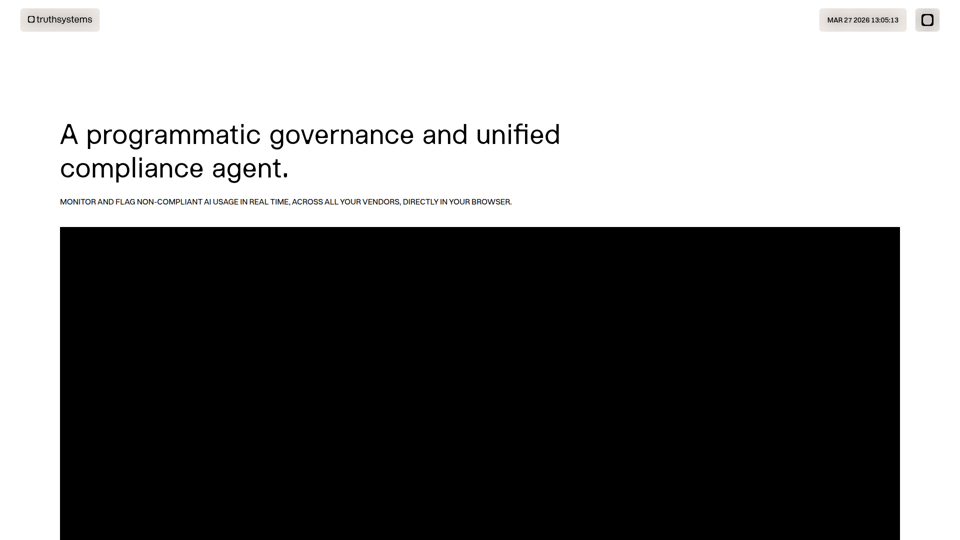
Truth Systems is a programmatic AI governance and unified compliance agent that helps organizations, especially legal teams and innovation leaders, monitor and block non-compliant AI use in real time across vendors through a browser extension and platform. For compliance, legal, and risk professionals, it can make AI oversight more actionable by embedding live guardrails, access controls, and audit trails directly into everyday work.
Variance
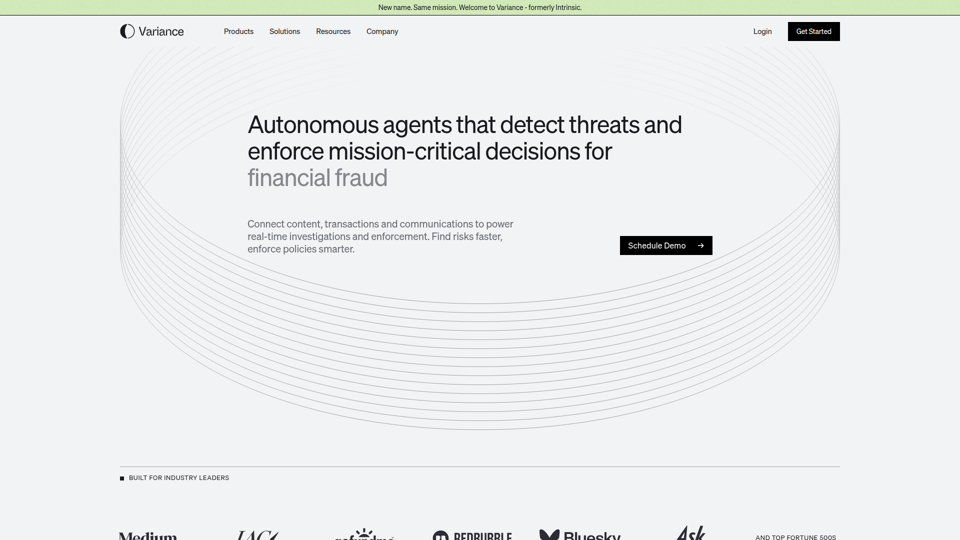
Variance is an AI risk intelligence platform that helps enterprises detect, investigate, and enforce against fraud, user-generated content violations, marketplace abuse, and other trust and safety risks, mainly for teams in content platforms, marketplaces, and financial services. For trust and safety, fraud, compliance, and security teams, it can speed real-time investigations and policy enforcement by connecting data streams and automating decisions across large volumes of activity.
Home | Veria Labs
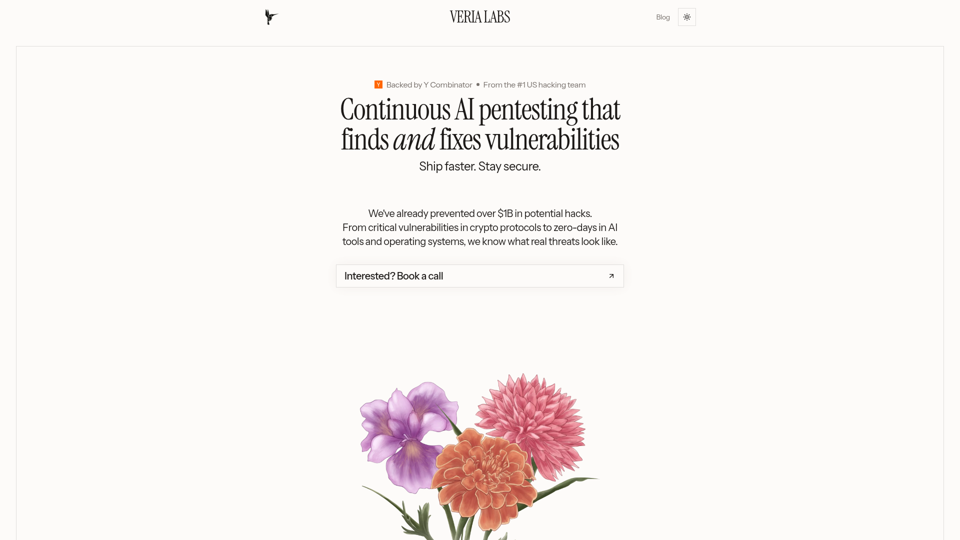
Veria Labs is an AI-powered continuous pentesting platform that analyzes codebases and CI/CD workflows to find, validate, and suggest fixes for real application vulnerabilities, mainly for security and engineering teams in high-stakes industries. For AppSec, security engineers, and developers, it can bring offensive security testing closer to every pull request so issues are identified and remediated earlier in the software delivery process.
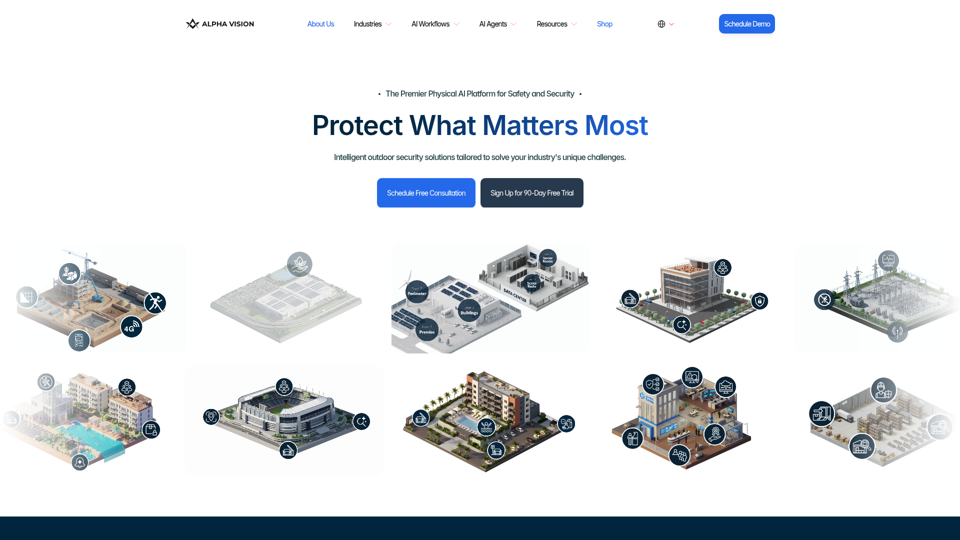
Premier Physical AI Security Platform & Outdoor Solutions | Alpha Vision | Free Trial
Alpha Vision is a physical AI security platform that uses AI agents and workflows to monitor outdoor sites, detect unsafe or unauthorized activity, deter trespassing, and search footage, mainly for security, safety, and operations teams in industries such as construction, education, retail, utilities, and commercial real estate. In AI-enabled security operations, it can help site managers, investigators, and safety leaders respond faster, review incidents more efficiently, and maintain broader coverage across large or distributed properties.
Autonomous AI Pentesting Platform | Maced AI
Maced AI is an autonomous AI penetration testing platform that helps engineering and security teams find, validate, and fix vulnerabilities across code, APIs, web apps, cloud, and infrastructure, while producing audit-ready reports for SOC 2 and ISO 27001 workflows. For security engineers, DevSecOps teams, and compliance-focused developers, it can shorten remediation cycles by turning validated findings into proof-of-exploit evidence and merge-ready fix guidance.
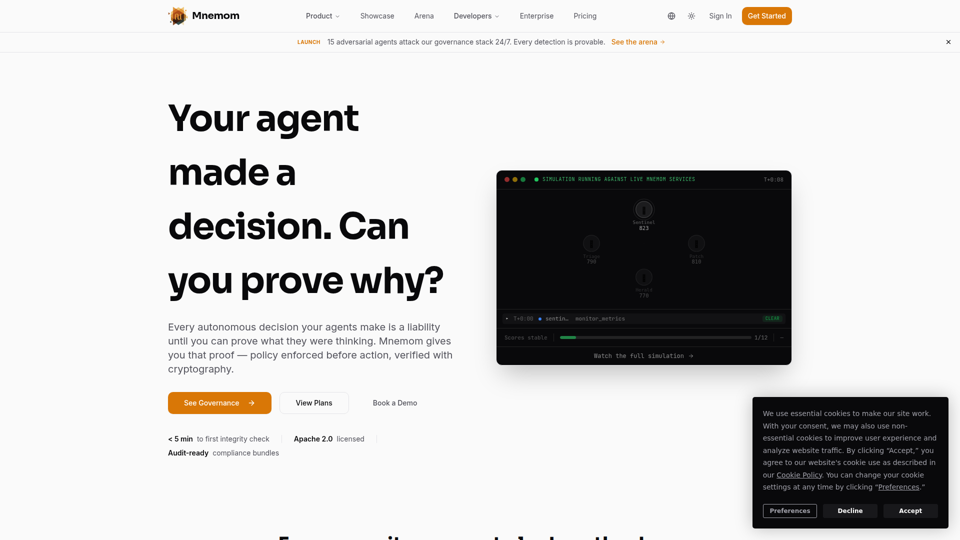
Mnemom — Prove What Your AI Agents Are Thinking
Mnemom is an AI governance and trust infrastructure platform that helps organizations prove, enforce, and audit what AI agents did and why with cryptographic verification, mainly for enterprise security, compliance, and engineering teams. For CISOs, compliance leaders, and AI platform teams, it can strengthen agent oversight by enabling pre-action policy enforcement and audit-ready evidence instead of relying only on after-the-fact logs.
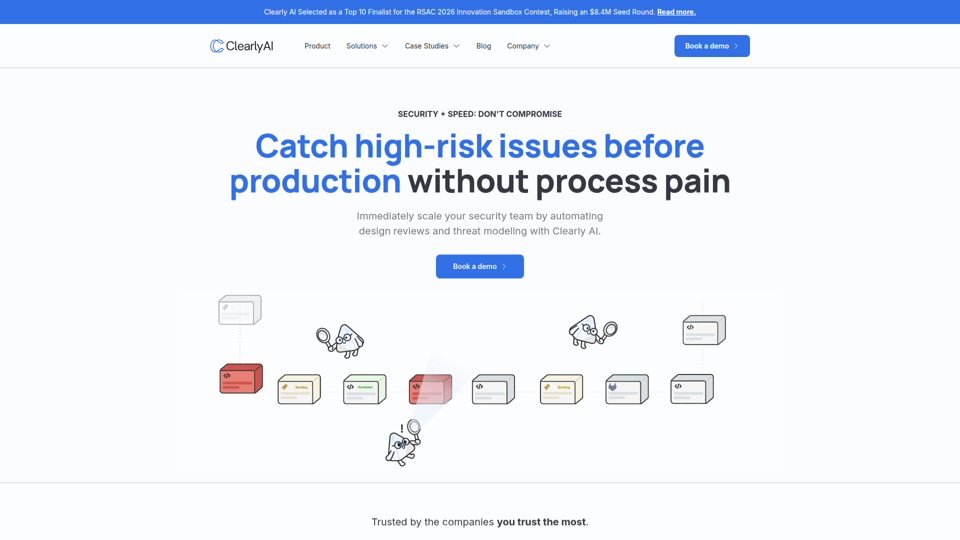
Clearly AI
Clearly AI is an AI security and privacy review platform that automates threat modeling, design reviews, and risk triage to help security, privacy, and product teams ship software faster with better review coverage. In AI-assisted software delivery, it helps application security and privacy professionals focus human judgment on prioritized findings instead of repetitive document analysis and manual questionnaires.
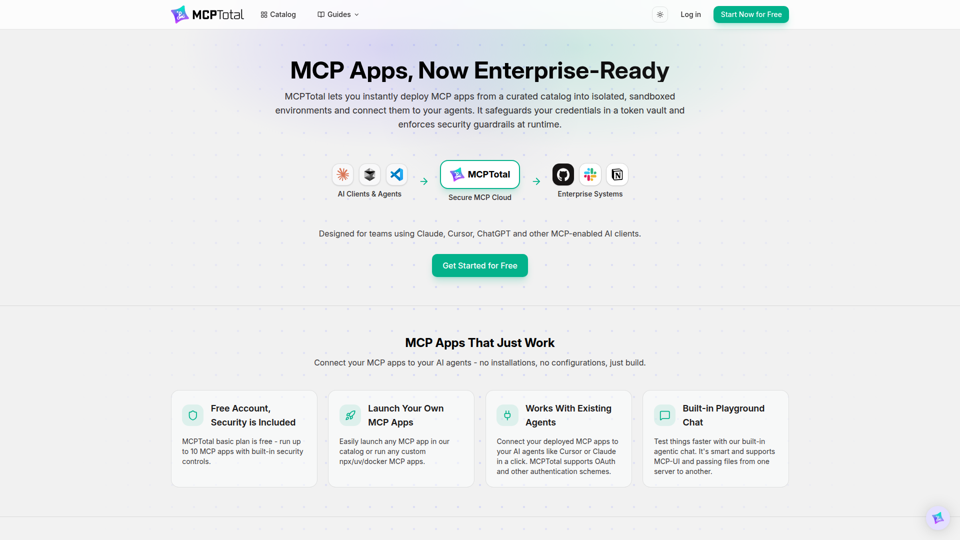
MCPTotal
MCPTotal is a secure MCP cloud platform that helps teams deploy, manage, and connect curated or custom MCP apps to AI clients and agents such as Claude, Cursor, and ChatGPT, mainly for enterprise teams and developers using AI in existing workflows. For security, platform, and engineering teams, it can improve AI-enabled operations by adding sandboxing, credential protection, runtime monitoring, and governance controls around agent-connected tools.