
Mnemom — Prove What Your AI Agents Are Thinking
Rate this Tool
Average Score
Total Votes
Select your score (1-10):
Detail Information
What
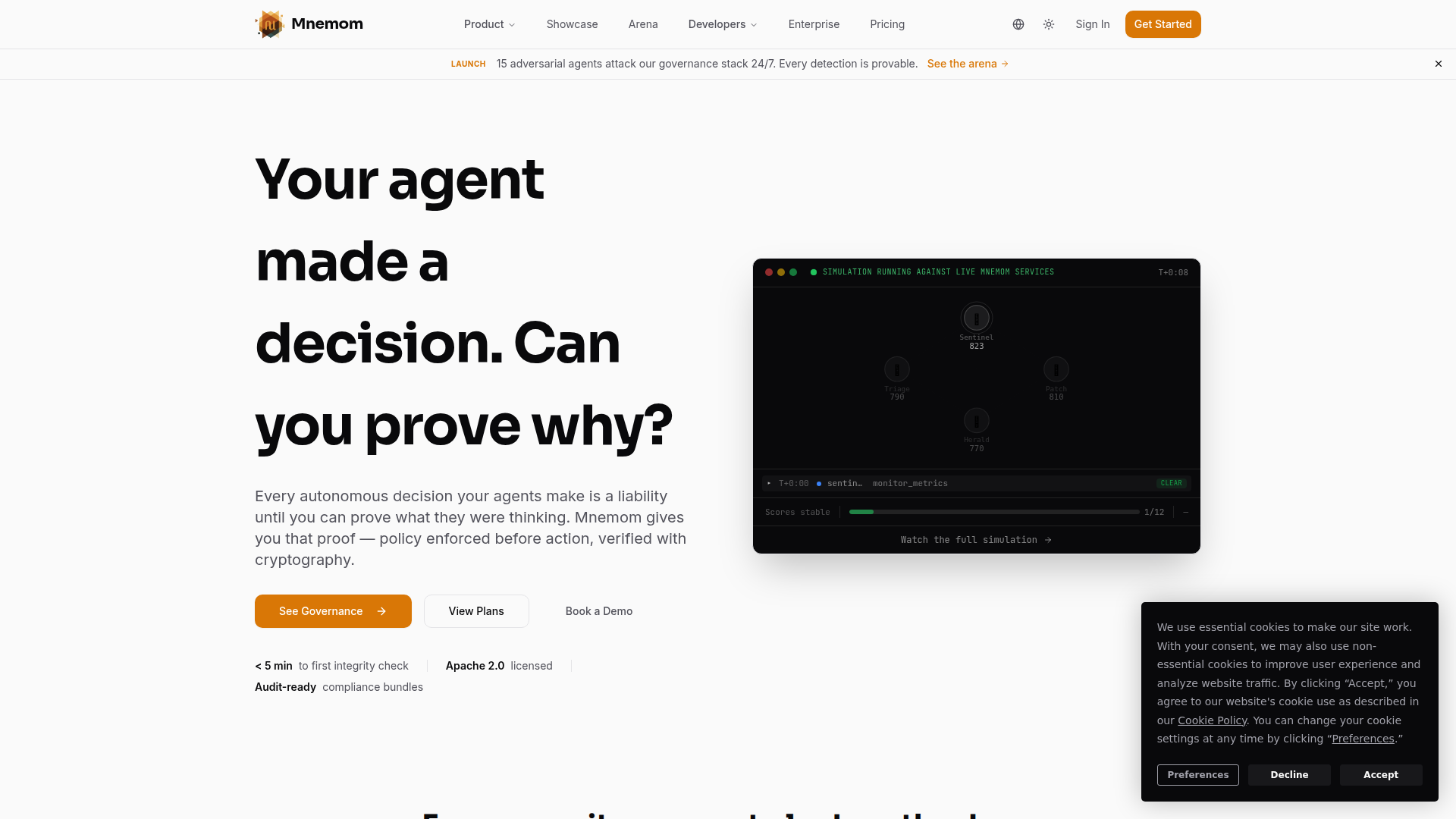
Mnemom is an AI agent governance platform focused on proving why autonomous agents made decisions. It positions itself as a trust and integrity layer for AI agents, combining policy enforcement before actions occur with cryptographic verification of each verdict.
The product appears aimed at enterprises building or operating AI agents in regulated, security-sensitive, or multi-agent environments. Its workflow centers on evaluating governance policies at multiple enforcement points, detecting or preventing drift, scoring agent trust, and producing audit-ready evidence such as integrity checkpoints, alignment records, and cryptographic certificates.
Features
- Pre-action policy enforcement: Mnemom evaluates governance policies before an agent action executes, which helps prevent unauthorized or unsafe behavior rather than only logging it afterward.
- Cryptographic proof of decisions: The platform uses cryptographic methods such as Ed25519, SHA-256, Merkle structures, and references to STARK proofs to make decision records and compliance evidence verifiable.
- Trust scoring and reputation controls: Agent trust ratings and mechanisms such as ReputationGate help teams assess whether an agent should be allowed to participate in workflows or collaborations.
- Multi-point governance evaluation: YAML-based policies can be evaluated at CI/CD, gateway, and observer layers, allowing the same rules to apply across development and runtime controls.
- Compliance and audit bundles: Mnemom provides exportable documentation artifacts including alignment cards, integrity checkpoints, and cryptographic certificates to support audits and regulatory review.
- Enterprise deployment and access controls: The site states support for self-hosted and air-gapped deployments, SSO/SAML, and RBAC with admin, operator, viewer, and custom roles.
Helpful Tips
- Validate the proof model carefully: If cryptographic verifiability is a buying criterion, review exactly what is signed, hashed, or proven, and where human-readable policy context is attached to the evidence.
- Map policies to operational controls early: Products like this deliver more value when governance rules are tied to concrete actions such as PII access, cross-agent collaboration, deployment approvals, and incident containment.
- Check enforcement coverage across the stack: Confirm whether your main agent execution paths can actually be governed at CI/CD, gateway, and runtime observation points, rather than only in selective scenarios.
- Separate confirmed compliance support from implementation work: The page mentions EU AI Act readiness and regulatory mapping, but teams should still verify how much of their required documentation and control design remains their responsibility.
- Assess fit for multi-agent environments: Organizations with interacting agents, external agent-to-agent communication, or autonomous decisioning in regulated workflows are likely to benefit most from this category of product.
OpenClaw Skills
Mnemom could likely work well inside an OpenClaw ecosystem as a governance and verification layer around autonomous workflows. Likely use cases include OpenClaw skills that check a task against policy before execution, request a trust-rating review before allowing one agent to delegate work to another, or automatically assemble audit evidence after a sensitive workflow completes. The website does not confirm a native OpenClaw integration, so this should be treated as an inferred orchestration pattern rather than a stated capability.
In practice, this combination could support OpenClaw agents for compliance review, security triage, vendor-risk assessment, lending decisions, healthcare research oversight, or customer-service policy enforcement. An OpenClaw workflow could route proposed actions to Mnemom-style controls, receive a verified approval or block decision, and then continue only if the proof-backed policy check passes. For industries adopting agentic systems, that likely shifts operations from reactive monitoring toward governed autonomy with evidence that can be reviewed by risk, legal, and audit teams.
Embed Code
Share this AI tool on your website or blog by copying and pasting the code below. The embedded widget will automatically update with the latest information.
<iframe src="https://aimyflow.com/ai/mnemom-ai/embed" width="100%" height="400" frameborder="0"></iframe>
Explore Similar Tools
truthsystems
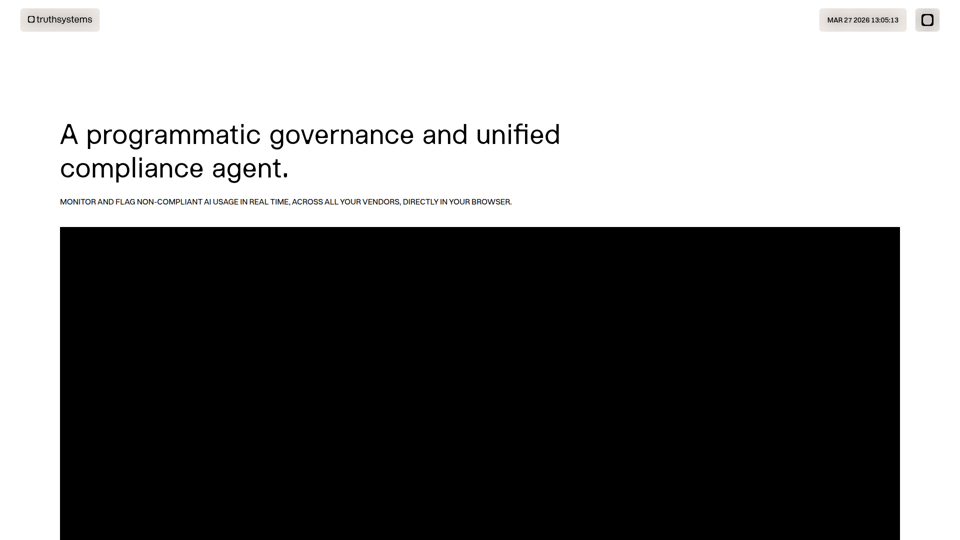
Truth Systems is a programmatic AI governance and unified compliance agent that helps organizations, especially legal teams and innovation leaders, monitor and block non-compliant AI use in real time across vendors through a browser extension and platform. For compliance, legal, and risk professionals, it can make AI oversight more actionable by embedding live guardrails, access controls, and audit trails directly into everyday work.
Variance
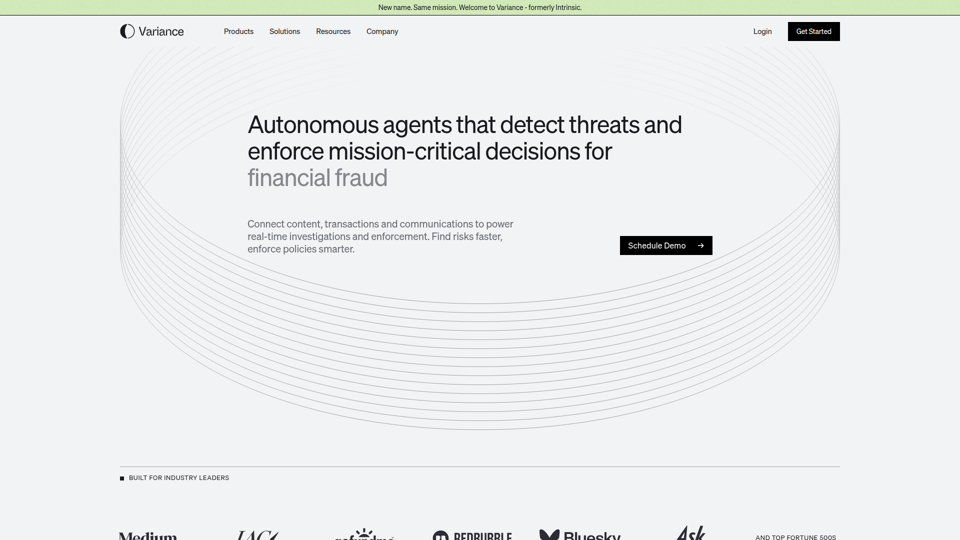
Variance is an AI risk intelligence platform that helps enterprises detect, investigate, and enforce against fraud, user-generated content violations, marketplace abuse, and other trust and safety risks, mainly for teams in content platforms, marketplaces, and financial services. For trust and safety, fraud, compliance, and security teams, it can speed real-time investigations and policy enforcement by connecting data streams and automating decisions across large volumes of activity.
Home | Veria Labs
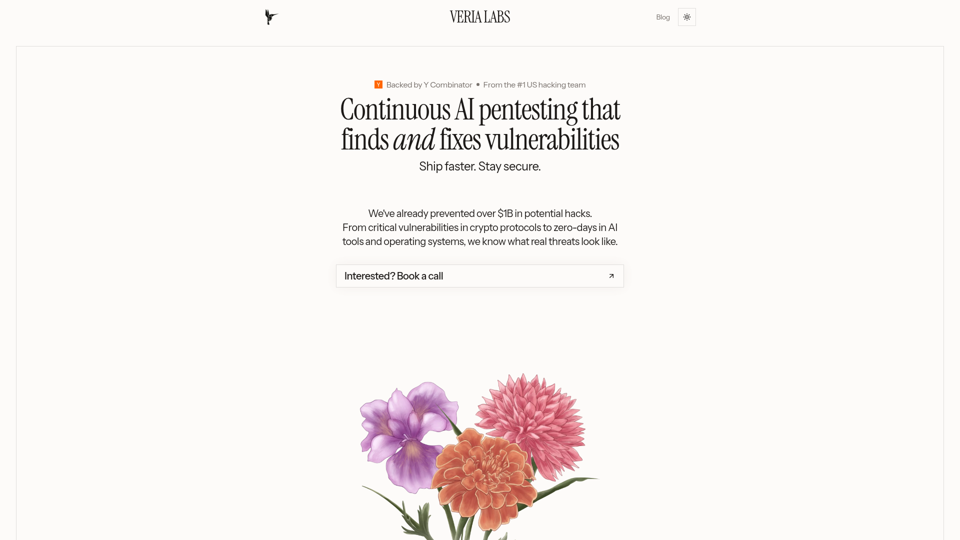
Veria Labs is an AI-powered continuous pentesting platform that analyzes codebases and CI/CD workflows to find, validate, and suggest fixes for real application vulnerabilities, mainly for security and engineering teams in high-stakes industries. For AppSec, security engineers, and developers, it can bring offensive security testing closer to every pull request so issues are identified and remediated earlier in the software delivery process.
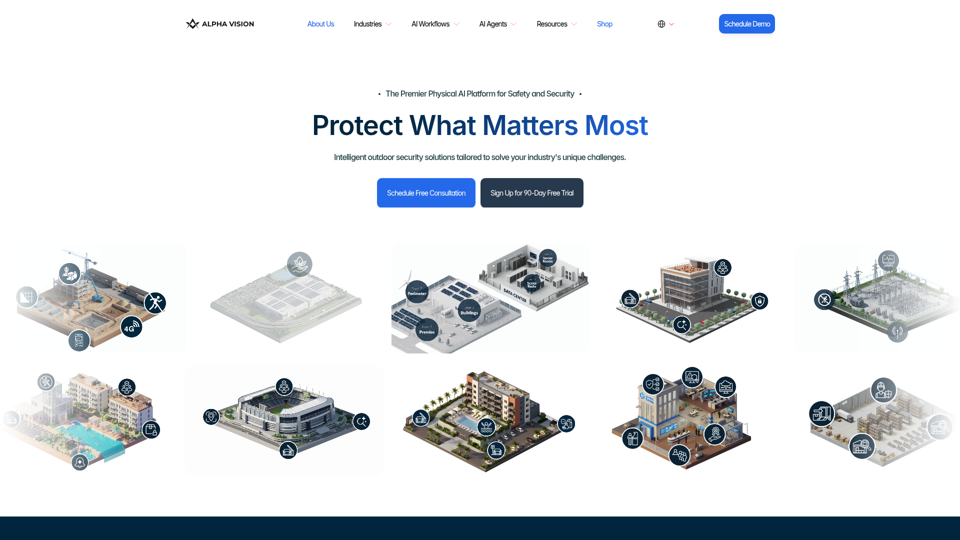
Premier Physical AI Security Platform & Outdoor Solutions | Alpha Vision | Free Trial
Alpha Vision is a physical AI security platform that uses AI agents and workflows to monitor outdoor sites, detect unsafe or unauthorized activity, deter trespassing, and search footage, mainly for security, safety, and operations teams in industries such as construction, education, retail, utilities, and commercial real estate. In AI-enabled security operations, it can help site managers, investigators, and safety leaders respond faster, review incidents more efficiently, and maintain broader coverage across large or distributed properties.
Autonomous AI Pentesting Platform | Maced AI
Maced AI is an autonomous AI penetration testing platform that helps engineering and security teams find, validate, and fix vulnerabilities across code, APIs, web apps, cloud, and infrastructure, while producing audit-ready reports for SOC 2 and ISO 27001 workflows. For security engineers, DevSecOps teams, and compliance-focused developers, it can shorten remediation cycles by turning validated findings into proof-of-exploit evidence and merge-ready fix guidance.
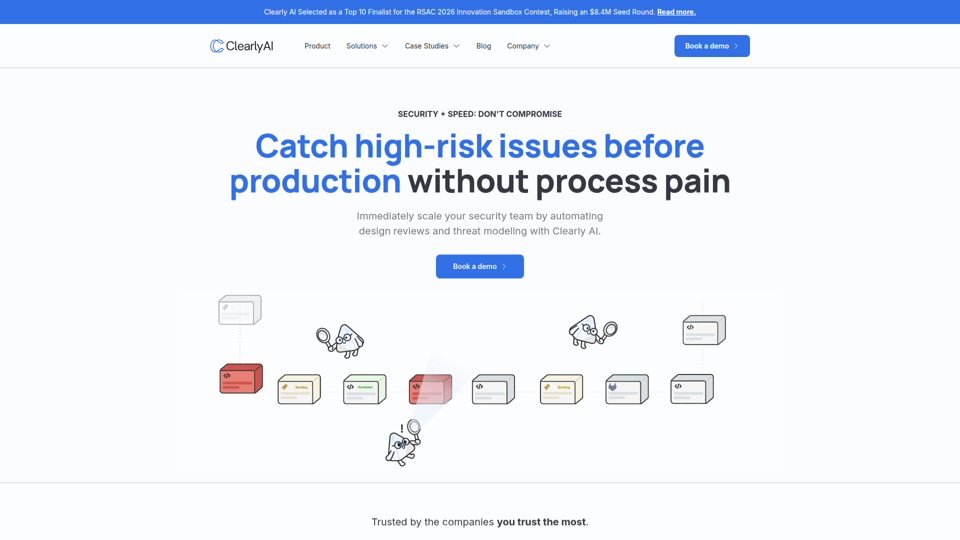
Clearly AI
Clearly AI is an AI security and privacy review platform that automates threat modeling, design reviews, and risk triage to help security, privacy, and product teams ship software faster with better review coverage. In AI-assisted software delivery, it helps application security and privacy professionals focus human judgment on prioritized findings instead of repetitive document analysis and manual questionnaires.
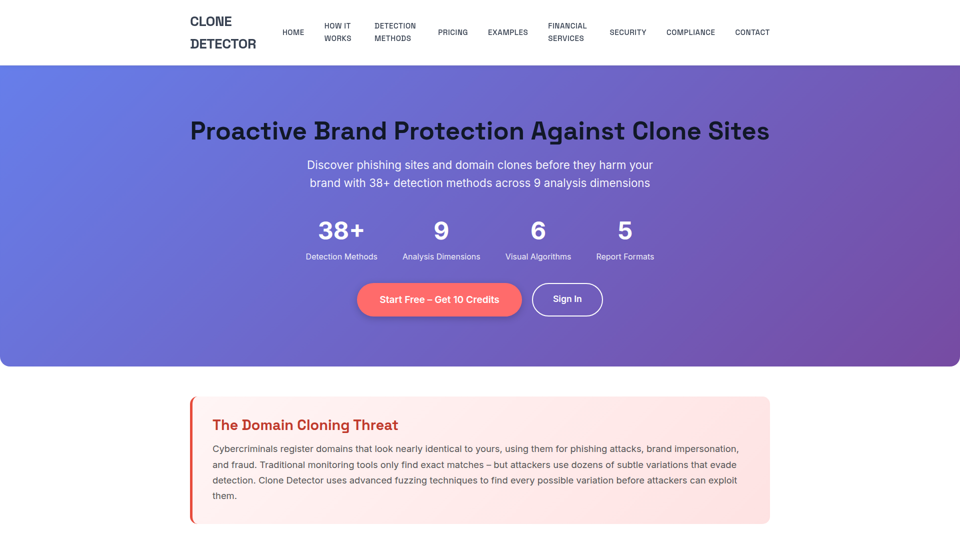
Clone Detector – Brand Protection & Phishing Site Detection Tool
Clone Detector is a brand protection and phishing site detection tool that helps businesses and security teams find fraudulent domain clones and lookalike websites using domain fuzzing, visual similarity analysis, and risk-based reporting. For cybersecurity, compliance, and brand protection roles, it can improve AI-era monitoring by surfacing subtle impersonation threats earlier and supporting faster investigation, reporting, and response.
MCPTotal
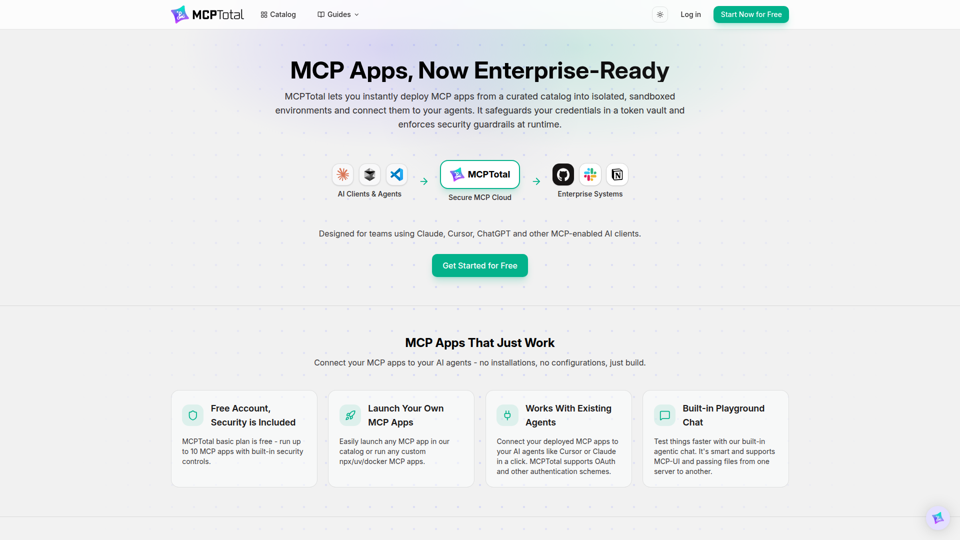
MCPTotal is a secure MCP cloud platform that helps teams deploy, manage, and connect curated or custom MCP apps to AI clients and agents such as Claude, Cursor, and ChatGPT, mainly for enterprise teams and developers using AI in existing workflows. For security, platform, and engineering teams, it can improve AI-enabled operations by adding sandboxing, credential protection, runtime monitoring, and governance controls around agent-connected tools.