How AI fits this role
Microbiologist in the Age of AI: How Artificial Intelligence Is Reshaping Microbiology Careers
Role Overview
Microbiologists study microorganisms — bacteria, viruses, fungi, parasites, and archaea — to understand their biology, behavior, and interactions with hosts, environments, and other organisms. In practice, the role spans a wide range of operational contexts: clinical diagnostics labs, pharmaceutical and biotech R&D, food safety and quality control, environmental monitoring, and academic research.
The highest-volume employment context for microbiologists sits at the intersection of clinical and industrial microbiology — specifically in pharmaceutical manufacturing, hospital and reference laboratory diagnostics, and food and beverage quality assurance. These environments are characterized by high throughput, regulatory pressure (FDA, ISO 17025, GMP), and a constant tension between speed-to-result and accuracy.
Day-to-day work involves culturing and identifying microorganisms, interpreting growth patterns, running susceptibility and contamination assays, maintaining sterile technique, documenting results in LIMS (Laboratory Information Management Systems), and translating findings into actionable recommendations for clinicians, quality teams, or R&D leads. The role is fundamentally interpretive — raw data from instruments means little without biological context and domain judgment.
How AI Is Transforming This Role
The transformation is not arriving as a single disruptive wave. It is accumulating through incremental automation of high-volume, pattern-recognition-heavy tasks that have historically consumed significant microbiologist time without requiring deep expertise.
The most concrete shift is in image-based identification and colony counting. Platforms like Copan WASPLab and Clever Culture Systems now use computer vision to read culture plates, flag morphologically significant colonies, and prioritize plates for human review. In high-volume clinical labs, this compresses the time a microbiologist spends on routine negative plates from minutes to seconds — but it also changes the nature of the work. Microbiologists are increasingly reviewing AI-flagged exceptions rather than scanning every plate themselves.
In genomic and metagenomic analysis, AI-assisted pipelines (Kraken2, DRAGEN Metagenomics, One Codex) are replacing manual BLAST searches and phylogenetic tree interpretation for routine species identification. What once required a specialist to run and interpret a multi-hour bioinformatics workflow can now be returned as a structured report in under 30 minutes. The microbiologist's role shifts from running the pipeline to validating its outputs and catching edge cases the model misclassifies.
In pharmaceutical QC and environmental monitoring, AI-driven anomaly detection is being integrated into environmental monitoring programs to flag deviations in contamination trends before they become OOS (out-of-specification) events. This is a genuine operational change — moving from reactive investigation to predictive intervention.
The commercial pressure driving adoption is real: reference labs are competing on turnaround time, pharma manufacturers face increasing regulatory scrutiny on contamination control, and food safety teams are under pressure to reduce recall risk. AI tools that reduce labor cost per sample or compress time-to-result have a clear ROI argument, and procurement decisions are being made at the lab director and VP Operations level, not by individual scientists.
Tasks AI Can Automate
- Routine plate reading and colony counting — automated imaging systems classify growth, count colonies, and flag morphology without human input on standard samples
- Species identification from MALDI-TOF or 16S rRNA data — AI-assisted spectral matching and sequence classification pipelines return identifications faster and with documented confidence scores
- Antibiotic susceptibility pattern interpretation — machine learning models trained on MIC distributions (EUCAST/CLSI breakpoints) can flag unusual resistance profiles and suggest preliminary interpretations
- Environmental monitoring trend analysis — statistical models detect contamination trend deviations across cleanroom zones and alert QA teams before exceedances occur
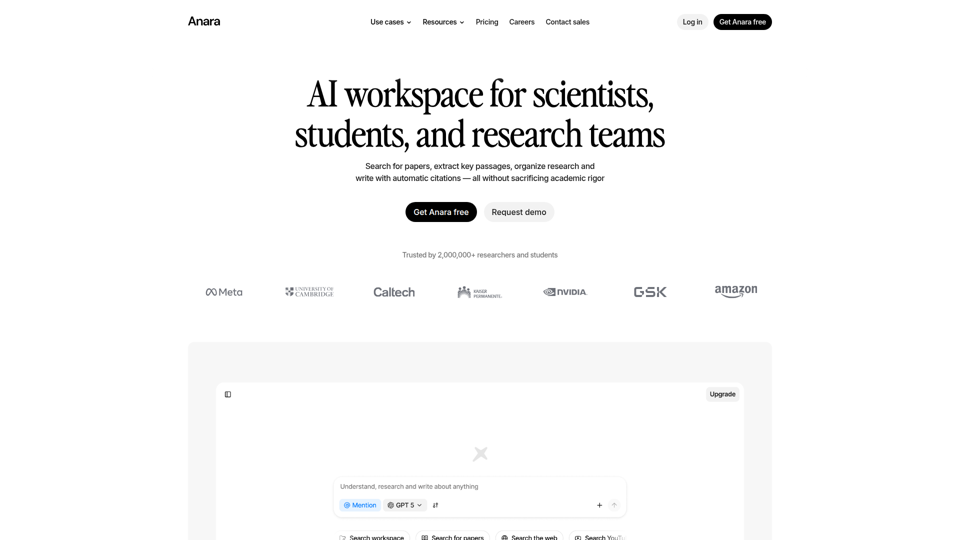
- Literature synthesis and protocol drafting — large language models can aggregate recent publications on a pathogen or method and generate draft SOPs or literature review sections for human editing
- LIMS data entry and result transcription — integration between instruments and LIMS increasingly eliminates manual data transfer, reducing transcription error and freeing technician time
- Contamination source tracing in WGS data — whole genome sequencing pipelines with AI-assisted phylogenetic clustering can identify outbreak clusters and probable transmission chains faster than manual analysis
Skills Becoming More Valuable
Bioinformatics literacy — microbiologists who can interpret, validate, and troubleshoot AI-generated genomic outputs are significantly more valuable than those who cannot. This does not mean writing code from scratch; it means understanding what Kraken2 is doing, why it misclassifies certain taxa, and when to escalate to a specialist.
Critical evaluation of AI outputs — the ability to recognize when an automated identification is plausible but wrong, when a resistance profile is algorithmically flagged but clinically irrelevant, or when an environmental trend model is reacting to a data artifact rather than a real contamination event. This is the core human value-add in an AI-augmented lab.
Regulatory and validation expertise — as AI tools enter GMP and clinical diagnostic workflows, someone has to validate them under 21 CFR Part 11, ISO 15189, or equivalent frameworks. Microbiologists who understand both the biology and the regulatory requirements for software validation are rare and increasingly sought after.
Cross-functional communication — translating microbiological findings into language that informs clinical decisions, manufacturing holds, or product release decisions. AI can generate a report; it cannot navigate the conversation with a skeptical clinician or a quality director under pressure.
Experimental design and method development — designing studies that generate data AI models can actually learn from, and developing novel detection methods for emerging pathogens or resistance mechanisms that no existing model covers.
Ecological and systems-level thinking — understanding microbiome dynamics, host-pathogen interactions, and environmental reservoirs in ways that go beyond single-organism identification. This is where human expertise remains irreplaceable.
Skills Becoming Less Important
- Manual colony counting and plate reading as a primary daily activity
- Routine BLAST-based species identification without bioinformatics context
- Memorizing breakpoint tables and resistance phenotype patterns that AI tools now flag automatically
- Manual data transcription between instruments and LIMS
- Basic literature searching as a standalone skill — AI synthesis tools handle first-pass aggregation
- Routine Gram stain interpretation on standard clinical isolates in high-volume labs with automated imaging
These skills are not disappearing entirely — they remain essential for training, troubleshooting, and edge cases. But they are no longer differentiating competencies for career advancement.
Current AI Adoption in This Industry
Adoption is uneven and highly context-dependent.
Clinical and reference laboratories are the furthest along. Large reference lab networks (Quest, LabCorp, Sonic Healthcare) have deployed automated plate reading systems at scale. AI-assisted interpretation of susceptibility data is embedded in some LIS platforms. The bottleneck is not technology — it is validation, regulatory clearance, and workflow integration.
Pharmaceutical and biotech QC is adopting AI for environmental monitoring trend analysis and contamination investigation, but adoption is slowed by the validation burden under GMP. Every AI tool that touches a release decision needs to be validated as software affecting product quality, which is a significant investment. Adoption is faster in R&D than in manufacturing QC.
Food and beverage safety is using AI primarily for rapid detection method development and supply chain risk modeling, but lab-level AI adoption lags clinical and pharma due to lower regulatory pressure and thinner margins for technology investment.
Academic and government research labs are using AI tools extensively for genomic analysis and literature synthesis, but this is researcher-driven adoption of open-source tools rather than enterprise deployment.
The honest picture: most working microbiologists interact with AI through their instruments and LIMS rather than through standalone AI platforms. The transformation is embedded in existing tools, not always visible as "AI adoption."
Future Workflow Evolution
The microbiologist's workflow in a high-volume clinical or industrial lab will look meaningfully different within five years. The shift is from sample-to-result execution toward exception management and interpretive oversight.
In the near-term model, automated systems handle sample processing, imaging, preliminary identification, and data entry. The microbiologist's queue is populated by the AI — flagged anomalies, low-confidence identifications, unusual resistance profiles, contamination trend alerts. The human role becomes reviewing, adjudicating, and escalating.
This is not a reduction in cognitive demand — it is a change in cognitive type. The work becomes less procedural and more diagnostic. A microbiologist who spends less time counting colonies spends more time asking why a particular organism is appearing in a cleanroom zone, or why a clinical isolate's susceptibility profile doesn't match its genotype.
In R&D contexts, AI-assisted hypothesis generation is beginning to change how microbiologists design experiments. Tools that can synthesize thousands of papers and suggest mechanistic hypotheses are already in use at large pharma companies. The microbiologist's role becomes evaluating those hypotheses for biological plausibility and experimental feasibility — a judgment call that requires deep domain knowledge.
The longer-term evolution points toward microbiologist-as-model-curator: professionals who maintain, validate, and improve the AI systems their labs depend on, in addition to doing traditional scientific work. This is already a defined role at some large reference labs and biotech companies.
Common AI Use Cases
- Automated culture plate reading (WASPLab, Copan, Clever Culture Systems) — computer vision reads plates, flags positives, prioritizes review queue
- Metagenomic species identification (Kraken2, One Codex, DRAGEN) — rapid classification of complex microbial communities from sequencing data
- Antimicrobial resistance prediction from WGS (ResFinder, AMRFinder, Kleborate) — genotype-to-phenotype resistance prediction without culture-based susceptibility testing
- Environmental monitoring anomaly detection — statistical process control models integrated into EMS platforms to detect contamination trends
- Outbreak investigation and cluster analysis — AI-assisted phylogenetic clustering of WGS data to identify transmission chains in hospital or food safety outbreaks
- Rapid pathogen detection in food matrices — AI-enhanced lateral flow and PCR interpretation platforms reducing time-to-result in food safety testing
- Literature-assisted protocol generation — LLM-based tools (Elicit, Consensus, internal pharma platforms) synthesizing methods literature to support SOP development
- Predictive contamination risk modeling — machine learning models trained on historical environmental monitoring data to predict high-risk periods or zones
Recommended AI Stack
The right tools depend heavily on context, but the following represent the current practical stack for microbiologists in clinical, pharma, and food safety environments:
Genomic and metagenomic analysis
- Kraken2 / Bracken — metagenomic classification, fast and well-validated
- One Codex — cloud-based metagenomics with clinical-grade reporting
- DRAGEN Metagenomics (Illumina) — high-throughput, instrument-integrated
- Kleborate / Pathogenwatch — species-specific genomic surveillance tools
Antimicrobial resistance
- AMRFinder Plus (NCBI) — comprehensive resistance gene detection
- ResFinder (CGE) — resistance and point mutation detection from WGS
- EUCAST MIC distributions integrated into LIS platforms
Automated plate reading
- Copan WASPLab — full pre-analytical and imaging automation
- Clever Culture Systems APAS Independence — AI-based plate assessment
Environmental monitoring and QC
- Veeva Vault QualityDocs / MasterControl — for SOP and deviation management with AI-assisted search
- Custom statistical process control models in Python (scikit-learn) or R for trend analysis
Literature and knowledge synthesis
- Elicit — structured literature review and evidence synthesis
- Consensus — claim-based scientific search
- Internal LLM deployments (increasingly common in large pharma) for proprietary data synthesis
LIMS and data integration
- LabVantage, STARLIMS, or LabWare with instrument integration to eliminate manual transcription
Risks & Challenges
Misplaced confidence in AI outputs is the most operationally significant risk. Automated identification systems have known failure modes — rare organisms, mixed cultures, degraded samples, novel resistance mechanisms — and labs that treat AI outputs as ground truth without maintaining human interpretive capacity will make errors. The risk is not that AI is wrong; it is that humans stop checking.
Regulatory lag creates friction in clinical and GMP environments. AI tools that could improve diagnostic accuracy or contamination detection cannot be deployed until they are validated under applicable frameworks. This validation work is expensive, time-consuming, and requires expertise that most labs do not have in-house. The result is that adoption is slower in the highest-stakes environments.
Deskilling of junior microbiologists is a genuine concern. If early-career scientists spend their formative years reviewing AI outputs rather than developing hands-on interpretive skills, the pipeline of experts who can troubleshoot, validate, and improve AI systems will narrow. This is not hypothetical — it is already being discussed in clinical microbiology training programs.
Data quality and model generalizability — AI models trained on data from large reference labs may perform poorly in smaller labs with different patient populations, environmental conditions, or instrument configurations. Deploying a model without understanding its training data is a real risk.
Cybersecurity and data integrity — as labs become more connected and AI tools process sensitive patient or proprietary data, the attack surface expands. 21 CFR Part 11 and GDPR compliance requirements add complexity to cloud-based AI deployments.
Future Outlook: 3–5 Years
Over the next three to five years, the microbiologist role will bifurcate more sharply than it has in the past decade.
In high-volume, routine-heavy environments — large clinical labs, food safety testing facilities, pharmaceutical QC — a smaller number of microbiologists will oversee larger automated workflows. The productivity per FTE will increase, but headcount growth will slow. The microbiologists who thrive in these environments will be those who can operate at the interface of biology, data, and regulation.
In R&D, biotech, and emerging infectious disease contexts, demand for microbiologists with strong bioinformatics and AI literacy will grow. The ability to design experiments that generate AI-trainable datasets, interpret complex metagenomic outputs, and develop novel detection methods for pathogens that existing models cannot classify will be genuinely scarce and well-compensated.
The most significant structural change will be the emergence of clinical microbiologist-informaticist hybrid roles — professionals who sit between the lab and the data science team, responsible for validating AI tools, curating reference databases, and translating biological edge cases into model improvement feedback. Some large health systems and reference labs are already creating these positions.
Antimicrobial resistance surveillance will be a major growth area. As WGS becomes standard for AMR monitoring, the demand for microbiologists who can interpret genomic resistance data in clinical and public health contexts will increase substantially — and AI tools will be central to making that surveillance scalable.
The profession is not shrinking. It is reorganizing around the tasks that require biological judgment, regulatory accountability, and the ability to recognize when a pattern-matching system has reached the edge of its competence.
Final Insight
The microbiologist who treats AI as a threat is misreading the situation. The microbiologist who treats AI as a replacement for developing deep biological expertise is making a more dangerous mistake.
The tools that are automating routine plate reading and species identification are doing so because those tasks, while important, are fundamentally pattern-matching problems with well-defined answer spaces. What they cannot do is recognize a clinically significant organism that falls outside the training distribution, understand why a contamination event in a cleanroom is biologically implausible given the facility's airflow design, or make the judgment call that a resistance profile is real rather than a sequencing artifact.
The durable value of a microbiologist in an AI-augmented lab is not procedural competence — it is the accumulated biological intuition that knows when the machine is wrong and why. That intuition is built through hands-on work, exposure to edge cases, and the kind of interpretive practice that cannot be shortcut. The professionals who will define this role over the next decade are those who develop both the biological depth and the technical literacy to work with AI systems critically rather than deferentially.