How AI fits this role
Lawyer
Role Overview
A lawyer provides legal counsel, drafts and reviews documents, represents clients in disputes, and navigates regulatory frameworks on their behalf. In practice, the role spans a wide operational range: a litigator at a mid-size firm spends their day differently than in-house counsel at a fintech startup or a transactional attorney closing M&A deals. The common thread is judgment under uncertainty — interpreting ambiguous law, assessing risk, and advising clients who face real consequences.
The legal industry has historically been resistant to automation, partly because legal work is language-intensive and context-dependent, and partly because the profession is self-regulated in ways that create structural inertia. That resistance is now eroding. The combination of large language models trained on legal corpora, contract intelligence platforms, and litigation analytics tools has moved AI from a novelty to a billable-hour threat — and, for forward-looking practitioners, a competitive advantage.
The highest-volume interpretation of this role is the commercial lawyer operating in private practice or in-house, handling contracts, compliance, disputes, and transactions. That is the primary lens here.
How AI Is Transforming This Role
The transformation is not uniform. It is hitting different practice areas at different speeds, and the pressure is coming from two directions simultaneously: clients demanding lower costs and faster turnaround, and AI tools that can now perform tasks that previously required junior associate hours.
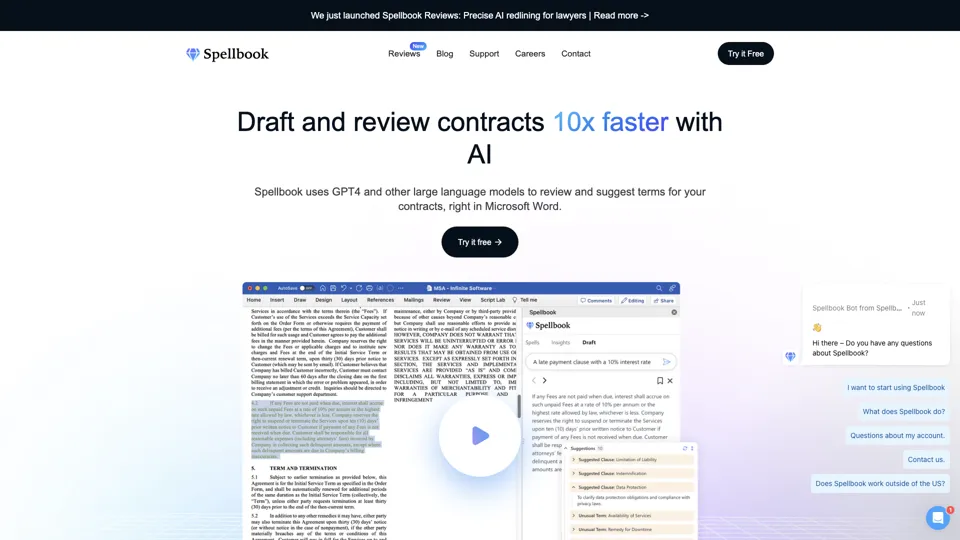
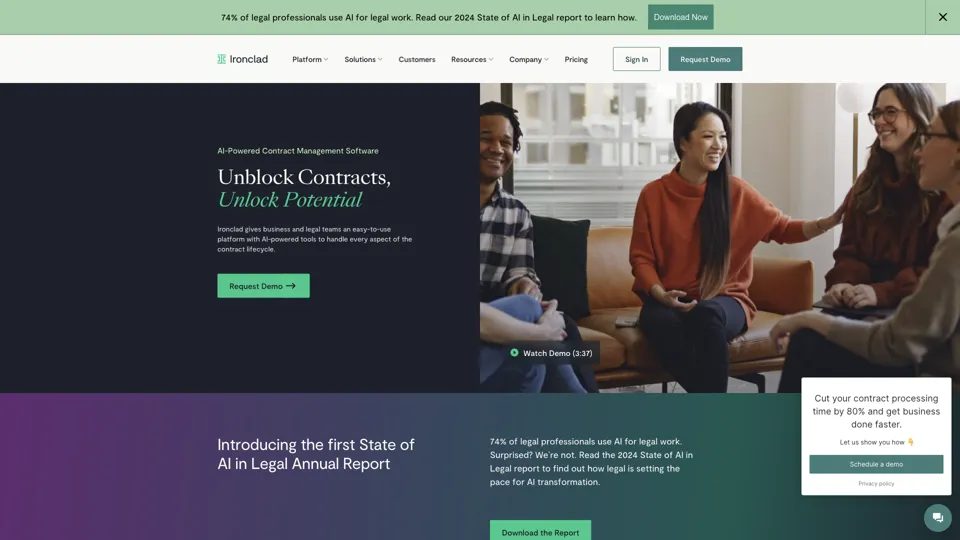
Contract work is the first domino. Tools like Harvey, Ironclad, and Spellbook can draft, redline, and summarize NDAs, MSAs, and employment agreements in minutes. What used to be a two-hour associate task is now a ten-minute review task. Law firms are not passing all of those savings to clients yet, but the pressure is building — particularly from sophisticated in-house legal teams who are deploying the same tools themselves and questioning why they are paying associate rates for work they can now do internally.
Legal research has been restructured. Westlaw Precision and Lexis+ AI now surface relevant case law, synthesize holdings, and flag conflicting authority faster than any associate. The research memo — a staple of junior associate work — is being compressed from a day-long task to a verification exercise. The lawyer's job shifts from finding the law to stress-testing what the AI found.
Litigation support is being automated at the document review layer. eDiscovery platforms using predictive coding and AI-assisted review have been standard for years, but the current generation goes further: tools can now draft deposition outlines, identify inconsistencies across witness statements, and generate first-draft motions based on prior filings.
Compliance and regulatory monitoring is shifting from periodic manual review to continuous automated surveillance. For lawyers in financial services, healthcare, or data privacy, this means AI is handling the monitoring layer while the lawyer focuses on response strategy when something flags.
Tasks AI Can Automate
- First-draft generation of standard contracts (NDAs, service agreements, employment contracts, licensing agreements)
- Contract review against a defined playbook — flagging deviations, missing clauses, and non-standard terms
- Legal research synthesis: pulling relevant cases, statutes, and secondary sources and summarizing holdings
- Due diligence document review in M&A transactions — extracting key terms, flagging risks, populating data room summaries
- eDiscovery document review and privilege logging
- Regulatory change monitoring and alerting across jurisdictions
- Drafting routine correspondence, demand letters, and cease-and-desist notices
- Summarizing deposition transcripts and identifying key admissions
- Generating billing narratives and time entry descriptions
- Court filing deadline tracking and docket management
Skills Becoming More Valuable
Legal judgment and risk calibration. When AI handles the research and drafting, the lawyer's value concentrates in the decision: what does this mean for this client, in this context, given these facts? That requires pattern recognition built from experience, not from training data.
Client counseling and relationship management. Clients are not paying for document production anymore — they are paying for someone who understands their business, anticipates problems, and gives them a clear answer under pressure. Emotional intelligence and commercial awareness matter more as transactional work commoditizes.
Prompt engineering and AI output validation. Lawyers who can direct AI tools precisely, catch hallucinations, and know when the output is legally unreliable are more productive than those who cannot. This is not a technical skill — it is a legal skill applied to a new medium.
Negotiation and advocacy. These remain deeply human. The ability to read a counterparty, find creative deal structures, and persuade a judge or jury is not replicable by current AI systems.
Regulatory strategy and policy interpretation. As regulations grow more complex and jurisdictions multiply (especially in data privacy, AI governance, and ESG), lawyers who can synthesize ambiguous regulatory signals into actionable business strategy are in high demand.
Cross-disciplinary fluency. Lawyers who understand the business, technology, or financial context of their clients' problems — not just the legal doctrine — are harder to replace and harder to commoditize.
Skills Becoming Less Important
- Manual case law research and Shepardizing
- Rote contract drafting from templates
- Document review and privilege logging in large-scale litigation
- Formatting and proofreading legal documents
- Manually tracking regulatory updates across jurisdictions
- Generating boilerplate sections of briefs, motions, and agreements
- Time-intensive due diligence extraction in standard M&A transactions
These tasks are not disappearing entirely — lawyers still need to understand them to supervise AI output — but they no longer justify significant billable hours or differentiate a practitioner.
Current AI Adoption in This Industry
Adoption is uneven but accelerating. Large law firms (Am Law 100) are deploying AI tools primarily for eDiscovery, contract review, and research augmentation, often through enterprise agreements with Thomson Reuters, LexisNexis, or dedicated legal AI vendors. The driver is defensive: they need to maintain margins as clients push back on associate-heavy billing models.
In-house legal teams at technology companies and financial institutions are ahead of private practice in many respects. They are using AI to handle high-volume, low-complexity work — vendor contracts, employment agreements, routine compliance queries — and reducing outside counsel spend as a result. This is a structural shift, not a temporary cost-cutting measure.
Mid-size and boutique firms are in a more precarious position. They lack the infrastructure investment capacity of large firms but face the same client pressure. The ones adopting AI tools early are finding they can punch above their weight on turnaround time and cost. The ones waiting are losing work to in-house teams and to larger firms that can offer AI-assisted efficiency at scale.
Solo practitioners and small firms are adopting consumer-grade tools (ChatGPT, Claude, Copilot) informally, often without formal policies on confidentiality, accuracy verification, or professional responsibility compliance — which creates its own risk exposure.
Future Workflow Evolution
The legal workflow of 2027 will look structurally different from 2022. The associate-heavy pyramid model — where junior lawyers bill hours doing research and document review to fund partner leverage — is under direct pressure. Firms that have not restructured their staffing models by then will face margin compression that is difficult to reverse.
The more likely future is a bifurcated model: a smaller number of highly skilled lawyers supported by AI tools that handle the volume work, with a separate tier of legal operations professionals (not lawyers) managing AI workflows, vendor relationships, and process compliance. The "legal engineer" role — someone who sits between law and technology — will become a standard function in large legal departments.
For individual lawyers, the workflow shift means more time spent on supervision, strategy, and client interaction, and less time on production. This sounds appealing but requires a genuine shift in how lawyers develop expertise. Junior lawyers who skip the research and drafting grind may arrive at senior roles without the foundational pattern recognition that made those tasks valuable in the first place. This is a real developmental risk the profession has not fully reckoned with.
Billing models will continue shifting from hourly to fixed-fee and value-based arrangements, particularly for transactional work. AI makes it harder to justify hourly billing for tasks that take minutes with the right tools.
Common AI Use Cases
Contract Lifecycle Management: Platforms like Ironclad, Icertis, and ContractPodAi automate contract creation, negotiation workflows, approval routing, and obligation tracking. In-house teams use these to reduce outside counsel dependency on routine agreements.
Legal Research Augmentation: Westlaw Precision and Lexis+ AI generate research memos, surface analogous cases, and identify circuit splits. Harvey (built on GPT-4) is being piloted at firms including Allen & Overy and A&O Shearman for research and drafting tasks.
Due Diligence Automation: Kira Systems and Luminance extract and categorize key provisions from large document sets in M&A transactions, reducing review time from weeks to days on standard deals.
eDiscovery and Litigation Support: Relativity, Everlaw, and Reveal use AI-assisted review to prioritize documents, identify key custodians, and flag privilege issues at scale.
Compliance Monitoring: Tools like Compliance.ai and Ascent RegTech monitor regulatory publications across jurisdictions and alert legal teams to changes relevant to their business.
Drafting Assistance: Spellbook (integrated into Microsoft Word) and Harvey provide in-line drafting suggestions, clause alternatives, and redline generation during contract negotiation.
Recommended AI Stack
The right stack depends on practice area and firm size, but a well-equipped commercial lawyer in 2025 is likely working with some combination of the following:
- Harvey or Spellbook — for drafting, research synthesis, and contract redlining
- Westlaw Precision or Lexis+ AI — for case law research with AI-generated summaries and citator integration
- Ironclad or ContractPodAi — for contract lifecycle management if operating in-house or managing high contract volume
- Kira Systems or Luminance — for due diligence extraction in transactional work
- Relativity or Everlaw — for eDiscovery in litigation-heavy practices
- Microsoft Copilot for M365 — for document drafting, email management, and meeting summarization within existing workflows
- Compliance.ai — for regulatory monitoring in regulated industries
The critical caveat: no tool in this stack eliminates the need for legal review. Every output requires a lawyer who understands the underlying law well enough to catch errors. The stack amplifies a competent lawyer; it does not replace one.
Risks & Challenges
Hallucination and legal accuracy. LLMs fabricate case citations with confidence. The Mata v. Avianca case — where attorneys submitted AI-generated briefs citing nonexistent cases — is now a cautionary tale taught in law schools. Verification workflows are not optional; they are a professional responsibility requirement.
Confidentiality and data security. Inputting client information into third-party AI tools raises serious privilege and confidentiality concerns. Most enterprise legal AI tools offer private deployment or data isolation, but many lawyers are using consumer tools without those protections. Bar associations are beginning to issue guidance, but the rules are still catching up to the practice.
Professional responsibility and unauthorized practice. When AI drafts a document, who is responsible for its accuracy? The supervising lawyer, under current rules. But as AI tools become more autonomous, the liability framework will need to evolve. Lawyers who do not understand what their AI tools are doing cannot adequately supervise them.
Junior lawyer development pipeline. If AI handles the work that used to develop junior lawyers, the profession faces a skills gap in the next generation of senior practitioners. Firms are beginning to grapple with this, but there is no consensus solution yet.
Client expectations and pricing pressure. Clients who know AI can draft a contract in minutes will increasingly resist paying associate rates for that work. Firms that do not proactively restructure their pricing will have it restructured for them.
Regulatory and ethical uncertainty. AI governance in legal practice is still being written. Lawyers operating in jurisdictions with strict data localization requirements (EU, certain APAC markets) face additional complexity in deploying cloud-based AI tools.
Future Outlook (3–5 Years)
By 2028, the legal industry will have completed a structural sorting. Firms and practitioners who integrated AI into their workflows will have lower cost bases, faster turnaround times, and the capacity to handle more complex work per lawyer. Those who did not will be competing on price for commoditized work — a race they cannot win against technology-enabled competitors.
The practice areas most exposed to continued automation are high-volume transactional work (standard commercial contracts, residential real estate, routine employment matters) and document-intensive litigation support. The areas most insulated are those requiring deep judgment, novel legal questions, high-stakes advocacy, and trusted client relationships built over years.
The in-house legal function will continue to grow relative to outside counsel spend. General counsels who can deploy AI effectively will reduce their external legal budgets while handling more work internally. This will accelerate the shift of legal talent from private practice to corporate legal departments.
New legal roles will emerge: legal operations managers, AI compliance officers, legal technology specialists, and legal engineers who design and maintain AI-assisted workflows. These roles will not require bar admission but will require legal knowledge combined with operational and technical fluency.
The billable hour will not disappear, but it will become a minority billing model for sophisticated clients within five years. Fixed-fee, subscription, and outcome-based arrangements will become the norm for everything except genuinely unpredictable litigation.
Final Insight
The lawyers who will thrive in the next decade are not the ones who resist AI or the ones who uncritically delegate to it. They are the ones who understand what AI can and cannot do well enough to use it as a force multiplier — and who have invested in the judgment, relationships, and strategic thinking that no model can replicate.
The core of legal practice has always been trust: a client trusting a lawyer to understand their situation, protect their interests, and give them honest counsel when the stakes are high. AI can accelerate the work that surrounds that trust. It cannot substitute for it.
The profession is not shrinking — it is restructuring. The lawyers who recognize that early, adapt their skills accordingly, and build practices around what humans do better than machines will find the next decade more productive, not less.