How AI fits this role
Hospice Care Nurse
Role Overview
Hospice care nurses occupy one of the most demanding and emotionally complex positions in healthcare. They work at the intersection of clinical precision and human compassion, providing end-of-life care to patients with terminal diagnoses — typically those with a prognosis of six months or less. Their work spans pain and symptom management, medication titration, family education, psychosocial support, and coordination with interdisciplinary teams that include physicians, social workers, chaplains, and home health aides.
The operational environment is almost always high-acuity and low-resource. Most hospice nurses carry caseloads of 10 to 15 patients at a time, managing care across home settings, skilled nursing facilities, inpatient hospice units, and assisted living communities. Unlike acute care nurses, hospice nurses make a significant portion of their clinical decisions independently, often in a patient's home without immediate physician backup. Documentation burdens are heavy — Medicare and Medicaid compliance requirements generate substantial charting obligations that routinely consume 30 to 40 percent of a nurse's working day.
The hospice industry in the United States is predominantly Medicare-funded, which creates a tightly regulated reimbursement environment. Agencies face constant pressure to demonstrate quality metrics, reduce avoidable hospitalizations, and maintain compliance with the Medicare Conditions of Participation. Nurse retention is a persistent crisis: burnout rates are high, and the emotional labor of grief work compounds the physical demands of field-based care.
How AI Is Transforming This Role
AI is entering hospice nursing not through dramatic automation but through incremental workflow integration — and the changes are already reshaping how nurses spend their time, make decisions, and document care.
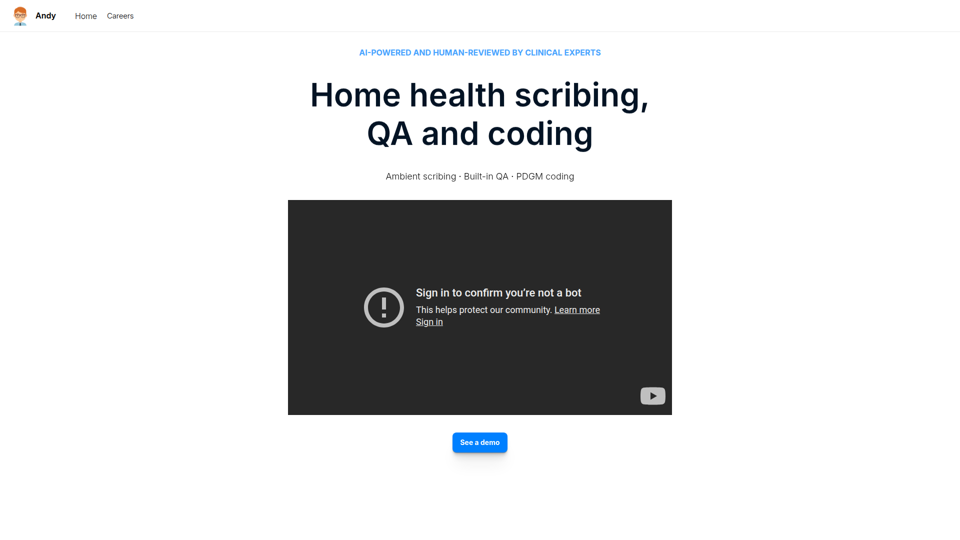
The most immediate transformation is in clinical documentation. AI-assisted transcription and ambient documentation tools are being piloted by mid-size and large hospice agencies to reduce the time nurses spend on narrative charting after visits. Tools that listen to patient-nurse interactions and auto-populate structured fields in the EHR are moving from pilot to production in several regional hospice networks. This is not a minor efficiency gain — it directly addresses one of the leading drivers of nurse burnout.
Predictive analytics is the second major shift. Hospice agencies are beginning to deploy models that analyze vital sign trends, medication changes, functional decline scores, and caregiver stress indicators to flag patients at elevated risk of a crisis event or imminent death. These models give nurses earlier warning to intensify visits, adjust comfort medications, or mobilize family support — reducing the number of chaotic, distressing deaths that occur without adequate preparation.
Care coordination is also changing. AI-driven scheduling tools are optimizing visit routing and caseload distribution in ways that reduce drive time and better match nurse skill sets to patient acuity. For agencies operating across large geographic territories, this has meaningful operational impact.
What AI is not doing — and is unlikely to do in any near-term horizon — is replacing the relational core of hospice nursing. The therapeutic presence a nurse brings to a dying patient, the ability to read a family's unspoken grief, the clinical judgment built from years of watching how people die: these remain irreducibly human.
Tasks AI Can Automate
- Narrative documentation generation — ambient AI tools can draft visit notes, symptom assessments, and care plan updates from recorded or transcribed interactions, reducing post-visit charting time by an estimated 40 to 60 percent in early deployments
- Medication reconciliation flagging — AI can cross-reference current medication lists against hospice formularies and flag potential interactions or comfort-care misalignments for nurse review
- Scheduling and route optimization — algorithms that account for patient acuity, geographic clustering, nurse licensure, and visit frequency requirements
- Regulatory compliance checks — automated review of documentation to identify missing required elements before submission, reducing audit risk
- Symptom trend monitoring — for patients using remote monitoring devices, AI can aggregate data and surface deterioration patterns that warrant a nurse call or unscheduled visit
- Bereavement follow-up scheduling — automated outreach workflows that trigger family contact at standard intervals post-death, with escalation flags for high-risk bereavement cases
- Prior authorization and billing support — AI-assisted coding and documentation review to support Medicare billing accuracy
Skills Becoming More Valuable
Advanced symptom management expertise — as AI handles more administrative load, the expectation is that nurses will spend more time on complex clinical decision-making. Deep knowledge of palliative pharmacology, refractory symptom management, and comfort-focused titration becomes a sharper differentiator.
Family systems assessment — the ability to read family dynamics, identify caregiver burnout, anticipate conflict around goals of care, and facilitate difficult conversations is a skill that AI cannot replicate and that agencies increasingly recognize as central to quality outcomes.
Data literacy — nurses who can interpret predictive model outputs, understand what a risk score means in clinical context, and push back when an algorithm's recommendation doesn't match what they're seeing at the bedside will be more effective and more trusted by their teams.
Interdisciplinary coordination — as care complexity increases and AI surfaces more actionable data, the nurse's role as the central coordinator of the hospice team becomes more demanding. Knowing how to activate the right team member at the right moment is a high-value skill.
Ethical reasoning under uncertainty — end-of-life care generates constant ethical tension. AI tools will surface options and flag risks, but the nurse must still navigate patient autonomy, family disagreement, and clinical reality in real time.
Skills Becoming Less Important
- Manual documentation formatting — the ability to produce well-structured narrative notes from scratch will matter less as AI drafting tools become standard
- Rote regulatory memorization — knowing which specific Medicare documentation fields are required for a given visit type is increasingly handled by compliance-checking software
- Manual scheduling coordination — phone-based or spreadsheet-driven visit scheduling is being displaced by algorithmic tools
- Basic medication lookup — formulary checks and interaction screening that nurses previously did manually are now embedded in EHR workflows
- Paper-based care planning — agencies still operating on paper or legacy systems are accelerating migration, making manual care plan management a transitional skill
Current AI Adoption in This Industry
Hospice and palliative care is a late-stage adopter of health technology relative to acute care, but the pace is accelerating. Several dynamics are driving this:
EHR consolidation is pushing more agencies onto platforms like Netsmart myUnity, Axxess, and WellSky, which are actively building AI features into their hospice-specific modules. This means AI capabilities are arriving as part of routine software updates rather than requiring separate procurement decisions.
Private equity consolidation of hospice agencies — a significant trend over the past decade — has created larger organizations with the capital and operational incentive to invest in AI-driven efficiency tools. PE-backed hospice networks are piloting predictive analytics and documentation AI at a faster rate than independent nonprofit agencies.
CMS quality reporting requirements are creating demand for data infrastructure that naturally supports AI analytics. Agencies already collecting structured outcome data are better positioned to layer predictive models on top.
Labor market pressure is the most direct driver. With hospice nurse vacancy rates running at 15 to 25 percent in many markets, agencies are motivated to reduce documentation burden and improve scheduling efficiency to retain existing staff.
Current adoption is uneven. Large regional and national operators are in active pilot or early deployment phases for documentation AI and predictive analytics. Mid-size independent agencies are evaluating tools but face budget and IT capacity constraints. Small community-based hospices are largely in a wait-and-see posture.
Future Workflow Evolution
The hospice nurse's workday in 2027 will look meaningfully different from today's, though the core clinical and relational work will remain intact.
Pre-visit preparation will be AI-assisted. Before arriving at a patient's home, the nurse will review an AI-generated summary of changes since the last visit — pulled from caregiver-reported symptoms, any remote monitoring data, medication administration records, and family communication logs. The nurse will arrive with a prioritized clinical agenda rather than reconstructing context from scratch.
During the visit, ambient documentation tools will run in the background, capturing the clinical encounter and drafting structured notes. The nurse's attention will be fully on the patient and family rather than split between care and a tablet.
Post-visit, the nurse will review and approve AI-drafted documentation rather than authoring it from scratch. Compliance checks will run automatically. Any flagged issues — a missing required element, a symptom pattern that warrants physician notification — will surface before the nurse closes the chart.
Caseload management will shift from reactive to predictive. Rather than responding to crises, nurses will work from a daily risk-stratified patient list that surfaces who needs a call, who needs an unscheduled visit, and who is stable. This changes the cognitive structure of the workday.
Team communication will be more asynchronous and data-driven. AI-generated patient summaries will replace some of the verbal handoff burden in team meetings, freeing interdisciplinary discussions for the complex cases that genuinely require collective judgment.
Common AI Use Cases
- Predictive decline modeling — identifying patients likely to experience a crisis event or death within 72 hours, enabling proactive family preparation and visit intensification
- Ambient clinical documentation — real-time transcription and structured note generation during home visits
- Caregiver distress detection — NLP analysis of caregiver communication patterns (phone calls, portal messages) to flag elevated stress or burnout risk
- Symptom burden tracking — aggregating patient-reported and caregiver-reported symptom data to identify trends that warrant clinical intervention
- Bereavement risk stratification — scoring bereaved family members for complicated grief risk to prioritize follow-up intensity
- Medication adherence monitoring — tracking comfort medication administration patterns to identify undertreated pain or symptom breakthrough
- Regulatory audit preparation — automated documentation review against Medicare Conditions of Participation requirements
Recommended AI Stack
These tools represent the current leading edge for hospice-specific AI integration. Adoption should be evaluated against agency size, EHR compatibility, and IT support capacity.
Clinical Documentation
- Netsmart myUnity AI features — built-in documentation assistance for agencies already on the Netsmart platform
- Axxess AI — documentation and scheduling intelligence within the Axxess hospice EHR
- Nuance DAX (Microsoft) — ambient clinical documentation tool with growing post-acute care deployment
Predictive Analytics
- Medalogix Bridge — hospice-specific predictive model for identifying patients at risk of live discharge or hospitalization; widely deployed in mid-to-large hospice organizations
- Trella Health — market analytics and patient risk stratification for hospice referral and care management
Scheduling and Operations
- WellSky Scheduling — AI-assisted visit scheduling and route optimization within the WellSky hospice platform
- Homecare Homebase — scheduling intelligence for home-based care organizations
Communication and Care Coordination
- CarePredict — AI-driven behavioral monitoring for patients in senior living settings, relevant for hospice patients in ALF or memory care environments
Risks & Challenges
Algorithmic bias in end-of-life prediction — predictive models trained on historical hospice data may reflect existing disparities in who receives hospice care and when. If a model underestimates decline risk in Black or Hispanic patients due to underrepresentation in training data, the clinical consequences are serious. Agencies deploying these tools need explicit bias auditing protocols.
Over-reliance on risk scores — nurses who defer to algorithmic outputs rather than their own clinical assessment risk missing what the model cannot see: the patient's expressed wishes, the family's actual capacity, the subtle signs that experienced nurses read from years at the bedside.
Documentation AI accuracy in emotionally complex encounters — ambient documentation tools trained on acute care or outpatient data may perform poorly in the unstructured, emotionally dense conversations that characterize hospice visits. Mischaracterization of a patient's expressed wishes in a clinical note is a serious error.
Privacy and consent in home settings — recording patient-nurse interactions in a patient's home raises consent and privacy questions that are not fully resolved in current regulatory frameworks. Agencies need clear policies before deploying ambient documentation tools.
Staff trust and adoption — hospice nurses are a skeptical audience for technology that feels like surveillance or that adds steps to an already demanding workflow. Implementations that don't involve frontline nurses in design and rollout will face resistance.
Reimbursement model misalignment — Medicare's per diem hospice reimbursement structure doesn't directly reward the efficiency gains that AI tools generate. Agencies must make the business case through retention, quality metrics, and reduced hospitalizations rather than direct billing impact.
Future Outlook (3–5 Years)
By 2028, AI-assisted documentation will be standard practice at agencies serving more than a few hundred patients. The question will no longer be whether to deploy these tools but how to configure them for hospice-specific clinical language and regulatory requirements.
Predictive analytics will become a standard component of hospice quality programs. CMS is already moving toward value-based purchasing models in hospice, and agencies that can demonstrate proactive, data-driven care management will be better positioned in that environment. Expect predictive decline models to be integrated directly into EHR dashboards rather than operating as separate platforms.
The nurse's role will shift further toward high-complexity clinical judgment and relational care. Agencies that successfully reduce documentation burden will face a new challenge: ensuring that the time freed up is reinvested in patient and family contact rather than absorbed by expanded caseloads. This is a management and culture question as much as a technology question.
Workforce dynamics will remain the dominant constraint. AI tools that demonstrably reduce burnout and administrative burden will become a recruitment and retention differentiator. Agencies that can credibly tell prospective nurses that they will spend more time with patients and less time charting will have a meaningful advantage in a tight labor market.
Regulatory scrutiny of AI in hospice will increase. As predictive tools influence clinical decisions and documentation AI shapes the medical record, CMS and state surveyors will develop new audit frameworks. Agencies need compliance infrastructure that keeps pace with tool deployment.
Final Insight
Hospice care nursing is not a role that AI will automate — it is a role that AI will, if implemented thoughtfully, make more human. The administrative weight that currently consumes a third or more of a hospice nurse's day is not clinical work. It is compliance infrastructure. Reducing that burden through AI doesn't diminish the role; it returns the nurse to the work that only a human can do: sitting with a dying person, holding a family together through grief, making the judgment calls that no algorithm can make at the bedside.
The risk is not replacement. The risk is that agencies use AI-driven efficiency gains to expand caseloads rather than deepen care — trading one form of burnout for another. The nurses who will thrive in this environment are those who develop the data literacy to work with predictive tools critically, the clinical depth to handle the complex cases that AI surfaces, and the relational capacity that remains the irreducible core of end-of-life care. The technology is a tool. The work is still profoundly human.