How AI fits this role
Civil Engineer and AI: How the Role Is Transforming in 2025
Role Overview
Civil engineers design, plan, and oversee the construction and maintenance of infrastructure — roads, bridges, tunnels, water systems, drainage networks, and buildings. In practice, the role spans feasibility studies, structural analysis, site investigation, hydraulic modeling, environmental compliance, and construction supervision. Most civil engineers work within one of several specializations: structural, geotechnical, transportation, water resources, or environmental engineering.
The operational environment is project-driven and heavily regulated. Engineers work under contract frameworks (NEC, FIDIC, JCT), coordinate with multidisciplinary teams, and are accountable to statutory bodies, planning authorities, and clients simultaneously. Deliverables include technical reports, drawings, calculations, specifications, and construction programs — all of which carry professional liability.
The industry is under sustained commercial pressure: infrastructure backlogs are growing, skilled labor is scarce, project timelines are compressing, and clients are demanding more predictive cost certainty. These pressures are accelerating AI adoption not as a novelty but as an operational necessity.
How AI Is Transforming This Role
The transformation is not uniform. AI is entering civil engineering through specific workflow bottlenecks where the cost of manual effort is highest and the data volume is too large for traditional methods.
Generative design and parametric modeling are changing how engineers approach early-stage design. Tools like Autodesk Forma and Spacemaker allow engineers to generate and evaluate hundreds of site layout or structural configurations against constraints — setbacks, solar access, wind loading, drainage gradients — in hours rather than weeks. The engineer's role shifts from drafting options to defining constraints and evaluating outputs.
Geotechnical and subsurface analysis is being augmented by machine learning models trained on borehole logs, CPT data, and historical ground condition records. Rather than manually interpolating between investigation points, engineers are using probabilistic ground models that flag uncertainty zones and recommend additional investigation locations.
Infrastructure inspection is being transformed by computer vision applied to drone and LiDAR imagery. Crack detection, deformation mapping, and condition scoring on bridges, retaining walls, and pavements — tasks that previously required scaffolding, lane closures, and days of manual assessment — are now being processed in hours with AI-assisted defect classification.
Hydraulic and flood modeling workflows are being accelerated by AI surrogate models that approximate the outputs of computationally expensive 1D/2D simulations (HEC-RAS, TUFLOW, MIKE FLOOD) at a fraction of the runtime. This enables real-time scenario testing during design reviews rather than overnight batch runs.
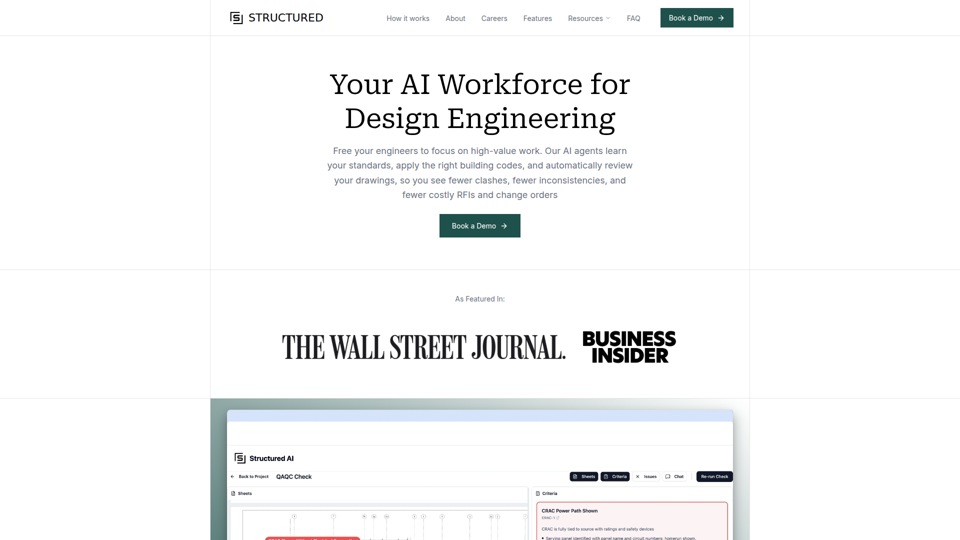
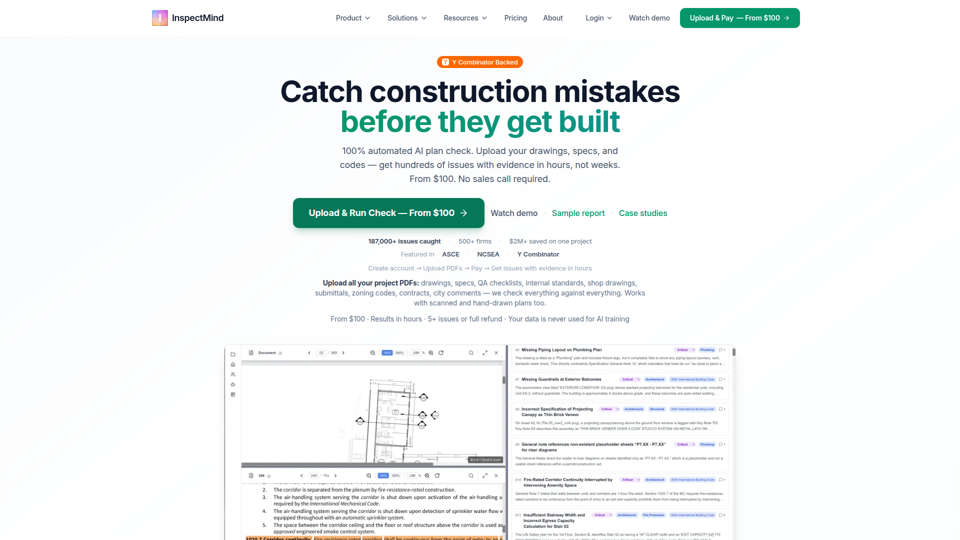
Document and contract intelligence is entering the back office. Engineers are using LLM-based tools to parse specifications, identify clashing requirements between drawings and contract documents, and extract compliance obligations from planning conditions — work that previously consumed significant junior engineer time.
Tasks AI Can Automate
- Quantity take-off from BIM models and 2D drawings using computer vision and model parsing
- Routine structural calculations for standard elements (pad foundations, retaining walls, simple beams) within defined parameter ranges
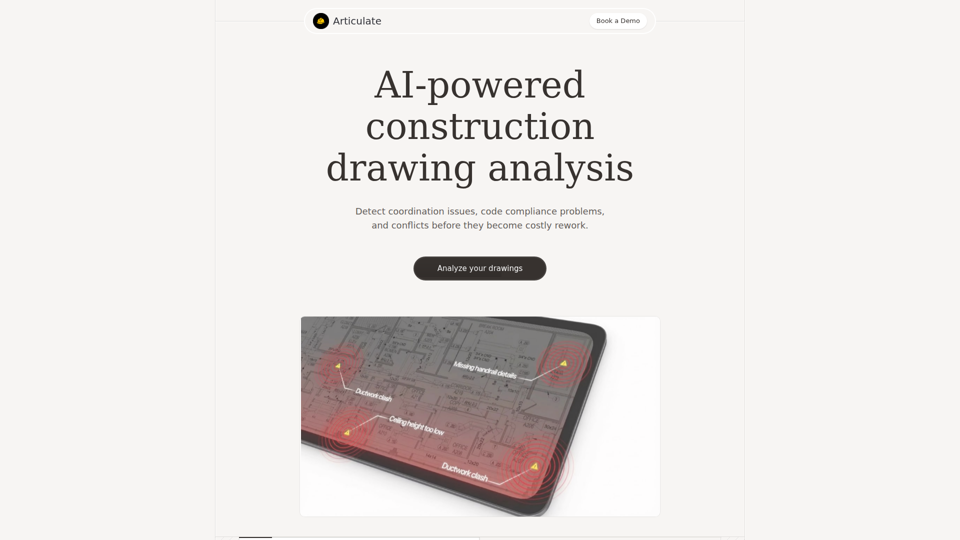
- Clash detection in 3D models across disciplines (structural, MEP, civil)
- Generating first-draft technical specifications from project briefs and standard templates
- Extracting and summarizing planning conditions, environmental constraints, and statutory requirements from regulatory documents
- Producing drainage network sizing calculations for standard catchment configurations
- Scheduling and sequencing construction programs from activity lists and dependency logic
- Processing and classifying inspection imagery for defect identification and condition grading
- Generating boilerplate sections of geotechnical or environmental reports from structured data inputs
- Monitoring construction progress against program using site imagery and IoT sensor feeds
Skills Becoming More Valuable
Engineering judgment under uncertainty. AI models produce outputs with confidence intervals and probabilistic ranges. The engineer's value lies in interpreting those outputs, identifying where model assumptions break down, and making defensible decisions when data is incomplete or contradictory.
Constraint definition and problem framing. Generative design tools are only as good as the constraints fed into them. Engineers who can translate client requirements, site conditions, and regulatory obligations into precise computational constraints will drive better outcomes from AI tools.
Cross-disciplinary integration. As AI handles more within-discipline computation, the coordination between structural, geotechnical, hydraulic, and environmental workstreams becomes the critical path. Engineers who can navigate these interfaces — technically and contractually — become more valuable.
Stakeholder communication and technical translation. AI-generated outputs (parametric models, probabilistic risk maps, automated reports) need to be interpreted and communicated to clients, planners, and contractors who lack technical literacy. This translation role is growing.
Regulatory and liability navigation. AI tools do not carry professional indemnity. The chartered engineer who understands where AI outputs can and cannot be relied upon — and who can document that judgment trail — is the professional the industry needs.
Data literacy and model validation. Understanding how AI models are trained, what their failure modes are, and how to validate outputs against first principles is becoming a core competency rather than a specialist skill.
Skills Becoming Less Important
- Manual quantity surveying and take-off from drawings
- Routine hand calculations for standard structural elements (increasingly handled by parametric tools with embedded calculation engines)
- Manual digitization of survey data and topographic information
- Repetitive report formatting and boilerplate technical writing
- Manual scheduling of construction programs for standard project types
- Basic CAD drafting of standard details (increasingly generated from parametric libraries)
- Manual cross-referencing of drawing registers and document control logs
These skills are not disappearing entirely — understanding them remains important for quality control — but the time investment they require is shrinking significantly.
Current AI Adoption in This Industry
Adoption is uneven and follows firm size and project type. Large infrastructure consultancies (AECOM, WSP, Jacobs, Mott MacDonald) are deploying AI tools at scale, particularly in asset management, inspection, and BIM-integrated workflows. Mid-tier firms are adopting point solutions — AI-assisted drainage design, automated specification generation, drone inspection platforms — without yet integrating them into a coherent digital delivery framework.
Smaller practices and contractor-side engineering teams lag significantly, constrained by data infrastructure, procurement processes, and the upfront cost of implementation.
The most mature AI adoption is in:
- Asset management and maintenance (highways, rail, water utilities) where large historical datasets enable predictive deterioration modeling
- Flood risk and hydraulic modeling where surrogate models are reducing simulation runtimes in commercial practice
- BIM-integrated design where clash detection and quantity extraction are now standard on major projects
- Drone-based inspection where AI defect classification is replacing manual visual inspection on bridges and structures
The least mature adoption is in:
- Geotechnical design, where data standardization remains poor and liability concerns are high
- Construction supervision, where real-time AI monitoring is technically available but contractually and practically difficult to implement
- Planning and consenting, where document intelligence tools are emerging but not yet embedded in standard workflows
Future Workflow Evolution
The civil engineering workflow of 2028 will look structurally different from today's in three specific ways.
Front-loaded intelligence. The feasibility and concept design phase will expand in scope and compress in time. AI-enabled parametric modeling means that what currently takes weeks of iterative design will be compressed into days of constraint-driven generation and evaluation. Engineers will spend more time at the front end defining what good looks like, and less time producing it.
Continuous model environments. Static deliverables — the drawing package, the geotechnical report, the drainage model — will increasingly be replaced by live, connected model environments that update as site conditions, design changes, and construction progress feed in. The engineer's role shifts from producing documents to maintaining and interrogating a living project model.
Risk-stratified human oversight. Routine calculations and standard design elements will be handled by AI with engineer sign-off. Complex, novel, or high-consequence design decisions will remain human-led. The profession will develop clearer frameworks for which category a given task falls into — driven partly by professional bodies (ICE, ASCE) and partly by insurance and liability requirements.
Procurement and commercial pressure. Clients and contractors will increasingly expect AI-enabled delivery as standard. Firms that cannot demonstrate digital delivery capability will face competitive disadvantage in tender evaluation. This will accelerate adoption among mid-tier firms over the next three to five years.
Common AI Use Cases
Parametric site layout and infrastructure alignment optimization — generating road alignments, drainage networks, or site layouts that minimize earthworks, cost, or environmental impact within defined constraints.
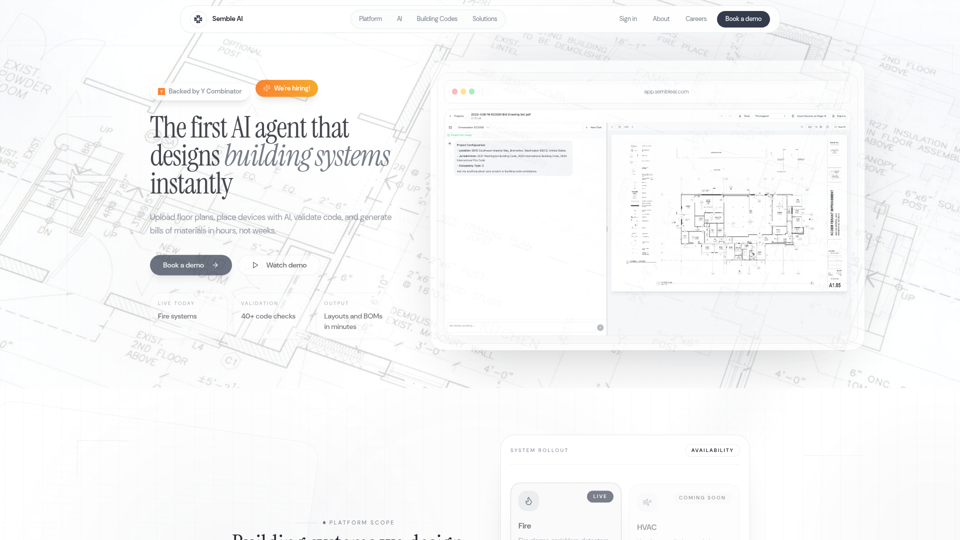
Automated BIM clash detection and coordination — identifying conflicts between structural, civil, and MEP elements before construction, reducing RFIs and on-site rework.
AI-assisted flood risk assessment — using surrogate hydraulic models to rapidly screen sites for flood risk and generate preliminary mitigation options.
Drone inspection with AI defect classification — processing aerial and close-range imagery of bridges, retaining walls, and pavements to produce condition scores and maintenance priority rankings.
Predictive pavement and asset deterioration modeling — using historical condition data and traffic loading to forecast maintenance needs and optimize whole-life cost.
Specification and document intelligence — parsing contract documents, planning conditions, and technical standards to extract obligations, flag conflicts, and generate compliance checklists.
Ground model generation from borehole and CPT data — using ML to interpolate subsurface conditions and quantify uncertainty between investigation points.
Construction progress monitoring — comparing site imagery or point cloud data against BIM models to track progress, identify deviations, and update programs.
Recommended AI Stack
The following tools reflect current commercial adoption in civil engineering practice, not aspirational or experimental platforms.
Design and generative modeling
- Autodesk Forma — AI-assisted early-stage site analysis and generative design
- Spacemaker (Autodesk) — parametric urban and site layout optimization
- Rhino + Grasshopper with AI plugins — parametric structural and civil design
BIM and coordination
- Autodesk Construction Cloud / BIM 360 — clash detection, model coordination, document management
- Navisworks — clash detection and construction simulation
- Revit with AI-assisted quantity extraction plugins
Hydraulic and environmental modeling
- HEC-RAS with AI surrogate model integrations — accelerated flood scenario modeling
- Flood Modeller AI (Jacobs) — commercial surrogate modeling for flood risk
Inspection and asset management
- Bentley AssetWise — AI-assisted infrastructure asset management
- DroneDeploy / Pix4D with AI defect detection — drone inspection processing
- Trimble SiteVision — AR-assisted site inspection and model overlay
Document and contract intelligence
- Kira Systems / Luminance — contract and specification document analysis
- Microsoft Copilot integrated into Office 365 — report drafting, document summarization
- Spex AI — specification generation and compliance checking
Geotechnical
- Keynetix / Bentley gINT with ML extensions — borehole data management and ground model generation
- Plaxis with parametric analysis workflows — geotechnical modeling with sensitivity analysis
Risks & Challenges
Liability and professional accountability. AI tools do not hold professional indemnity insurance. When an AI-generated calculation or design recommendation contributes to a failure, the chartered engineer who signed off carries the liability. The profession has not yet developed clear standards for what level of AI-assisted output requires independent verification — and until it does, risk exposure is poorly defined.
Data quality and standardization. Most AI tools in civil engineering depend on structured, consistent input data. In practice, geotechnical records, asset condition data, and historical project information are fragmented, inconsistently formatted, and held across incompatible systems. Garbage in, garbage out applies with particular force when AI outputs carry professional weight.
Over-reliance on black-box outputs. Engineers who use AI tools without understanding their underlying assumptions risk accepting outputs that are plausible but wrong. Surrogate hydraulic models, for example, can produce credible-looking results outside their training domain. The risk is not that AI is wrong — it is that it is wrong in ways that are not obviously visible.
Skills atrophy in junior engineers. If AI handles routine calculations and standard design tasks, junior engineers may not develop the foundational understanding needed to exercise judgment on complex problems. The profession faces a pipeline risk: producing engineers who can operate AI tools but cannot interrogate their outputs.
Procurement and contractual frameworks. Standard forms of contract (NEC4, FIDIC) were not written with AI-generated deliverables in mind. Questions of intellectual property, design responsibility, and fitness for purpose when AI tools are used in the design process are not yet resolved in most contract frameworks.
Cybersecurity and model integrity. Connected BIM environments and live project models represent new attack surfaces. Unauthorized modification of a structural model or drainage design in a live project environment is a risk that the industry is only beginning to address.
Future Outlook (3–5 Years)
By 2028, the civil engineering role will have bifurcated more sharply than it has today. A significant portion of what currently occupies junior and mid-level engineers — routine calculations, standard design, document production, basic modeling — will be handled by AI tools with engineer oversight rather than engineer execution. The profession will need fewer people doing these tasks and more people capable of the judgment, integration, and communication work that AI cannot replicate.
The firms that will lead are those building proprietary data assets now — structured project histories, condition databases, ground investigation records — that will train better internal models than generic commercial tools can provide. Infrastructure owners (highways agencies, water utilities, rail operators) are already doing this; consultancies are beginning to.
Professional bodies face a defining challenge: updating competency frameworks, CPD requirements, and assessment criteria to reflect a world where AI handles a growing share of technical production. The ICE's competency framework, last substantially revised before the current AI wave, will need to address what it means to exercise engineering judgment when the calculation was generated by a model.
The infrastructure investment pipeline — driven by net zero commitments, aging asset replacement, and urbanization — means demand for civil engineering output is not shrinking. The question is not whether civil engineers will be needed, but what they will spend their time doing. The answer, increasingly, is the work that requires accountability, judgment, and the ability to navigate complexity that cannot be reduced to a training dataset.
Final Insight
Civil engineering is not being automated — it is being restructured. The tasks that consumed the most time at the junior and mid-level are the ones most exposed to AI displacement. The tasks that define professional value — exercising judgment under uncertainty, integrating competing constraints, taking accountability for decisions that affect public safety — are the ones AI cannot perform and clients cannot afford to remove from human hands.
The engineers who will thrive are not those who resist AI tools or those who defer entirely to them. They are the ones who understand the boundary between what a model can reliably produce and what requires a trained human mind to evaluate — and who can articulate that boundary clearly to clients, regulators, and courts.
That boundary is where the profession lives. Knowing where it sits, and defending it rigorously, is the most important skill a civil engineer can develop in the next five years.