How AI fits this role
Sales Lead: How AI Is Reshaping the Role Across B2B and High-Volume Sales Environments
Role Overview
A Sales Lead occupies the operational middle ground between frontline sales representatives and sales management. In most B2B, SaaS, retail, and field sales environments, the Sales Lead is simultaneously a quota-carrying individual contributor and a team anchor — responsible for closing deals, coaching junior reps, managing pipeline hygiene, and escalating complex negotiations.
In practice, the role carries significant cognitive load. A Sales Lead in a mid-market SaaS company might manage a personal book of 40–80 accounts while reviewing pipeline health for a pod of three to five reps, running deal reviews, and coordinating with marketing on lead quality. In retail or distribution contexts, the Sales Lead often owns territory performance, handles key account relationships, and trains new hires on product knowledge and objection handling.
The role is defined by judgment under pressure: knowing when to discount, when to escalate, when a deal is genuinely stalled versus when a rep is misreading buyer signals. That judgment has historically been built through experience, pattern recognition, and relationship capital — all of which AI is now beginning to replicate, augment, or replace in specific sub-tasks.
How AI Is Transforming This Role
The transformation of the Sales Lead role is not about replacing the person — it is about compressing the time between signal and action, and shifting where human judgment is actually required.
Three years ago, a Sales Lead spent meaningful time each week pulling CRM reports, reviewing call recordings manually, and building pipeline forecasts in spreadsheets. Today, AI-native CRM layers (Salesforce Einstein, HubSpot AI, Gong, Clari) surface those insights automatically. The Sales Lead no longer needs to find the signal — the signal arrives pre-packaged. The question is whether they act on it correctly.
This shift has two consequences. First, Sales Leads who relied on information asymmetry — knowing the pipeline better than their manager because they built the reports — lose that structural advantage. Second, Sales Leads who develop strong interpretive and coaching skills become significantly more valuable, because the bottleneck moves from data collection to decision quality.
AI is also changing the nature of rep coaching. Conversation intelligence platforms like Gong and Chorus automatically score calls, flag objection-handling gaps, and identify talk-time ratios. A Sales Lead no longer needs to listen to 10 calls to identify a rep's weakness — the platform surfaces it. The Lead's job becomes acting on that insight: designing the right coaching intervention, modeling the behavior, and holding the rep accountable.
On the outbound side, AI prospecting tools (Clay, Apollo, Amplemarket) have dramatically increased the volume of personalized outreach a rep can generate. This creates a new problem for Sales Leads: managing signal-to-noise in inbound pipeline, coaching reps on quality over volume, and ensuring that AI-generated sequences don't erode brand trust through over-automation.
Tasks AI Can Automate
- Pipeline reporting and forecast roll-ups: AI layers in Salesforce, HubSpot, and Clari now generate deal-level risk scores, forecast categories, and pipeline gap analyses without manual input.
- Call scoring and conversation analysis: Gong, Chorus, and Salesloft automatically transcribe, tag, and score sales calls — identifying competitor mentions, pricing objections, next-step commitments, and sentiment shifts.
- Lead scoring and prioritization: AI models trained on historical conversion data rank inbound leads by fit and intent, reducing the time reps spend on low-probability prospects.
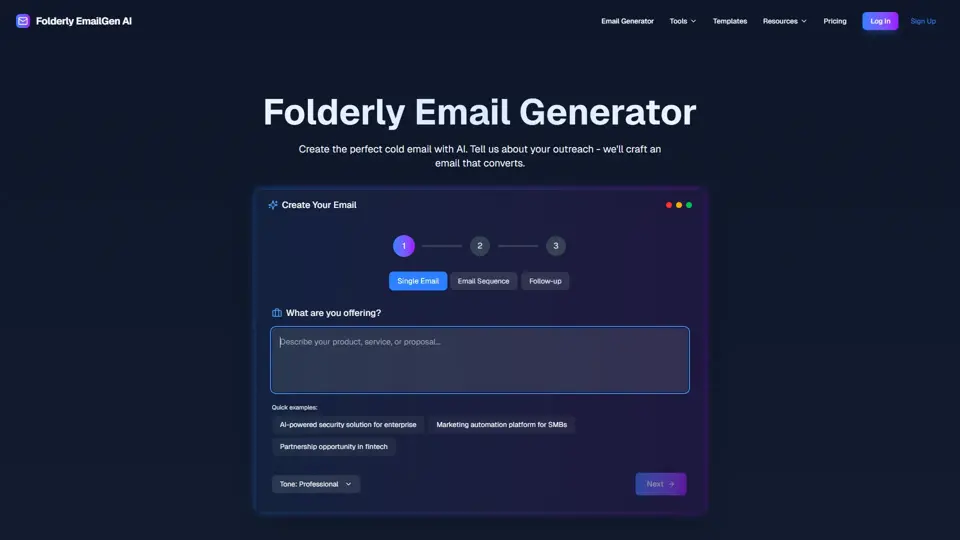
- Outreach sequence generation: Tools like Clay and Amplemarket generate personalized cold email sequences using prospect data, company news triggers, and job change signals.
- CRM data entry and activity logging: AI assistants embedded in email and calendar tools (Salesforce Inbox, HubSpot AI, Superhuman) auto-log meetings, calls, and email threads to the correct CRM records.
- Win/loss pattern analysis: AI surfaces common themes across won and lost deals — objection patterns, deal velocity, stakeholder engagement depth — that previously required manual analysis.
- Onboarding content delivery: AI-driven sales enablement platforms (Highspot, Seismic) serve the right content to new reps based on their deal stage and product focus, reducing the Sales Lead's time spent on basic enablement.
Skills Becoming More Valuable
Coaching precision over coaching volume. When AI surfaces rep weaknesses automatically, the Sales Lead's value lies in designing targeted interventions — not in identifying the problem. The ability to change rep behavior through structured feedback, role-play, and accountability frameworks becomes the differentiator.
Deal qualification judgment. AI can score a deal, but it cannot reliably assess whether a champion is politically positioned to drive internal consensus, whether a procurement delay is a stall or a genuine process, or whether a competitor's proposal is a real threat or a negotiating tactic. That contextual judgment remains human.
Cross-functional influence. Sales Leads increasingly need to translate field intelligence into actionable input for marketing, product, and RevOps. The ability to synthesize what AI surfaces — "our AI shows we lose 60% of deals where legal gets involved after stage 3" — and drive process changes upstream is a high-value skill.
AI tool literacy. Not prompt engineering, but operational fluency: knowing which signals from Gong or Clari are reliable, which are noisy, and how to configure workflows so the team acts on the right data. Sales Leads who can evaluate and implement AI tooling have a structural advantage in organizations moving fast on RevOps modernization.
Buyer relationship depth. As outreach volume increases across the industry due to AI-generated sequences, genuine relationship capital — knowing a buyer's internal politics, their career motivations, their risk tolerance — becomes scarcer and more valuable.
Skills Becoming Less Important
- Manual pipeline reporting and spreadsheet forecasting: Largely automated by CRM AI layers and revenue intelligence platforms.
- Call review as a primary coaching method: Replaced by AI-generated call summaries and scoring; listening to full recordings is now an exception, not a routine.
- Rote product knowledge delivery: AI-powered enablement tools and chatbots handle basic product Q&A; deep memorization of feature sets matters less than knowing when and how to position them.
- Administrative CRM hygiene: Auto-logging and AI data enrichment reduce the time spent on manual record updates.
- Basic lead research: AI prospecting tools (Clay, Apollo) automate company research, contact enrichment, and trigger identification that previously required manual effort.
Current AI Adoption in This Industry
AI adoption in B2B and SaaS sales is among the highest of any professional function, driven by the measurable ROI of revenue intelligence and the competitive pressure of compressed sales cycles.
As of 2024–2025, the majority of mid-market and enterprise sales organizations have deployed at least one AI-native tool in their stack. Gong and Chorus have become near-standard in SaaS sales teams above 20 reps. Clari and Salesforce Einstein are widely deployed for forecasting. Clay has seen rapid adoption in outbound-heavy teams for prospect enrichment and sequence personalization.
However, adoption is uneven. Many organizations have purchased AI tools without integrating them into rep workflows or manager review processes. The result is a common pattern: AI surfaces insights that no one acts on because the Sales Lead hasn't been trained to use them, or because the CRM data quality is too poor to make the AI outputs reliable.
The gap between tool deployment and operational integration is the defining challenge of current AI adoption in sales. Organizations that close this gap — by training Sales Leads to interpret and act on AI outputs — are seeing measurable improvements in forecast accuracy, rep ramp time, and deal velocity.
Future Workflow Evolution
The Sales Lead role in 2027 will look structurally different from 2022, even if the title and compensation bands remain similar.
The weekly rhythm will shift from information gathering to decision-making. Pipeline reviews will be AI-prepared, with the Sales Lead's time focused on challenging assumptions, identifying coaching opportunities, and making resource allocation decisions — which deals get executive involvement, which reps need intervention, which accounts need a different approach.
Coaching will become more systematic and data-driven. Sales Leads will work from AI-generated rep performance profiles that track skill development over time, not just quota attainment. The coaching conversation will be structured around specific behavioral gaps identified by conversation intelligence, not general impressions.
Outbound strategy will require more deliberate human oversight. As AI-generated outreach becomes ubiquitous, Sales Leads will need to make sharper decisions about when to use automation and when to invest in high-touch, human-led prospecting. The risk of brand erosion from over-automated outreach will become a real operational concern.
The Sales Lead will also increasingly function as a RevOps translator — taking AI-surfaced patterns from the field and working with marketing and product to address root causes. This requires comfort with data interpretation and cross-functional communication that was not historically part of the role.
Common AI Use Cases
- Deal risk flagging: Clari and Salesforce Einstein flag deals with low engagement, stalled stages, or missing next steps, allowing Sales Leads to intervene before deals go dark.
- Rep performance benchmarking: Gong compares individual rep metrics (talk ratio, question rate, objection handling frequency) against team and industry benchmarks.
- Personalized outreach at scale: Clay pulls prospect data from LinkedIn, company news, and job postings to generate contextually relevant cold outreach without manual research.
- Forecast accuracy improvement: AI models trained on historical deal data provide more accurate commit/best-case/pipeline forecasts than rep self-reporting.
- Competitive intelligence surfacing: Gong and Chorus flag competitor mentions in calls and aggregate them, giving Sales Leads visibility into which competitors are appearing most frequently and in which deal stages.
- Onboarding acceleration: AI-driven role-play tools (Rehearsal, Second Nature) allow new reps to practice objection handling and discovery calls without consuming Sales Lead time.
- Email and meeting summarization: AI tools auto-generate follow-up email drafts and meeting summaries, reducing post-call administrative time for reps.
Recommended AI Stack
Revenue Intelligence & Forecasting
- Clari — pipeline management, forecast accuracy, deal risk scoring
- Gong — conversation intelligence, call scoring, rep coaching insights
- Salesforce Einstein / HubSpot AI — CRM-native AI for activity scoring and pipeline health
Prospecting & Outreach
- Clay — prospect enrichment, trigger-based personalization, sequence building
- Apollo.io — contact database, intent data, outreach automation
- Amplemarket — AI-driven outbound sequencing with buying signal detection
Sales Enablement
- Highspot or Seismic — AI-powered content recommendations by deal stage
- Second Nature or Rehearsal — AI role-play for rep skill development
Productivity & CRM Hygiene
- Superhuman or Salesforce Inbox — AI-assisted email with auto-logging
- Otter.ai or Fireflies — meeting transcription and CRM sync
The right stack depends on team size, CRM infrastructure, and whether the primary bottleneck is outbound volume, forecast accuracy, or rep development. Sales Leads should resist the temptation to deploy all layers simultaneously — tool sprawl without workflow integration produces noise, not insight.
Risks & Challenges
Over-reliance on AI scoring. Deal scores and call ratings are probabilistic, not deterministic. A Sales Lead who acts on AI outputs without applying contextual judgment will make worse decisions than one who uses AI as a starting point for inquiry, not a final verdict.
CRM data quality as a constraint. Most AI sales tools are only as good as the underlying CRM data. Organizations with poor data hygiene — missing contact records, inconsistent stage definitions, incomplete activity logging — will find that AI outputs are unreliable or actively misleading. Fixing data quality is a prerequisite, not an afterthought.
Rep resistance to AI monitoring. Conversation intelligence platforms can feel surveillance-like to sales reps. Sales Leads who deploy these tools without building a coaching culture around them — where the data is used to develop reps, not punish them — will face adoption resistance and trust erosion.
Outreach volume and brand risk. AI-generated outreach at scale increases the risk of sending low-quality, off-brand, or contextually inappropriate messages. Sales Leads need to establish quality controls and review processes for AI-generated sequences, particularly in enterprise or relationship-driven sales contexts.
Skill atrophy in junior reps. If AI handles research, CRM logging, and sequence writing, junior reps may not develop the foundational skills — manual prospecting, discovery discipline, objection handling — that build long-term sales competence. Sales Leads need to be deliberate about which tasks reps should still do manually for developmental reasons.
Future Outlook (3–5 Years)
By 2028, the Sales Lead role will have bifurcated along a capability axis. Sales Leads who have developed strong AI literacy, coaching precision, and cross-functional influence will be managing larger pods, carrying more strategic responsibility, and commanding higher compensation. Those who have not adapted will find their roles compressed — either absorbed into pure individual contributor positions or displaced by leaner team structures enabled by AI productivity gains.
The most significant structural change will be in team sizing. As AI tools increase rep productivity — through better lead prioritization, automated admin, and faster onboarding — organizations will experiment with higher rep-to-manager ratios. A Sales Lead who currently manages a pod of four may be expected to manage six or eight, with AI handling the monitoring and reporting functions that previously justified smaller spans of control.
Autonomous AI agents will begin handling specific sales sub-tasks end-to-end: scheduling follow-ups, sending contract reminders, re-engaging dormant leads, and routing inbound inquiries. This will further reduce the administrative component of the Sales Lead role and increase the premium on tasks that require human judgment, relationship depth, and organizational influence.
The Sales Lead who thrives in this environment will be less of a player-coach and more of a performance architect — designing systems, interpreting signals, developing people, and making judgment calls that AI cannot reliably make.
Final Insight
The Sales Lead role is not being automated — it is being clarified. AI is stripping away the information-gathering and administrative work that has historically consumed a significant portion of the role, leaving behind the parts that actually require human judgment: coaching, deal qualification, relationship management, and strategic decision-making.
The professionals who will struggle are those who have built their identity around being the most informed person in the room — the one who knows the pipeline best, who has listened to the most calls, who has the most data. AI now provides that information to everyone. The professionals who will thrive are those who have always been most valuable for what they do with information, not how much of it they hold.
The transition requires deliberate investment: in AI tool literacy, in coaching skills, in cross-functional communication, and in the judgment to know when AI outputs are reliable and when they are not. That investment is not optional — it is the defining professional development challenge for Sales Leads in the next three years.