How AI fits this role
Postsecondary Teachers in Higher Education: How AI Is Reshaping the Role
Role Overview
Postsecondary teachers — faculty, lecturers, adjuncts, and instructors at colleges, universities, community colleges, and professional schools — sit at the intersection of knowledge transmission, research production, and student development. Their work spans course design, direct instruction, academic advising, curriculum governance, scholarly research, and increasingly, institutional service obligations that consume a growing share of their working hours.
The role is not monolithic. A tenure-track professor at a research university operates under fundamentally different pressures than an adjunct instructor teaching five sections of composition at a community college, or a clinical faculty member supervising nursing students. What they share is a core professional identity built around subject-matter expertise, pedagogical judgment, and the mentorship of learners at a critical developmental stage.
Higher education as an industry is under compounding structural pressure: declining enrollment in many regions, rising tuition resistance, accreditation scrutiny of learning outcomes, and a growing employer expectation that graduates arrive with applied, demonstrable skills rather than theoretical credentials. AI is arriving into this environment not as a neutral productivity tool but as a disruptive force that simultaneously threatens some of what faculty do, amplifies other parts, and raises genuinely unresolved questions about what a university education is actually for.
How AI Is Transforming This Role
The transformation is happening on three distinct fronts simultaneously, and faculty are navigating all three at once with minimal institutional support.
The assessment crisis. Generative AI broke the traditional essay-based assessment model in a single semester. Faculty who relied on take-home writing assignments, short-answer exams, and research papers as their primary evaluation instruments found those instruments compromised almost overnight. The response has not been uniform: some faculty moved to in-class assessments, oral defenses, and portfolio-based evaluation; others adopted AI detection tools that have proven unreliable and legally contested; others redesigned assignments around process documentation rather than final products. None of these solutions is frictionless, and all of them require significant redesign labor that falls on individual instructors.
The content and preparation layer. AI tools are now embedded in how faculty prepare course materials, generate practice problems, draft rubrics, create lecture outlines, and build reading lists. This is genuinely useful, but it also creates a new competency gap: faculty who understand how to prompt, verify, and critically edit AI-generated instructional content produce better materials faster; those who either avoid the tools entirely or use them uncritically are diverging in quality and efficiency.
The student-facing AI layer. Students are using AI tools regardless of institutional policy. Faculty are now effectively teaching in an environment where every student has access to a capable writing assistant, a 24/7 tutoring proxy, and a research summarization engine. This changes what classroom time is for, what homework can accomplish, and what "learning" means in practice. Faculty who have adapted treat AI as a variable in the learning environment to be designed around; those who haven't are experiencing a growing disconnect between their course design assumptions and student behavior.
Tasks AI Can Automate
- Generating first-draft rubrics for assignments, which faculty then refine based on course-specific learning objectives
- Producing practice problem sets in quantitative disciplines — math, statistics, economics, chemistry — including worked solutions and difficulty variants
- Summarizing research literature for course preparation, particularly for survey courses where faculty are teaching adjacent to their primary specialization
- Drafting syllabus boilerplate — policies, accessibility statements, grading scales, late work language — freeing faculty to focus on the substantive course design
- Creating quiz and low-stakes assessment banks from course readings or lecture content
- Generating initial feedback templates on common student writing errors, which faculty personalize for individual submissions
- Transcribing and summarizing recorded lectures for student accessibility and review
- Drafting grant proposal sections — literature reviews, broader impact statements, budget justifications — that researchers then revise and verify
- Producing course announcement drafts, FAQ responses to common student emails, and LMS discussion prompt variations
- Translating course materials for multilingual student populations or international program delivery
Skills Becoming More Valuable
Pedagogical redesign capability. The ability to rethink assessment, course structure, and learning activities from first principles — not just update existing materials — is now a core professional competency, not a periodic curriculum review task. Faculty who can design for AI-present learning environments are in demand for curriculum leadership roles.
AI literacy as a disciplinary skill. In every field, the ability to critically evaluate AI-generated outputs within the discipline's epistemological standards is becoming essential. A historian who can explain why an AI-generated historical narrative is structurally misleading, or a statistician who can identify where an AI model's assumptions break down, is teaching something that cannot be automated.
High-stakes mentorship and advising. Career advising, thesis supervision, research mentorship, and the kind of developmental feedback that changes how a student thinks — these require relational continuity, contextual judgment, and genuine investment in a specific person's trajectory. AI can simulate some of this, but students and institutions are increasingly distinguishing between transactional support and genuine mentorship.
Research synthesis and original inquiry. AI accelerates literature review and hypothesis generation, but the ability to identify genuinely novel research questions, design rigorous studies, and interpret ambiguous findings remains a human-intensive skill. Faculty who are strong researchers are better positioned than those whose primary value was content delivery.
Facilitation of complex discussion. Seminar-style teaching, Socratic questioning, and the management of productive intellectual disagreement in a classroom are skills that AI cannot replicate and that students increasingly value precisely because they are rare.
Skills Becoming Less Important
Encyclopedic content delivery. The lecture as a primary vehicle for transmitting factual information is losing its comparative advantage. Students can access explanations of most concepts through multiple AI-assisted channels. Faculty whose primary classroom value was "knowing a lot about the subject" face the sharpest disruption.
Manual grading of formulaic assignments. Grading standardized multiple-choice exams, checking problem set arithmetic, and providing boilerplate feedback on common writing errors are tasks where AI assistance is already reducing the time faculty spend, and where that time reduction is largely uncontroversial.
Routine course administration. Scheduling, LMS maintenance, generating standard course documents, and answering procedural student questions are increasingly handled through AI-assisted administrative workflows, either by faculty using tools directly or by institutional systems.
Isolated subject-matter expertise without applied context. Deep knowledge of a narrow subfield, without the ability to connect it to applied problems, interdisciplinary questions, or student career relevance, is a weaker professional position than it was a decade ago.
Current AI Adoption in This Industry
Adoption in higher education is fragmented, institution-dependent, and often driven by individual faculty initiative rather than coordinated institutional strategy. A 2024 survey by Educause found that while the majority of faculty were aware of generative AI tools, fewer than a third reported receiving formal institutional guidance on how to integrate them into their teaching practice.
The most visible adoption patterns:
- Research-intensive universities are seeing AI adoption concentrated in research workflows — literature synthesis, grant writing, data analysis — with more cautious and contested adoption in teaching contexts
- Community colleges and teaching-focused institutions are seeing faster adoption in course design and student support, partly because faculty there carry heavier teaching loads and have stronger incentives to find efficiency gains
- Professional programs — business, law, nursing, engineering — are moving faster on AI integration because employer expectations are explicit and accreditation bodies are beginning to address AI competency in program standards
- Humanities and social science departments are navigating the most acute tension, because AI most directly disrupts their traditional assessment instruments while their disciplinary frameworks are also best suited to critically analyzing AI's cultural and epistemic implications
Institutional AI policies remain inconsistent. Many universities issued blanket guidance in 2023 that has since been revised, and faculty are operating in a policy environment that is still catching up to practice.
Future Workflow Evolution
The postsecondary teaching workflow over the next three to five years will likely bifurcate along two axes: course type and institutional context.
High-enrollment, standardized courses — introductory sequences in math, writing, economics, and the sciences — will see the most significant AI integration. Adaptive learning platforms, AI tutoring systems, and automated feedback tools will handle a larger share of the instructional support load. Faculty in these courses will shift toward course design, exception handling, and the human touchpoints that AI cannot replicate: office hours, discussion facilitation, and the judgment calls that adaptive systems escalate.
Upper-division, seminar, and graduate instruction will change more slowly and less dramatically. The value proposition of these courses is already centered on discussion, mentorship, and original inquiry — areas where AI is a tool rather than a substitute. Faculty here will use AI to prepare more efficiently and to give students richer research scaffolding, but the core instructional model will remain recognizable.
The administrative burden on faculty is likely to increase before it decreases. AI tools create new obligations — reviewing AI-generated content for accuracy, redesigning assessments, navigating student AI use — that are not yet offset by efficiency gains in most faculty workflows.
Common AI Use Cases
- Flipped classroom preparation: Using AI to generate pre-class reading summaries, concept explainers, and warm-up questions that students engage with before lecture, freeing class time for application and discussion
- Personalized feedback at scale: Using AI writing assistants to generate draft feedback on student papers that faculty review and personalize, enabling more substantive feedback in high-enrollment courses
- Research literature mapping: Using tools like Elicit, Consensus, or Semantic Scholar's AI features to map a research landscape before designing a new course or entering an adjacent research area
- Assignment redesign: Using AI to generate multiple variants of an assignment prompt and then selecting or combining the most pedagogically sound version
- Accessibility support: Generating alt-text for course images, producing transcripts for recorded content, and creating multiple-format versions of course materials
- Student early warning: Some institutions are deploying AI systems that flag engagement patterns in LMS data, which faculty use to identify students who may need outreach before they disengage entirely
- Simulation and case generation: In professional programs, using AI to generate realistic case studies, patient scenarios, or business situations that are current and contextually specific
Recommended AI Stack
Course design and content
- Claude or GPT-4o for drafting syllabi, rubrics, assignment prompts, and lecture outlines — with faculty verification of disciplinary accuracy
- Perplexity or Elicit for research literature synthesis and course reading curation
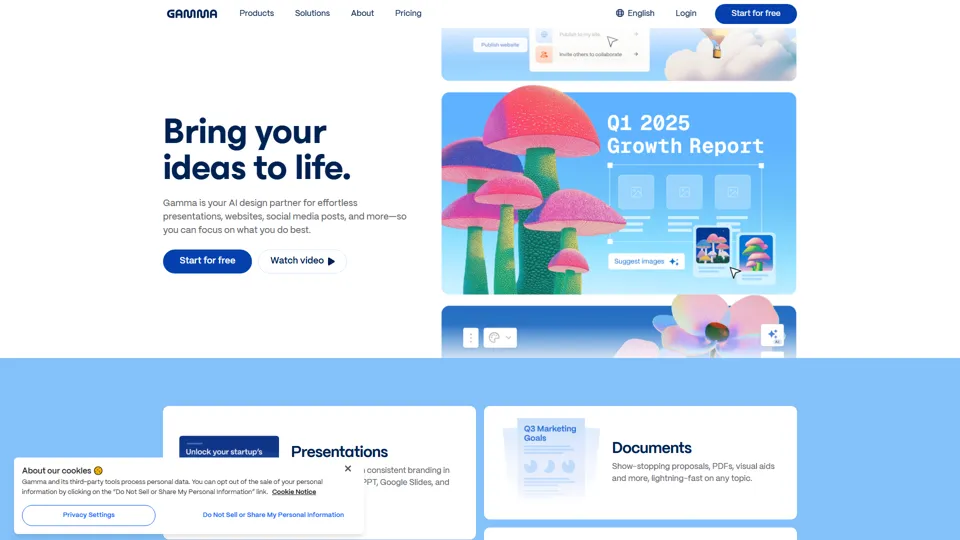
- Canva AI or Gamma for generating visual lecture materials and presentation drafts
Assessment and feedback
- Turnitin's AI writing detection (with the caveat that false positive rates require careful handling and should not be used as sole evidence of misconduct)
- Gradescope for AI-assisted grading of structured assignments, particularly in STEM disciplines
- Writable or Grammarly Business for AI-assisted writing feedback in composition-heavy courses
Student support and engagement
- Khanmigo or similar AI tutoring integrations for out-of-class student support in foundational courses
- Zoom AI Companion for lecture transcription and summary generation
- LMS-native AI features (Canvas Intelligence, Brightspace Lumi) for engagement analytics and communication drafting
Research
- Research Rabbit or Connected Papers for literature mapping
- Otter.ai for transcribing research interviews
- Zotero with AI plugins for reference management and annotation synthesis
Risks & Challenges
Academic integrity ambiguity. The line between AI-assisted work and AI-substituted work is genuinely unclear, and institutions have not resolved it. Faculty are making consequential decisions about student misconduct in a policy vacuum, with detection tools that are unreliable and legal exposure that is not well understood.
Deskilling risk for students. If AI handles the cognitive work that produces learning — the struggle of drafting an argument, working through a problem, synthesizing sources — students may arrive at credentials without the underlying competencies those credentials are supposed to represent. Faculty are the primary line of defense against this, but they are not equipped or incentivized to fight it systematically.
Labor displacement at the adjunct level. High-enrollment introductory courses taught by adjunct faculty are the most vulnerable to AI-assisted consolidation. If adaptive learning platforms can deliver introductory content at scale with reduced human instruction, the adjunct labor market — already precarious — faces structural contraction.
Institutional pressure to do more with less. AI is being positioned by some administrators as a justification for larger class sizes, reduced faculty lines, and increased teaching loads. Faculty who adopt AI tools may find those efficiency gains captured by the institution rather than returned to them as reduced workload.
Verification burden. AI-generated course content, research summaries, and student feedback drafts all require faculty review for accuracy. In disciplines where errors have real consequences — medicine, law, engineering — this verification burden is significant and cannot be delegated.
Future Outlook (3–5 Years)
The postsecondary teaching role will not disappear, but it will stratify more sharply than it already has. Faculty at research universities with strong mentorship relationships, active research agendas, and the ability to teach in ways that AI cannot replicate will see their professional position strengthen. Faculty whose primary value was content delivery in high-enrollment courses will face the most significant displacement pressure, particularly at institutions under enrollment and financial stress.
The most consequential shift will be in what counts as a credential. If employers and graduate programs begin to weight demonstrated applied skills over seat-time credentials — a shift that AI-enabled skills assessment makes more feasible — the demand for traditional course-based instruction will face structural pressure that no amount of pedagogical innovation can fully offset.
Accreditation bodies are beginning to incorporate AI competency into program standards, which will create new curriculum obligations and, eventually, new faculty development requirements. Faculty who build AI literacy now — not just as tool users but as critical analysts of AI's disciplinary implications — will be better positioned for those requirements.
The institutions that navigate this transition best will be those that treat AI integration as a curriculum design problem rather than a technology adoption problem, and that invest in faculty development rather than expecting individual instructors to figure it out alone.
Final Insight
The deepest challenge facing postsecondary teachers is not that AI can do some of what they do. It is that AI's arrival is forcing a long-overdue reckoning with what higher education is actually for. If the answer is credential delivery and content transmission, AI is a serious threat. If the answer is the development of judgment, the capacity for original inquiry, and the ability to think rigorously under uncertainty — things that require human relationships, intellectual modeling, and the kind of feedback that only comes from someone who genuinely knows a field — then faculty who embody those things are more valuable, not less.
The faculty who will thrive are those who stop defending the old model and start designing the new one: building courses where AI is a tool students learn to use critically, creating assessments that reveal thinking rather than just output, and positioning themselves as the irreplaceable human layer in a learning environment that will increasingly be mediated by machines. That is a harder job than the one most faculty were trained for. It is also a more important one.