How AI fits this role
Middle School History Teacher
How AI Is Reshaping History Education in K–12 Schools
Role Overview
Middle school history teachers — typically serving students in grades 6 through 8, ages 11 to 14 — occupy one of the most cognitively demanding positions in K–12 education. They are simultaneously content specialists, developmental psychologists, classroom managers, curriculum designers, and civic educators. The subject matter itself demands more than factual recall: history at this level requires students to interpret primary sources, evaluate competing narratives, understand causation across time, and connect past events to present-day civic life.
In most U.S. public school districts, middle school history teachers operate under state-mandated curriculum frameworks — Common Core literacy standards, C3 Framework for Social Studies, and state-specific content standards — while managing class sizes that routinely exceed 28 students per period, often across five or six periods daily. That means a single teacher may be responsible for 140 to 180 students at any given time.
The operational reality is relentless: lesson planning, differentiated instruction for mixed-ability classrooms, formative and summative assessment design, grading written responses, parent communication, IEP and 504 accommodation compliance, and mandatory professional development — all compressed into a contract day that rarely reflects actual working hours. Burnout and attrition rates in this role are among the highest in the profession.
AI is entering this environment not as a luxury upgrade but as a practical response to structural overload.
How AI Is Transforming This Role
The transformation is not about replacing teachers. It is about redistributing where cognitive labor goes. Middle school history teachers have historically spent a disproportionate share of their time on tasks that are necessary but not pedagogically generative — writing quiz variations, formatting rubrics, drafting parent emails, searching for primary source documents, and differentiating the same worksheet for three reading levels. AI tools are beginning to absorb significant portions of that administrative and preparatory load.
The more consequential shift is in instructional design. Teachers who previously relied on textbook-provided materials — often outdated, culturally narrow, and pedagogically flat — can now generate custom primary source sets, Socratic discussion prompts, and document-based question (DBQ) scaffolds tailored to their specific student population. A teacher in a district with a large immigrant student population can now build a unit on immigration history that centers their students' own heritage communities, using AI to surface relevant primary sources and generate culturally responsive discussion questions, in a fraction of the time it would have taken manually.
Assessment feedback is another area of active change. AI writing tools can now provide first-pass feedback on student essays — flagging unsupported claims, identifying where evidence is missing, and noting structural weaknesses — before the teacher reads a single paper. This shifts the teacher's role from error-finder to coach, focusing human attention on the higher-order feedback that actually develops historical thinking.
There is also a growing pressure from students themselves. Generative AI has fundamentally changed what student-produced writing means. A middle schooler can now produce a grammatically polished five-paragraph essay on the causes of World War I in under three minutes. This forces history teachers to redesign assessments toward process documentation, oral defense, annotated source analysis, and in-class writing — formats where AI assistance is harder to obscure and historical thinking is harder to fake.
Tasks AI Can Automate
- Differentiated material generation: Producing the same reading passage at three Lexile levels (e.g., 600L, 800L, 1000L) for mixed-ability classrooms, a task that previously took 45–90 minutes per lesson
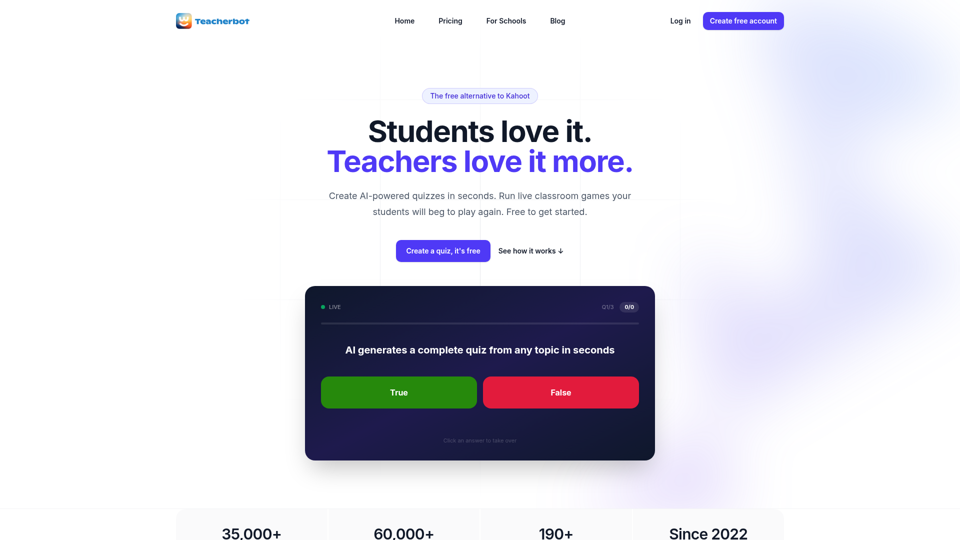
- Quiz and assessment drafting: Generating multiple-choice, short-answer, and matching questions aligned to specific learning objectives and state standards
- Rubric construction: Building detailed analytical rubrics for DBQs, essays, and source analysis tasks with criteria mapped to C3 or state framework standards
- Primary source identification: Surfacing relevant primary and secondary sources for a given historical topic, period, or geographic region
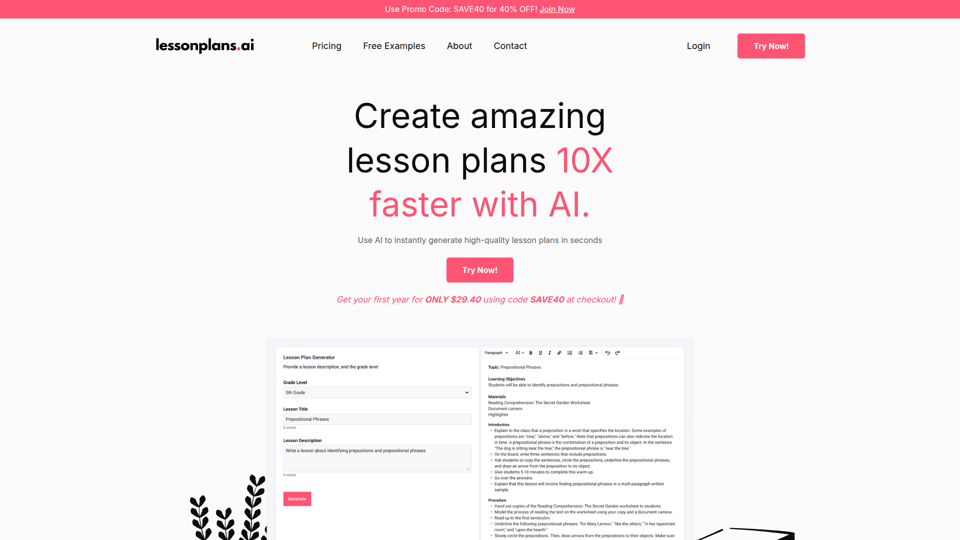
- Lesson plan scaffolding: Generating structured lesson outlines with warm-up activities, direct instruction notes, guided practice, and exit ticket prompts
- Parent communication drafts: Writing progress update emails, concern notices, and conference preparation summaries
- Vocabulary and concept glossaries: Building tiered vocabulary lists with student-accessible definitions for each unit
- Substitute lesson plans: Creating self-contained, low-prep lesson packages for planned or emergency absences
- IEP/504 accommodation adaptation: Modifying existing materials to meet documented accommodation requirements (extended time formatting, reduced complexity versions, visual supports)
Skills Becoming More Valuable
Historical thinking facilitation — The ability to guide students through sourcing, contextualization, corroboration, and close reading of primary sources is increasingly the core differentiator of an effective history teacher. AI can find the sources; it cannot replicate the Socratic back-and-forth that builds genuine historical reasoning in a 12-year-old.
Assessment redesign for the AI era — Teachers who can construct assessments that are genuinely AI-resistant — oral presentations, in-class source analysis, portfolio-based evaluation, Socratic seminars — are providing something that cannot be gamed by a student with a ChatGPT subscription.
Culturally responsive curriculum curation — AI tools generate content from dominant historical narratives unless explicitly directed otherwise. Teachers who understand how to prompt for, evaluate, and integrate underrepresented perspectives are adding real intellectual value to AI-generated drafts.
Prompt literacy and AI output evaluation — Knowing how to direct AI tools toward pedagogically sound outputs, and how to identify when AI-generated content contains historical inaccuracies, anachronisms, or oversimplifications, is becoming a core professional competency.
Relationship-based classroom management — The motivational and relational work of teaching — knowing which student needs a challenge, which one needs a confidence boost, which one is struggling at home — remains entirely human and becomes more visible as AI handles more of the transactional work.
Data-informed differentiation — Using formative assessment data to make real-time instructional decisions, rather than relying on intuition alone, is a skill that AI tools can support but not replace.
Skills Becoming Less Important
Manual worksheet and handout production — The ability to format and design print materials from scratch is no longer a meaningful professional differentiator. AI handles this faster and with more variation.
Memorization of content for lecture delivery — Lecture-heavy instruction is already pedagogically disfavored in history education; AI further reduces its value by making content retrieval trivially easy for both teachers and students.
Manual grade calculation and gradebook management — Learning management systems and AI-assisted grading tools have largely automated this, and the remaining manual work is administrative rather than instructional.
Searching for and compiling primary source collections — While source evaluation remains critical, the raw search-and-compile work that once consumed significant planning time is now largely automatable.
Writing boilerplate communications — Drafting routine parent emails, newsletter updates, and standard progress reports no longer requires significant teacher time or skill.
Current AI Adoption in This Industry
Adoption in K–12 history education is uneven and largely teacher-driven rather than institutionally mandated. As of 2024–2025, the pattern looks roughly like this:
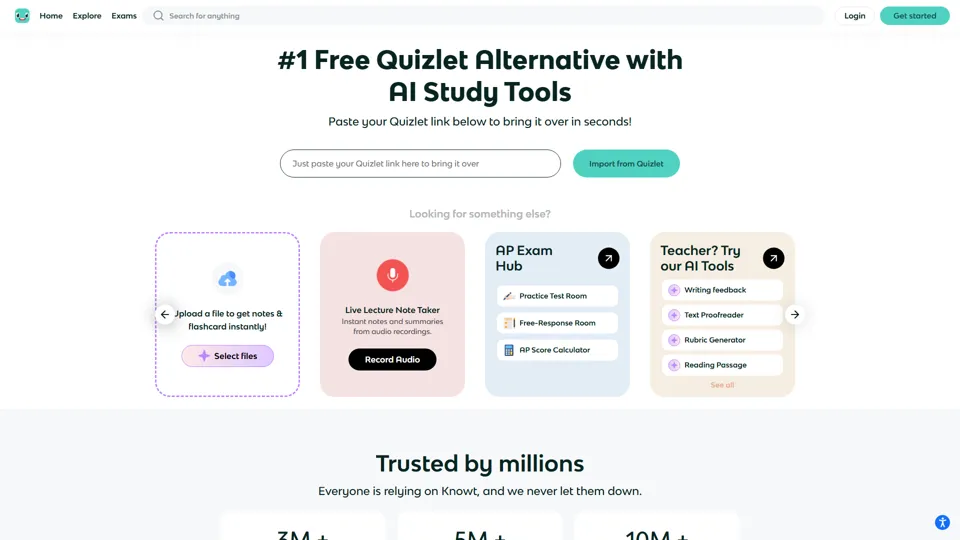
Early adopters (estimated 15–25% of middle school history teachers) are actively using tools like ChatGPT, Claude, MagicSchool AI, or Diffit to generate differentiated materials, draft assessments, and accelerate lesson planning. Many discovered these tools independently and have not received formal training.
Passive or experimental users (estimated 35–45%) have tried AI tools at least once but use them inconsistently, often because they lack confidence in evaluating AI output quality or because their district has not provided guidance on acceptable use.
Non-adopters (estimated 30–40%) have not integrated AI tools into their practice, either due to skepticism, lack of access, district restrictions, or simple bandwidth constraints.
District-level policy is a significant variable. Some districts have issued blanket restrictions on AI tool use pending policy development. Others have moved quickly to license platforms like MagicSchool AI or Khanmigo for teacher use. The result is a fragmented landscape where a teacher's access to AI tools depends heavily on geography and district resources rather than professional need.
The most commercially active AI platforms targeting this space — MagicSchool AI, Diffit, Curipod, Brisk Teaching, and SchoolAI — have all seen rapid adoption growth since 2023, with MagicSchool AI reporting over 3 million educator users by late 2024.
Future Workflow Evolution
The middle school history teacher's workflow in 2027 will look meaningfully different from 2022, though the core instructional act — facilitating historical thinking in a room full of adolescents — will remain recognizably human.
Unit planning will shift from a solo, multi-hour process to a collaborative human-AI workflow. Teachers will define learning goals, cultural priorities, and assessment formats; AI will generate draft materials that teachers review, modify, and contextualize. The teacher's role becomes editorial and pedagogical rather than generative.
Assessment will bifurcate. Routine comprehension checks — vocabulary quizzes, timeline sequencing, factual recall — will be increasingly AI-generated and AI-graded, freeing teacher attention for evaluating the higher-order work that actually matters: source analysis, argumentative writing, and historical reasoning. In-class, process-visible assessments will become the primary evidence of student learning.
Feedback loops will compress. AI writing tools will provide students with immediate structural feedback on drafts, meaning students arrive at teacher conferences with more developed work and more specific questions. Teacher feedback time shifts from correcting basic errors to developing argument quality and historical thinking.
Personalization will become more operationally feasible. A teacher managing 150 students cannot currently provide meaningfully differentiated instruction at the individual level. AI-assisted platforms that track individual student performance on specific historical thinking skills — sourcing, contextualization, corroboration — will make targeted intervention more realistic.
Professional collaboration will expand. Teachers who develop strong AI-assisted curriculum materials will increasingly share and iterate on those materials across PLCs, district networks, and platforms like Teachers Pay Teachers, creating a new economy of AI-augmented curriculum resources.
Common AI Use Cases
Document-Based Question (DBQ) construction — Generating sets of 5–7 primary sources on a historical question, with scaffolded analysis prompts at multiple reading levels, is one of the highest-value AI applications in this role. A well-constructed DBQ previously required hours of source hunting and formatting; AI reduces this to a 20–30 minute review-and-refine process.
Socratic seminar preparation — Generating discussion question sequences that move from factual recall to interpretive analysis to contemporary connection, calibrated to the specific historical topic and student grade level.
Differentiated reading passages — Taking a complex secondary source or textbook excerpt and generating simplified, standard, and enriched versions for classroom use.
Exit ticket and formative assessment generation — Producing quick, targeted checks for understanding aligned to the day's specific learning objective.
Historical fiction and scenario writing — Generating first-person narrative scenarios that place students in historical contexts for empathy-building and perspective-taking exercises.
Comparative analysis frameworks — Building structured graphic organizers and comparison matrices for topics like comparing ancient civilizations, revolutionary movements, or economic systems.
Student essay feedback — Using AI tools to provide first-pass structural feedback on student writing before teacher review, identifying missing evidence, unsupported claims, and organizational weaknesses.
Recommended AI Stack
MagicSchool AI — Purpose-built for K–12 educators, with specific tools for lesson planning, differentiation, rubric generation, and IEP accommodation. The most widely adopted teacher-facing AI platform in U.S. K–12 as of 2025. Strong for routine instructional design tasks.
Diffit — Specialized in generating differentiated reading materials from any source or topic. Particularly useful for history teachers who need the same content at multiple reading levels. Outputs are clean and classroom-ready.
Claude (Anthropic) or ChatGPT (OpenAI) — General-purpose LLMs remain the most flexible tools for complex, custom tasks: building multi-day unit plans, generating nuanced primary source analysis prompts, drafting culturally responsive materials, or working through pedagogical design problems. Requires stronger prompt literacy than purpose-built tools.
Curipod — Useful for generating interactive lesson slides with built-in discussion prompts, polls, and reflection activities. Reduces the time cost of building engaging presentation materials.
Brisk Teaching — Chrome extension that integrates AI assistance directly into Google Docs and Classroom workflows, useful for in-context feedback and material generation without switching platforms.
Khanmigo (Khan Academy) — AI tutoring tool that can support student-facing historical inquiry and Socratic dialogue. More relevant as a student tool than a teacher tool, but useful for teachers designing independent learning sequences.
Newsela or CommonLit — Not AI-native, but both platforms use adaptive reading technology to deliver leveled historical texts, reducing the manual differentiation burden for informational reading.
Risks & Challenges
Historical accuracy degradation — AI language models produce confident, fluent historical content that is frequently wrong in specific details: dates, names, causation, and context. A teacher who does not have strong content knowledge will not catch these errors, and students will learn incorrect history. This is not a hypothetical risk — it is already occurring in classrooms where AI-generated materials are used without expert review.
Erosion of student writing development — If AI feedback replaces teacher feedback entirely, students lose access to the relational, developmental coaching that builds genuine writing skill. The risk is not that students use AI to write; it is that teachers use AI to respond, and the human developmental relationship disappears from both ends.
Equity gaps in access — AI tool adoption is currently correlated with district resources and teacher technical confidence. Students in under-resourced districts are less likely to benefit from AI-enhanced instruction, potentially widening existing achievement gaps rather than closing them.
Curriculum homogenization — AI tools trained on dominant historical narratives will reproduce those narratives unless teachers actively intervene. Without deliberate prompting for diverse perspectives, AI-generated history curriculum risks reinforcing the same Eurocentric, nation-state-centric frameworks that history education has been working to expand for decades.
Assessment integrity collapse — The DBQ and analytical essay — the gold-standard assessments in history education — are now trivially completable by AI. Districts and teachers who have not redesigned their assessment systems are effectively measuring AI capability rather than student historical thinking.
Over-reliance and deskilling — Teachers who outsource lesson planning entirely to AI tools risk losing the deep curriculum knowledge that makes expert teaching possible. The ability to improvise, respond to student questions, and make real-time instructional decisions depends on internalized content knowledge that atrophies without use.
Data privacy and district compliance — Many AI tools used by teachers operate outside district-approved vendor agreements, creating FERPA and COPPA compliance risks when student data is involved. This is an active legal and policy concern in most districts.
Future Outlook (3–5 Years)
By 2027–2028, AI will be a standard component of the middle school history teacher's professional toolkit in most U.S. districts, much as Google Classroom and document cameras became standard in the 2010s. The question is not whether AI will be present but how well teachers and institutions will have learned to use it.
The roles most at risk are not classroom teachers but the peripheral roles that support them: curriculum coordinators who produce district-wide unit plans, instructional designers who build textbook supplements, and test-prep companies whose products are easily replicated by AI. The classroom teacher's core function — facilitating historical thinking in relationship with adolescents — is durable precisely because it is relational, developmental, and contextually embedded in ways that AI cannot replicate.
The teachers who will thrive are those who develop genuine AI fluency: not just the ability to use tools, but the critical capacity to evaluate AI output against their own historical knowledge, pedagogical judgment, and knowledge of their specific students. This is a higher-order professional skill, and it will increasingly distinguish effective teachers from those who are either avoiding AI entirely or outsourcing their professional judgment to it.
State licensing bodies and teacher preparation programs are beginning to incorporate AI literacy into certification requirements and pre-service curricula, though implementation is lagging behind the pace of classroom adoption. Expect this gap to close significantly by 2026–2027, with AI tool proficiency becoming a standard component of teacher evaluation frameworks in forward-leaning districts.
The history classroom itself will likely evolve toward more discussion-based, source-analysis-centered, and project-based formats — not because AI mandates this, but because AI makes the alternative (lecture and recall-based instruction) even less defensible than it already was.
Final Insight
The middle school history teacher is not being replaced by AI. But the version of this role that survives and thrives will look different from the version that existed in 2019. The teachers who treat AI as a production tool — a faster way to make the same worksheets and quizzes — will find modest efficiency gains and little else. The teachers who treat AI as a thinking partner for curriculum design, a first-pass reviewer for student writing, and a differentiation engine for mixed-ability classrooms will find that it genuinely expands what is possible within the structural constraints of the job.
The irreducible core of this role is not content delivery. It is the cultivation of historical consciousness in young people — the capacity to ask hard questions about power, evidence, and change over time. That is a human project, conducted in relationship, and it is not going anywhere. What AI changes is how much of the surrounding labor teachers have to carry alone to get there.