How AI fits this role
Elementary School Math Teacher
How AI Is Reshaping the Role in K–12 Public and Private Education
Role Overview
Elementary school math teachers work with students in grades K–5 or K–6, building foundational numeracy skills that research consistently identifies as the strongest predictor of long-term academic outcomes. The role sits at the intersection of cognitive development, behavioral management, curriculum delivery, and family communication — all compressed into a six-hour school day with 20 to 30 students at wildly different readiness levels.
In practice, the job is less about teaching math and more about diagnosing why a specific child cannot yet grasp place value, then finding the third or fourth way to explain it before that child disengages. Teachers manage IEP accommodations, English language learner modifications, gifted extensions, and grade-level instruction simultaneously — often without a co-teacher or aide.
The operational environment is shaped by district-mandated curriculum pacing guides, state standardized testing windows, and increasingly, edtech platform requirements pushed down from administrators who purchased licenses at the district level. Teachers rarely choose their own tools. They inherit them.
How AI Is Transforming This Role
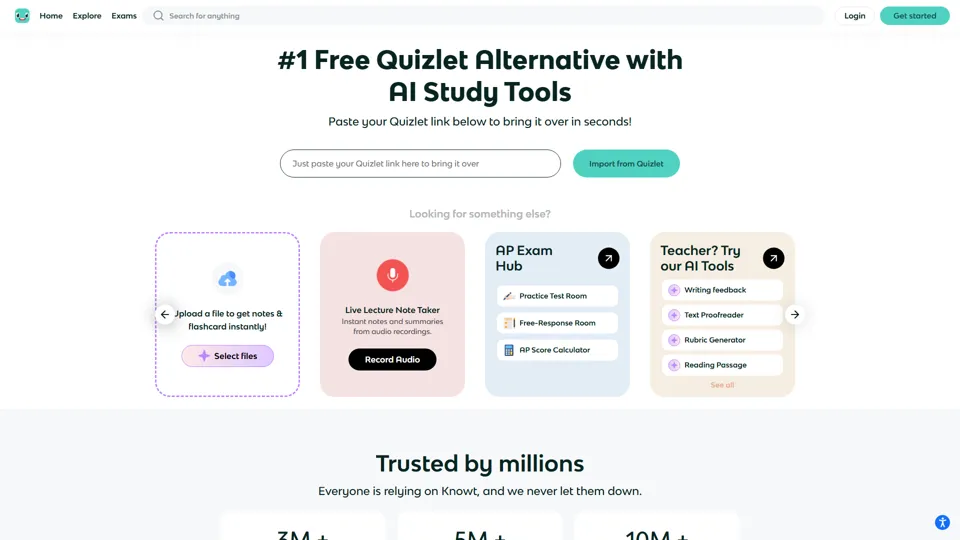
The transformation is not arriving as a single disruptive moment. It is accumulating through the platforms teachers are already required to use — Curriculum Associates' i-Ready, Renaissance's Fastbridge, Khan Academy, IXL — all of which have embedded adaptive AI engines that generate student performance data at a granularity that did not exist five years ago.
The practical shift is this: teachers used to spend Sunday evenings building differentiated worksheets for three reading groups. Now the platform does that automatically. The time freed up has not translated into lighter workloads — it has been absorbed by the expectation that teachers will actually interpret and act on the data the platform generates. The cognitive load has shifted from content production to data-driven instructional decision-making.
A second transformation is happening in assessment. AI-powered diagnostic tools can now identify a student's specific misconception — not just that they got the wrong answer, but that they are applying an inversion error in subtraction — within a 20-minute adaptive session. This changes what a teacher needs to do before small-group instruction: less pre-testing, more targeted intervention design.
The third shift is administrative compression. AI writing tools are being used to draft parent communication, IEP progress notes, and report card comments at scale. Teachers who once spent 90 minutes writing 28 individual report card narratives are now spending 20 minutes editing AI-generated drafts. This is real and widespread, even if districts have not formally sanctioned it.
Tasks AI Can Automate
- Adaptive practice generation: Platforms like IXL and Khan Academy automatically serve differentiated problem sets based on demonstrated mastery, removing the need for teachers to manually create tiered worksheets.
- Formative assessment scoring: Multiple-choice and short-answer math assessments are scored instantly, with error pattern analysis surfaced automatically.
- Progress monitoring reports: i-Ready and similar tools auto-generate growth reports aligned to grade-level benchmarks, replacing manual data compilation teachers previously did in spreadsheets.
- Routine parent communication drafts: AI tools can generate first drafts of progress update emails, meeting summaries, and homework guidance letters.
- Lesson plan scaffolding: Tools like MagicSchool AI and Diffit generate lesson plan outlines, vocabulary scaffolds, and differentiated versions of grade-level content within minutes.
- Identifying at-risk students: Predictive analytics embedded in district SIS platforms flag students showing early warning indicators before teachers would typically notice the pattern manually.
- Fluency drill sequencing: Fact fluency apps like Reflex Math and Prodigy use spaced repetition algorithms to sequence practice without teacher input.
Skills Becoming More Valuable
Diagnostic instructional thinking. When a platform tells you a student is struggling with fractions, the teacher's job is to figure out whether the root cause is a weak understanding of equal parts, a procedural confusion with numerators and denominators, or an underlying number sense gap from second grade. AI surfaces the symptom; the teacher still has to identify the cause and design the intervention.
Small-group and one-on-one facilitation. As whole-class direct instruction compresses — because adaptive platforms handle more independent practice — the teacher's highest-leverage time is in the small-group pull-aside. The ability to ask the right probing question, notice a student's hesitation, and pivot instruction in real time is not automatable.
Relationship and trust-building with students and families. Math anxiety is real and begins early. A teacher who can build a classroom culture where mistakes are safe, where a struggling student still feels capable, is doing something that no platform replicates. This is increasingly the differentiating variable between classrooms with similar demographic profiles.
Data interpretation and instructional response. Reading a dashboard is not the same as knowing what to do with it. Teachers who can translate platform data into a coherent small-group rotation plan, a re-teaching sequence, or a parent conversation are more valuable than ever.
Curriculum coherence judgment. As AI tools generate more content on demand, someone has to evaluate whether that content is mathematically accurate, developmentally appropriate, and aligned to the actual standard being taught. Teachers with strong content knowledge are the quality control layer.
Skills Becoming Less Important
- Manual worksheet and assessment creation: Spending hours building differentiated practice materials from scratch is increasingly inefficient when platforms generate them automatically and adapt in real time.
- Whole-class pacing uniformity: The assumption that all students move through the same content on the same day is being structurally undermined by adaptive platforms. Teachers who insist on lockstep pacing are working against the tools, not with them.
- Memorization of curriculum sequence details: When pacing guides, scope-and-sequence documents, and standard alignments are embedded in the platform, teachers do not need to hold all of that in working memory.
- Manual grade-book maintenance: Platforms that auto-sync scores to the SIS reduce the clerical burden of grade entry, though teachers still need to audit the data.
- Designing fluency drills: Fact practice sequencing is now handled more effectively by spaced repetition algorithms than by teacher-designed drill sheets.
Current AI Adoption in This Industry
Adoption is uneven and largely platform-driven rather than teacher-initiated. The majority of U.S. elementary schools are already using at least one AI-powered adaptive learning platform — i-Ready alone serves over 11 million students. However, most teachers interact with these tools as consumers of outputs rather than as informed users who understand the underlying logic.
Generative AI adoption for lesson planning and communication is growing rapidly but informally. A 2023 survey by the EdWeek Research Center found that roughly 40% of teachers reported using AI tools for lesson planning, with the number higher among younger teachers. District policies lag significantly behind actual use — most teachers are making individual decisions about what to use and how, without formal guidance.
The gap between high-resource and low-resource districts is widening. Well-funded suburban districts are investing in professional development around data-driven instruction and platform literacy. Under-resourced urban and rural districts often have the same platform licenses but lack the coaching infrastructure to help teachers use the data effectively.
Future Workflow Evolution
Within the next three to five years, the elementary math teacher's daily workflow will likely look like this: the adaptive platform handles the majority of independent practice and fluency work, generating real-time data on each student's progress. The teacher's morning begins not with a lesson plan review but with a five-minute dashboard check that surfaces which students hit a new misconception overnight in their homework session.
Small-group instruction becomes the primary instructional mode for the teacher, with the platform managing the rest of the class on differentiated tasks. The teacher rotates through groups, using AI-generated diagnostic summaries as a starting point but relying on direct observation and questioning to refine the picture.
Planning time shifts from content creation to intervention design and family communication. AI drafts the communication; the teacher personalizes and sends it. IEP progress notes are generated from platform data and edited by the teacher rather than written from scratch.
The role of the teacher as the sole knowledge source in the room diminishes further. The role of the teacher as the human who builds the conditions for learning — trust, safety, motivation, belonging — becomes the irreplaceable core of the job.
Common AI Use Cases
- i-Ready Diagnostic: Adaptive diagnostic assessment that identifies each student's instructional level and specific skill gaps, used by most U.S. districts for fall, winter, and spring benchmarking.
- Khan Academy: Free adaptive practice platform with teacher-facing dashboards showing time-on-task, mastery progress, and exercise-level performance data.
- MagicSchool AI: Generative AI tool built specifically for teachers, used to create differentiated lesson plans, rubrics, IEP accommodations language, and parent emails.
- Diffit: AI tool that generates reading and content materials at adjustable reading levels, useful for creating math word problem scaffolds for ELL students.
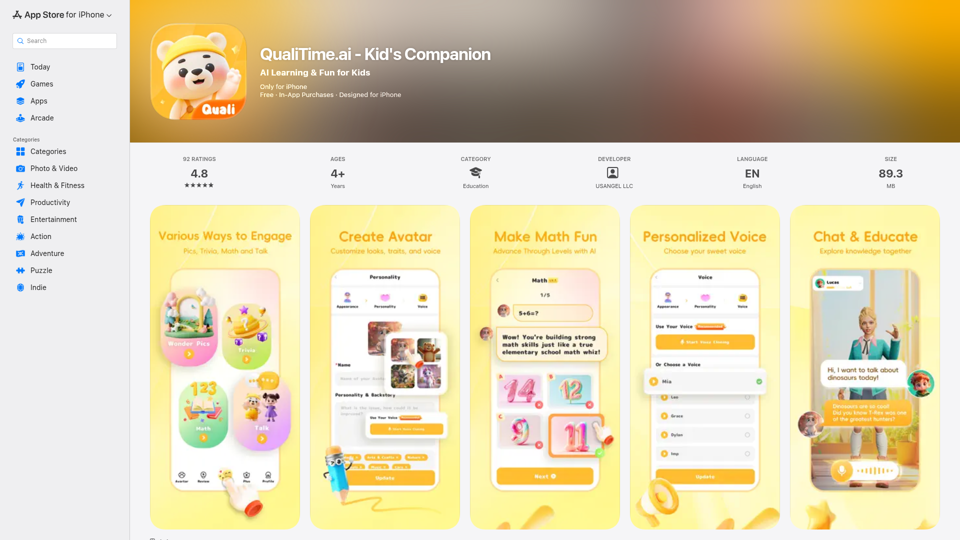
- Prodigy Math: Game-based adaptive platform that adjusts problem difficulty in real time; widely used for independent practice and homework.
- Curipod: AI-assisted interactive lesson builder that generates discussion prompts, exit tickets, and formative checks aligned to a given topic.
- Grammarly / ChatGPT: Informally used by teachers to draft report card comments, parent newsletters, and professional communication.
Recommended AI Stack
For an elementary math teacher operating in a typical U.S. public school environment, a practical and realistic stack looks like this:
Core adaptive platform (district-assigned): i-Ready, Fastbridge, or NWEA MAP — use the diagnostic data actively, not just for reporting. Learn to read the sub-skill breakdowns, not just the overall score.
Independent practice platform: Khan Academy (free, reliable, strong data dashboard) or IXL (more granular skill alignment, subscription-based). Use these to assign targeted practice after small-group instruction, not as a replacement for it.
Lesson planning and differentiation: MagicSchool AI for generating differentiated versions of lessons, accommodation suggestions, and communication drafts. Treat outputs as first drafts requiring your professional judgment, not finished products.
Word problem and text scaffolding: Diffit for generating accessible versions of math word problems for students reading below grade level or learning English.
Exit ticket and formative check: Curipod or Formative for quick, AI-assisted formative assessments that give immediate class-wide data without manual scoring.
Risks & Challenges
Over-reliance on platform data without instructional follow-through. The most common failure mode is teachers who look at the dashboard, acknowledge the data, and then teach the same whole-class lesson they planned anyway. The data has no value if it does not change instruction.
Equity in AI tool access. Students in low-income households may not have reliable devices or internet access for homework on adaptive platforms, creating gaps in the data that make the platform's model of each student less accurate.
Mathematical accuracy of AI-generated content. Generative AI tools occasionally produce mathematically incorrect problems, especially in word problems involving multi-step reasoning or unit conversions. Teachers without strong content knowledge may not catch these errors before distributing them to students.
Student engagement with adaptive platforms. Platforms that are purely drill-based can erode intrinsic motivation over time, particularly for students who are repeatedly served below-grade-level content. The gamification layer in tools like Prodigy partially addresses this but does not eliminate it.
Privacy and data governance. Adaptive platforms collect detailed behavioral and performance data on children as young as five. Most teachers are not aware of what data is collected, how it is stored, or who has access to it. District data governance policies are inconsistent.
Teacher deskilling risk. If teachers stop designing curriculum and assessments entirely, the professional knowledge required to evaluate whether a platform's output is appropriate may atrophy. This is a slow-moving risk but a real one.
Future Outlook (3–5 Years)
The elementary math teacher role will not be automated. It will be restructured. The restructuring will favor teachers who are comfortable operating as instructional coaches within a technology-mediated environment — interpreting data, designing targeted interventions, and building the relational conditions that make learning possible.
The teachers most at risk are not those who resist AI tools, but those who adopt them passively — who let the platform run and stop making active instructional decisions. The platform optimizes for measurable skill acquisition. It does not optimize for mathematical curiosity, persistence through difficulty, or the moment when a child suddenly understands why multiplication works. Those outcomes still require a human in the room who is paying attention.
District investment in platform literacy and data-driven instruction coaching will be the primary differentiator between schools that use AI effectively and schools that pay for licenses and see no improvement. The technology is not the bottleneck. The professional development infrastructure around it is.
Expect to see AI-generated individualized learning plans become standard practice within three years, with teachers reviewing and approving AI-drafted plans rather than building them from scratch. Expect parent communication to be almost entirely AI-assisted. Expect the IEP process to incorporate AI-generated progress summaries as a baseline document.
What will not change: the child who needs someone to believe they can do this. That is still the job.
Final Insight
The most important thing to understand about AI in elementary math education is that the technology is already there. The adaptive platforms, the diagnostic tools, the generative lesson builders — they exist, they work reasonably well, and most teachers are already using them in some form. The transformation is not coming. It is underway.
The question is not whether AI will change this role. It is whether the profession will develop the capacity to use these tools with the same rigor and intentionality that good teachers bring to everything else they do. A teacher who can read a diagnostic dashboard the way a physician reads a lab result — knowing what it means, what it does not mean, and what to do next — is more valuable than ever. A teacher who treats the platform as a substitute for professional judgment is being slowly replaced by it.
The irreducible core of this role is the human relationship between a teacher and a child who is learning something hard for the first time. AI can map the terrain. It cannot make the journey feel safe.