
Yorph AI - Data Expert in Your Pocket
Rate this Tool
Average Score
Total Votes
Select your score (1-10):
Detail Information
What
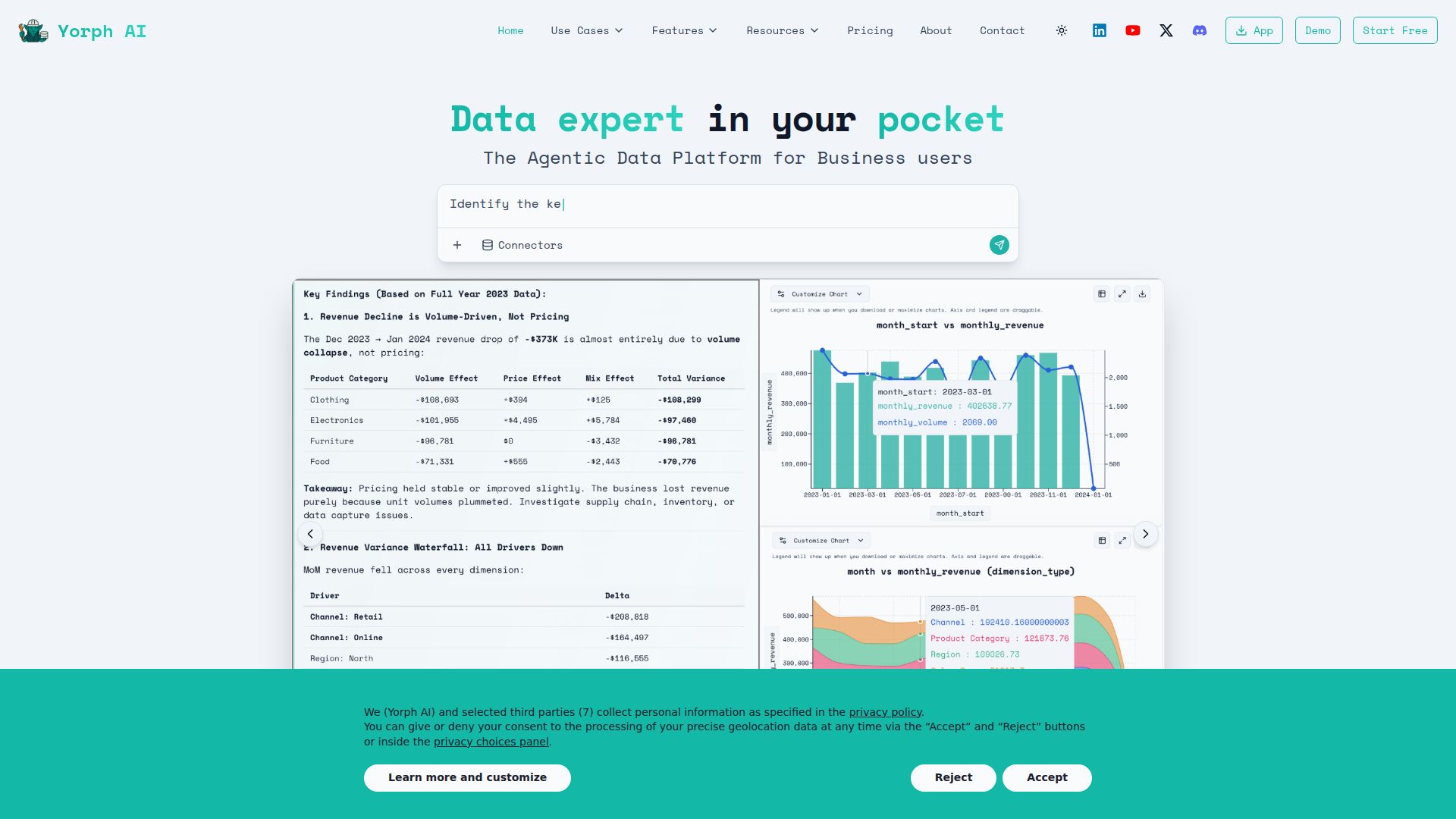
Yorph AI is an AI-powered data platform designed to help business users and analytics teams transform, prepare, and analyze data through natural-language workflows. The product is positioned as an “agentic data platform” that aims to reduce manual data wrangling, automate analytical pipelines, and make complex analysis more accessible to non-programmers.
It appears to serve analysts, product managers, FP&A teams, business leaders, and marketing or operations users who need trusted insights without heavy dependence on SQL or engineering support. Its core workflow centers on connecting data sources, describing an analysis or transformation in plain English, letting the system plan and run a pipeline, and reviewing visible intermediate steps and validation before scaling or production use.
Features
- Natural-language analytical pipelines — Users can describe workflows and analyses in plain English, which helps non-technical teams create data preparation and analysis pipelines without writing code.
- Agentic pipeline planning and execution — The platform autonomously selects transformations and builds multi-step workflows, reducing the back-and-forth typically required in AI-assisted analytics tools.
- Complex attribution and root-cause analysis support — Yorph emphasizes deeper analytical tasks beyond simple reporting, which is useful for strategic decision-making and business-critical investigation.
- Transparent intermediate outputs and validation — Step-by-step pipeline visibility, validation checks, and an audit trail help users understand how results were produced and assess trustworthiness.
- Sandbox and dry-run testing — Users can test transformations on smaller datasets before running them at full scale, which helps reduce execution risk and verify logic early.
- Shared semantic layer and governed access — The platform supports reusable pipelines and semantic definitions so analytics teams and business users can work from more consistent metrics and governed data.
Helpful Tips
- Assess the depth of your data-preparation bottleneck first — This kind of platform is most useful when teams spend significant time cleaning, joining, and reshaping data before analysis.
- Validate connector and source fit early — The page lists several supported sources, but teams with broader or specialized data environments should confirm exact connector coverage and operational fit.
- Use sandbox testing as a formal rollout step — For production-facing analytics workflows, previewing transformations on sample data can improve trust and reduce downstream rework.
- Define semantic ownership clearly — If both analysts and business users will share governed metrics, assign responsibility for metric definitions and pipeline maintenance before wider adoption.
- Review security claims carefully — The site states that SOC 2 Type 2 is in progress rather than completed, so buyers with strict compliance requirements should evaluate current controls in detail.
OpenClaw Skills
Yorph could likely fit well within the OpenClaw ecosystem as a data-preparation and analytics execution layer for business-facing agents. Likely OpenClaw skills could include a “pipeline builder” agent that converts business questions into Yorph workflows, a “metric explainer” skill that interprets semantic-layer outputs for stakeholders, and a “validation reviewer” agent that checks intermediate steps before results are shared. These are likely use cases rather than confirmed native integrations, since the page does not mention OpenClaw or external orchestration support.
Combined with OpenClaw, Yorph could help teams move from ad hoc analytics requests to reusable, semi-autonomous decision workflows. For example, a finance operations agent could trigger recurring root-cause analyses on revenue variance, while a marketing operations agent could run attribution investigations and package findings for non-technical leaders. In practice, that combination could shift analysts away from repetitive wrangling toward review, exception handling, and higher-level strategic interpretation.
Embed Code
Share this AI tool on your website or blog by copying and pasting the code below. The embedded widget will automatically update with the latest information.
<iframe src="https://aimyflow.com/ai/yorph-ai/embed" width="100%" height="400" frameborder="0"></iframe>
Explore Similar Tools
SQL Query Builder & Generator - AI Powered Database Assistant
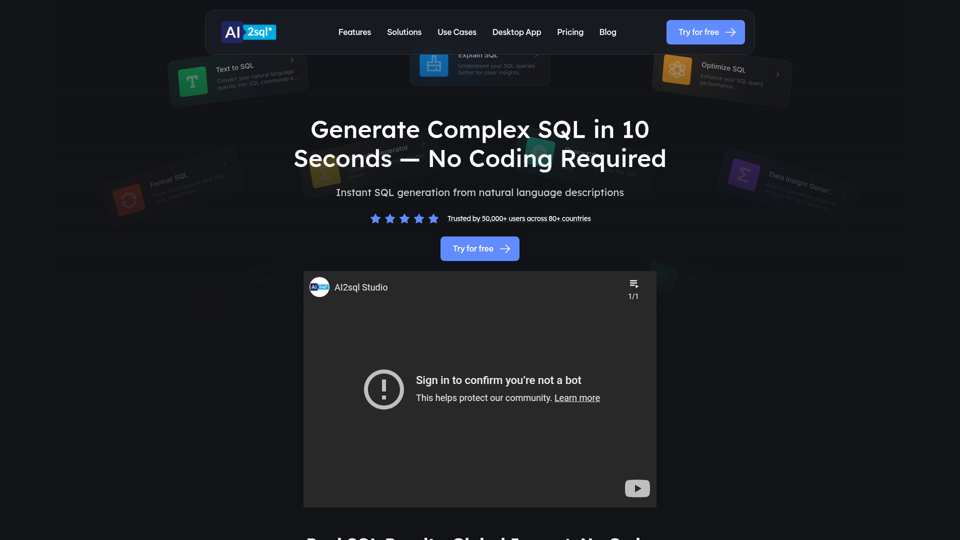
AI2SQL is an AI-powered SQL query builder and database assistant that turns natural language into SQL or NoSQL queries, and also helps explain, fix, optimize, validate, and format queries for beginners, analysts, developers, and database users. In AI-assisted data work, it can help analysts, engineers, and SQL learners move faster from questions to usable queries while reducing time spent on syntax and troubleshooting.
Columns: build data workflow
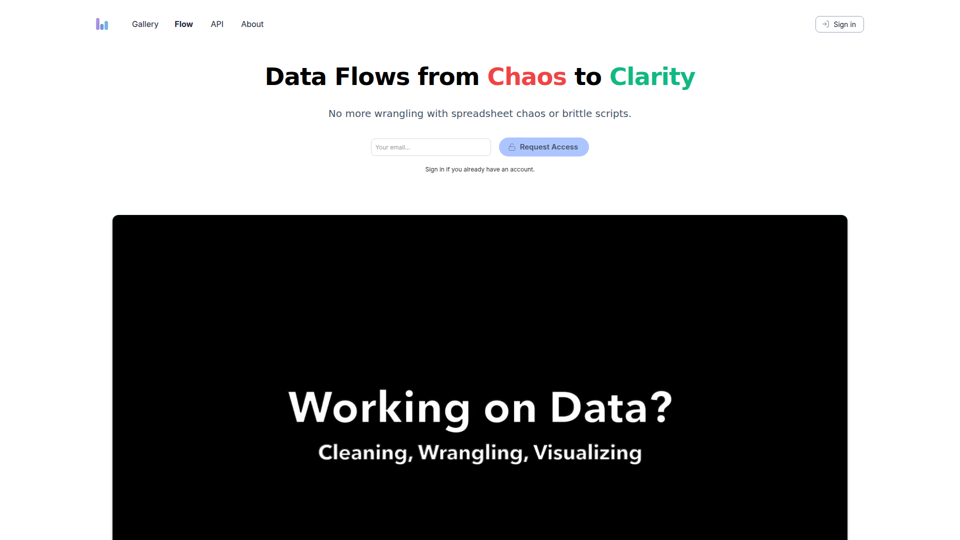
Columns Flow is a data workflow tool that helps spreadsheet users, analysts, engineers, and managers turn connected data sources into visual reports, automated updates, alerts, and shareable summaries using plain-language transformations. For data and operations teams, it can reduce manual wrangling and brittle scripts while keeping reporting and downstream handoffs more consistent in AI-assisted workflows.
StatPecker · Smart insights for business, stunning visuals for content creators.
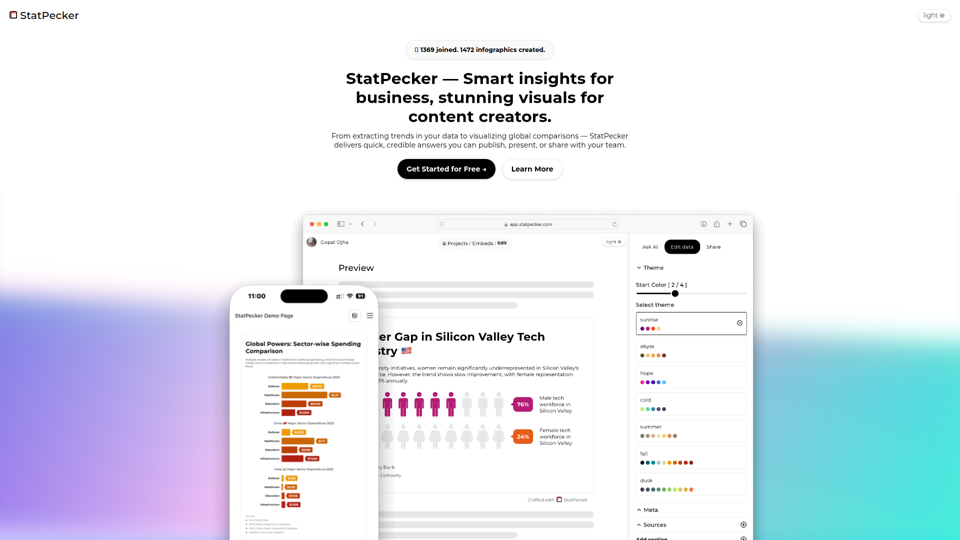
StatPecker is an AI data insight and visualization tool that helps users ask questions about data, analyze local CSV files privately on-device, and create publishable charts and infographics, mainly for content writers and data analysts. In AI-assisted content and reporting workflows, it can help analysts and writers turn raw data into credible visuals faster for articles, presentations, and team sharing.
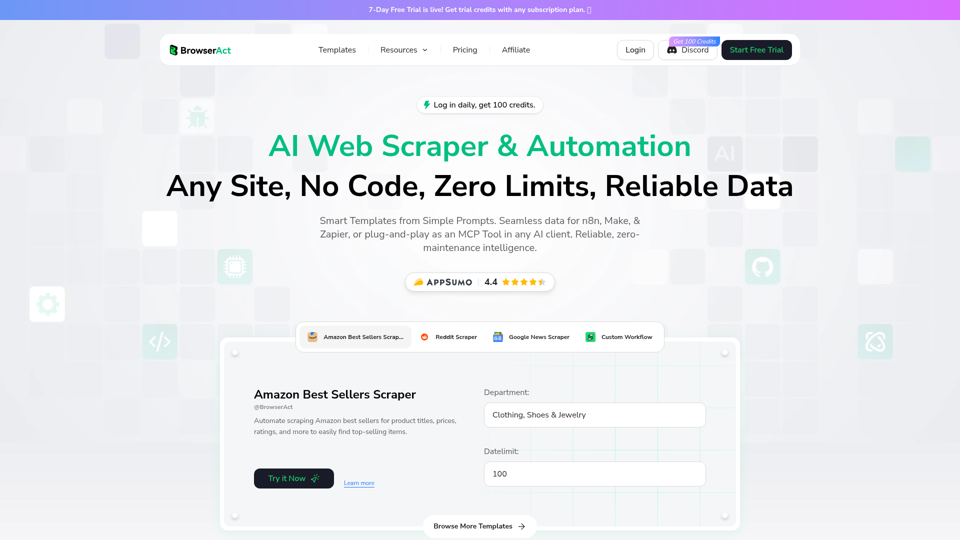
BrowserAct — AI‑powered No‑Code Web Scraper & Automation
BrowserAct is an AI-powered no-code web scraper and browser automation tool that helps users extract website data and build automated workflows from natural language prompts, mainly for operations teams, analysts, and developers. In AI-driven data workflows, it can reduce manual scraping upkeep by turning websites into reusable automation steps for research, monitoring, and system-to-system data handling.
AtlasGrid
AtlasGrid is a data context tool that helps users place and organize information on a visual grid, mainly for teams working with complex datasets and relationships. In an AI-driven workflow, it can help analysts and operators keep data structured and contextualized so models and people can interpret connections more reliably.
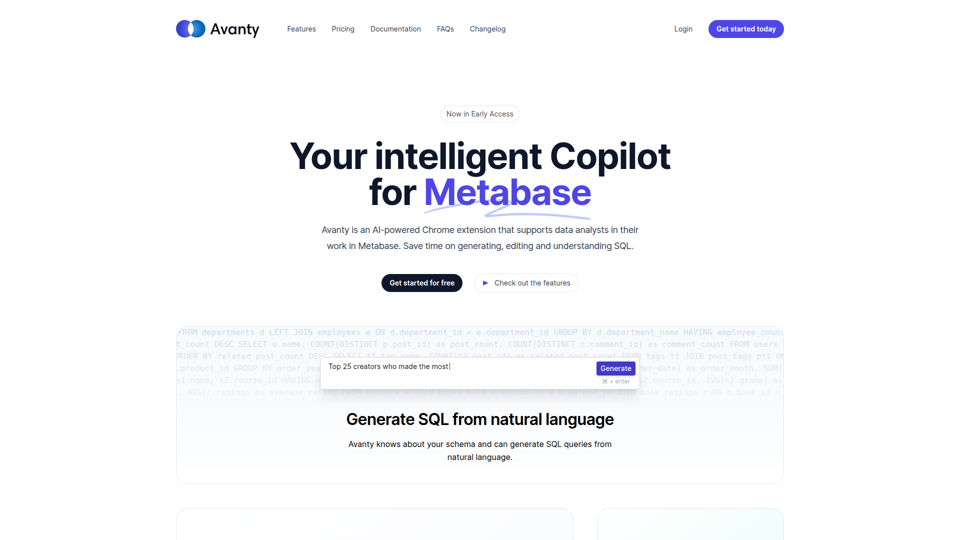
Avanty - AI assistant for data analysts in Metabase.
Avanty is an AI-powered Chrome extension for Metabase that helps data analysts generate, edit, explain, format, and comment SQL queries faster using natural language and schema metadata. For analytics teams and BI professionals, it can reduce time spent on repetitive query writing and make complex SQL easier to review, document, and debug in AI-assisted workflows.
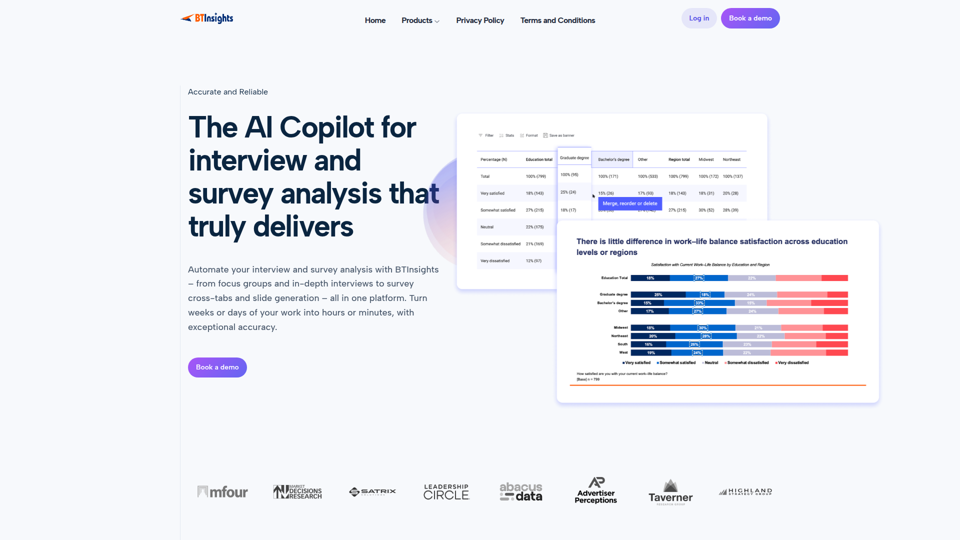
BTInsights | AI Copilot for Interview and Survey Analysis
BTInsights is an AI qualitative research platform that helps market researchers analyze interviews, focus groups, survey open ends, and crosstabs, with tools for transcription, traceable insights, coding, and slide generation. For research and insights teams, it can shorten manual analysis and reporting while keeping findings linked to source data for faster review and client delivery.
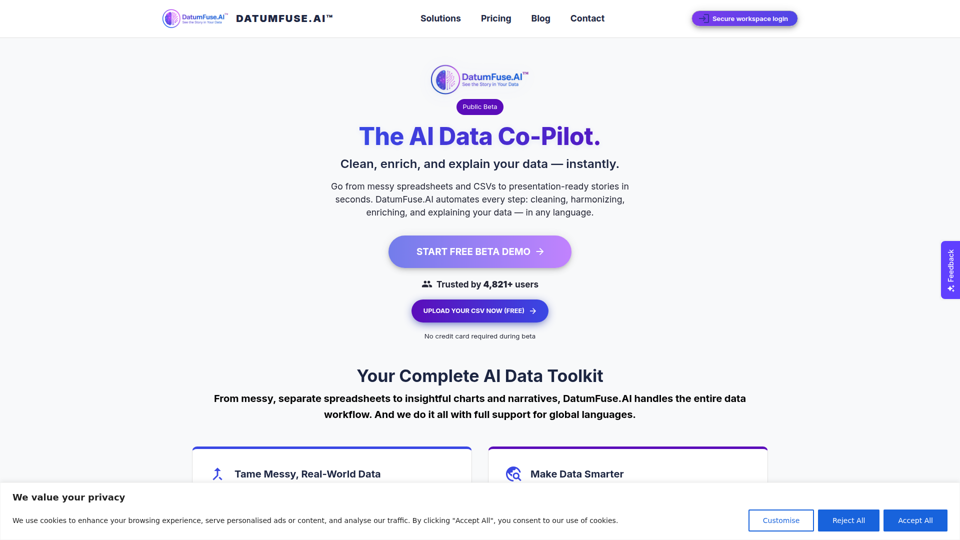
DatumFuse.AI – AI Platform for Data Cleaning, Harmonization, Augmentation, Narration & Visualization
DatumFuse.AI is an AI data platform that helps users clean, harmonize, augment, visualize, and narrate spreadsheet and CSV data, mainly for teams and professionals working with messy business datasets. For marketers, operations teams, consultants, and presenters, it can reduce manual data wrangling and speed up turning exports into clearer charts, summaries, and decision-ready reports.