
Vaethat | Archviz AI Render Enhancer | Architectural Rendering
Rate this Tool
Average Score
Total Votes
Select your score (1-10):
Detail Information
What
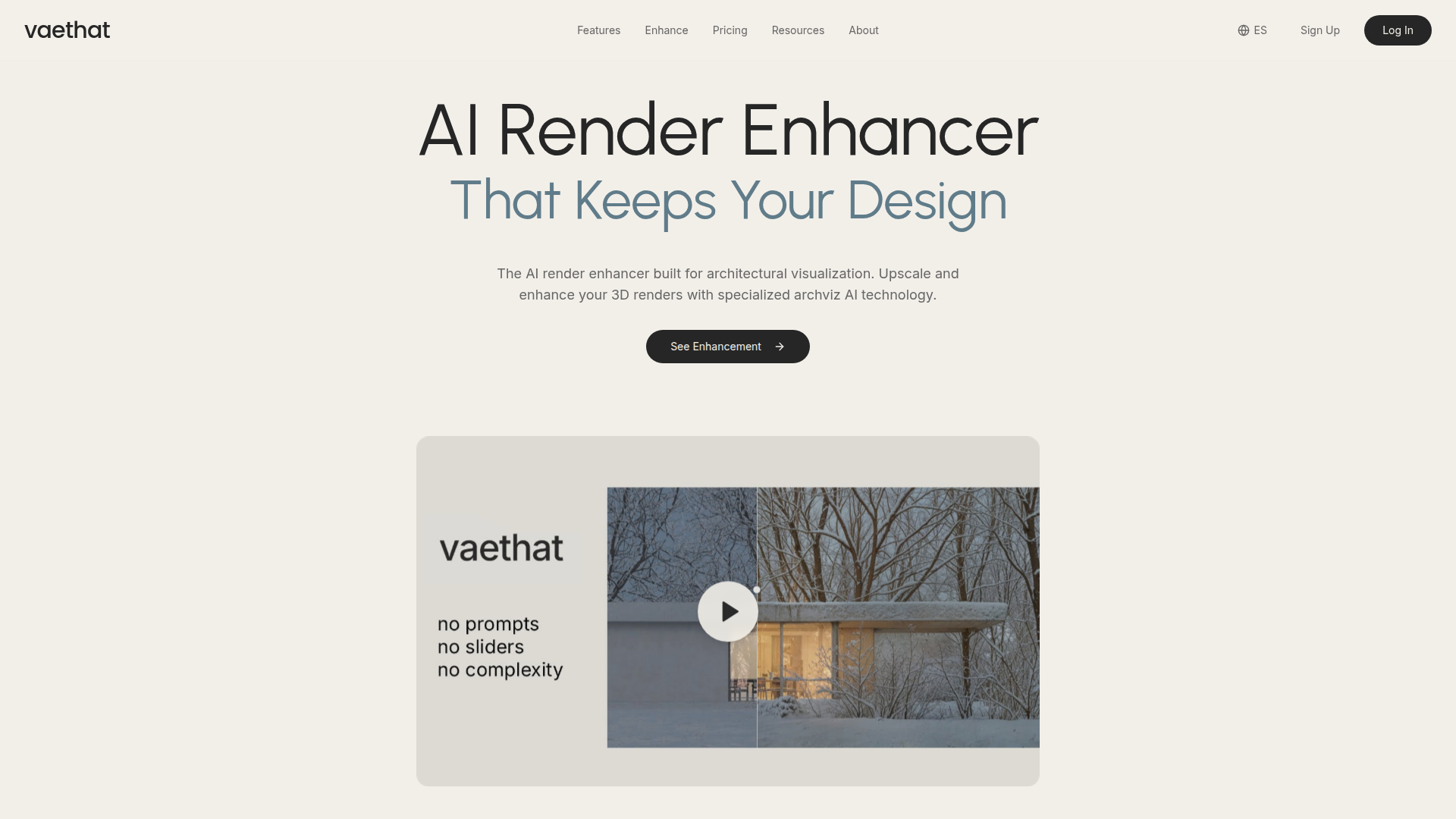
Vaethat is an AI render enhancer for architectural visualization. It is designed for 3D artists, architectural visualizers, and related professionals who need to upscale and improve renders while preserving the original design intent.
The product appears positioned as a specialized alternative to general-purpose AI image enhancers. Its core workflow is simple: upload architectural render images, select a preset, and run enhancement without prompt writing, manual slider tuning, or repeated trial-and-error.
Features
- Architectural-visualization-specific AI model — The system is described as trained exclusively on archviz content, which is intended to improve enhancement quality for 3D renders compared with general-purpose models.
- Simple preset-based workflow — Users upload images, choose a preset, and enhance, reducing the setup complexity common in prompt-driven or highly manual AI tools.
- Multi-Image Workspace — Entire folders of renders can be uploaded into one workspace, which is useful for handling full visualization projects rather than single images.
- Batch upscaling and enhancement — The product supports enhancing multiple images at once, which can help maintain throughput across a project set.
- Session saving for project continuity — Saved sessions can support ongoing work across larger archviz jobs and make it easier to return to prior enhancement tasks.
- Design-preserving enhancement focus — The product emphasizes keeping the underlying design intact while improving detail, which is important for presentation accuracy in architecture workflows.
Helpful Tips
- Test consistency across a full project set — For architectural visualization, image-to-image consistency matters as much as single-image quality, so evaluate the tool on multiple views from the same project.
- Check where enhancement adds the most value — This type of product is most useful when improving textures, vegetation, materials, and fine scene details without changing composition or design intent.
- Verify fit with your existing render pipeline — The page references common archviz software in its FAQ, but the visible content does not confirm exact workflow depth, so confirm file handling and process compatibility before standardizing on it.
- Review credit usage and processing details carefully — Since the page references credits, plan changes, speed, and unused credits in FAQ topics, teams should validate these operational details before broader adoption.
- Clarify data handling for sensitive projects — The site includes a question about whether renders are used to train AI models, but the answer is not shown here, so this should be checked for confidential client work.
OpenClaw Skills
Vaethat could likely fit into OpenClaw as part of an architectural visualization post-production workflow. An OpenClaw skill could ingest render folders, classify views by project or scene type, route them into a Vaethat enhancement step, and then organize outputs for review, presentation decks, or delivery packages. If an API or automation layer exists, this could support repeatable enhancement pipelines for studios handling many image sets.
A likely OpenClaw use case would be an archviz production agent for visualization teams, architects, or real estate marketing groups. That agent could coordinate render intake, enhancement presets, naming conventions, version tracking, and stakeholder review notes around Vaethat outputs. Even where no native integration is confirmed on the page, the combination suggests a practical path toward more structured and scalable image-finishing workflows in architecture and 3D visualization.
Embed Code
Share this AI tool on your website or blog by copying and pasting the code below. The embedded widget will automatically update with the latest information.
<iframe src="https://aimyflow.com/ai/vaethat-com/embed" width="100%" height="400" frameborder="0"></iframe>
Explore Similar Tools
Articulate - AI-Powered Construction Drawing Analysis
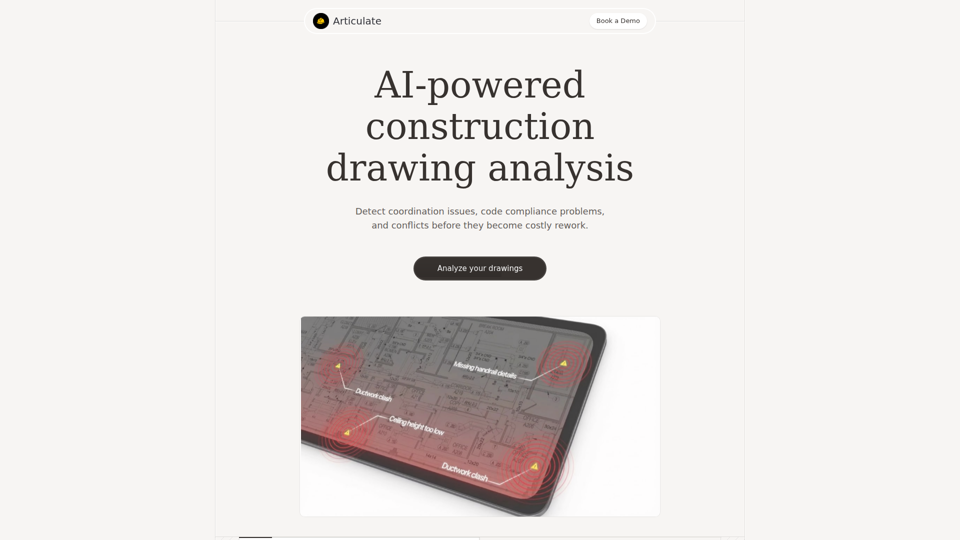
Articulate is an AI-powered construction drawing analysis platform that reviews 2D PDF plans to identify coordination conflicts, code compliance issues, and design errors for architects, engineers, general contractors, and other construction professionals. In AI-assisted preconstruction workflows, it can help design and project teams review drawings faster, prioritize issues by location and severity, and reduce RFIs and rework before work reaches the field.
AI Architectural Documentation & BIM Automation | SWAPP | Swapp
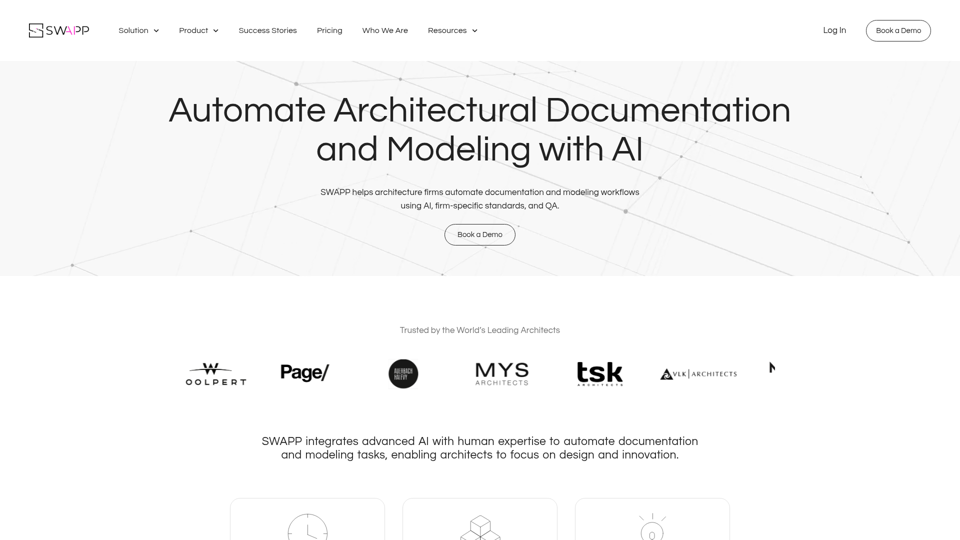
SWAPP is an AI platform for architecture firms that automates architectural documentation and BIM modeling workflows using firm-specific standards and QA, helping architects and operations leaders reduce repetitive work and maintain consistency. For architects and design technology teams, this can streamline documentation production and make firm standards more usable in day-to-day project delivery.
Build with Brickanta
Brickanta is an agentic AI platform for construction and society-building teams that helps users work with project documentation and decision-making, with a focus on European enterprise requirements. For construction professionals and project stakeholders, this can reduce manual handling of complex documents and support more consistent, security-conscious decisions as AI becomes part of core project workflows.
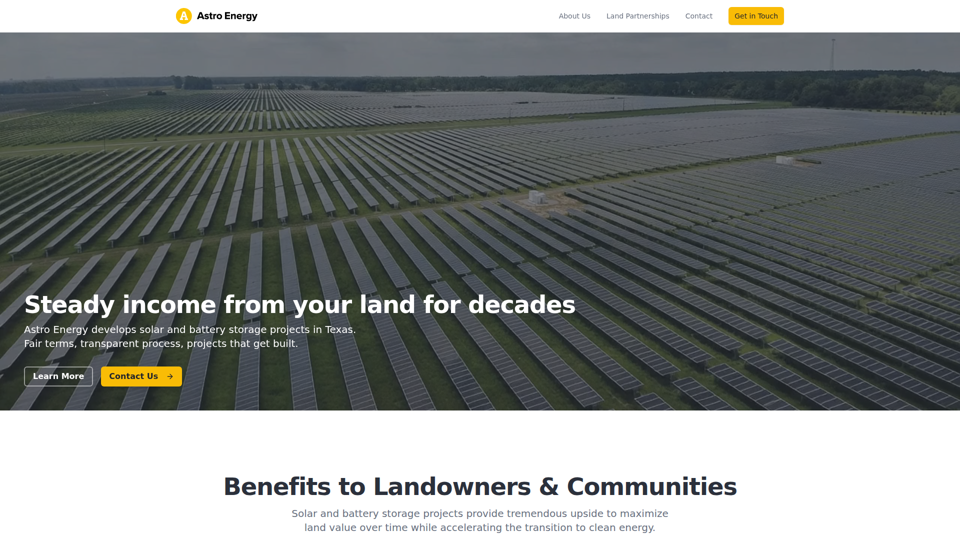
Astro Energy
Astro Energy is a utility-scale solar and battery storage developer that helps Texas landowners evaluate and lease land for long-term energy projects through a transparent development process. For landowners and rural property stakeholders, this can turn underused acreage into predictable energy income while supporting project planning in the ERCOT market.

Chaos COM CN Ecosystem
Chaos is a 3D visualization tool ecosystem from Chaos that helps users render, simulate, and visualize projects across architecture, architectural visualization, media and entertainment, and product design, mainly for architects, AEC professionals, designers, and VFX artists. With AI-assisted ideation and connected rendering tools, it can help architects and visualization teams speed design decisions and produce more consistent photoreal outputs within existing 3D workflows.