
Home
Rate this Tool
Average Score
Total Votes
Select your score (1-10):
Detail Information
What
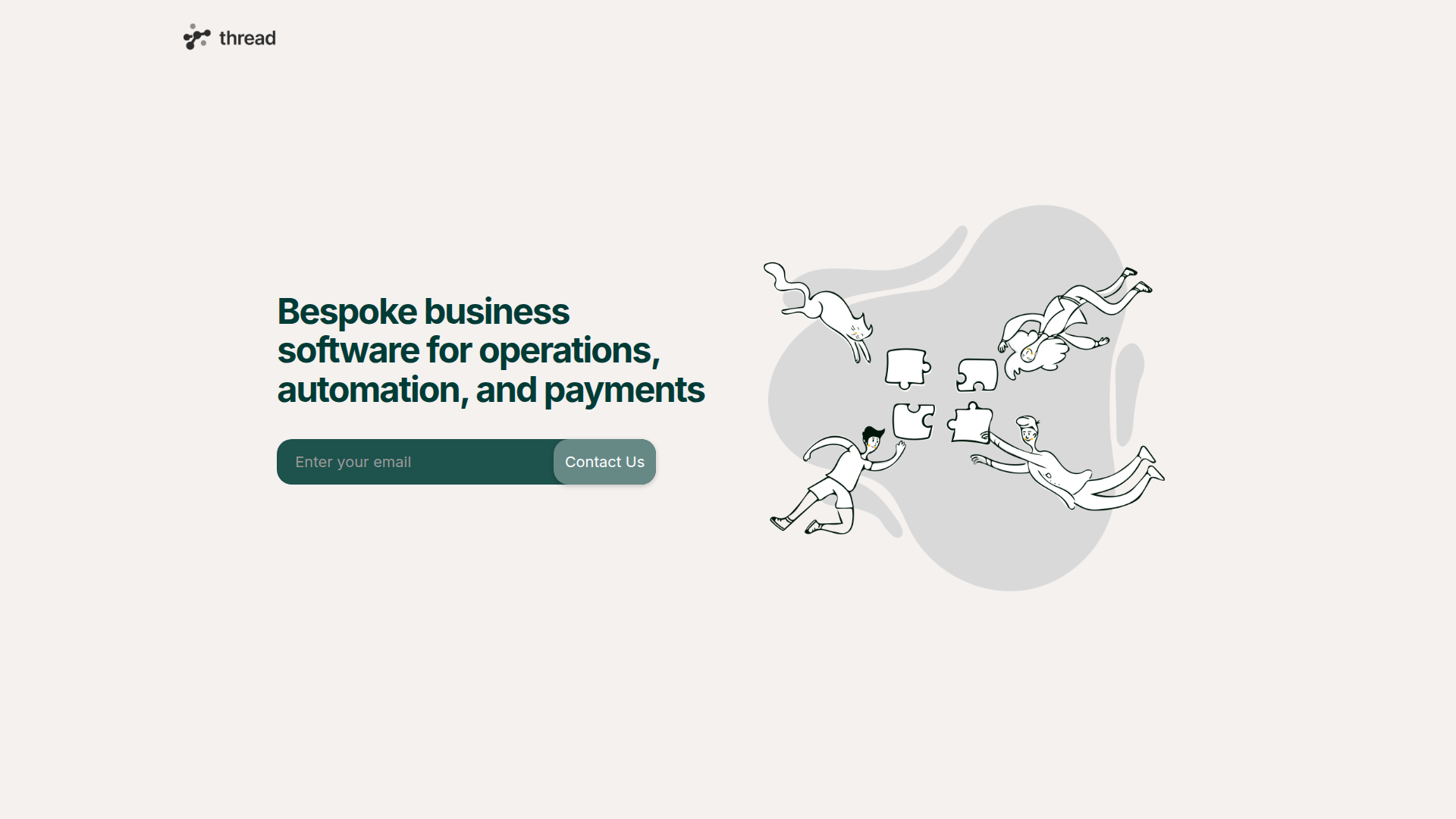
Thread appears to be a business software platform focused on operations, automation, and payments, with a visible emphasis on incident routing, service catalog management, and communication around production environments. Based on the page content, it is aimed at organizations that manage technical services and need clearer workflows between operational teams and non-technical stakeholders.
Its core workflow seems to center on organizing services, routing incidents to the right responders, and presenting relevant production context through a simplified interface. The positioning is likely that of an operational support platform for modern service-based or engineering-led businesses, though the page provides only limited detail on the payments and broader automation scope.
Features
- Incident routing: Automatically sends incoming incidents to the appropriate team or individual using configurable rules based on severity, type, and urgency.
- Service catalog management: Lets teams document services, maintain service records, manage service requests, and track approval and progress flows in one place.
- Interactive service visibility: Displays organizational services in an interactive UI, which can help teams understand service ownership and status more quickly.
- Technical and non-technical communication support: Addresses the communication gap between technical and non-technical stakeholders around the production environment.
- Context-focused incident design: Presents key incident facts and relevant context in a streamlined interface to reduce unnecessary information overload.
- Service onboarding workflow: Supports onboarding new services into the production environment, suggesting a structured operational setup process.
Helpful Tips
- Check whether Thread’s incident routing logic can match your existing escalation policies, since routing quality usually determines operational value.
- Review how the service catalog is maintained over time; these systems are most useful when ownership and update processes are clearly assigned.
- Validate whether non-technical stakeholders actually need direct access to production-facing context, or whether curated views are sufficient for your organization.
- Ask for a clearer product breakdown if payments and automation are central requirements, because the page emphasizes operations workflows more than those broader claims.
- Treat the blog and example content cautiously during evaluation, as some sections appear generic and may not fully describe production-ready capabilities.
OpenClaw Skills
Thread could likely fit well into an OpenClaw environment as an operational system of record for incidents, service metadata, and request flows. A likely use case would be OpenClaw skills that watch for new incidents, summarize severity and context, identify likely owners from the service catalog, and prepare stakeholder-specific updates for engineering, operations, and business teams.
Another likely workflow would be an OpenClaw agent that turns service catalog data into onboarding checklists, approval-routing automations, or internal knowledge assistants for production support. If Thread exposes structured incident and service data, that combination could help operations, platform engineering, and IT teams reduce manual coordination work and create more consistent cross-functional response processes, though the source page does not confirm any native OpenClaw integration.
Embed Code
Share this AI tool on your website or blog by copying and pasting the code below. The embedded widget will automatically update with the latest information.
<iframe src="https://aimyflow.com/ai/usethread-io/embed" width="100%" height="400" frameborder="0"></iframe>
Explore Similar Tools

W.AI - Global AI Supercomputer
W.AI is a decentralized AI supercomputer that lets people with GPU-equipped devices contribute idle compute power to AI tasks, mainly for device owners and infrastructure participants who want to support distributed AI networks. For AI infrastructure operators and technical teams, it can expand available compute capacity through a distributed model while using sandboxed execution and privacy-focused architecture.
Risotto | IT help desk with AI ticketing automation
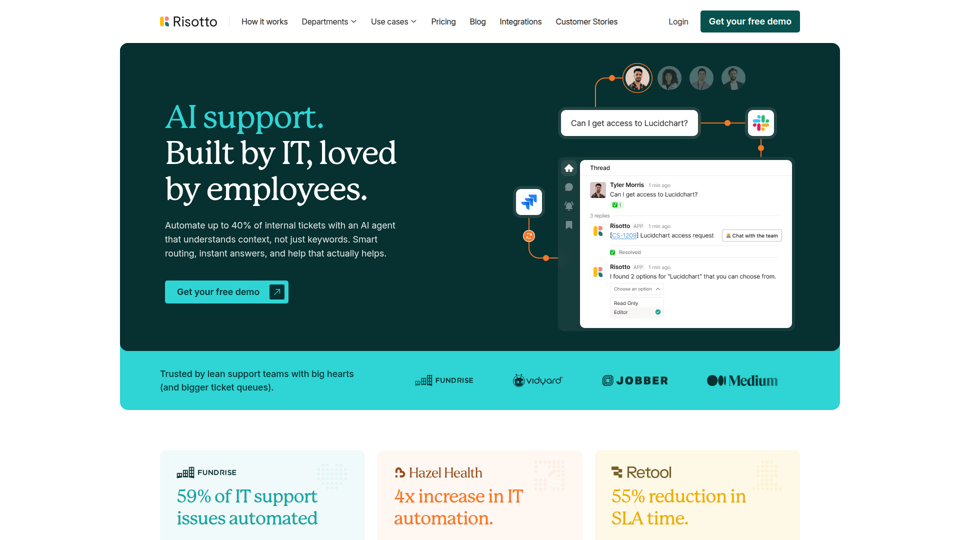
Risotto is an AI help desk and ticketing automation platform that helps IT teams automate internal support, access requests, and cross-department workflows in tools like Slack. For IT managers, help desk teams, and systems administrators, it can reduce repetitive tier-1 work by using context-aware automation, self-updating knowledge, and automated routing to speed resolution and approvals.
Terracotta AI | Infrastructure Change Governance
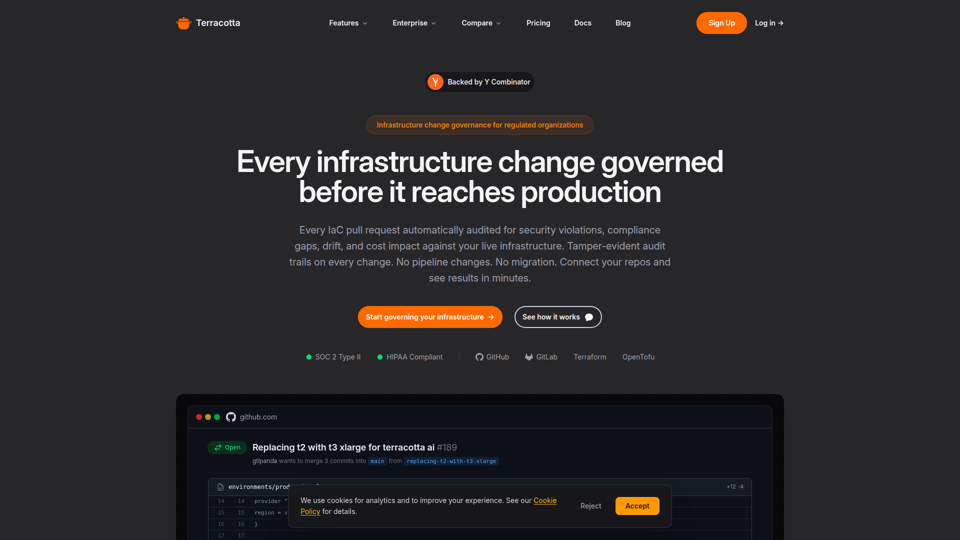
Terracotta AI is an infrastructure change governance tool that audits Terraform, Kubernetes, and Terragrunt pull requests for security, compliance, drift, and cost before merge, mainly for regulated organizations and platform engineering teams. For platform, security, and compliance teams, it adds AI-assisted PR review and audit trails that can reduce manual infrastructure review work and improve pre-production change control.
Ubicloud - Open source alternative to AWS
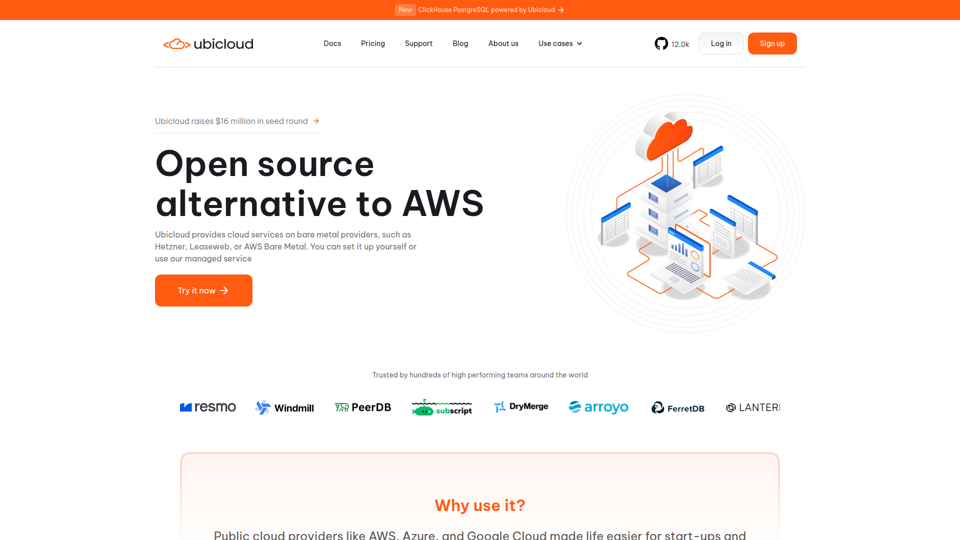
Ubicloud is an open source cloud platform and AWS alternative that helps teams run elastic compute, block storage, networking, managed PostgreSQL, and GitHub Actions runners on bare metal providers, mainly for engineering and infrastructure teams that want self-hosted or managed cloud services. For DevOps, platform, and database engineers, it can support more portable, automated infrastructure and CI workflows while reducing dependence on closed public cloud platforms.
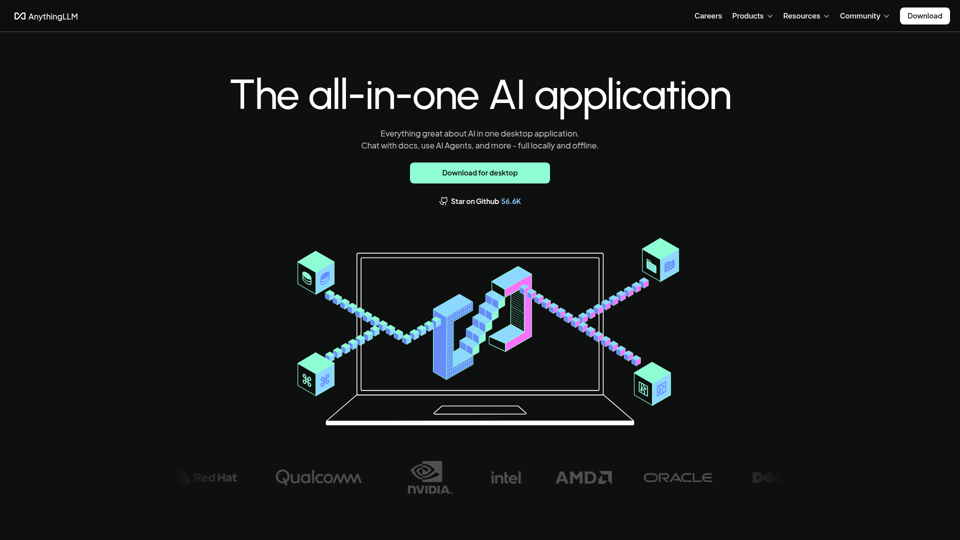
AnythingLLM | The all-in-one AI application for everyone
AnythingLLM is an all-in-one AI application that lets users chat with documents, run AI agents, and use local or cloud LLMs with privacy-focused, low-setup workflows, mainly for individuals and teams that want desktop, self-hosted, or cloud AI tools. For knowledge workers, developers, and IT teams, its local-first design and built-in API can make document-based analysis, internal automation, and controlled AI deployment easier in everyday work.
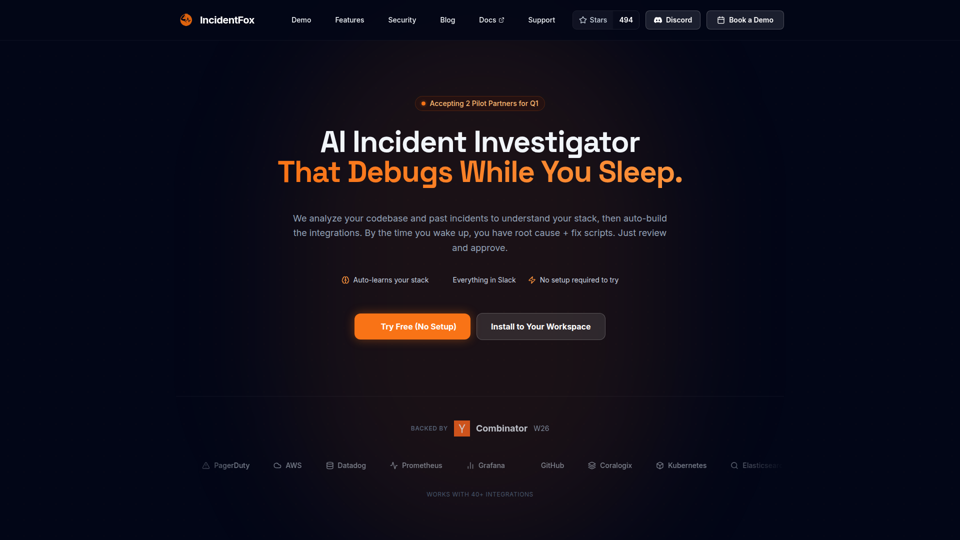
IncidentFox - The AI SRE for Teams
IncidentFox is an AI SRE tool that investigates production incidents in Slack, analyzes codebases and past incidents, and proposes or executes approved fixes for engineering, SRE, and platform teams. For on-call and reliability work, it can reduce manual triage by correlating alerts, logs, metrics, and deployment history into root-cause findings and auditable remediation steps.
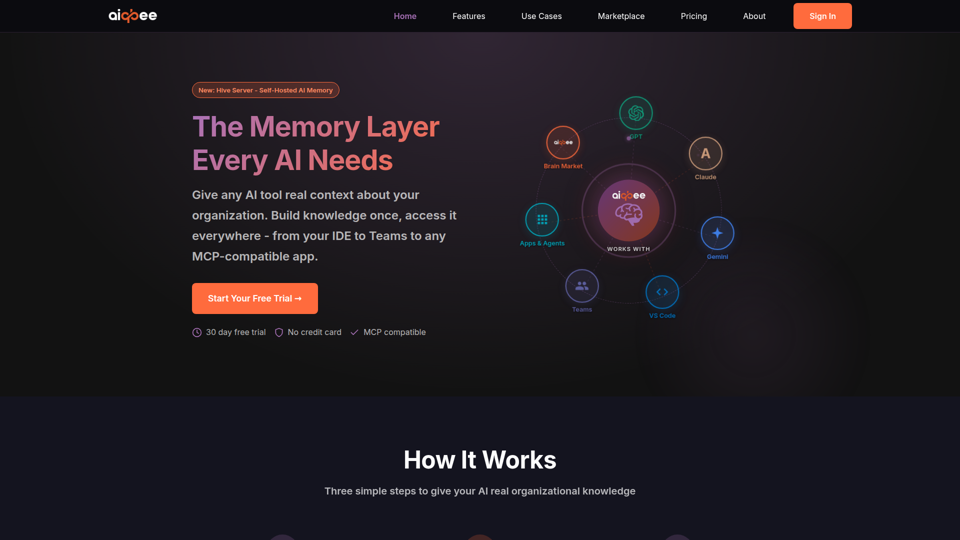
Aiqbee - Universal AI Memory Platform | Enterprise Knowledge for Any LLM
Aiqbee is an enterprise AI memory platform that gives any LLM or AI tool persistent organizational context by centralizing company knowledge, connecting it to tools like Teams and IDEs, and adding governance controls, mainly for businesses managing AI use across teams. For IT, operations, support, and development functions, it can reduce repeated prompting and improve consistency by making shared knowledge available across approved AI workflows.
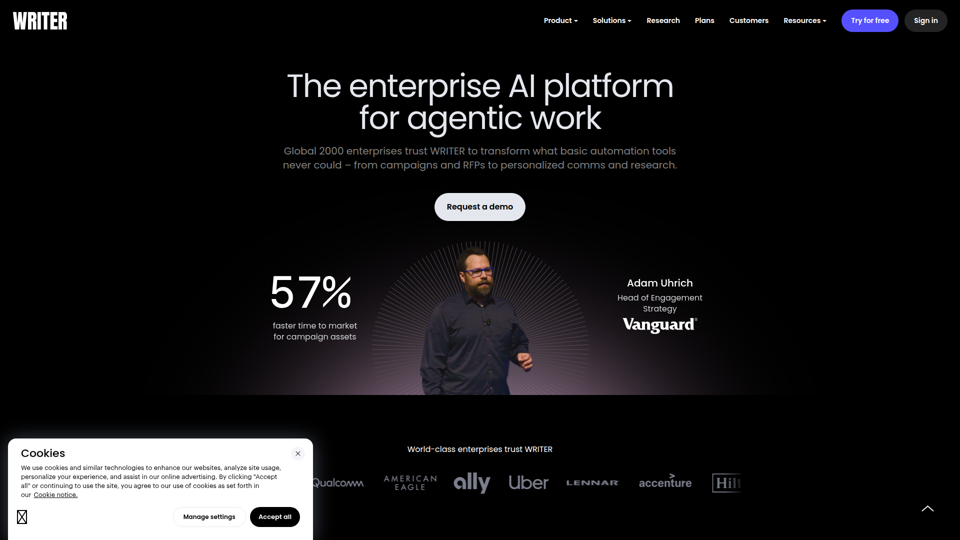
WRITER - The enterprise AI platform for agentic work
WRITER is an enterprise AI platform for agentic work that helps Global 2000 companies build, activate, and supervise AI agents for tasks like campaigns, RFPs, personalized communications, and research, with a focus on IT governance and security. For marketing, sales, support, and IT teams, it can improve productivity by combining shared knowledge, workflow automation, and oversight in one system.