
Ubicloud - Open source alternative to AWS
Rate this Tool
Average Score
Total Votes
Select your score (1-10):
Detail Information
What
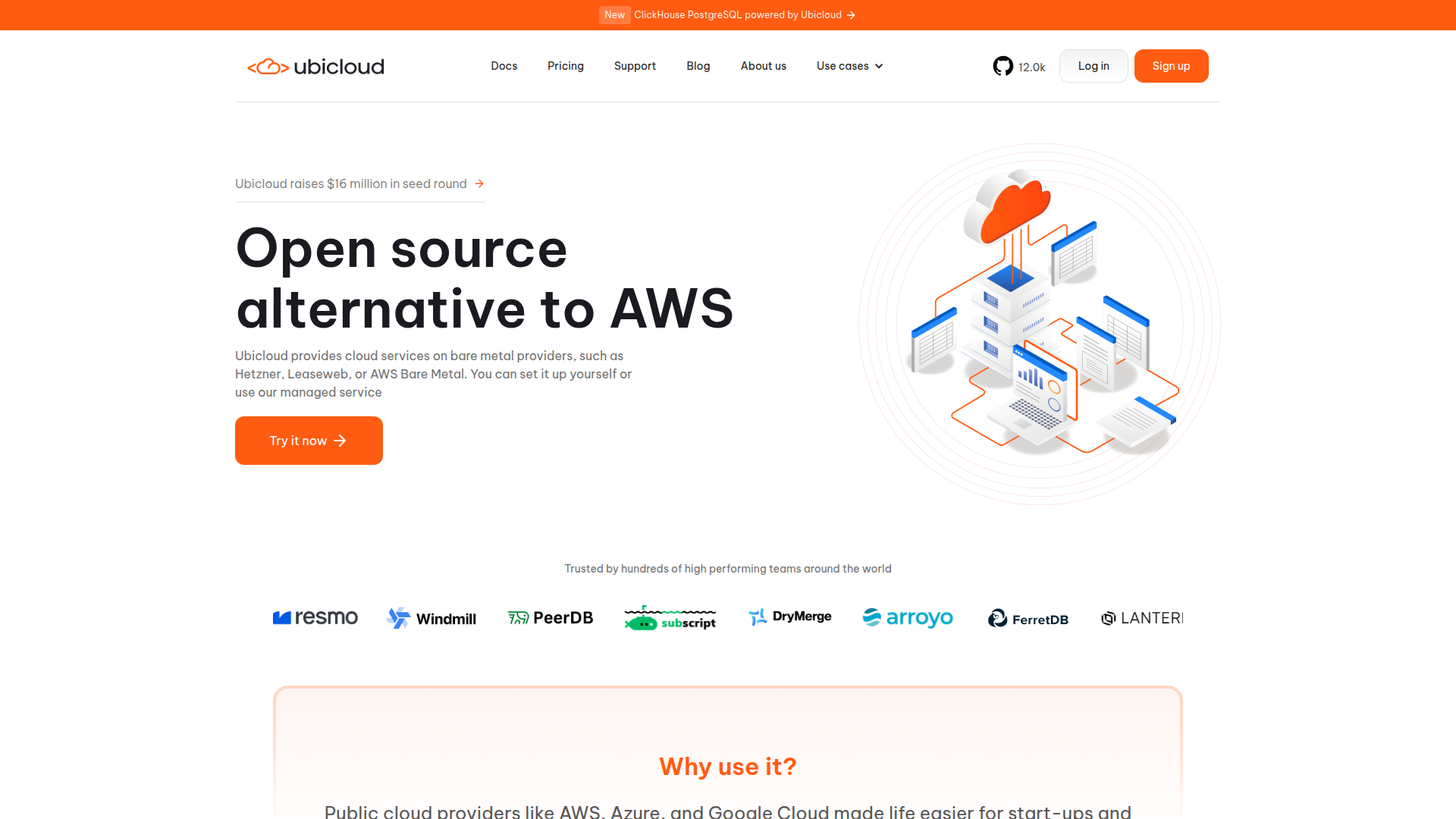
Ubicloud is an open source infrastructure-as-a-service platform positioned as an alternative to AWS and other major public clouds. It provides cloud services on bare metal providers such as Hetzner, Leaseweb, and AWS Bare Metal, and can be deployed as a self-hosted setup or consumed as a managed service.
The product appears aimed at engineering teams, startups, and enterprises that want lower infrastructure costs, less vendor lock-in, and more control without giving up core cloud workflows. Based on the page, its core use cases include virtual machine provisioning, managed PostgreSQL, networking, storage, and GitHub Actions runners for isolated ephemeral jobs.
Features
- Elastic compute on bare metal — Provisions isolated virtual machines that can be created, used, and deleted as needed for general compute or heavier processing workloads.
- Virtual networking — Supports public and private networking, IPv4 and IPv6, firewall rules, load balancing, and encryption in transit for controlled network design.
- Block storage — Offers non-replicated block devices with encryption at rest for persistent storage needs where replication is handled elsewhere or not required.
- Managed PostgreSQL — Provides current PostgreSQL versions with automatic backups, point-in-time restore, and high availability to reduce database operations overhead.
- Attribute-Based Access Control (ABAC) — Enables role definition and fine-grained access control for teams that need structured permissions management.
- GitHub Actions runners — Supplies isolated, clean, ephemeral VMs for CI jobs with a minimal workflow-file change, which can simplify runner management and improve job isolation.
Helpful Tips
- Evaluate Ubicloud primarily against AWS-style infrastructure spend, portability requirements, and control needs, since its main stated value is lower cost and reduced lock-in.
- Validate whether its bare-metal-provider model fits your operational preferences, especially if your team wants predictable infrastructure primitives rather than a large catalog of proprietary managed services.
- Review storage architecture carefully because the page specifies non-replicated block storage; production resilience may depend on how your applications or database layers handle redundancy.
- For PostgreSQL adoption, confirm your requirements around backups, failover, and migration planning, even though automatic backups, PITR, and high availability are stated.
- If CI is a major use case, test the GitHub Actions runner workflow in a limited environment first to measure job isolation, startup behavior, and operational fit with your pipelines.
OpenClaw Skills
Ubicloud could fit well into the OpenClaw ecosystem as the infrastructure layer behind cloud operations, database lifecycle management, and CI cost-optimization workflows. Likely OpenClaw skills could include VM provisioning agents, PostgreSQL maintenance assistants, access-control review workflows, and CI runner orchestration that selects or tears down ephemeral environments based on workload patterns. The page does not mention a native OpenClaw integration, so this should be treated as a likely implementation pattern rather than a confirmed capability.
In practice, that combination could be useful for platform engineering, DevOps, and data teams that want more automated control over lower-cost infrastructure. OpenClaw agents could likely help standardize environment setup, enforce access policies, coordinate backup and restore routines, summarize infrastructure state, or route application deployment requests onto Ubicloud resources. For organizations moving away from large public clouds, this kind of pairing could shift teams toward a more portable, operator-controlled cloud model while still keeping day-to-day workflows relatively automated.
Embed Code
Share this AI tool on your website or blog by copying and pasting the code below. The embedded widget will automatically update with the latest information.
<iframe src="https://aimyflow.com/ai/ubicloud-com/embed" width="100%" height="400" frameborder="0"></iframe>
Explore Similar Tools

W.AI - Global AI Supercomputer
W.AI is a decentralized AI supercomputer that lets people with GPU-equipped devices contribute idle compute power to AI tasks, mainly for device owners and infrastructure participants who want to support distributed AI networks. For AI infrastructure operators and technical teams, it can expand available compute capacity through a distributed model while using sandboxed execution and privacy-focused architecture.
Risotto | IT help desk with AI ticketing automation
Risotto is an AI help desk and ticketing automation platform that helps IT teams automate internal support, access requests, and cross-department workflows in tools like Slack. For IT managers, help desk teams, and systems administrators, it can reduce repetitive tier-1 work by using context-aware automation, self-updating knowledge, and automated routing to speed resolution and approvals.
Terracotta AI | Infrastructure Change Governance
Terracotta AI is an infrastructure change governance tool that audits Terraform, Kubernetes, and Terragrunt pull requests for security, compliance, drift, and cost before merge, mainly for regulated organizations and platform engineering teams. For platform, security, and compliance teams, it adds AI-assisted PR review and audit trails that can reduce manual infrastructure review work and improve pre-production change control.
AnythingLLM | The all-in-one AI application for everyone
AnythingLLM is an all-in-one AI application that lets users chat with documents, run AI agents, and use local or cloud LLMs with privacy-focused, low-setup workflows, mainly for individuals and teams that want desktop, self-hosted, or cloud AI tools. For knowledge workers, developers, and IT teams, its local-first design and built-in API can make document-based analysis, internal automation, and controlled AI deployment easier in everyday work.
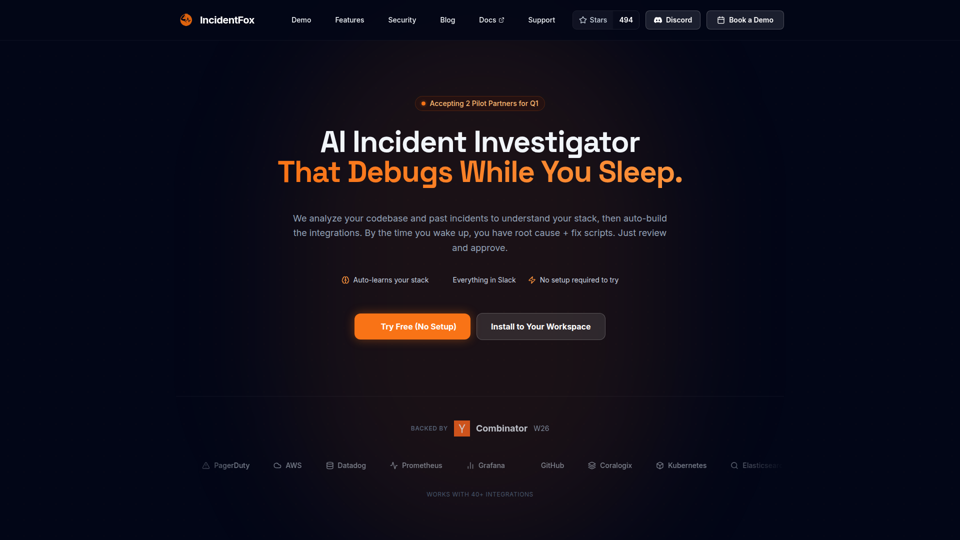
IncidentFox - The AI SRE for Teams
IncidentFox is an AI SRE tool that investigates production incidents in Slack, analyzes codebases and past incidents, and proposes or executes approved fixes for engineering, SRE, and platform teams. For on-call and reliability work, it can reduce manual triage by correlating alerts, logs, metrics, and deployment history into root-cause findings and auditable remediation steps.
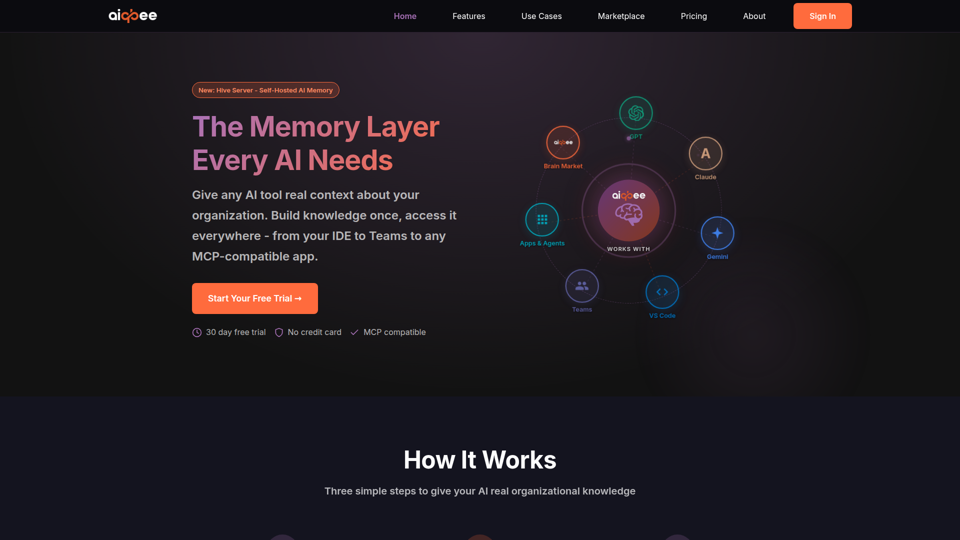
Aiqbee - Universal AI Memory Platform | Enterprise Knowledge for Any LLM
Aiqbee is an enterprise AI memory platform that gives any LLM or AI tool persistent organizational context by centralizing company knowledge, connecting it to tools like Teams and IDEs, and adding governance controls, mainly for businesses managing AI use across teams. For IT, operations, support, and development functions, it can reduce repeated prompting and improve consistency by making shared knowledge available across approved AI workflows.
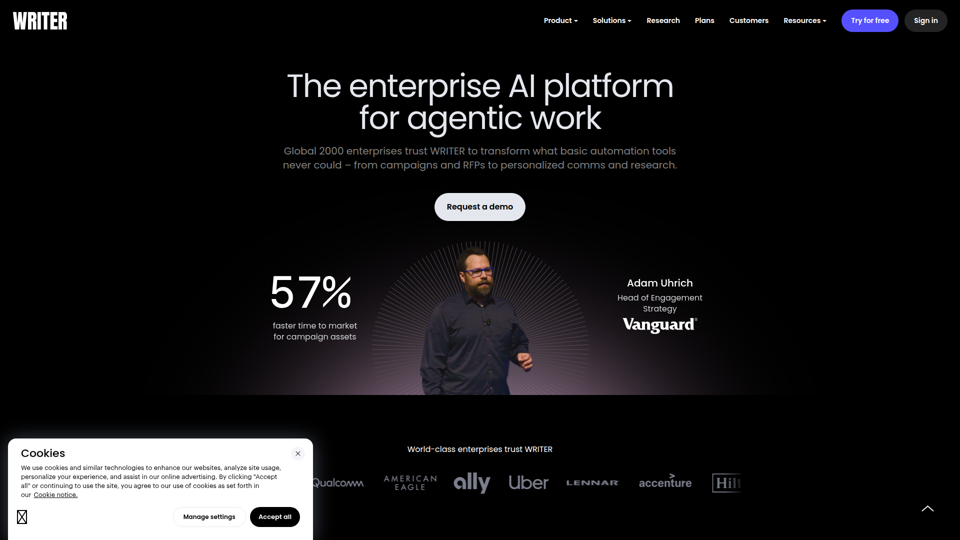
WRITER - The enterprise AI platform for agentic work
WRITER is an enterprise AI platform for agentic work that helps Global 2000 companies build, activate, and supervise AI agents for tasks like campaigns, RFPs, personalized communications, and research, with a focus on IT governance and security. For marketing, sales, support, and IT teams, it can improve productivity by combining shared knowledge, workflow automation, and oversight in one system.

AI Search & Reason Behind Your Firewall
LightOn is an on-premise AI search and reasoning platform that helps enterprises query, extract, and reason over unstructured internal data through a ready-to-use interface or multimodal RAG API, mainly for security-conscious business teams and developers. In AI-driven knowledge work, it can help IT, compliance, legal, support, and R&D teams find cited answers and automate document-heavy workflows without moving sensitive data outside their environment.