
Lemma: Observability and Evaluation for AI Agents
Rate this Tool
Average Score
Total Votes
Select your score (1-10):
Detail Information
What
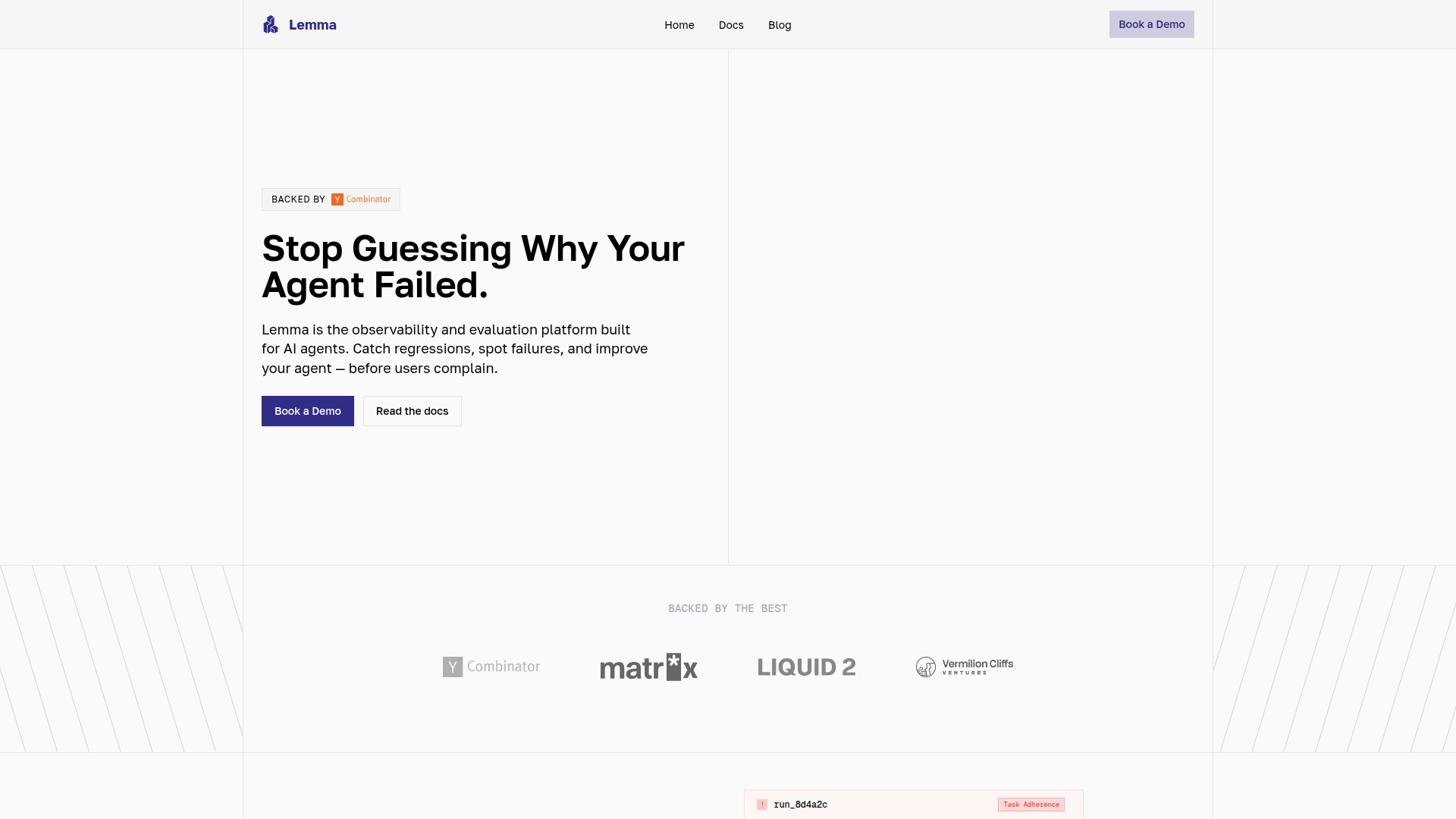
Lemma is an observability and evaluation platform for AI agents. It helps teams understand why agents fail, detect regressions, inspect traces, and use both automated evaluations and user feedback to improve behavior before issues reach more users.
The product appears aimed at teams building and operating production AI agents, especially those using common agent frameworks and SDKs. Its positioning is likely as a developer and ML-operations layer for agent quality: instrument the agent, collect traces and feedback, search and cluster failures, and compare strategies or configurations over time.
Features
- Agent observability with trace-level visibility: Lemma captures agent runs and spans so teams can inspect failures such as hallucinations, wrong tool use, repeated tool calls, or task-adherence issues.
- Online evaluations tied to real user signals: It combines automated evals with observed behaviors like thumbs-up feedback, checkout starts, or completed actions to measure performance beyond static benchmarks.
- Semantic search across traces and evaluations: Every trace is embedded and indexed, allowing teams to search run histories in plain English and quickly find recurring failure patterns without learning a query language.
- Automatic cluster discovery for emerging issues: Lemma continuously groups traces into behavior or input clusters, helping teams surface unknown failure modes without predefined labels or manual categorization.
- Experiment comparison for prompts, models, and architectures: The product describes a coming-soon experiments workflow for testing strategies against a fixed test set before production deployment.
- Lightweight instrumentation with OpenTelemetry support: Teams can wrap an agent function, generate a run ID, and link traces to feedback or experiment outcomes, with SDK support for TypeScript and Python and integrations with existing observability tools.
Helpful Tips
- Check whether your team needs runtime observability or offline eval tooling most: Lemma is strongest where production agent failures are hard to diagnose and user feedback needs to be tied back to exact runs.
- Prioritize instrumentation design early: The value of search, clustering, and evaluation depends on consistently capturing traces, tool calls, outputs, and feedback events with reliable run IDs.
- Use user signals carefully: Observed actions such as checkout progression can be useful outcome signals, but they should be paired with domain-specific quality metrics to avoid misleading conclusions.
- Validate framework coverage against your stack: The site lists native support for some frameworks and notes others as coming soon, so teams should confirm implementation fit before standardizing.
- Treat the experiments capability as roadmap, not current core functionality: The page labels experiments as coming soon, so buying decisions should focus on current observability, search, clustering, and evaluation capabilities.
Embed Code
Share this AI tool on your website or blog by copying and pasting the code below. The embedded widget will automatically update with the latest information.
<iframe src="https://aimyflow.com/ai/uselemma-ai/embed" width="100%" height="400" frameborder="0"></iframe>
Explore Similar Tools
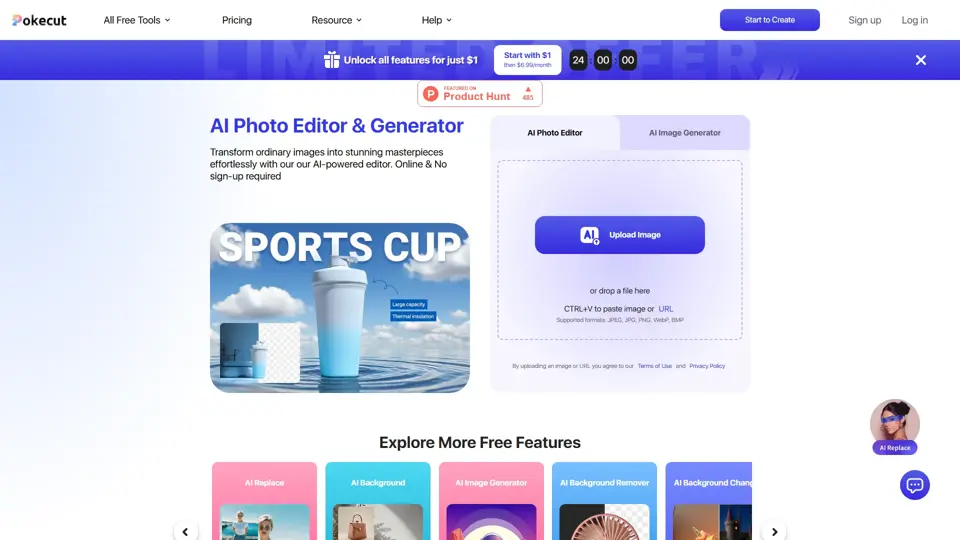
Free AI Photo Editor: Edit & Generate Image Online | Pokecut
Pokecut is an AI photo editor that helps users remove backgrounds, enhance images, and generate visuals online, mainly for ecommerce sellers, marketers, and creators who need quick design-ready assets. It speeds up routine image production so visual teams can create polished content with less manual editing.
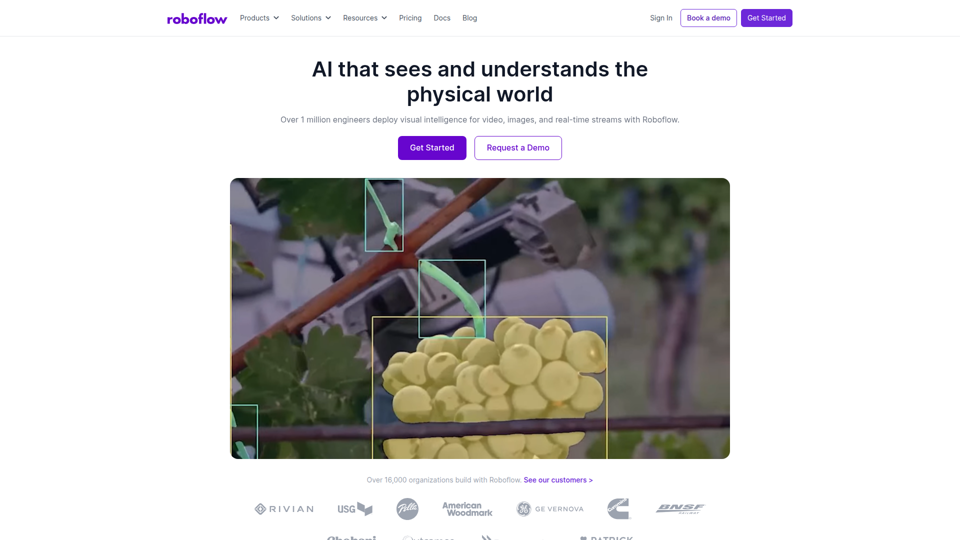
Roboflow: Computer vision tools for developers and enterprises
Roboflow is a computer vision platform that helps developers, machine learning engineers, and enterprises annotate data, train models, build workflows, and deploy vision AI for images, video, and real-time streams. In AI-driven operations, it can help computer vision and ML teams move faster from prototype to production by combining data labeling, model training, and deployment in one workflow.

Seedance 2.0
Seedance 2.0 is ByteDance's AI video generation model designed to create high-quality videos from prompts and multimodal inputs, mainly for creators, developers, and media teams. In the AI era, it helps visual content roles turn ideas into production-ready motion assets with far less manual editing effort.
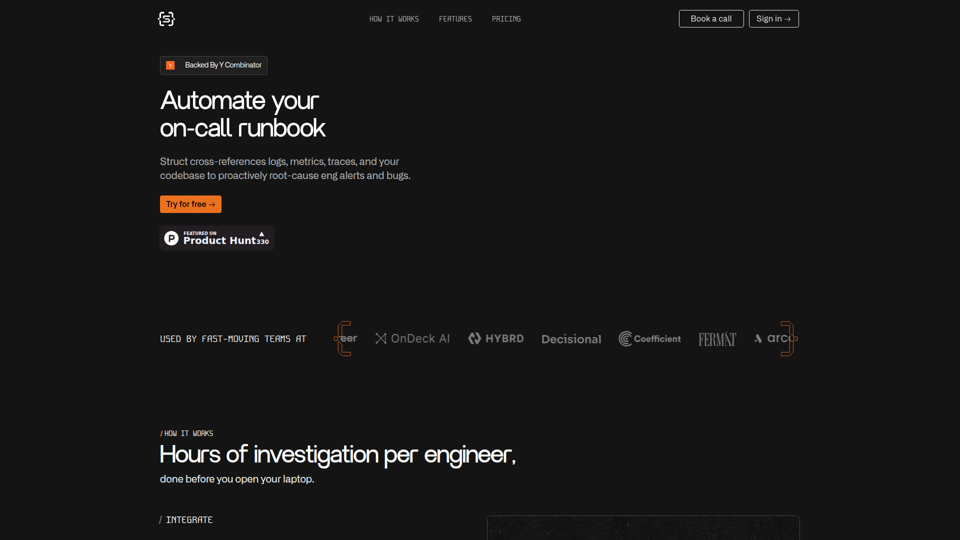
Struct | Automate your on-call runbook
Struct is an AI on-call agent that investigates engineering alerts and bugs by analyzing logs, metrics, traces, and codebases, mainly for software engineers and SRE teams. In the AI era, it helps incident responders shorten triage time by delivering root-cause findings and suggested fixes directly in workflows.
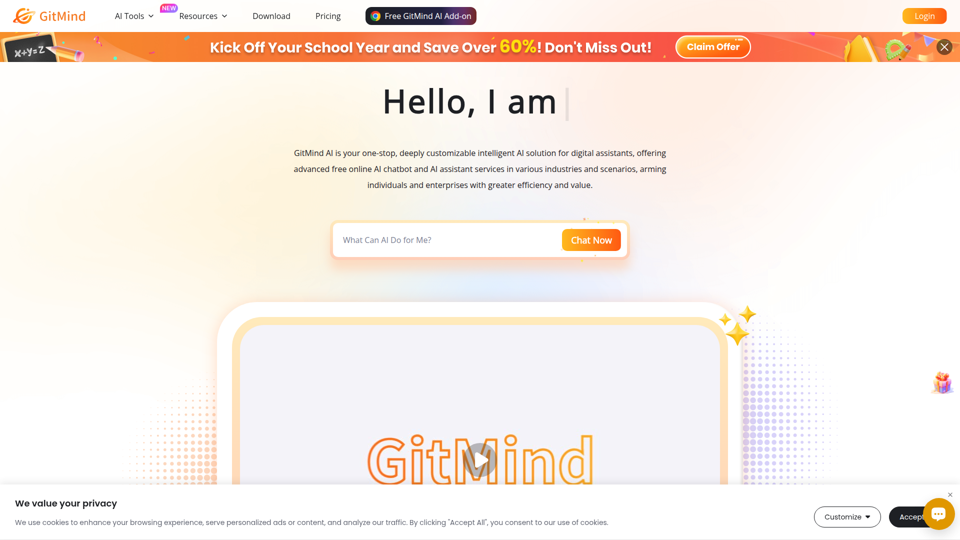
GitMind Chat - Your Best AI Assistant
GitMind Chat is an AI assistant and chatbot platform that helps individuals and enterprises handle conversations, analysis, writing, coding, translation, customer service, and custom AI agent creation through prebuilt or configurable assistants. For roles such as marketers, analysts, support teams, educators, and developers, it can streamline repetitive knowledge work by combining chat, file and link inputs, image analysis, and contextual responses in one workflow.
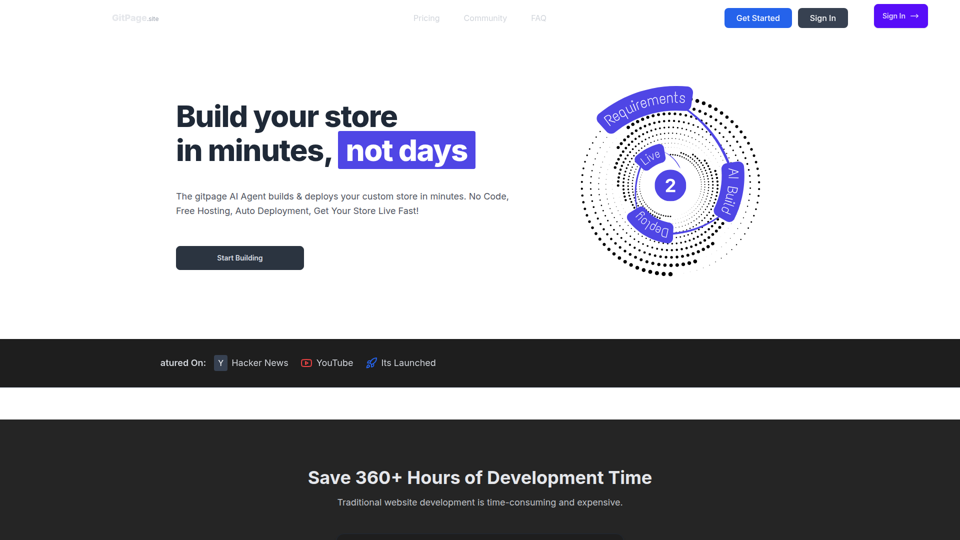
GitPage AI Website Builder | GitPage
GitPage is an AI website builder that generates and deploys websites, online stores, and landing pages from a form, mainly for freelancers, agencies, startups, and businesses that want no-code site creation with code ownership. For web professionals and client-service teams, it can reduce manual setup and content drafting by automating page generation, blog content, and deployment to GitHub or GitLab Pages.

Rohan Mehta
Rohan Mehta is a personal website for a New York–based software engineer at OpenAI, outlining his background at Meta and as a YC-backed startup founder, and highlighting his creator role behind the Subway Time NYC transit app. For software engineers and technical hiring teams, this kind of concise profile helps AI-era talent evaluation by quickly surfacing relevant build, scale, and product experience.
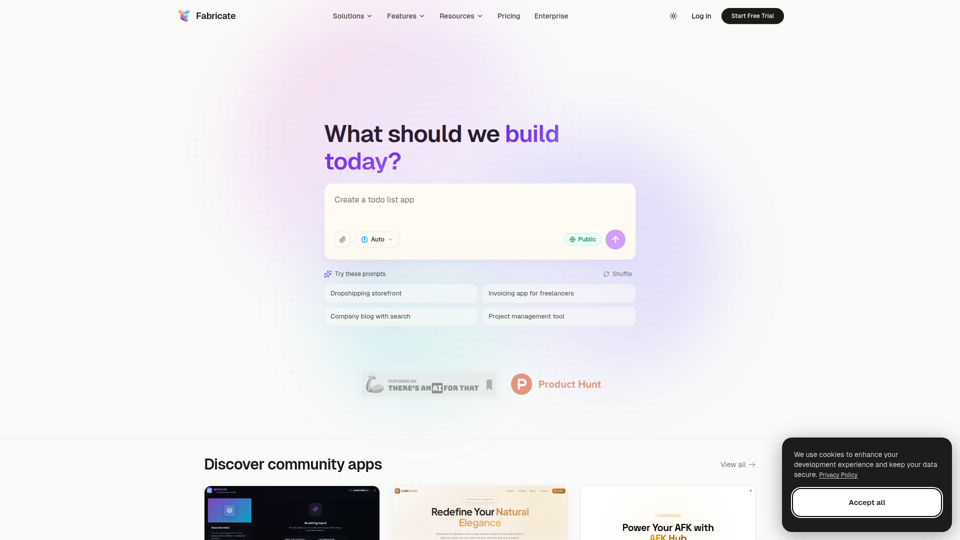
Fabricate - AI Full-Stack App Builder | Build Anything, Ship Faster
Fabricate is an AI full-stack app builder that helps users describe an app idea and generate production-ready web applications, mainly for founders, developers, designers, freelancers, agencies, and enterprises. In AI-assisted product development, it can help these teams move faster from concept to deployable React, TypeScript, and backend code with less manual setup.