
Fabricate - AI Full-Stack App Builder | Build Anything, Ship Faster
Rate this Tool
Average Score
Total Votes
Select your score (1-10):
Detail Information
What
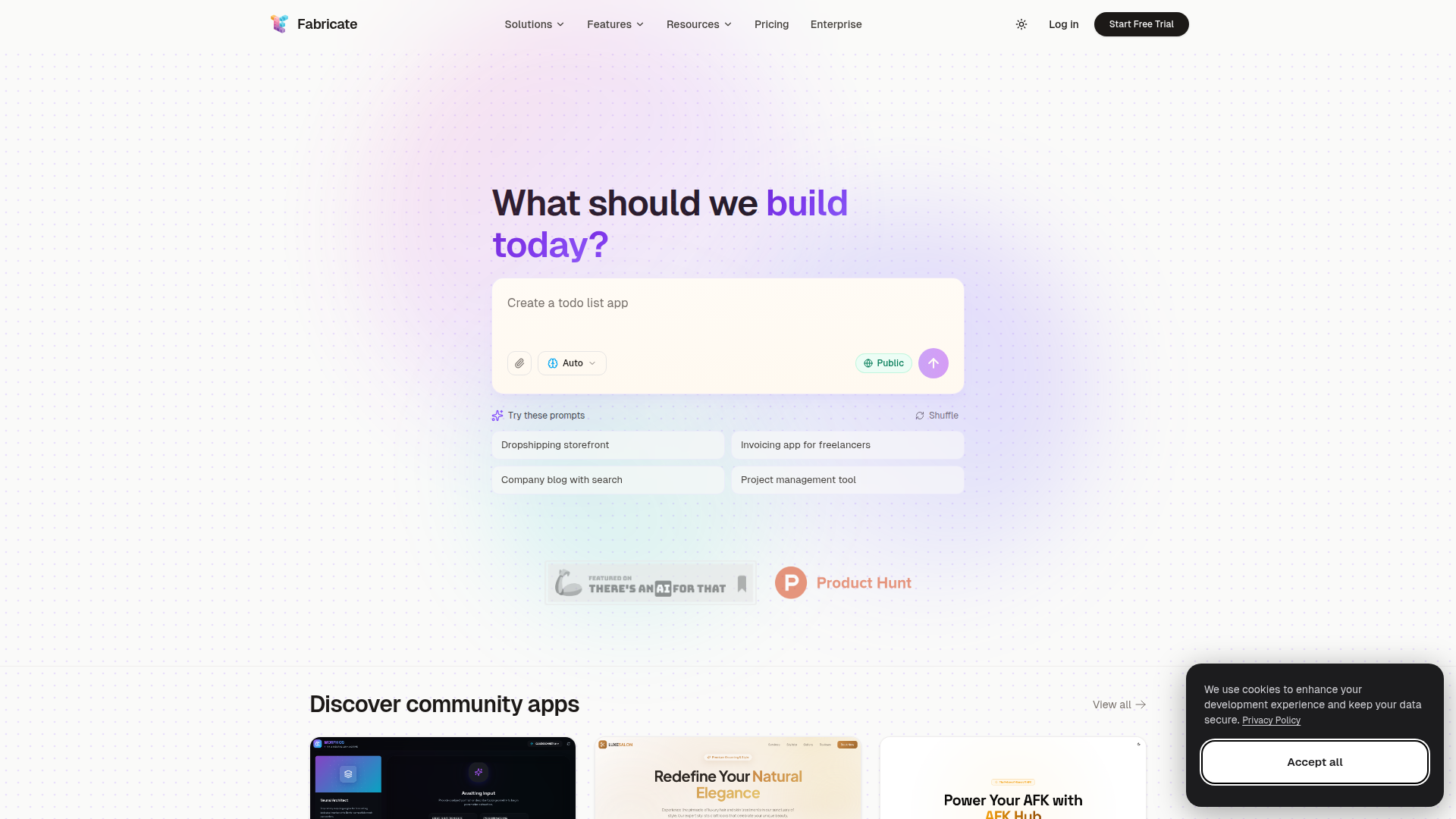
Fabricate is an AI full-stack app builder that turns a text prompt into a deployable application. The site positions it as a broad website and app creation platform for people who want to go from idea to working product quickly, including founders, developers, designers, freelancers, agencies, and enterprises.
The core workflow appears to be prompt-led building: users describe what they want, choose or refine from example app types, and generate applications such as SaaS dashboards, e-commerce stores, finance trackers, AI chatbots, booking systems, and portfolio sites. Based on the page content, Fabricate is likely positioned as a fast, AI-assisted alternative to more manual app development tools.
Features
- Prompt-based app generation — Users can describe an app in natural language and have Fabricate generate a starting point, which reduces the time needed to set up common product structures.
- Full-stack app focus — The product is presented as supporting both front-end and back-end style app needs, useful for projects that require more than a static page.
- Support for multiple app categories — Example outputs include SaaS dashboards, e-commerce stores, CRM tools, booking systems, AI chatbots, and social platforms, which suggests broad template or generation coverage.
- Community app discovery — The site shows community-built apps that users can browse, which can help with inspiration, benchmarking, or reusing common patterns.
- Use-case alignment for different roles — Navigation and solution pages are organized around founders, developers, designers, freelancers, agencies, and enterprises, indicating role-based positioning and likely tailored messaging.
- Trial-based onboarding — The page includes a free trial path, which can lower initial evaluation friction, though the page does not explain onboarding depth or production-readiness details.
Helpful Tips
- Validate output quality beyond the first generation — For AI app builders, the initial prototype can be useful, but teams should still review architecture, data handling, and edge cases before relying on it for production.
- Use concrete prompts with feature scope — Products like this generally perform better when prompts specify users, workflows, pages, and required functions rather than broad ideas.
- Check how much control exists after generation — The page confirms app generation, but does not clearly explain editing depth, code ownership, deployment controls, or extensibility, so those areas should be evaluated carefully.
- Match the tool to speed-sensitive projects — This type of product is usually strongest for MVPs, internal tools, demos, and fast iteration cycles rather than highly customized systems with unusual infrastructure needs.
- Review enterprise fit separately — Although enterprise is listed in navigation, the page provided does not detail governance, security, collaboration, or admin features, so larger buyers should verify those capabilities directly.
OpenClaw Skills
Fabricate could fit well into the OpenClaw ecosystem as a likely upstream build engine for rapid product prototyping. An OpenClaw skill could gather business requirements from a founder, convert them into structured build prompts, generate multiple app variants in Fabricate, and then compare the outputs against product goals such as lead capture, booking flow, CRM structure, or dashboard usability. This is a likely workflow inference, not a confirmed native integration from the page.
OpenClaw agents could also sit around Fabricate as planning, QA, and iteration layers. For example, one agent could turn a market brief into a SaaS app prompt, another could evaluate whether the generated app includes the expected pages and flows, and another could produce revised prompt instructions for improvements. In industries like agencies, product consulting, and startup studios, that combination could shift work from manual scoping and wireframing toward faster concept validation and more repeatable app delivery processes.
Embed Code
Share this AI tool on your website or blog by copying and pasting the code below. The embedded widget will automatically update with the latest information.
<iframe src="https://aimyflow.com/ai/fabricate-build/embed" width="100%" height="400" frameborder="0"></iframe>
Explore Similar Tools
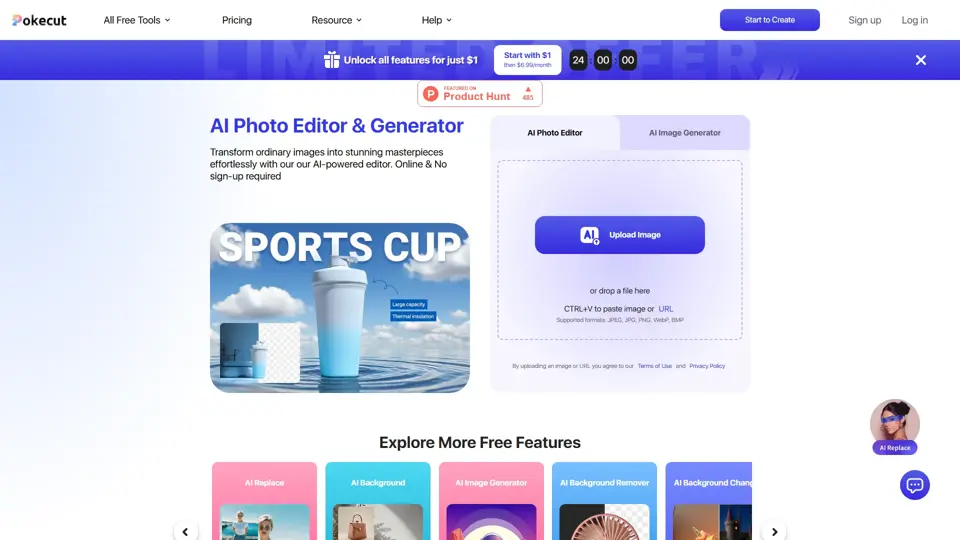
Free AI Photo Editor: Edit & Generate Image Online | Pokecut
Pokecut is an AI photo editor that helps users remove backgrounds, enhance images, and generate visuals online, mainly for ecommerce sellers, marketers, and creators who need quick design-ready assets. It speeds up routine image production so visual teams can create polished content with less manual editing.
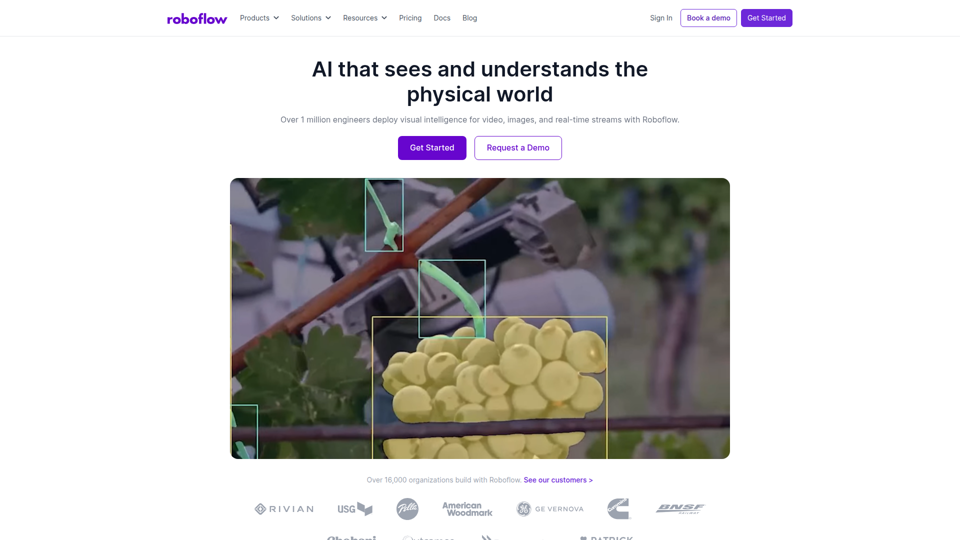
Roboflow: Computer vision tools for developers and enterprises
Roboflow is a computer vision platform that helps developers, machine learning engineers, and enterprises annotate data, train models, build workflows, and deploy vision AI for images, video, and real-time streams. In AI-driven operations, it can help computer vision and ML teams move faster from prototype to production by combining data labeling, model training, and deployment in one workflow.

Seedance 2.0
Seedance 2.0 is ByteDance's AI video generation model designed to create high-quality videos from prompts and multimodal inputs, mainly for creators, developers, and media teams. In the AI era, it helps visual content roles turn ideas into production-ready motion assets with far less manual editing effort.
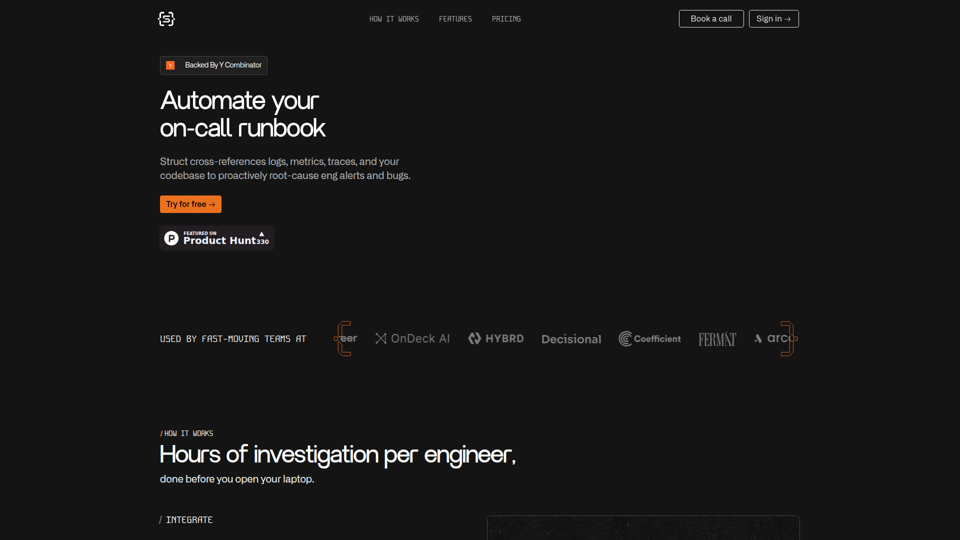
Struct | Automate your on-call runbook
Struct is an AI on-call agent that investigates engineering alerts and bugs by analyzing logs, metrics, traces, and codebases, mainly for software engineers and SRE teams. In the AI era, it helps incident responders shorten triage time by delivering root-cause findings and suggested fixes directly in workflows.
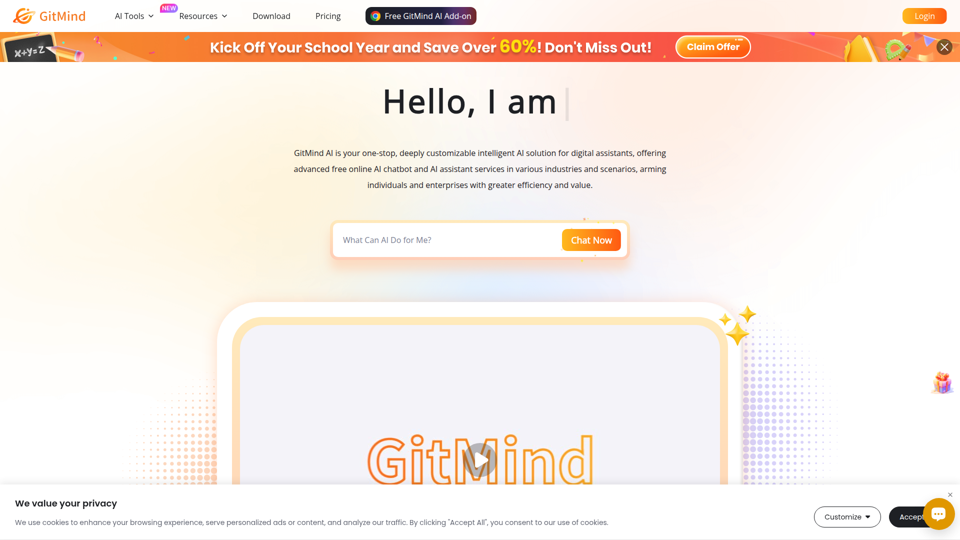
GitMind Chat - Your Best AI Assistant
GitMind Chat is an AI assistant and chatbot platform that helps individuals and enterprises handle conversations, analysis, writing, coding, translation, customer service, and custom AI agent creation through prebuilt or configurable assistants. For roles such as marketers, analysts, support teams, educators, and developers, it can streamline repetitive knowledge work by combining chat, file and link inputs, image analysis, and contextual responses in one workflow.
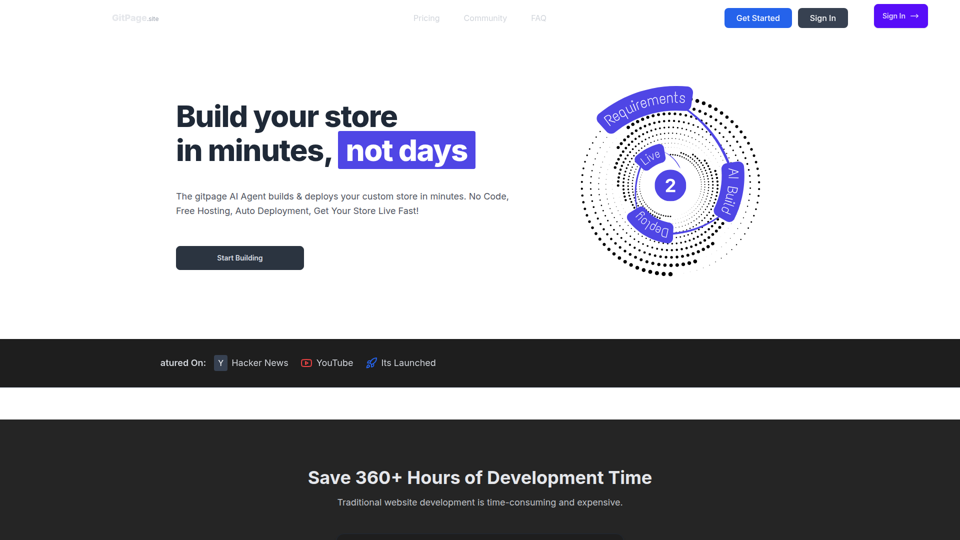
GitPage AI Website Builder | GitPage
GitPage is an AI website builder that generates and deploys websites, online stores, and landing pages from a form, mainly for freelancers, agencies, startups, and businesses that want no-code site creation with code ownership. For web professionals and client-service teams, it can reduce manual setup and content drafting by automating page generation, blog content, and deployment to GitHub or GitLab Pages.

Rohan Mehta
Rohan Mehta is a personal website for a New York–based software engineer at OpenAI, outlining his background at Meta and as a YC-backed startup founder, and highlighting his creator role behind the Subway Time NYC transit app. For software engineers and technical hiring teams, this kind of concise profile helps AI-era talent evaluation by quickly surfacing relevant build, scale, and product experience.
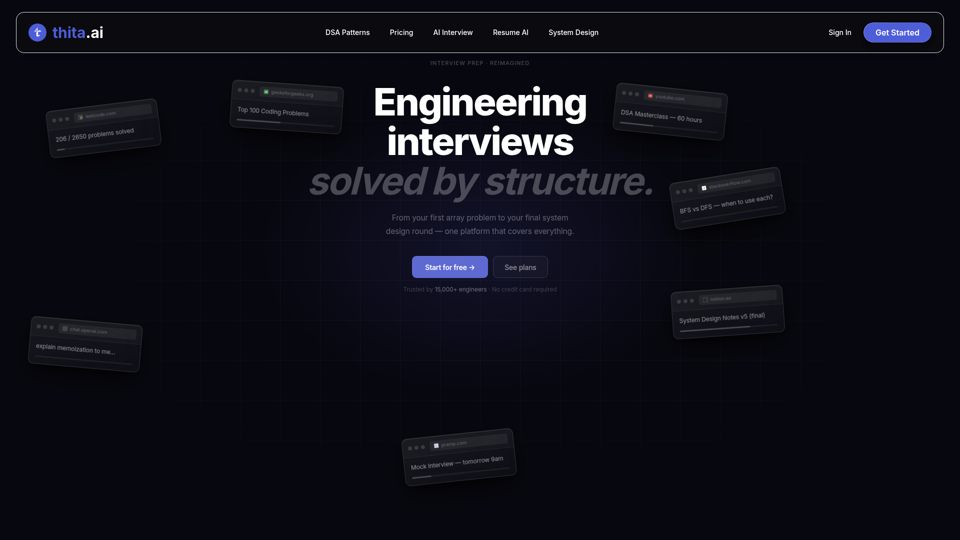
AI Interview Prep | DSA Patterns, AI Coaching | Thita.ai
Thita.ai is an AI interview preparation platform that helps engineers practice DSA patterns, mock interviews, system design, resume analysis, and structured learning tracks for technical roles. For software engineers and related technical candidates, AI-based coaching and adaptive feedback can make interview prep more consistent, targeted, and easier to fit into busy schedules.