
Team9 - Bring OpenClaw AI Agent to Your Team | Part of Moltbook Ecosystem
Rate this Tool
Average Score
Total Votes
Select your score (1-10):
Detail Information
What
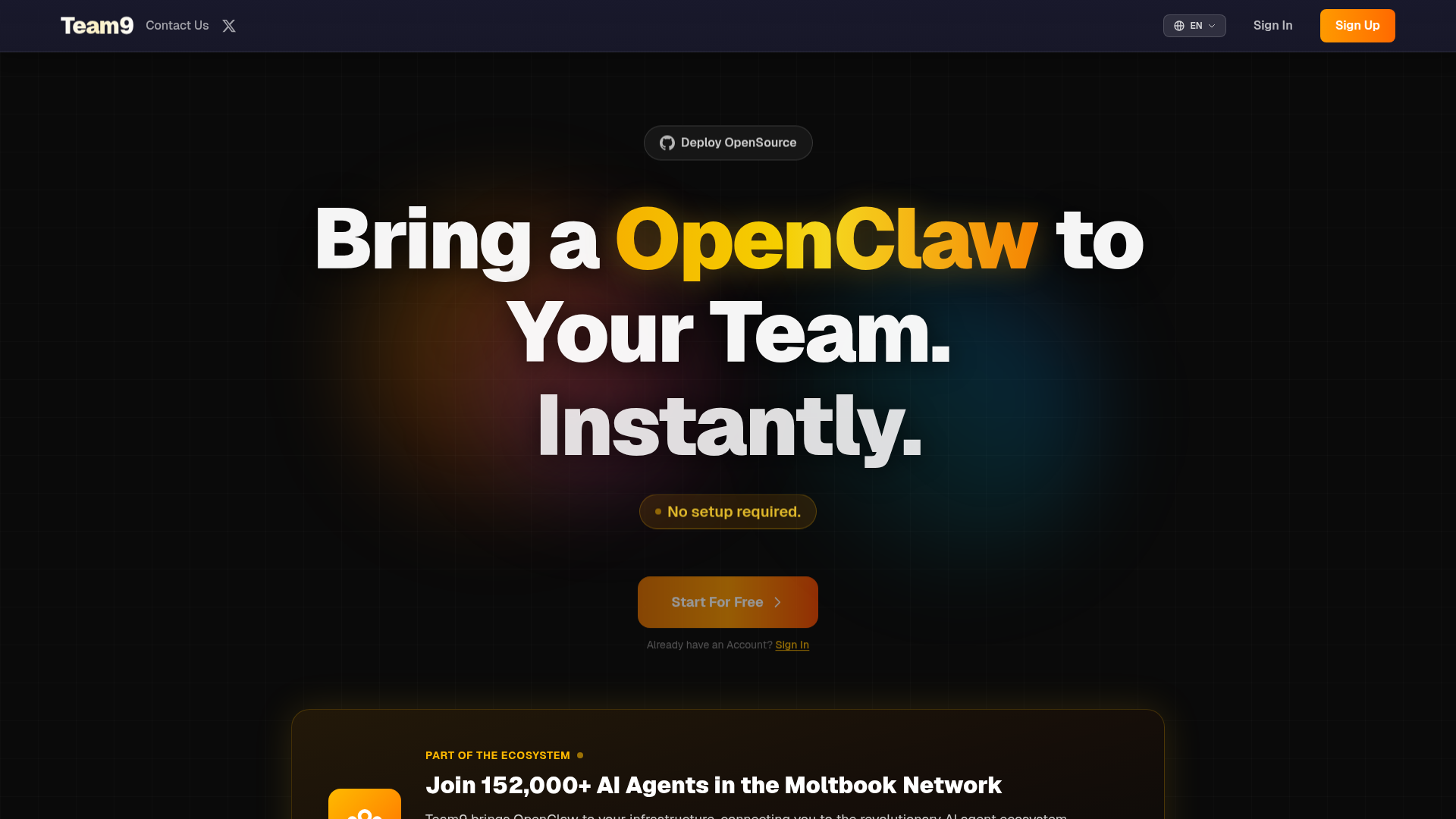
Team9 is an AI workspace built on OpenClaw and the Moltbook ecosystem. It is designed for teams that want to work with AI agents as operational teammates by assigning tasks, sharing context, and coordinating work in one place.
Its main positioning appears to be a managed, zero-setup way to deploy OpenClaw on team-controlled infrastructure without handling installation or configuration manually. The product addresses a common gap between wanting local-first, privacy-oriented AI agents and the operational complexity of running them in production.
Features
- Managed OpenClaw deployment — Team9 provides a zero-setup OpenClaw experience, reducing the need to install Node.js, configure adapters, or manage security policies manually.
- AI staff workspace model — Teams can “hire” AI staff inside the product and collaborate with them like teammates, which helps structure task assignment and shared context.
- Local-first agent architecture — OpenClaw runs on hardware the team controls, which is useful for keeping sensitive files, code, and credentials on internal infrastructure.
- Persistent memory in Markdown — Long-term memory is stored as plain Markdown files, making the agent state easier to inspect, edit, and delete directly.
- Scheduled and event-driven execution — OpenClaw supports recurring jobs, background operation, and reactions to webhooks or events, enabling proactive workflows rather than only chat-based responses.
- Composable tool extension via MCP — The platform can be extended through Model Context Protocol tools, allowing teams to add capabilities without modifying the core runtime.
Helpful Tips
- Assess where sovereignty matters most — This type of product is most relevant when teams need AI automation around private data, internal systems, or always-on workflows that should stay under their control.
- Start with narrow, repeatable use cases — Daily briefings, server monitoring, knowledge base maintenance, and GitHub operations are practical early candidates because success criteria are clearer.
- Validate security controls before expanding scope — The source emphasizes permission boundaries, approval gates, localhost defaults, and private network access; these should be reviewed before enabling higher-risk actions.
- Treat skills and external tools as privileged extensions — MCP servers and community skills increase capability, but they also increase supply-chain and access risk, so version pinning and minimal permissions matter.
- Clarify the Team9 vs. OpenClaw boundary — Some capabilities described on the page belong to OpenClaw broadly rather than explicitly to Team9’s native product layer, so buyers should confirm which controls are managed in-product versus self-managed.
OpenClaw Skills
Within the OpenClaw ecosystem, Team9 likely serves as a collaboration and deployment layer that makes agent operations usable for non-infrastructure specialists. Based on the page, likely OpenClaw skills around Team9 would include scheduled reporting agents, server health monitors, GitHub workflow assistants, and knowledge-base maintenance agents that operate continuously with persistent memory and constrained actions.
In the OpenClaw ecosystem, this could enable multi-agent workflows where specialized agents handle different functions inside one team workspace while remaining connected to the broader Moltbook network. While the page does not confirm specific native OpenClaw-to-OpenClaw orchestration patterns inside Team9, a likely use case is building role-based agents for IT, engineering, and operations teams that share context, escalate risky actions for approval, and turn local-first AI from a single assistant into an organized team capability.
Embed Code
Share this AI tool on your website or blog by copying and pasting the code below. The embedded widget will automatically update with the latest information.
<iframe src="https://aimyflow.com/ai/team9-ai/embed" width="100%" height="400" frameborder="0"></iframe>
Explore Similar Tools

W.AI - Global AI Supercomputer
W.AI is a decentralized AI supercomputer that lets people with GPU-equipped devices contribute idle compute power to AI tasks, mainly for device owners and infrastructure participants who want to support distributed AI networks. For AI infrastructure operators and technical teams, it can expand available compute capacity through a distributed model while using sandboxed execution and privacy-focused architecture.
Risotto | IT help desk with AI ticketing automation
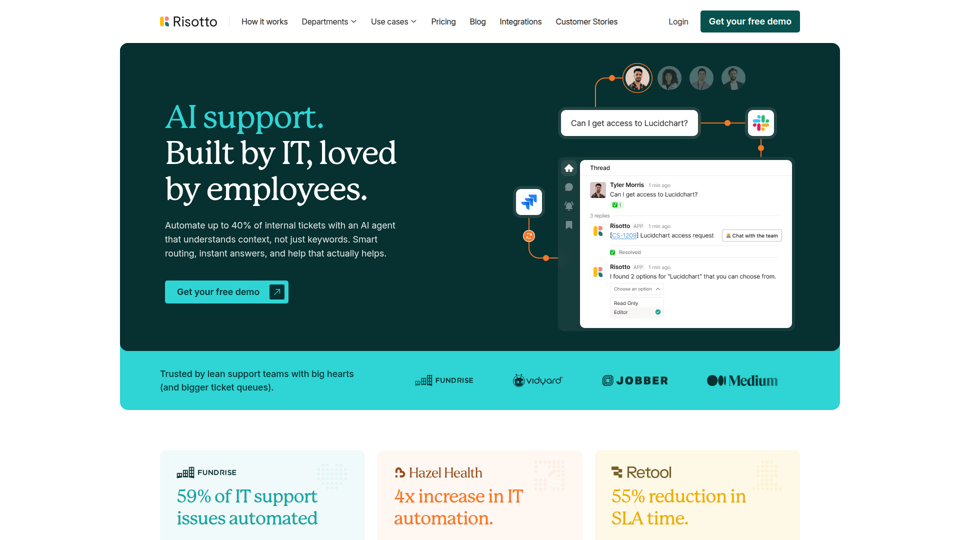
Risotto is an AI help desk and ticketing automation platform that helps IT teams automate internal support, access requests, and cross-department workflows in tools like Slack. For IT managers, help desk teams, and systems administrators, it can reduce repetitive tier-1 work by using context-aware automation, self-updating knowledge, and automated routing to speed resolution and approvals.
Terracotta AI | Infrastructure Change Governance
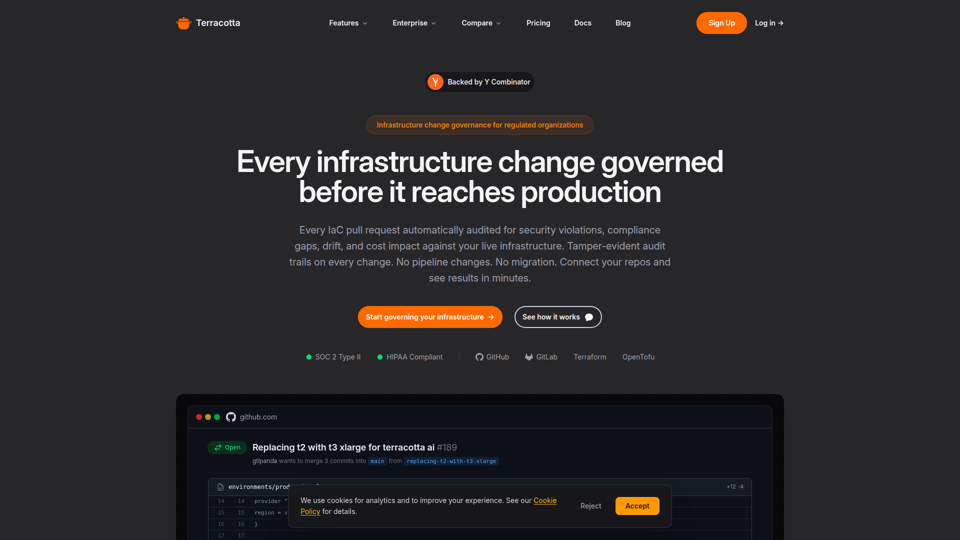
Terracotta AI is an infrastructure change governance tool that audits Terraform, Kubernetes, and Terragrunt pull requests for security, compliance, drift, and cost before merge, mainly for regulated organizations and platform engineering teams. For platform, security, and compliance teams, it adds AI-assisted PR review and audit trails that can reduce manual infrastructure review work and improve pre-production change control.
Ubicloud - Open source alternative to AWS
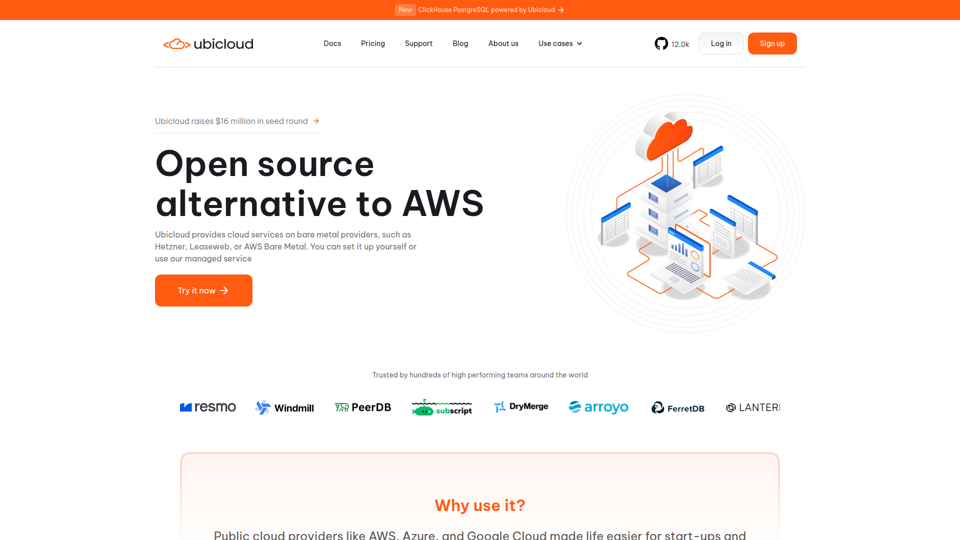
Ubicloud is an open source cloud platform and AWS alternative that helps teams run elastic compute, block storage, networking, managed PostgreSQL, and GitHub Actions runners on bare metal providers, mainly for engineering and infrastructure teams that want self-hosted or managed cloud services. For DevOps, platform, and database engineers, it can support more portable, automated infrastructure and CI workflows while reducing dependence on closed public cloud platforms.
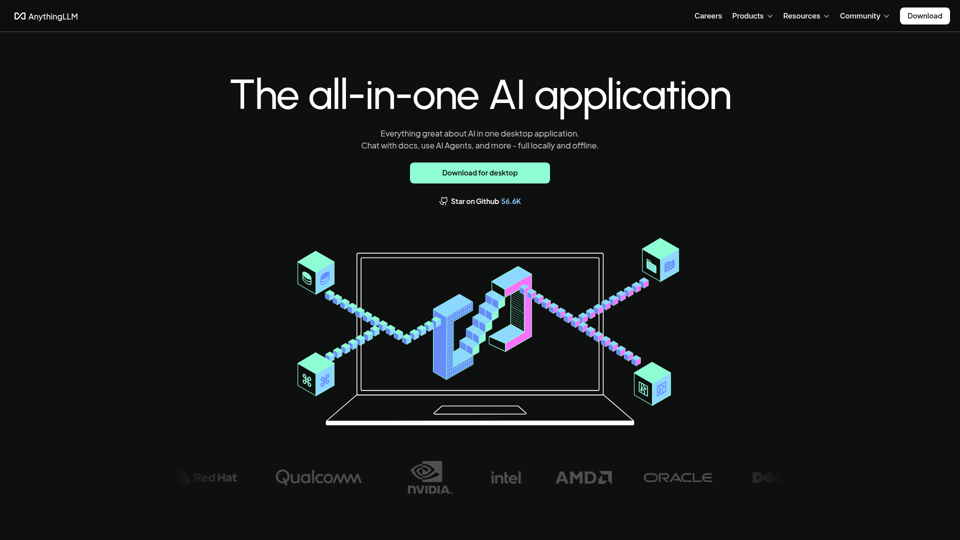
AnythingLLM | The all-in-one AI application for everyone
AnythingLLM is an all-in-one AI application that lets users chat with documents, run AI agents, and use local or cloud LLMs with privacy-focused, low-setup workflows, mainly for individuals and teams that want desktop, self-hosted, or cloud AI tools. For knowledge workers, developers, and IT teams, its local-first design and built-in API can make document-based analysis, internal automation, and controlled AI deployment easier in everyday work.
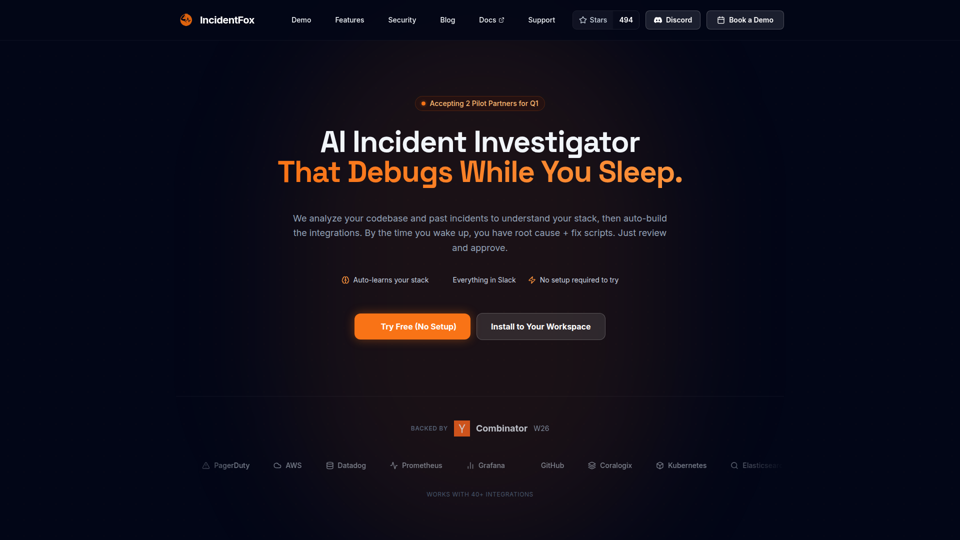
IncidentFox - The AI SRE for Teams
IncidentFox is an AI SRE tool that investigates production incidents in Slack, analyzes codebases and past incidents, and proposes or executes approved fixes for engineering, SRE, and platform teams. For on-call and reliability work, it can reduce manual triage by correlating alerts, logs, metrics, and deployment history into root-cause findings and auditable remediation steps.
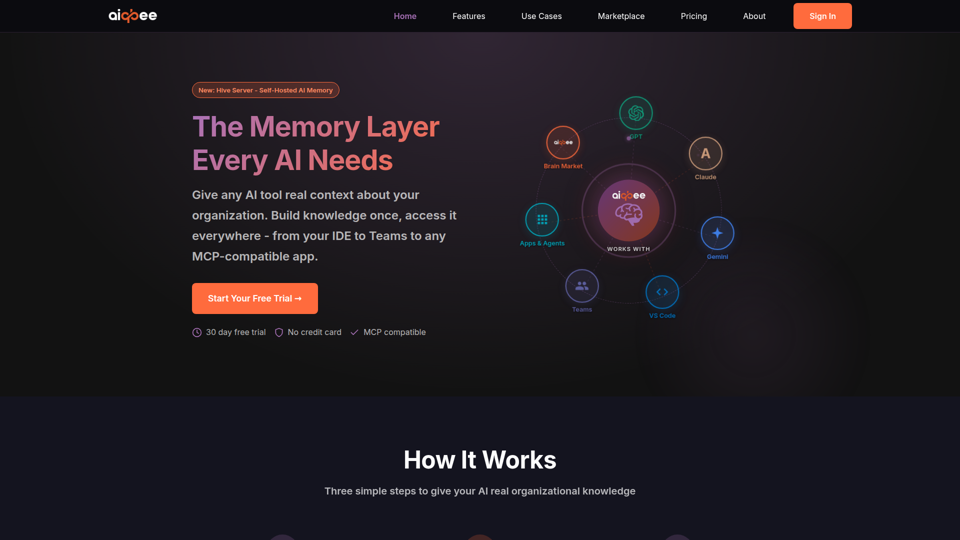
Aiqbee - Universal AI Memory Platform | Enterprise Knowledge for Any LLM
Aiqbee is an enterprise AI memory platform that gives any LLM or AI tool persistent organizational context by centralizing company knowledge, connecting it to tools like Teams and IDEs, and adding governance controls, mainly for businesses managing AI use across teams. For IT, operations, support, and development functions, it can reduce repeated prompting and improve consistency by making shared knowledge available across approved AI workflows.
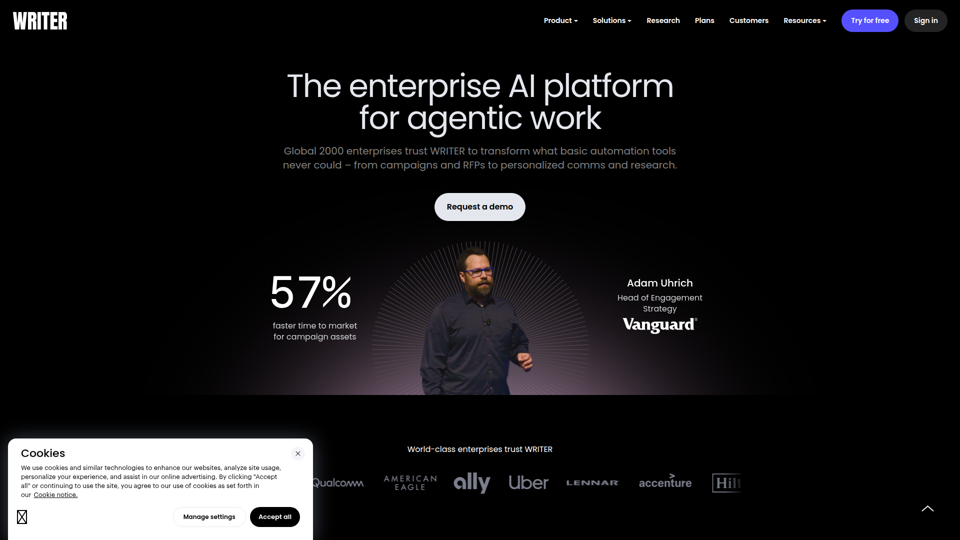
WRITER - The enterprise AI platform for agentic work
WRITER is an enterprise AI platform for agentic work that helps Global 2000 companies build, activate, and supervise AI agents for tasks like campaigns, RFPs, personalized communications, and research, with a focus on IT governance and security. For marketing, sales, support, and IT teams, it can improve productivity by combining shared knowledge, workflow automation, and oversight in one system.