
SurfSense - Open Source NotebookLM Alternative for Teams
Rate this Tool
Average Score
Total Votes
Select your score (1-10):
Detail Information
What
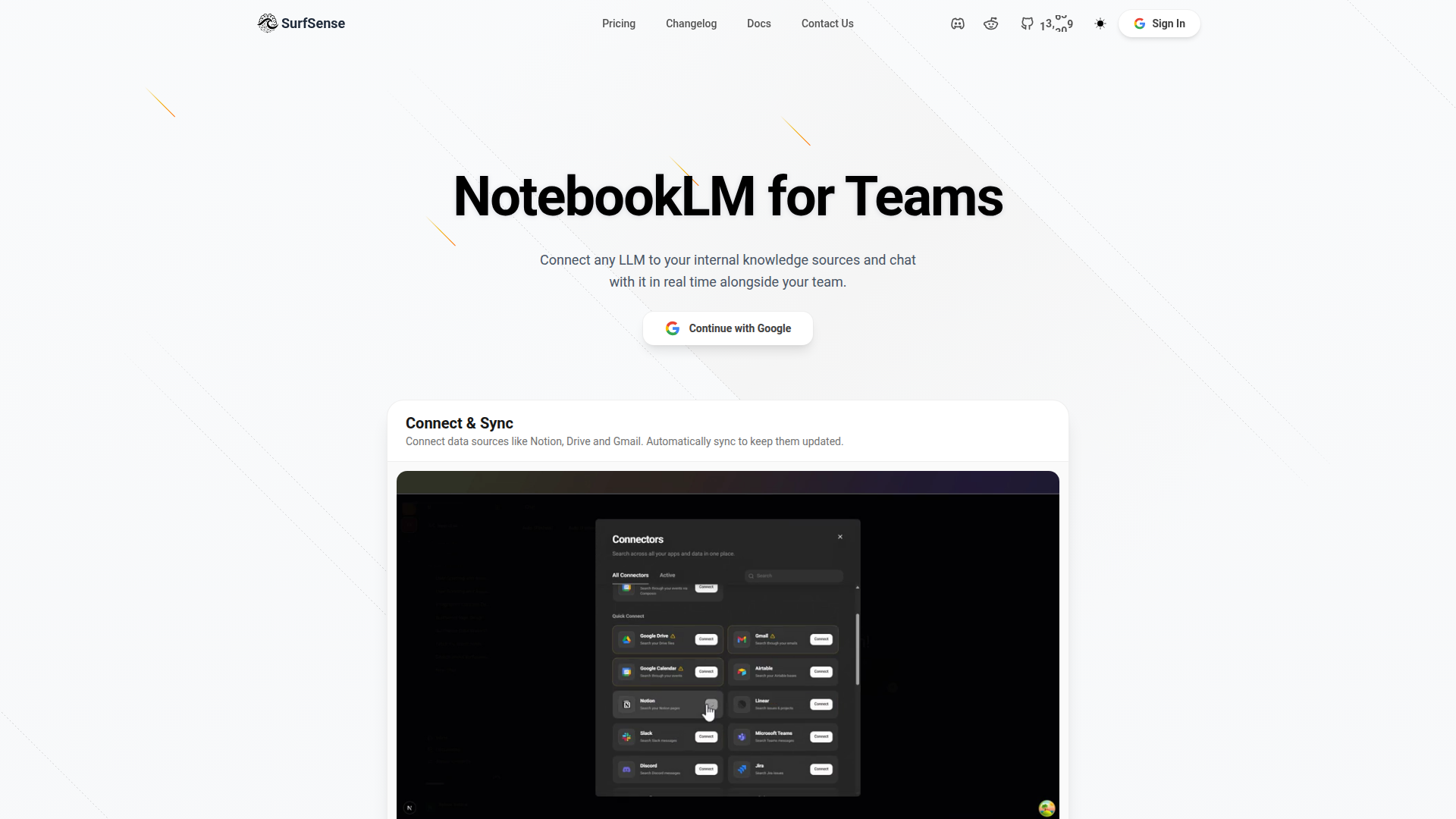
SurfSense is an open source, team-oriented alternative to NotebookLM that connects large language models to internal knowledge sources and lets users chat with that information in real time. The page presents it as a shared AI knowledge hub for organizations that want to centralize documents, search across them, and collaborate around answers with source references.
It appears aimed at teams that work across company and personal knowledge repositories such as Notion, Google Drive, and Gmail. Its core workflow is to connect and sync data sources, query them through an LLM of choice, and collaborate inside a multiplayer workspace with live edits, comments, and cited responses; positioning-wise, it likely sits between AI knowledge management, collaborative research, and enterprise-style retrieval-augmented chat.
Features
- Knowledge source connection and sync: Connects sources such as Notion, Drive, and Gmail, then automatically syncs them so the workspace stays current.
- LLM choice and deployment flexibility: Supports 100+ LLMs and can call models on demand, with on-premise local inference options referenced including vLLM, Ollama, llama.cpp, and LM Studio.
- Cited answers from internal knowledge: Returns answers with clickable source references, which helps teams verify outputs against underlying content.
- Unified find-ask-act workflow: Brings search, question answering, and action-oriented knowledge access into one interface across company and personal information.
- Real-time team collaboration: Turns documents into shared spaces with live edits, synced content, and presence indicators to support concurrent work.
- Comments and multimedia collaboration: Adds in-context comments to chats and docs, and supports podcasts or other multimedia content that teams can share and refine together.
Helpful Tips
- For this type of product, source quality and sync design matter as much as model quality; start by organizing the highest-value repositories before expanding coverage.
- If teams require model flexibility, verify which LLMs are practical for your security, latency, and cost constraints, especially when considering local inference options.
- Cited answers are most useful when content is current and permissioned correctly, so governance for document ownership and update cadence should be defined early.
- Real-time collaboration features can improve adoption, but they work best when paired with clear workflows for commenting, review, and decision capture.
- The page signals broad model support and collaboration depth, but it does not provide detailed information on admin controls, security architecture, or advanced workflow automation, so buyers should validate those areas directly.
OpenClaw Skills
SurfSense could fit well within the OpenClaw ecosystem as a knowledge-grounding layer for team agents. Likely OpenClaw skills could include internal research assistants, document Q&A agents, meeting prep workflows, and knowledge triage routines that pull from synced repositories and return cited summaries for shared review. Because SurfSense emphasizes collaborative chat and source-backed answers, it could serve as the retrieval and discussion surface around which OpenClaw agents coordinate work.
A likely use case, rather than a confirmed native integration, would be building OpenClaw workflows that monitor updated knowledge sources, generate digest notes, route questions to domain-specific agents, and post collaborative outputs back into shared spaces for comments and refinement. In practice, this combination could help operations, enablement, support, and research teams move from fragmented document search toward continuously updated, agent-assisted knowledge work with human review built into the loop.
Embed Code
Share this AI tool on your website or blog by copying and pasting the code below. The embedded widget will automatically update with the latest information.
<iframe src="https://aimyflow.com/ai/surfsense-com/embed" width="100%" height="400" frameborder="0"></iframe>
Explore Similar Tools

W.AI - Global AI Supercomputer
W.AI is a decentralized AI supercomputer that lets people with GPU-equipped devices contribute idle compute power to AI tasks, mainly for device owners and infrastructure participants who want to support distributed AI networks. For AI infrastructure operators and technical teams, it can expand available compute capacity through a distributed model while using sandboxed execution and privacy-focused architecture.
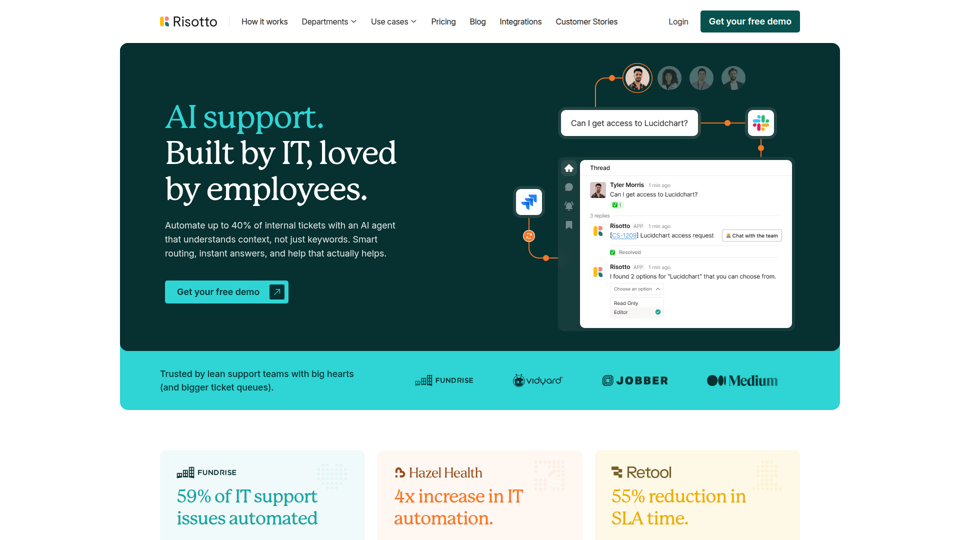
Risotto | IT help desk with AI ticketing automation
Risotto is an AI help desk and ticketing automation platform that helps IT teams automate internal support, access requests, and cross-department workflows in tools like Slack. For IT managers, help desk teams, and systems administrators, it can reduce repetitive tier-1 work by using context-aware automation, self-updating knowledge, and automated routing to speed resolution and approvals.
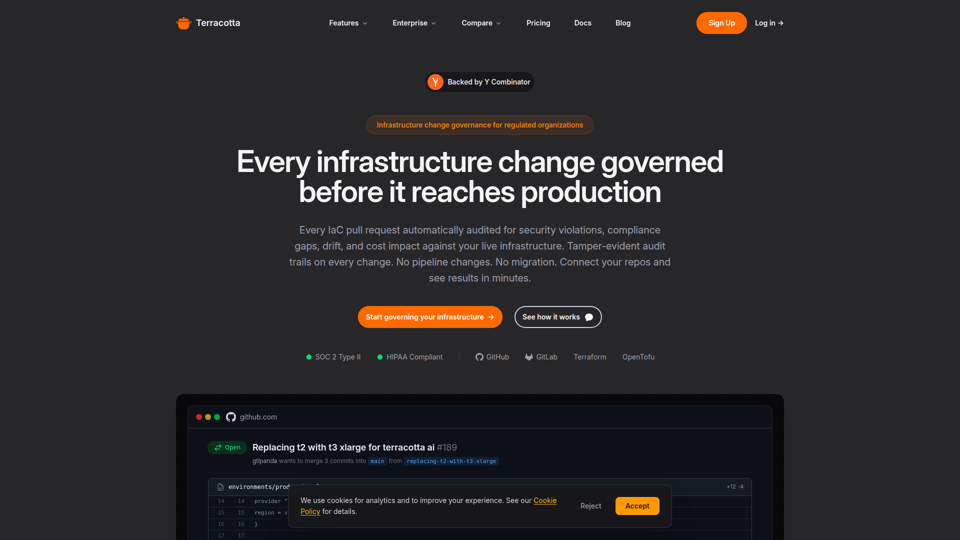
Terracotta AI | Infrastructure Change Governance
Terracotta AI is an infrastructure change governance tool that audits Terraform, Kubernetes, and Terragrunt pull requests for security, compliance, drift, and cost before merge, mainly for regulated organizations and platform engineering teams. For platform, security, and compliance teams, it adds AI-assisted PR review and audit trails that can reduce manual infrastructure review work and improve pre-production change control.
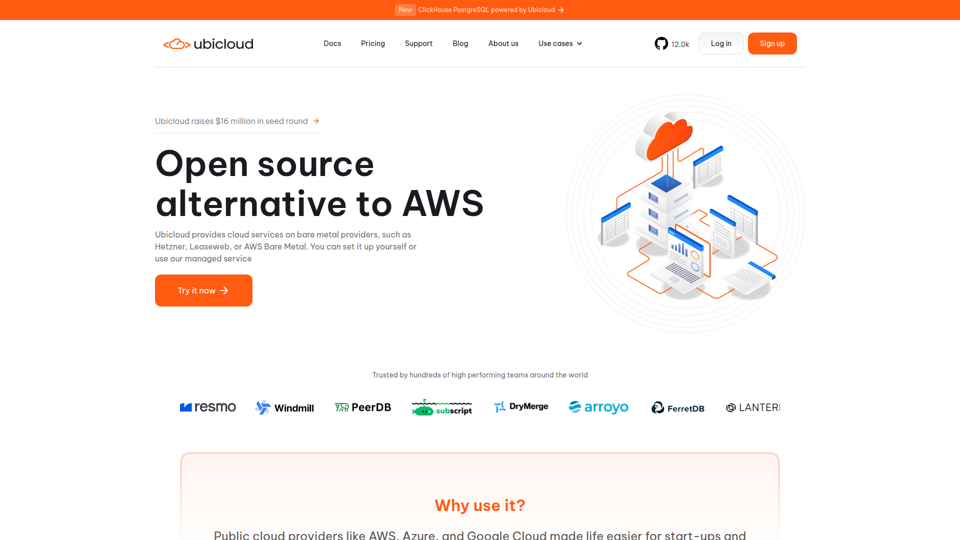
Ubicloud - Open source alternative to AWS
Ubicloud is an open source cloud platform and AWS alternative that helps teams run elastic compute, block storage, networking, managed PostgreSQL, and GitHub Actions runners on bare metal providers, mainly for engineering and infrastructure teams that want self-hosted or managed cloud services. For DevOps, platform, and database engineers, it can support more portable, automated infrastructure and CI workflows while reducing dependence on closed public cloud platforms.
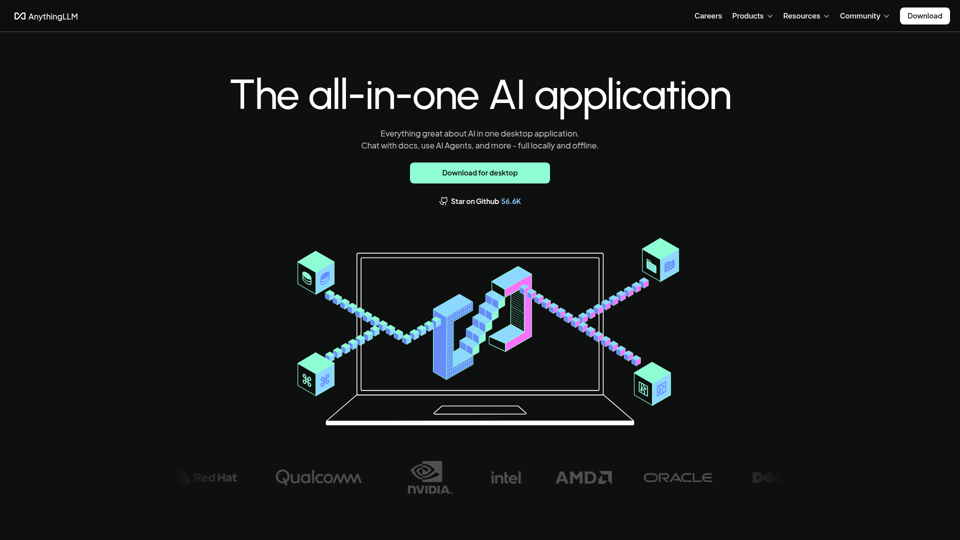
AnythingLLM | The all-in-one AI application for everyone
AnythingLLM is an all-in-one AI application that lets users chat with documents, run AI agents, and use local or cloud LLMs with privacy-focused, low-setup workflows, mainly for individuals and teams that want desktop, self-hosted, or cloud AI tools. For knowledge workers, developers, and IT teams, its local-first design and built-in API can make document-based analysis, internal automation, and controlled AI deployment easier in everyday work.
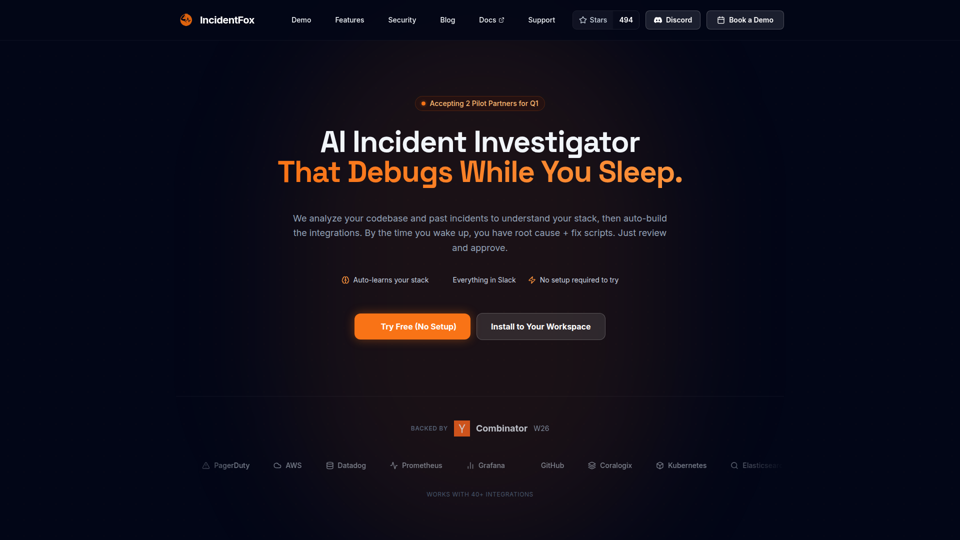
IncidentFox - The AI SRE for Teams
IncidentFox is an AI SRE tool that investigates production incidents in Slack, analyzes codebases and past incidents, and proposes or executes approved fixes for engineering, SRE, and platform teams. For on-call and reliability work, it can reduce manual triage by correlating alerts, logs, metrics, and deployment history into root-cause findings and auditable remediation steps.
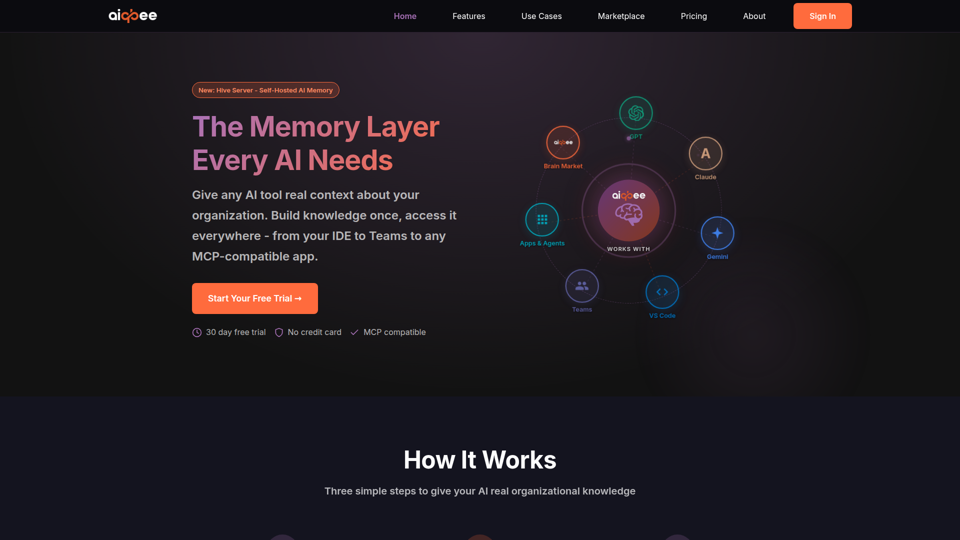
Aiqbee - Universal AI Memory Platform | Enterprise Knowledge for Any LLM
Aiqbee is an enterprise AI memory platform that gives any LLM or AI tool persistent organizational context by centralizing company knowledge, connecting it to tools like Teams and IDEs, and adding governance controls, mainly for businesses managing AI use across teams. For IT, operations, support, and development functions, it can reduce repeated prompting and improve consistency by making shared knowledge available across approved AI workflows.
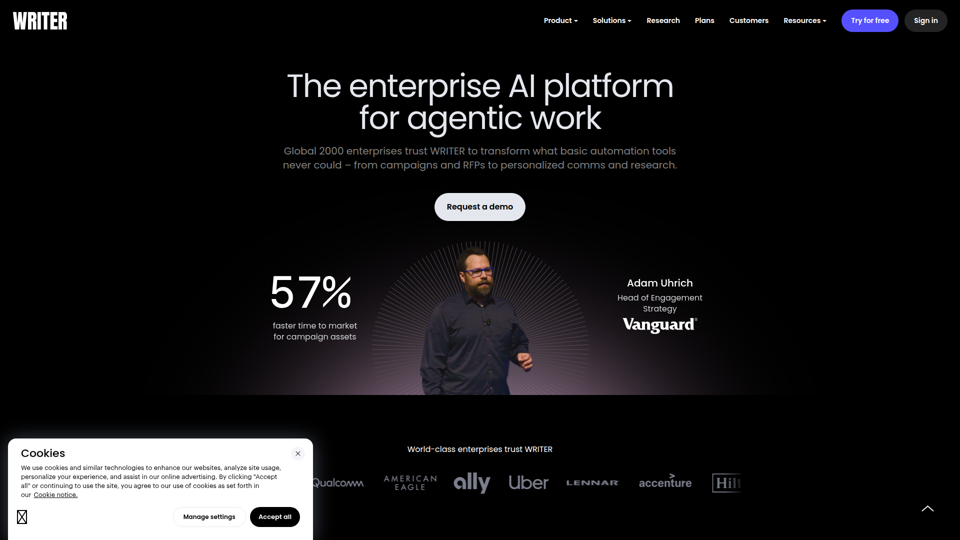
WRITER - The enterprise AI platform for agentic work
WRITER is an enterprise AI platform for agentic work that helps Global 2000 companies build, activate, and supervise AI agents for tasks like campaigns, RFPs, personalized communications, and research, with a focus on IT governance and security. For marketing, sales, support, and IT teams, it can improve productivity by combining shared knowledge, workflow automation, and oversight in one system.