
Scenario | The Creative AI Infrastructure
Rate this Tool
Average Score
Total Votes
Select your score (1-10):
Detail Information
What
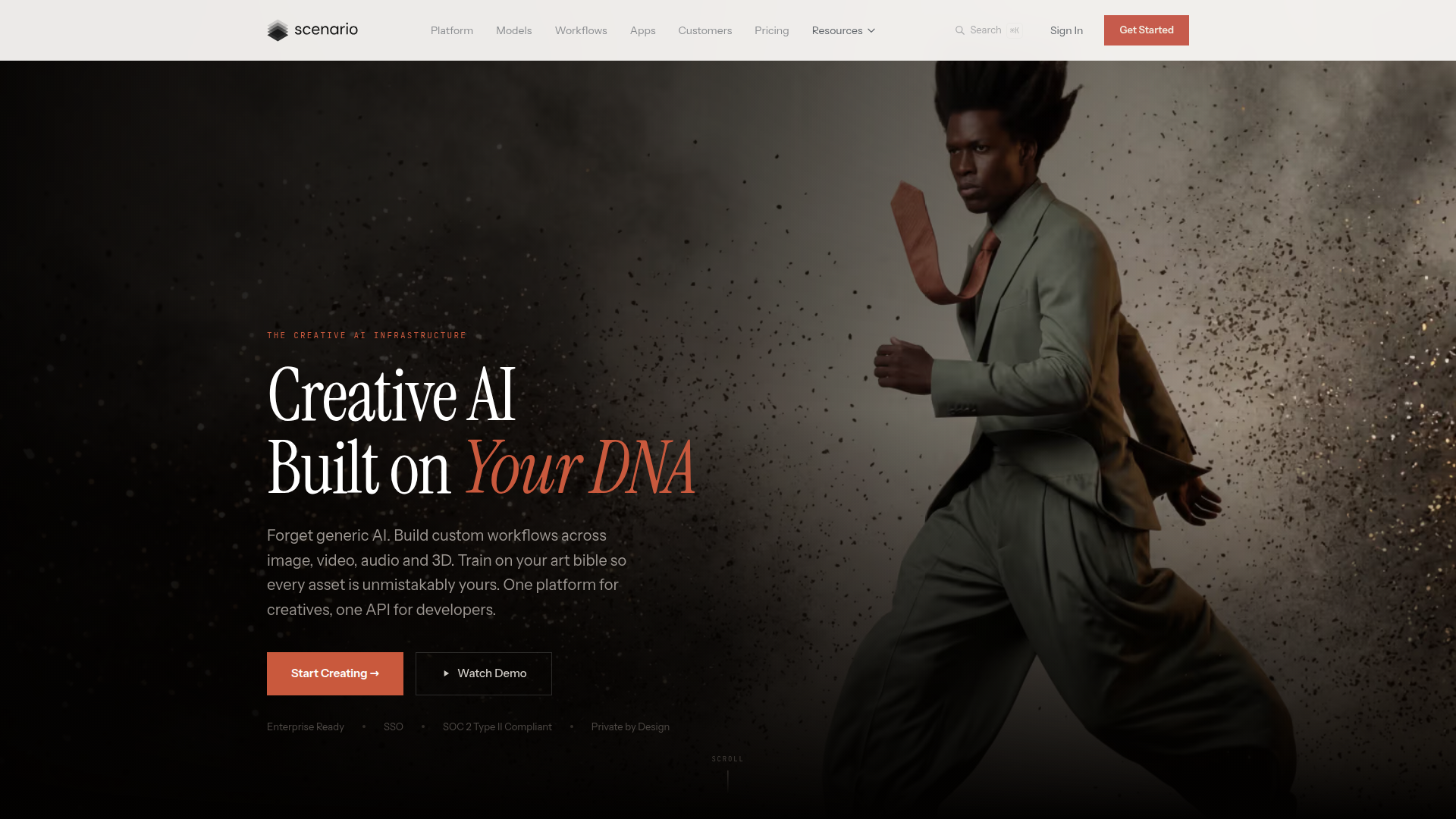
Scenario is a creative AI infrastructure platform for teams that need custom asset generation across image, video, audio, and 3D. It is built around the idea of training models on a company’s own visual references, style guides, or “art bible” so outputs remain aligned with a brand, game world, or creative system.
The product appears aimed at creative teams, marketers, game studios, e-commerce teams, and developers who need both hands-on creation tools and API-based production workflows. Its positioning is likely as a centralized layer for custom model training, access to many third-party AI models, and workflow automation that turns one-off prompting into repeatable production pipelines.
Features
- Custom model training on proprietary references — Teams can upload style references and visual libraries to train custom LoRA models that preserve a specific creative identity across outputs.
- Unified multi-model workspace — Scenario provides access to 500+ models from 50+ providers across image, video, 3D, and audio, reducing the need to manage separate tools.
- Visual workflow builder — A node-based editor lets users connect prompts, models, and post-processing steps into structured pipelines for repeatable asset production.
- Batch generation and reusable templates — Teams can scale production and share repeatable workflows internally, which is useful for high-volume creative operations.
- App creation from workflows — Complex workflows can be packaged into one-click internal apps, making advanced pipelines easier for non-technical teammates to use.
- API-first deployment model — Developers can connect Scenario workflows and agents into existing production stacks, supporting more automated or embedded creative operations.
Helpful Tips
- Evaluate consistency before breadth — If brand or character continuity matters, test the custom-trained model workflow first rather than starting with the full model library.
- Map asset pipelines by use case — Separate workflows for concepting, production, resizing, and localization can help teams avoid mixing exploratory and operational tasks.
- Check governance requirements early — Scenario highlights IP control, SSO/SAML, and SOC 2 Type II, so enterprise buyers should validate how those controls match internal security and creative approval processes.
- Use apps to widen adoption — Packaging validated workflows into simple apps is likely the best path for enabling marketers, producers, or designers who do not need to edit pipeline logic directly.
- Compare models systematically — Since the platform supports side-by-side evaluation and many providers, teams should define quality criteria upfront for speed, style fidelity, and editability.
OpenClaw Skills
Scenario could likely work well inside the OpenClaw ecosystem as the creative generation layer behind specialized agents and production skills. For example, OpenClaw could orchestrate a brand asset agent, game art variation agent, product imagery agent, or storyboard generation workflow that sends structured prompts and references into Scenario, then routes outputs into review, storage, and publishing systems. The page confirms API-first usage, but any direct OpenClaw integration would be an inferred use case rather than a stated native capability.
This combination could be especially useful for marketing, gaming, e-commerce, and content operations teams. An OpenClaw skill could likely automate intake from a campaign brief, choose the right Scenario workflow, generate on-brand variations, request human approval, and trigger downstream packaging for ads, product pages, social posts, or game pipelines. In practice, that could shift creative teams from manual prompt-by-prompt production toward governed, repeatable asset operations while keeping style control anchored in Scenario’s custom-trained models.
Embed Code
Share this AI tool on your website or blog by copying and pasting the code below. The embedded widget will automatically update with the latest information.
<iframe src="https://aimyflow.com/ai/scenario-com/embed" width="100%" height="400" frameborder="0"></iframe>
Explore Similar Tools
Versive
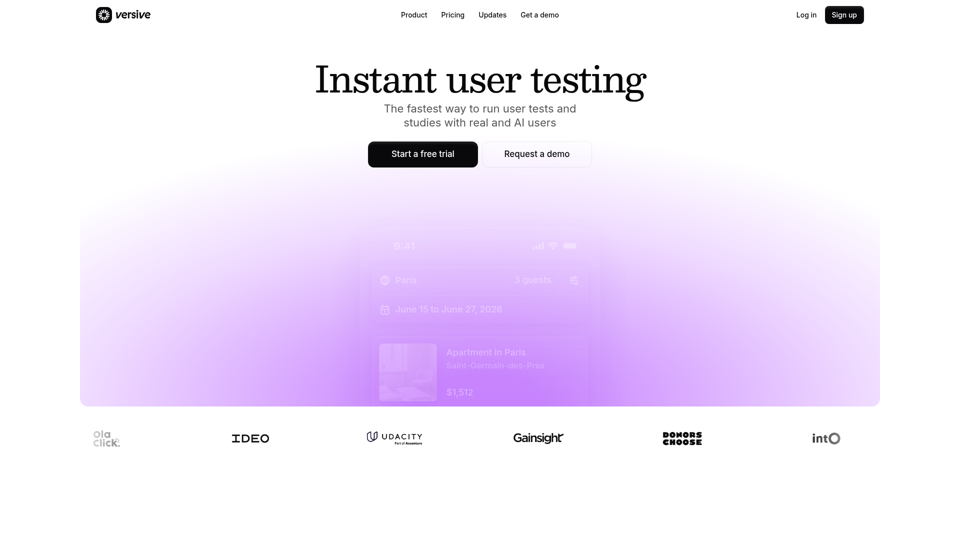
Versive is an AI-powered user research and testing platform that helps product teams design, run, and synthesize usability studies with real and simulated users, especially for product managers, UX researchers, and designers. In AI-assisted product development, it can help these teams validate interface decisions faster by generating transcripts, screenshots, summaries, and actionable recommendations in minutes.
Challenges | Test Your AI Prompting Skills
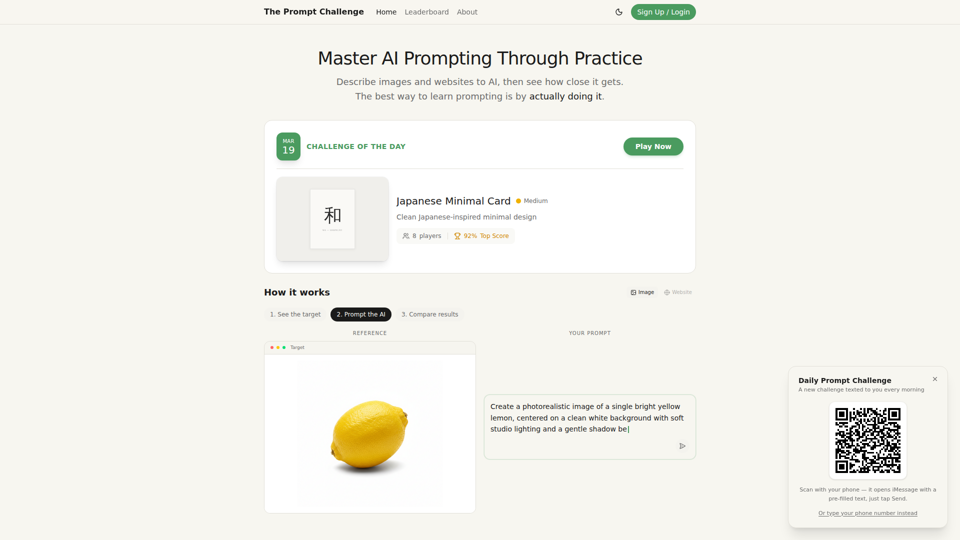
The Prompt Challenge is a practice platform that helps users improve AI prompting by describing images and websites, comparing AI-generated results to references, and competing on scores, mainly for people learning prompt engineering and hands-on AI creation. For designers, developers, and AI practitioners, this kind of repeatable prompt testing can sharpen instruction-writing skills and improve consistency when using generative tools for visual and interface work.
AI Infographic Generator
GraphicInfo is an AI infographic generator that helps users turn ideas and content into professional, customizable infographics quickly, mainly for creators and people producing website or social media content. In AI-driven content workflows, it can help marketers, content teams, and designers speed up visual asset creation while still refining text and images for specific brand needs.
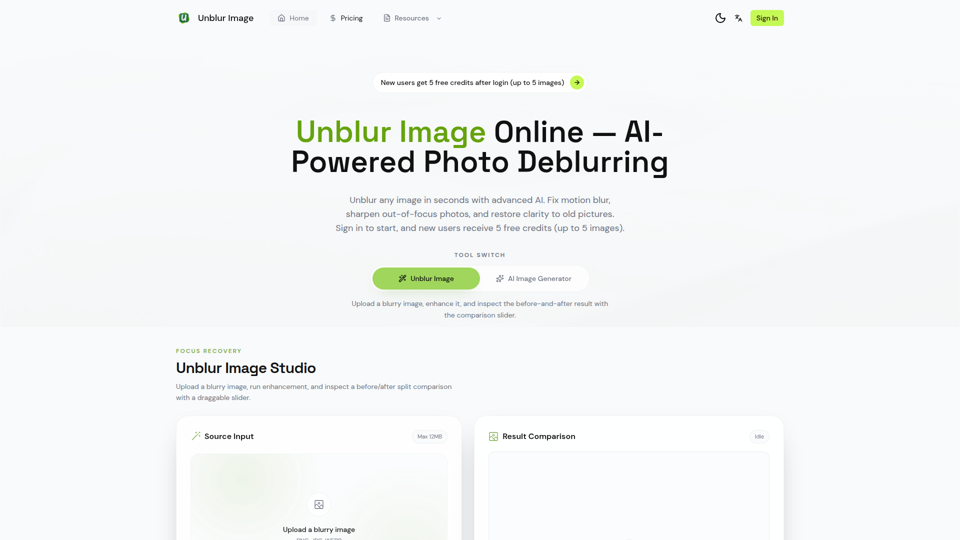
Unblur Image — Make Blurry Photos Clear with AI
Unblur Image is an AI-powered online photo deblurring tool that helps users fix motion blur, sharpen out-of-focus images, restore old photos, and improve text clarity, mainly for people who need quick image enhancement without manual editing skills. In AI-era workflows, it can help photographers, content teams, and document-heavy professionals recover usable visuals and readable assets faster from imperfect source images.
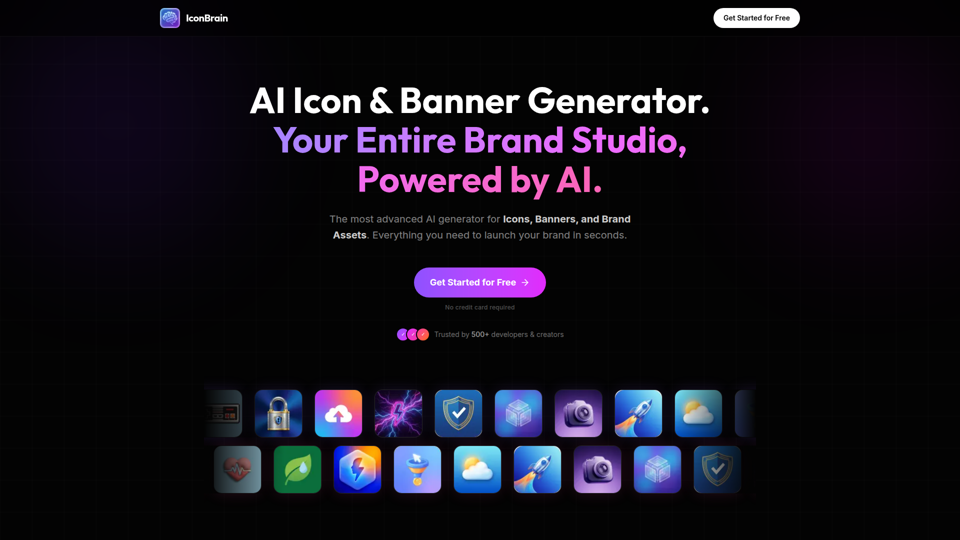
IconBrain | AI Icon Generator for Apps & Brands
IconBrain is an AI icon, banner, and brand asset generator that helps users create and edit production-ready visuals from text prompts or brand context, mainly for developers and creators launching apps or brands. For product, marketing, and design work, it can speed up early brand asset creation while helping teams keep visual styles more consistent across platforms.
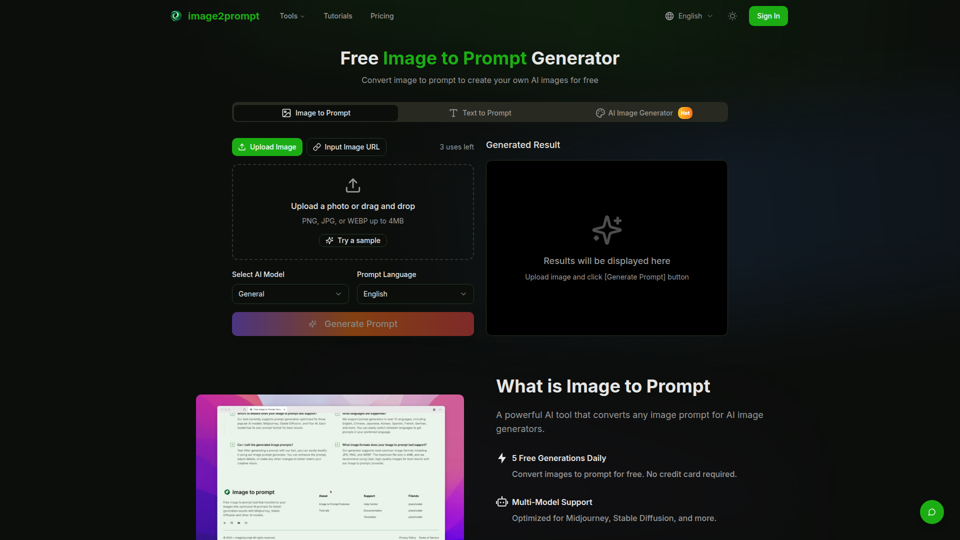
Free Image to Prompt Generator - image2prompt.net
image2prompt.net is a free AI image-to-prompt generator that analyzes uploaded images or image URLs and turns them into editable prompts for Midjourney, Stable Diffusion, Flux, and similar models, mainly for AI artists, designers, and creators. For creative professionals, it can speed prompt drafting, support style consistency, and reduce manual prompt rewriting across different image generation workflows.

UXCanvas.ai | AI UI/UX Design Agent — Describe It, Design It
UXCanvas.ai is an AI UI/UX design agent that helps users turn text prompts into production-ready interface designs, iterate through chat, and export to Figma or React code, mainly for designers and developers. For UI/UX and product teams, it can shorten the path from concept to handoff by turning rough ideas into structured specs, reusable components, and code-ready assets.
AI HD Anime: Your Ultimate Choice for Upscaling Anime Images
AI HD Anime is a free online AI image upscaling tool that enhances anime and manga images with higher clarity and restored detail, mainly for anime fans. In AI-assisted creative and archival workflows, it can help illustrators, editors, and community curators quickly improve low-resolution anime visuals for review, sharing, or preservation.