
GET3D: A Generative Model of High Quality 3D Textured Shapes Learned from Images
Rate this Tool
Average Score
Total Votes
Select your score (1-10):
Detail Information
What
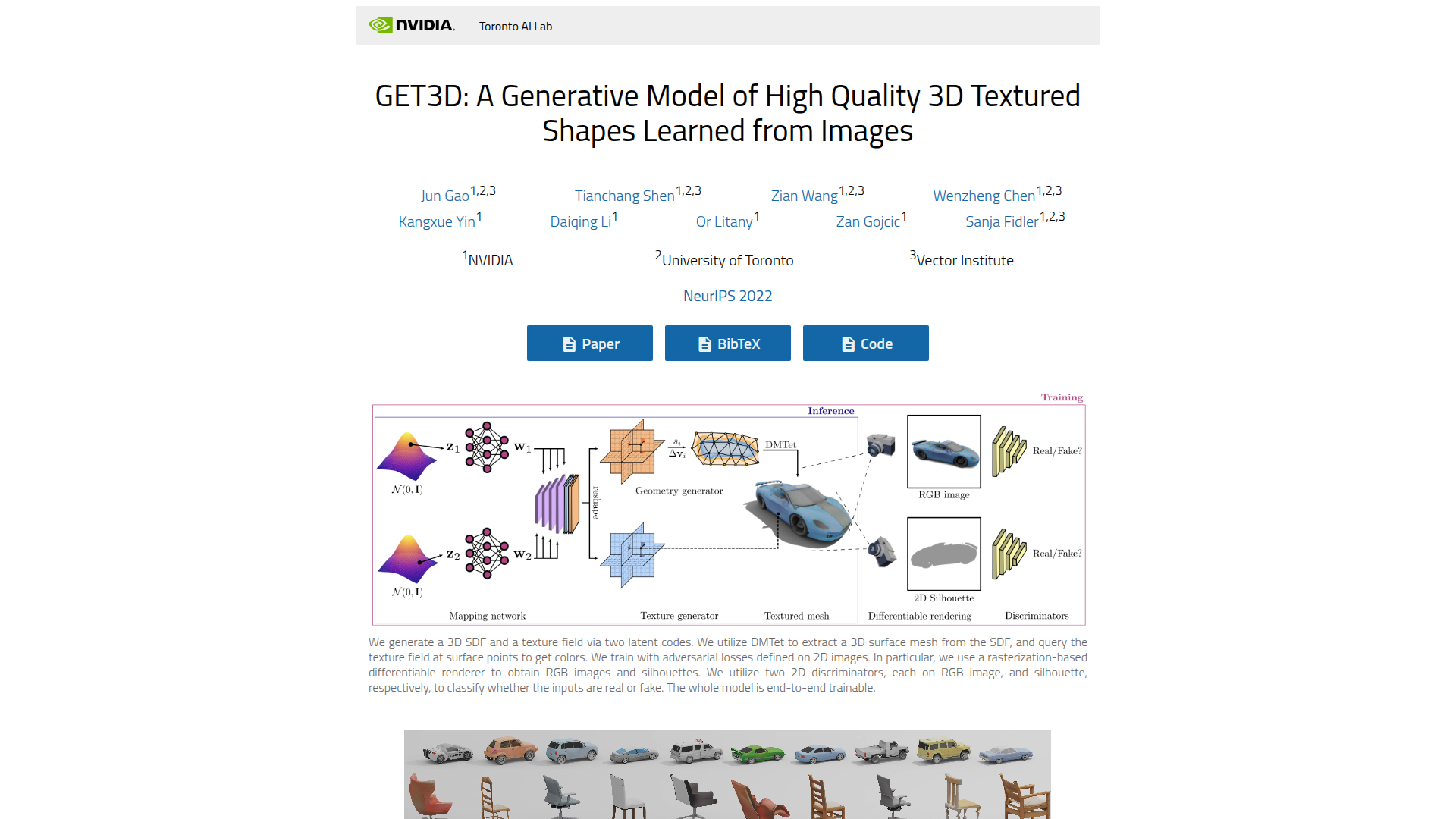
GET3D is a research model from NVIDIA, the University of Toronto, and the Vector Institute for generating explicit 3D textured meshes from 2D image collections. It is designed for teams that need scalable 3D asset creation, especially where assets must be directly usable in standard 3D rendering engines rather than confined to neural rendering pipelines.
The core workflow combines a 3D signed distance field, a texture field, DMTet-based mesh extraction, and differentiable rendering with adversarial training on RGB images and silhouettes. Based on the page, GET3D is best understood as a high-end generative 3D research system for content creation and experimentation in areas such as virtual worlds, graphics, and 3D asset generation, rather than a packaged commercial application.
Features
- Direct generation of textured 3D meshes — Produces explicit meshes with textures, making outputs more practical for downstream rendering workflows than methods that only synthesize images or implicit neural representations.
- Training from 2D image collections — Learns 3D shape and texture without requiring 3D-supervised training data on the page, which can reduce dependence on costly 3D asset datasets.
- Support for complex topology and fine detail — The project highlights arbitrary topology, detailed geometry, and high-fidelity textures across categories such as cars, chairs, animals, motorbikes, humans, and buildings.
- Disentangled geometry and texture latent codes — Separates shape and appearance control, enabling users to vary texture while keeping geometry fixed, or vice versa.
- Meaningful latent interpolation and local variation — Demonstrates smooth transitions between shapes and localized perturbations, which is useful for exploring design spaces and generating related asset variants.
- Research extensions for materials and text guidance — The page shows unsupervised material generation with DIBR++ and text-guided shape generation via CLIP-based fine-tuning, though these appear to be research demonstrations rather than baseline native product features.
Helpful Tips
- Treat GET3D as a research foundation, not a turnkey production suite — The page provides paper, code, and demos, but does not describe deployment tooling, asset management, or enterprise workflow features.
- Validate output quality by category — Results shown are strong across several object classes, but practical performance will likely depend on how close a target domain is to the demonstrated training distributions.
- Plan for post-generation asset review — Even when meshes are directly consumable, production teams will typically still need QA for topology cleanliness, texture consistency, rigging readiness, and style alignment.
- Use disentangled controls for structured asset exploration — Separate geometry and texture codes are especially useful when building asset libraries that need controlled variation rather than purely random generation.
- Check licensing and commercialization paths early — The page routes business inquiries to NVIDIA Research Licensing, which suggests commercial usage terms may need review before adoption.
OpenClaw Skills
Within an OpenClaw ecosystem, GET3D would likely fit as a specialized generative asset engine inside broader 3D content workflows. Likely OpenClaw skills could include prompt-to-asset experiment orchestration, dataset preparation for category-specific training, batch generation of mesh candidates, latent-space exploration agents, and review workflows that compare outputs by geometry, texture, or class-specific constraints. The page does not state a native OpenClaw integration, so this should be viewed as a likely workflow pattern rather than a confirmed capability.
Combined with OpenClaw agents, GET3D could help studios, simulation teams, and industrial design groups move from manual asset creation toward semi-automated 3D asset pipelines. For example, one agent could generate controlled variants of chairs or vehicles, another could score outputs for visual diversity and mesh usability, and another could route selected assets into rendering or game-engine preparation. In industries building large virtual environments, this combination could shift work from one-off modeling toward curated generation, review, and refinement at scale.
Embed Code
Share this AI tool on your website or blog by copying and pasting the code below. The embedded widget will automatically update with the latest information.
<iframe src="https://aimyflow.com/ai/nv-tlabs-github-io-GET3D/embed" width="100%" height="400" frameborder="0"></iframe>
Explore Similar Tools
Versive
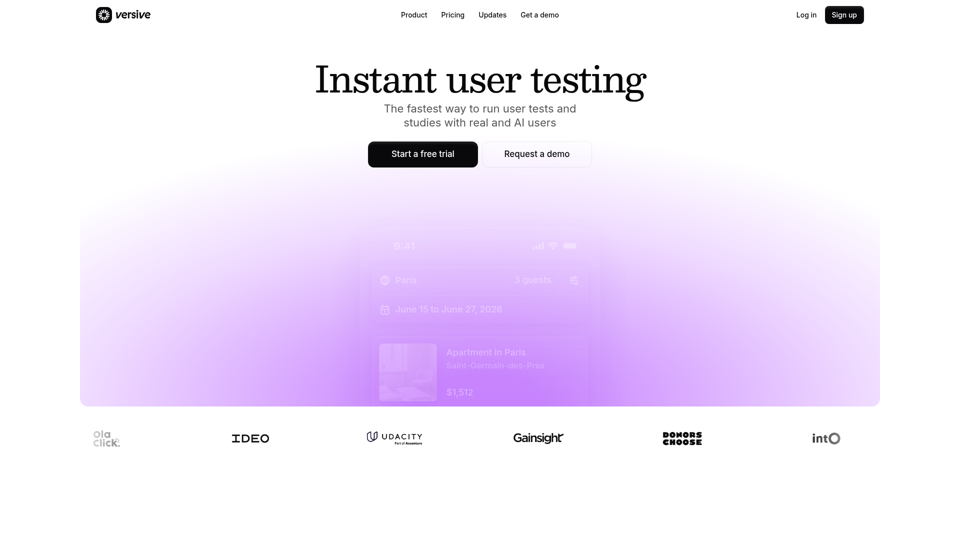
Versive is an AI-powered user research and testing platform that helps product teams design, run, and synthesize usability studies with real and simulated users, especially for product managers, UX researchers, and designers. In AI-assisted product development, it can help these teams validate interface decisions faster by generating transcripts, screenshots, summaries, and actionable recommendations in minutes.
Challenges | Test Your AI Prompting Skills
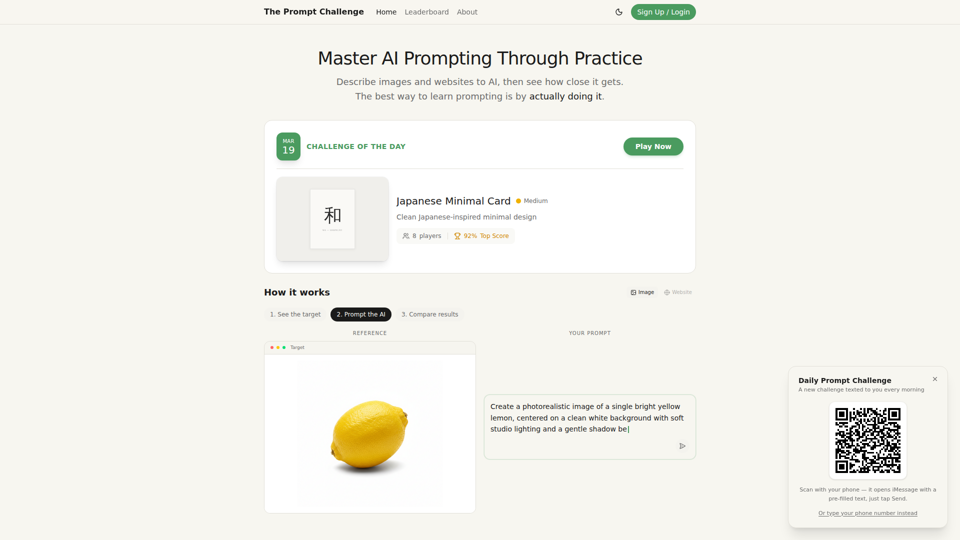
The Prompt Challenge is a practice platform that helps users improve AI prompting by describing images and websites, comparing AI-generated results to references, and competing on scores, mainly for people learning prompt engineering and hands-on AI creation. For designers, developers, and AI practitioners, this kind of repeatable prompt testing can sharpen instruction-writing skills and improve consistency when using generative tools for visual and interface work.
AI Infographic Generator
GraphicInfo is an AI infographic generator that helps users turn ideas and content into professional, customizable infographics quickly, mainly for creators and people producing website or social media content. In AI-driven content workflows, it can help marketers, content teams, and designers speed up visual asset creation while still refining text and images for specific brand needs.
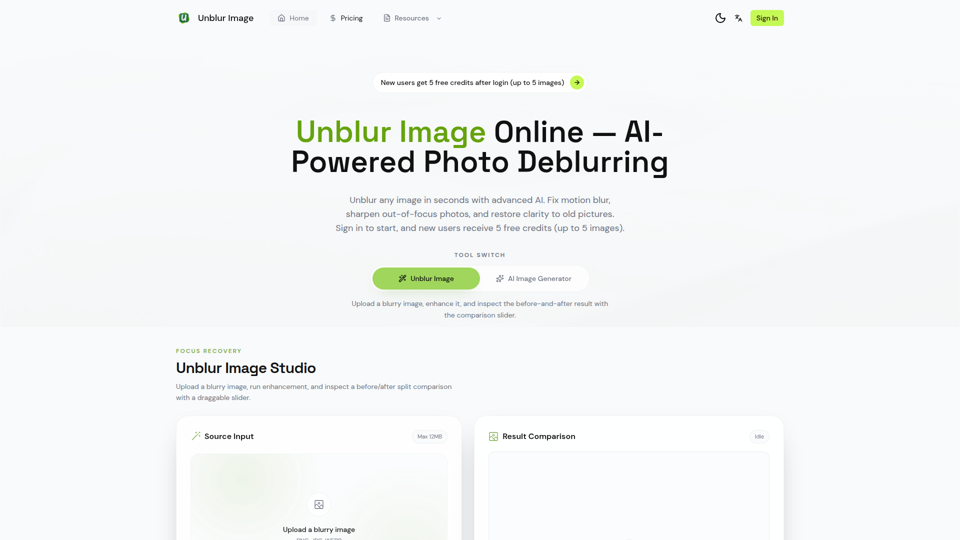
Unblur Image — Make Blurry Photos Clear with AI
Unblur Image is an AI-powered online photo deblurring tool that helps users fix motion blur, sharpen out-of-focus images, restore old photos, and improve text clarity, mainly for people who need quick image enhancement without manual editing skills. In AI-era workflows, it can help photographers, content teams, and document-heavy professionals recover usable visuals and readable assets faster from imperfect source images.
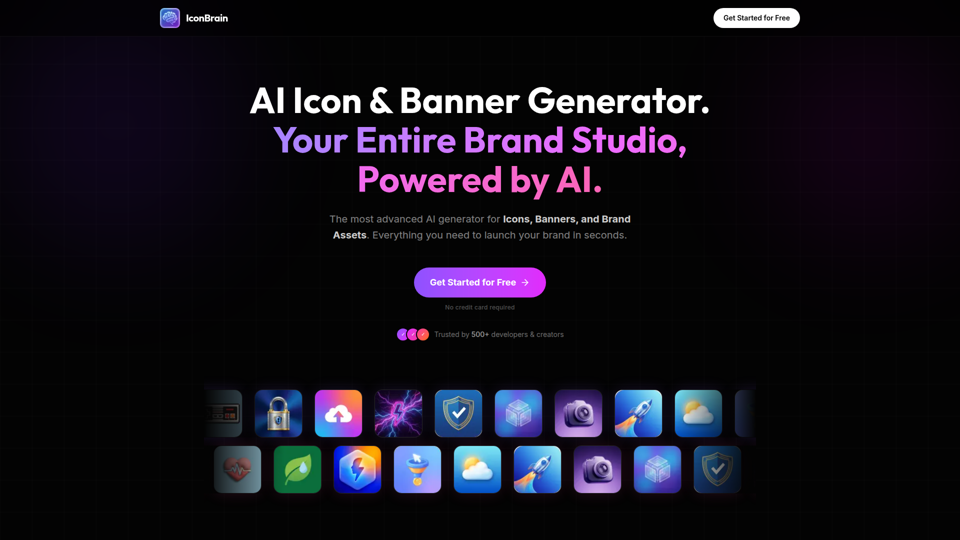
IconBrain | AI Icon Generator for Apps & Brands
IconBrain is an AI icon, banner, and brand asset generator that helps users create and edit production-ready visuals from text prompts or brand context, mainly for developers and creators launching apps or brands. For product, marketing, and design work, it can speed up early brand asset creation while helping teams keep visual styles more consistent across platforms.
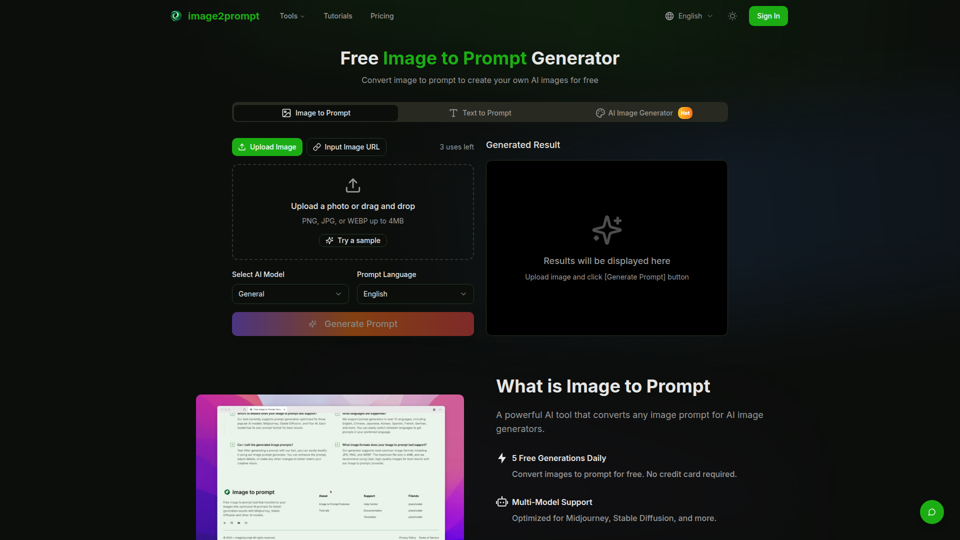
Free Image to Prompt Generator - image2prompt.net
image2prompt.net is a free AI image-to-prompt generator that analyzes uploaded images or image URLs and turns them into editable prompts for Midjourney, Stable Diffusion, Flux, and similar models, mainly for AI artists, designers, and creators. For creative professionals, it can speed prompt drafting, support style consistency, and reduce manual prompt rewriting across different image generation workflows.

UXCanvas.ai | AI UI/UX Design Agent — Describe It, Design It
UXCanvas.ai is an AI UI/UX design agent that helps users turn text prompts into production-ready interface designs, iterate through chat, and export to Figma or React code, mainly for designers and developers. For UI/UX and product teams, it can shorten the path from concept to handoff by turning rough ideas into structured specs, reusable components, and code-ready assets.
AI HD Anime: Your Ultimate Choice for Upscaling Anime Images
AI HD Anime is a free online AI image upscaling tool that enhances anime and manga images with higher clarity and restored detail, mainly for anime fans. In AI-assisted creative and archival workflows, it can help illustrators, editors, and community curators quickly improve low-resolution anime visuals for review, sharing, or preservation.