
Luminal - Inference at the Speed of Light
Rate this Tool
Average Score
Total Votes
Select your score (1-10):
Detail Information
What
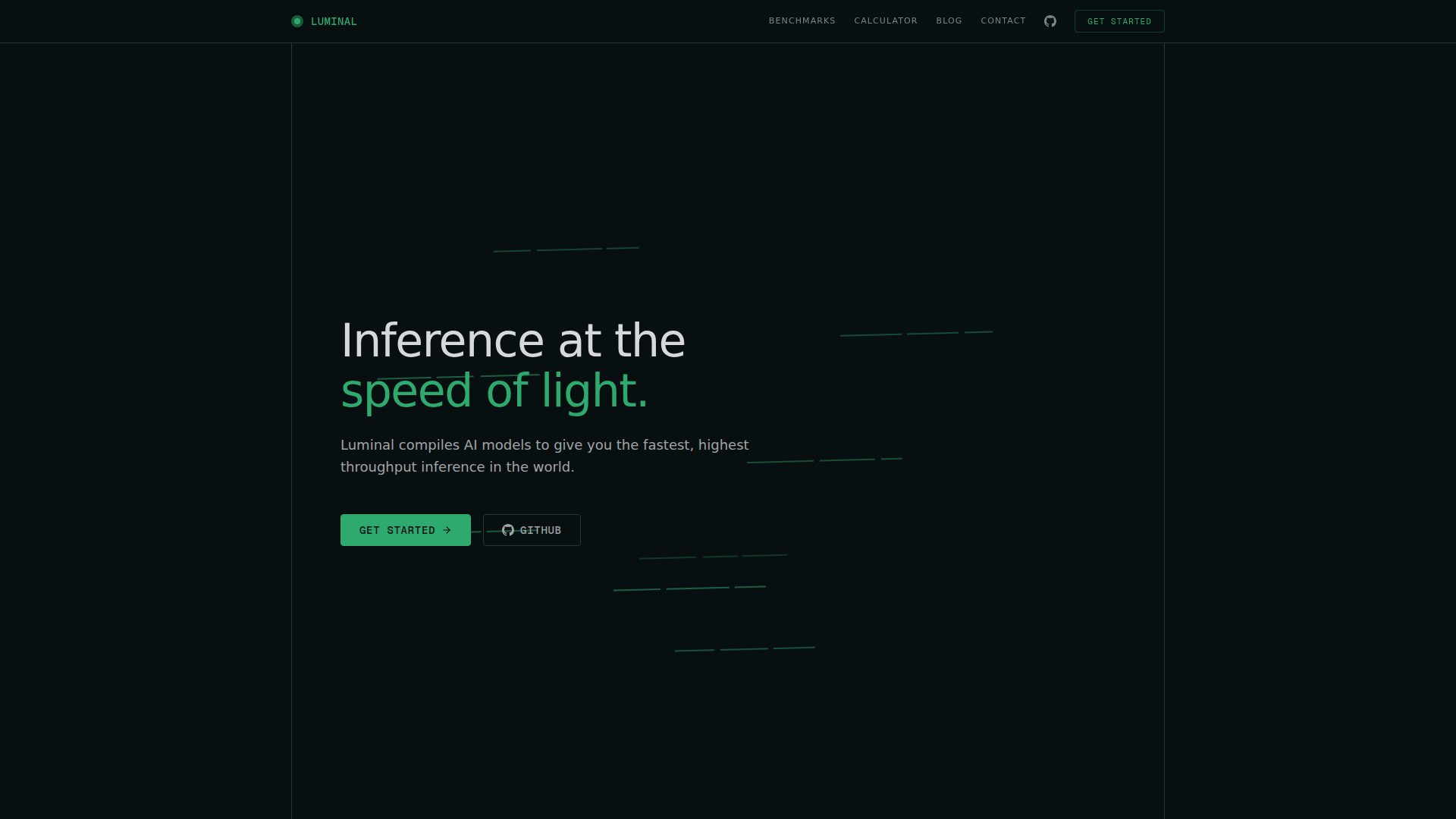
Luminal is an AI inference platform built around a compiler-first approach. Instead of relying on runtime engines that interpret models dynamically, it compiles models from frameworks such as PyTorch and Hugging Face into optimized native code for GPUs and ASICs to reduce overhead and increase throughput.
The product appears aimed at teams running production inference workloads that care about latency, utilization, and infrastructure efficiency, from single accelerators to large heterogeneous clusters. Its positioning is likely a high-performance inference layer for organizations that need faster model serving, dynamic scheduling, and flexible deployment through either a managed cloud service or on-prem infrastructure.
Features
- Ahead-of-time model compilation — Converts models into optimized native GPU kernels or ASIC instructions, which reduces runtime interpretation overhead.
- Graph-level intermediate representation — Lowers models into a minimal dataflow graph, helping remove framework overhead before optimization and execution.
- Hardware-aware optimization passes — Applies fusion, tiling, memory planning, and scheduling tuned to specific targets, improving performance on GPUs and ASICs.
- Heterogeneous compute orchestration — Runs inference across CPUs, GPUs, and ASICs, which can improve throughput and infrastructure utilization in mixed environments.
- Dynamic load balancing and scaling — Monitors node utilization, redistributes work in real time, and boots or shuts down nodes as demand changes.
- Flexible deployment options — Offers managed serverless inference endpoints in Luminal Cloud and licensed cloud or on-prem deployment for teams needing more infrastructure control.
Helpful Tips
- Validate benchmark fit carefully — The site reports strong benchmark gains, but buyers should confirm performance on their own models, sequence lengths, batching patterns, and hardware mix.
- Assess model compilation workflow early — Since Luminal is compiler-centric, implementation planning should include model compatibility, compile times, and how often models change in production.
- Map the scheduling value to your topology — The biggest operational benefit is likely for teams managing multiple accelerators or heterogeneous clusters rather than very simple single-node setups.
- Review deployment tradeoffs by operating model — Serverless may suit variable workloads, while on-prem or licensed deployment may better fit organizations needing infrastructure control and dedicated support.
- Clarify ASIC support details during evaluation — The site states GPU and ASIC targeting, but it does not specify supported vendors or device classes on this page.
OpenClaw Skills
Luminal could likely fit well into an OpenClaw ecosystem as the high-performance execution layer behind AI-heavy workflows. Likely use cases include OpenClaw skills that route requests to the right compiled model endpoint, manage workload-aware inference policies, or coordinate multi-agent pipelines where some agents need low-latency generation and others need high-throughput batch execution.
In a broader workflow design, OpenClaw could build agents for inference capacity planning, performance regression monitoring, deployment validation, and intelligent traffic shaping across Luminal-backed clusters. If connected in this way, the combination could help ML platform teams, AI infrastructure engineers, and enterprise AI operations groups move from manually tuned serving stacks toward more autonomous inference operations, though the page does not confirm any native OpenClaw integration.
Embed Code
Share this AI tool on your website or blog by copying and pasting the code below. The embedded widget will automatically update with the latest information.
<iframe src="https://aimyflow.com/ai/luminal-com/embed" width="100%" height="400" frameborder="0"></iframe>
Explore Similar Tools

Free AI Photo Editor: Edit & Generate Image Online | Pokecut
Pokecut is an AI photo editor that helps users remove backgrounds, enhance images, and generate visuals online, mainly for ecommerce sellers, marketers, and creators who need quick design-ready assets. It speeds up routine image production so visual teams can create polished content with less manual editing.

Roboflow: Computer vision tools for developers and enterprises
Roboflow is a computer vision platform that helps developers, machine learning engineers, and enterprises annotate data, train models, build workflows, and deploy vision AI for images, video, and real-time streams. In AI-driven operations, it can help computer vision and ML teams move faster from prototype to production by combining data labeling, model training, and deployment in one workflow.

Seedance 2.0
Seedance 2.0 is ByteDance's AI video generation model designed to create high-quality videos from prompts and multimodal inputs, mainly for creators, developers, and media teams. In the AI era, it helps visual content roles turn ideas into production-ready motion assets with far less manual editing effort.
Struct | Automate your on-call runbook
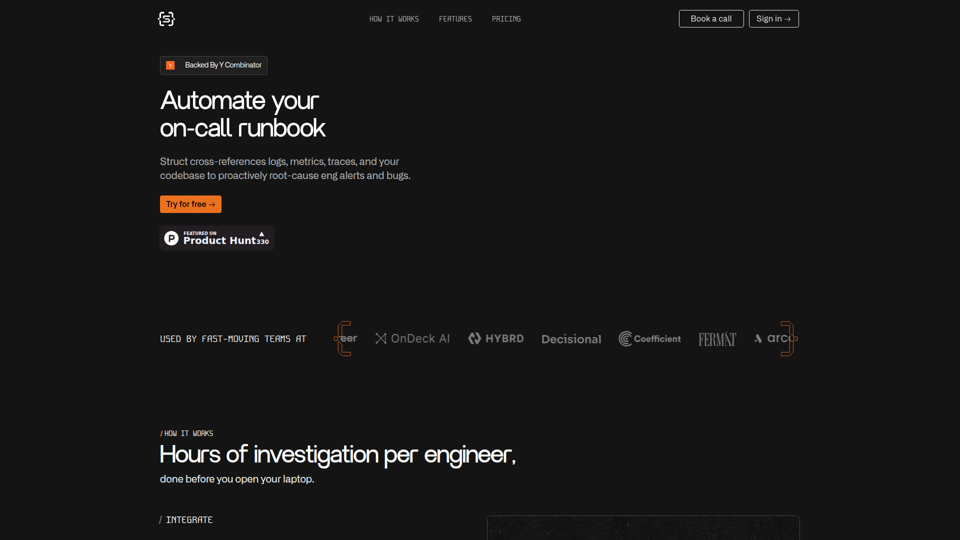
Struct is an AI on-call agent that investigates engineering alerts and bugs by analyzing logs, metrics, traces, and codebases, mainly for software engineers and SRE teams. In the AI era, it helps incident responders shorten triage time by delivering root-cause findings and suggested fixes directly in workflows.

GitMind Chat - Your Best AI Assistant
GitMind Chat is an AI assistant and chatbot platform that helps individuals and enterprises handle conversations, analysis, writing, coding, translation, customer service, and custom AI agent creation through prebuilt or configurable assistants. For roles such as marketers, analysts, support teams, educators, and developers, it can streamline repetitive knowledge work by combining chat, file and link inputs, image analysis, and contextual responses in one workflow.
GitPage AI Website Builder | GitPage
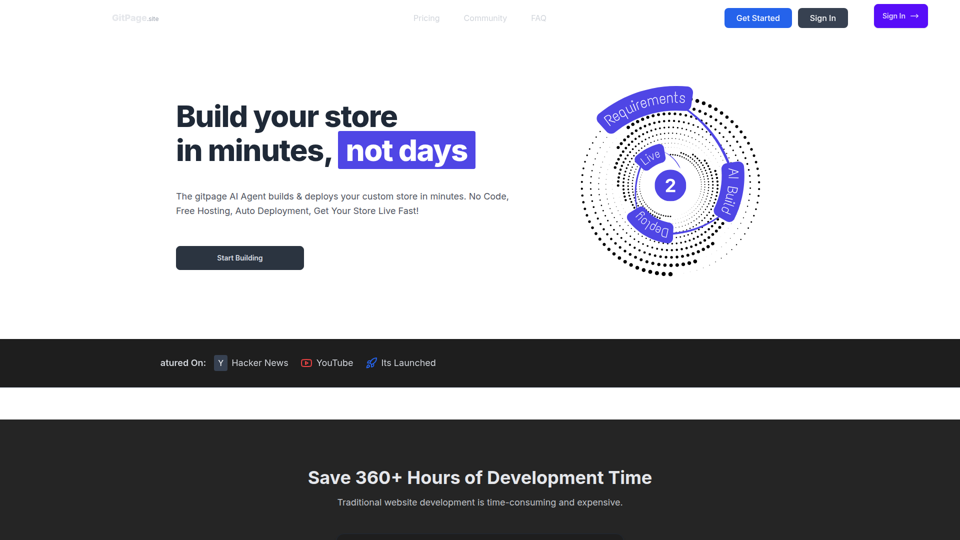
GitPage is an AI website builder that generates and deploys websites, online stores, and landing pages from a form, mainly for freelancers, agencies, startups, and businesses that want no-code site creation with code ownership. For web professionals and client-service teams, it can reduce manual setup and content drafting by automating page generation, blog content, and deployment to GitHub or GitLab Pages.

Rohan Mehta
Rohan Mehta is a personal website for a New York–based software engineer at OpenAI, outlining his background at Meta and as a YC-backed startup founder, and highlighting his creator role behind the Subway Time NYC transit app. For software engineers and technical hiring teams, this kind of concise profile helps AI-era talent evaluation by quickly surfacing relevant build, scale, and product experience.
Fabricate - AI Full-Stack App Builder | Build Anything, Ship Faster
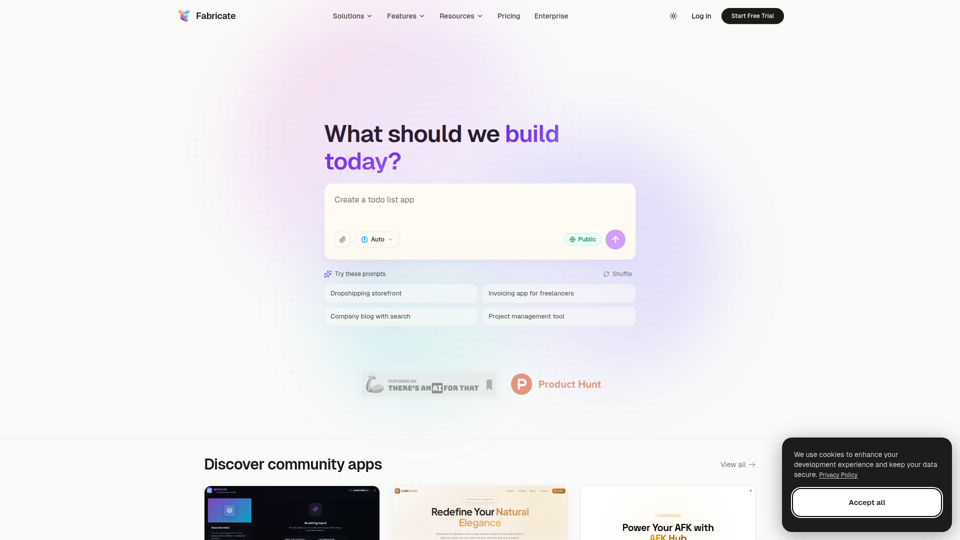
Fabricate is an AI full-stack app builder that helps users describe an app idea and generate production-ready web applications, mainly for founders, developers, designers, freelancers, agencies, and enterprises. In AI-assisted product development, it can help these teams move faster from concept to deployable React, TypeScript, and backend code with less manual setup.