
Linkly AI - Local Document Search Engine Built for AI Agents, AI-Native Local Full-Text Search | Linkly AI
Rate this Tool
Average Score
Total Votes
Select your score (1-10):
Detail Information
What
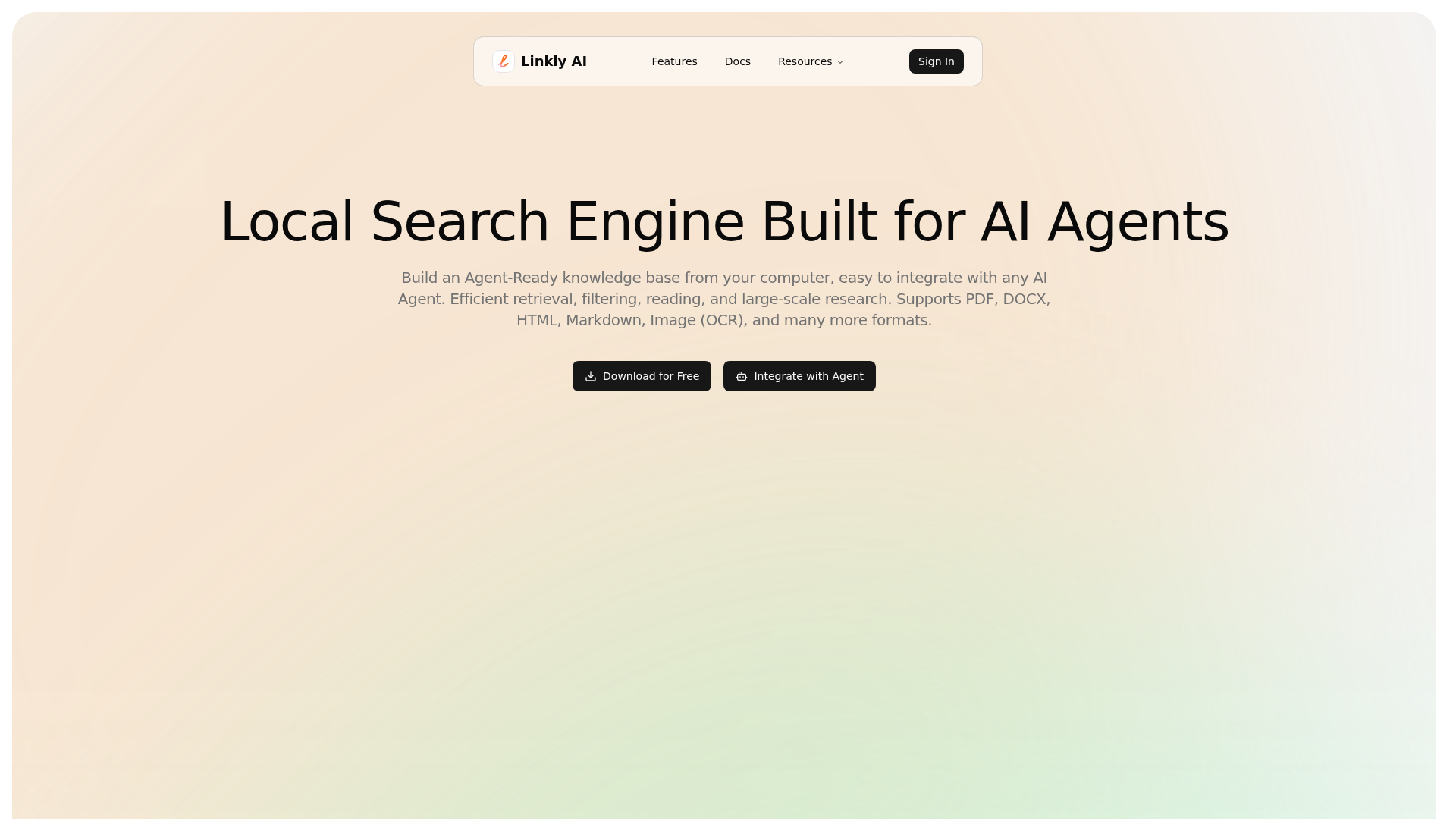
Linkly AI is a local full-text and semantic document search engine built to make files on a computer usable by AI agents and assistants. It appears aimed at knowledge workers, researchers, developers, and other users who need fast access to large personal or work document collections without uploading files to the cloud.
The product indexes local documents, supports multiple file types, and lets users search by keywords or descriptive natural-language queries. Its positioning is clearly AI-agent-first: beyond human search, it provides agent-facing tools, CLI access, MCP support, and document outline indexing so AI systems can retrieve and read relevant sections more purposefully.
Features
- Local document indexing — Builds a searchable knowledge base from files on your computer so document retrieval can happen without sending files to external servers.
- Semantic and fuzzy search — Supports keyword and descriptive-sentence queries, helping users find documents even when exact filenames or phrases are unknown.
- Multi-format document support — Works with PDF, DOCX, HTML, Markdown, images via OCR, and other formats, which is useful for mixed personal or project archives.
- AI agent integration via CLI and MCP — Exposes documents to AI assistants through dedicated tools and integration methods designed for agent workflows.
- Outline-based document reading — Creates outlines for documents so AI can focus on relevant sections instead of processing entire long files indiscriminately.
- Cross-language search — Uses a local multilingual model to support semantic search across many languages, which can help with multilingual document collections.
Helpful Tips
- Validate retrieval quality on your own corpus — Semantic search quality depends on document variety, language mix, and scan quality, so testing with representative files is important before broader rollout.
- Review OCR-heavy content separately — Image-based documents may be searchable through OCR, but practical accuracy will likely vary with scan clarity and layout complexity.
- Define what AI assistants are allowed to access — Because the product progressively exposes local documents to agents, teams should establish clear folder and document-scope rules before deployment.
- Assess MCP or CLI fit based on your environment — MCP may suit broader agent ecosystems, while CLI-based workflows may be simpler for technical users managing local automation.
- Use it where local-first handling matters — The strongest documented advantage is on-device document handling, so it is especially relevant where cloud upload is undesirable.
OpenClaw Skills
Linkly AI is a strong candidate for OpenClaw workflows that need grounded access to local documents. A likely use case would be an OpenClaw research agent that searches a user’s local knowledge base, reads only the most relevant sections through Linkly AI’s outline index, and then produces summaries, comparisons, or project briefs. The website explicitly mentions CLI, MCP, and official skills for agent use, which suggests a practical foundation for agent-driven retrieval workflows, even though specific OpenClaw-native integration is not stated.
Within the OpenClaw ecosystem, likely skills could include local policy lookup, meeting-note recall, technical documentation comparison, multilingual evidence gathering, and document-backed drafting. For professions such as legal operations, software engineering, consulting, or research, this combination could shift work from manual file hunting toward agent-assisted analysis grounded in local source material. That benefit is an inferred workflow advantage rather than a confirmed packaged integration.
Embed Code
Share this AI tool on your website or blog by copying and pasting the code below. The embedded widget will automatically update with the latest information.
<iframe src="https://aimyflow.com/ai/linkly-ai/embed" width="100%" height="400" frameborder="0"></iframe>
Explore Similar Tools
Free AI Photo Editor: Edit & Generate Image Online | Pokecut
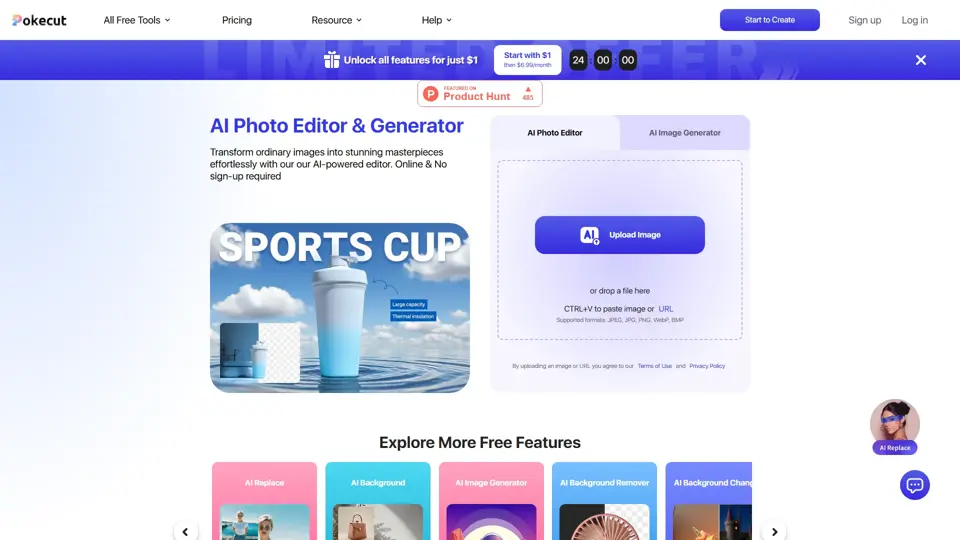
Pokecut is an AI photo editor that helps users remove backgrounds, enhance images, and generate visuals online, mainly for ecommerce sellers, marketers, and creators who need quick design-ready assets. It speeds up routine image production so visual teams can create polished content with less manual editing.
Roboflow: Computer vision tools for developers and enterprises
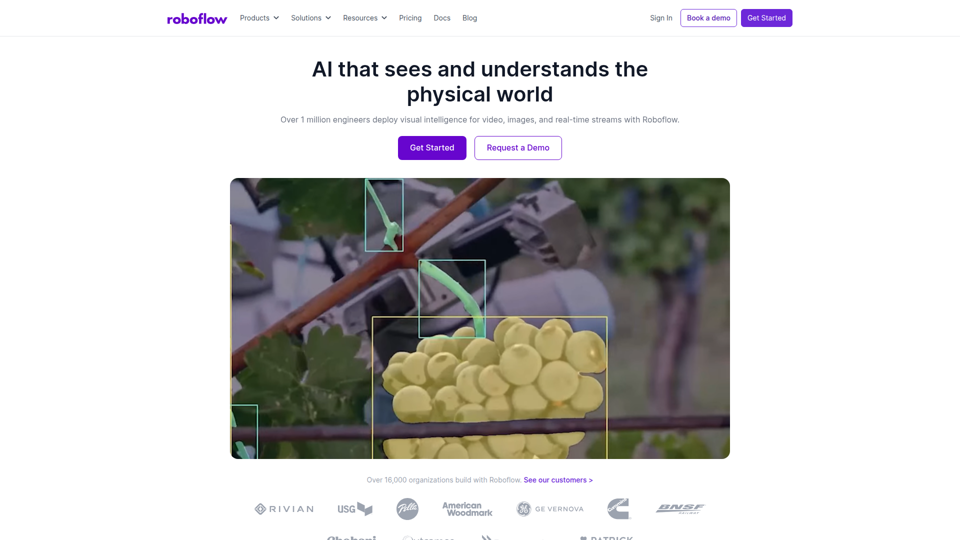
Roboflow is a computer vision platform that helps developers, machine learning engineers, and enterprises annotate data, train models, build workflows, and deploy vision AI for images, video, and real-time streams. In AI-driven operations, it can help computer vision and ML teams move faster from prototype to production by combining data labeling, model training, and deployment in one workflow.

Seedance 2.0
Seedance 2.0 is ByteDance's AI video generation model designed to create high-quality videos from prompts and multimodal inputs, mainly for creators, developers, and media teams. In the AI era, it helps visual content roles turn ideas into production-ready motion assets with far less manual editing effort.
Struct | Automate your on-call runbook
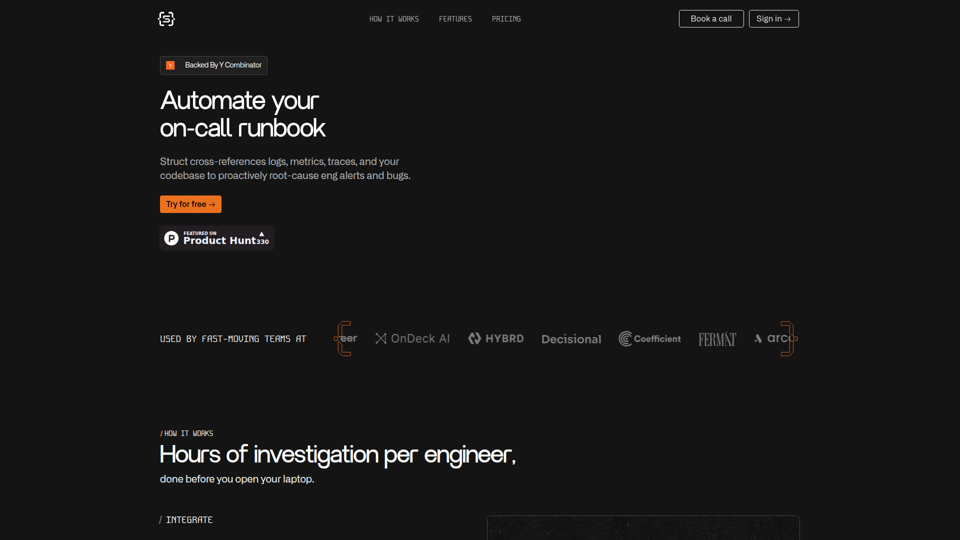
Struct is an AI on-call agent that investigates engineering alerts and bugs by analyzing logs, metrics, traces, and codebases, mainly for software engineers and SRE teams. In the AI era, it helps incident responders shorten triage time by delivering root-cause findings and suggested fixes directly in workflows.
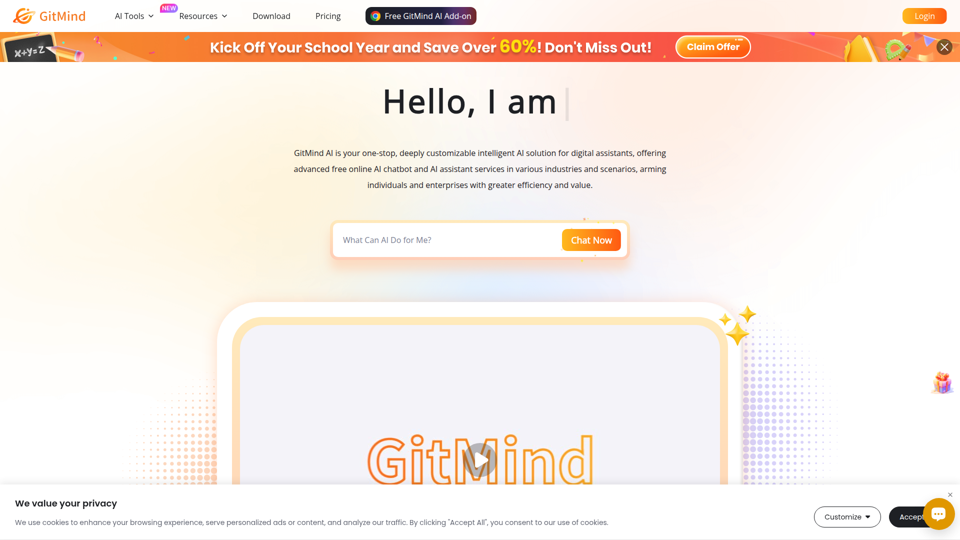
GitMind Chat - Your Best AI Assistant
GitMind Chat is an AI assistant and chatbot platform that helps individuals and enterprises handle conversations, analysis, writing, coding, translation, customer service, and custom AI agent creation through prebuilt or configurable assistants. For roles such as marketers, analysts, support teams, educators, and developers, it can streamline repetitive knowledge work by combining chat, file and link inputs, image analysis, and contextual responses in one workflow.
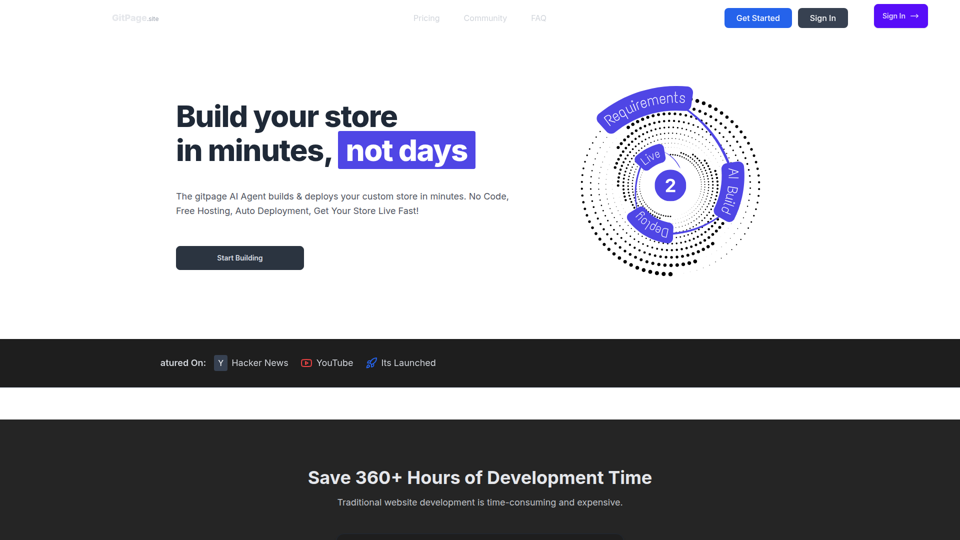
GitPage AI Website Builder | GitPage
GitPage is an AI website builder that generates and deploys websites, online stores, and landing pages from a form, mainly for freelancers, agencies, startups, and businesses that want no-code site creation with code ownership. For web professionals and client-service teams, it can reduce manual setup and content drafting by automating page generation, blog content, and deployment to GitHub or GitLab Pages.

Rohan Mehta
Rohan Mehta is a personal website for a New York–based software engineer at OpenAI, outlining his background at Meta and as a YC-backed startup founder, and highlighting his creator role behind the Subway Time NYC transit app. For software engineers and technical hiring teams, this kind of concise profile helps AI-era talent evaluation by quickly surfacing relevant build, scale, and product experience.
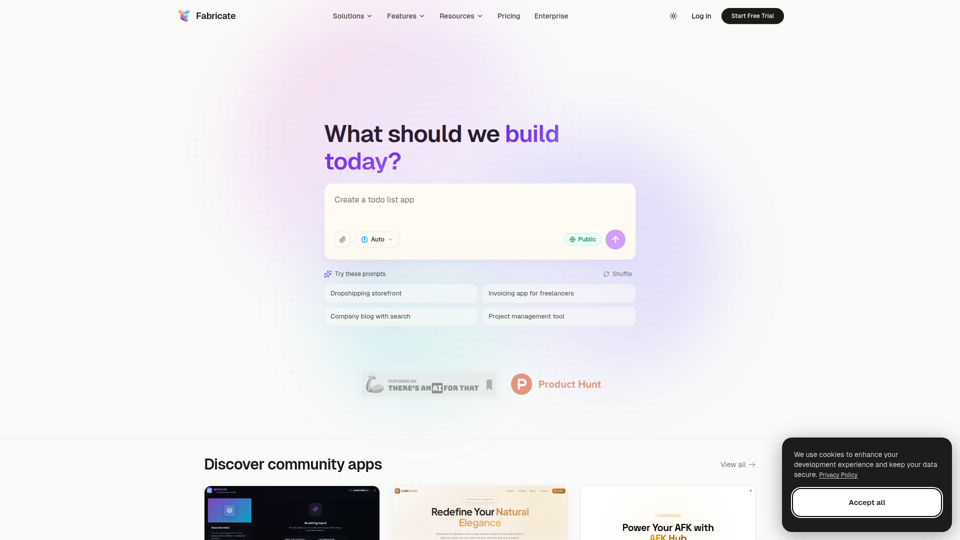
Fabricate - AI Full-Stack App Builder | Build Anything, Ship Faster
Fabricate is an AI full-stack app builder that helps users describe an app idea and generate production-ready web applications, mainly for founders, developers, designers, freelancers, agencies, and enterprises. In AI-assisted product development, it can help these teams move faster from concept to deployable React, TypeScript, and backend code with less manual setup.