
Komos – AI That Runs Your Repetitive Work
Rate this Tool
Average Score
Total Votes
Select your score (1-10):
Detail Information
What
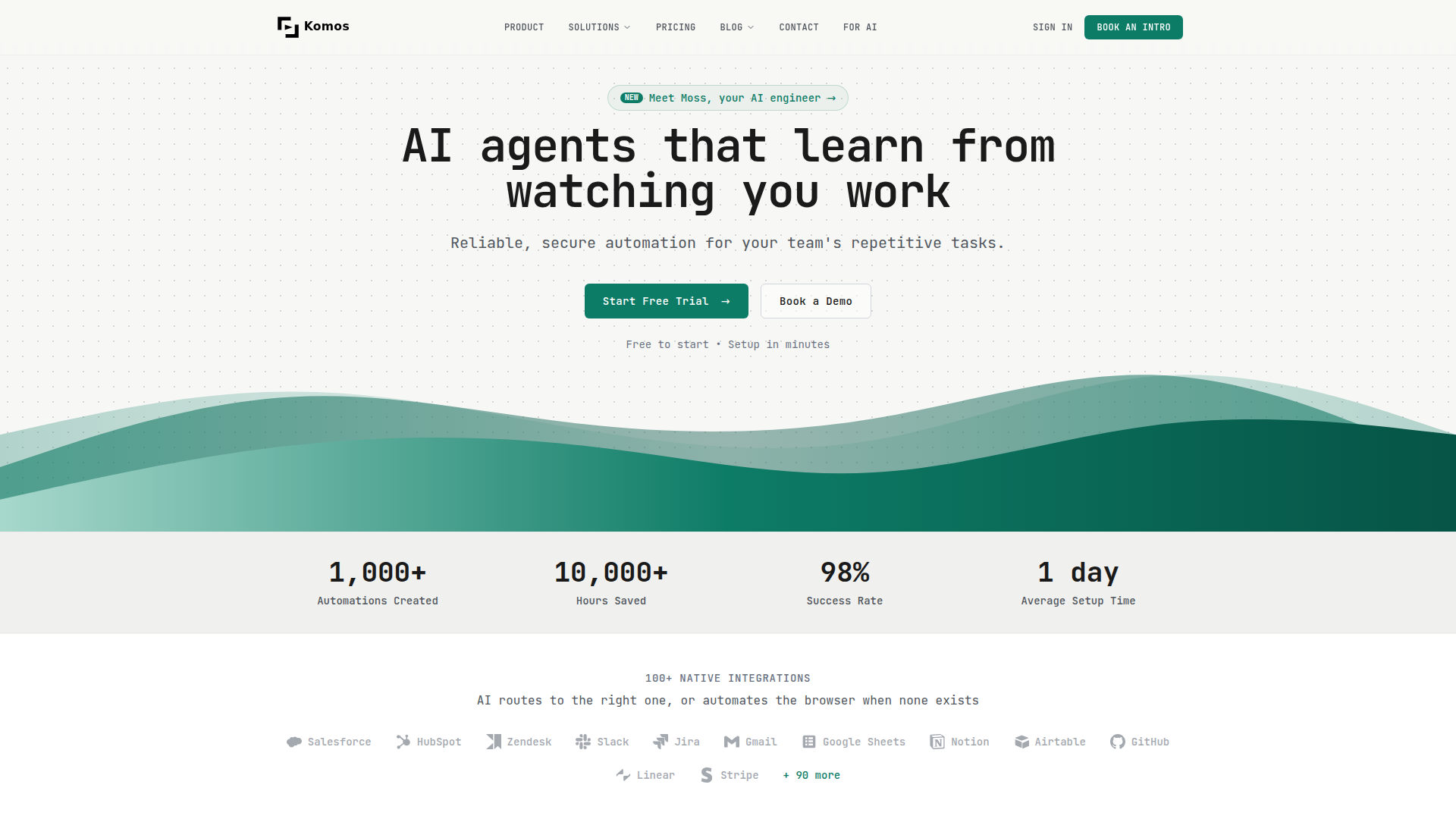
Komos is an AI automation platform for repetitive operational work across browser-based systems, SaaS apps, and documents. It is aimed at business teams in functions such as healthcare, finance, legal, human resources, and supply chain, especially where work spans modern tools and legacy portals.
The core workflow is: a user records a task once while explaining it, Komos generates an editable visual workflow, selects from native integrations when possible, and uses browser automation when APIs are unavailable. Its positioning appears to be an enterprise-oriented alternative to API-only automation tools, with emphasis on deterministic execution, auditability, and support for production use.
Features
- Record-and-learn workflow creation — Users demonstrate a task in the browser and narrate the steps, and Komos converts that demonstration into an editable automation flow.
- Hybrid integration and browser automation — The platform routes work through 100+ native integrations when available and falls back to browser automation for websites or systems without APIs.
- Visual, deterministic workflow editor — Workflows are shown as flowcharts that can be edited with branching, loops, conditions, and rollback controls to keep runs predictable.
- Workflows exposed as APIs — Automations can be turned into API endpoints and triggered from apps, webhooks, or schedulers for broader system orchestration.
- Built-in AI assistant, Moss — Moss helps create automations from natural-language descriptions, monitors runs, and is described as diagnosing and adapting workflows when changes occur.
- Document processing in workflows — Komos can ingest PDFs, images, scans, and spreadsheets, extract structured fields such as tables and totals, and also update documents and forms as part of an automation.
Helpful Tips
- Prioritize stable, repetitive processes first — This kind of platform is usually strongest on high-volume tasks with clear steps, decision rules, and measurable outputs.
- Validate exception handling early — Browser-based and portal-driven automations should be tested against edge cases such as MFA prompts, missing fields, layout changes, and timing delays.
- Use the visual workflow layer for governance — Teams should review generated flows, version important changes, and define ownership so automations remain understandable beyond the original builder.
- Assess where API routing versus browser automation matters — Buyers should map their process mix; Komos is especially relevant when critical work depends on websites or legacy systems without usable APIs.
- Confirm deployment fit for internal applications — The site mentions cloud-hosted execution for public websites and Windows/Mac runners for internal or SSO-protected flows, so environment requirements should be reviewed during evaluation.
OpenClaw Skills
Komos could fit well inside an OpenClaw ecosystem as the execution layer for operational agents that need to complete real business tasks across fragmented systems. Likely skill patterns include invoice retrieval agents, legal filing agents, compliance evidence collection agents, account-opening assistants, and CRM update workflows. Because Komos exposes workflows as APIs, OpenClaw agents could likely trigger them as reusable actions, then use the returned status, logs, or outputs to continue multi-step reasoning and coordination.
A strong likely use case is combining OpenClaw’s orchestration and decision-making with Komos’s browser-level execution and document handling. For example, an OpenClaw agent for legal operations could decide which filings are due, gather source data, call a Komos workflow to navigate a government portal, then route results into review queues and audit records. In finance or supply chain, this pairing could shift teams from manual portal work toward supervised exception handling, where humans focus on approvals and judgment while agents manage the repetitive execution layer.
Embed Code
Share this AI tool on your website or blog by copying and pasting the code below. The embedded widget will automatically update with the latest information.
<iframe src="https://aimyflow.com/ai/komos-ai/embed" width="100%" height="400" frameborder="0"></iframe>
Explore Similar Tools
Transcribe Meetings & Generate Files with AI on TicNote Cloud
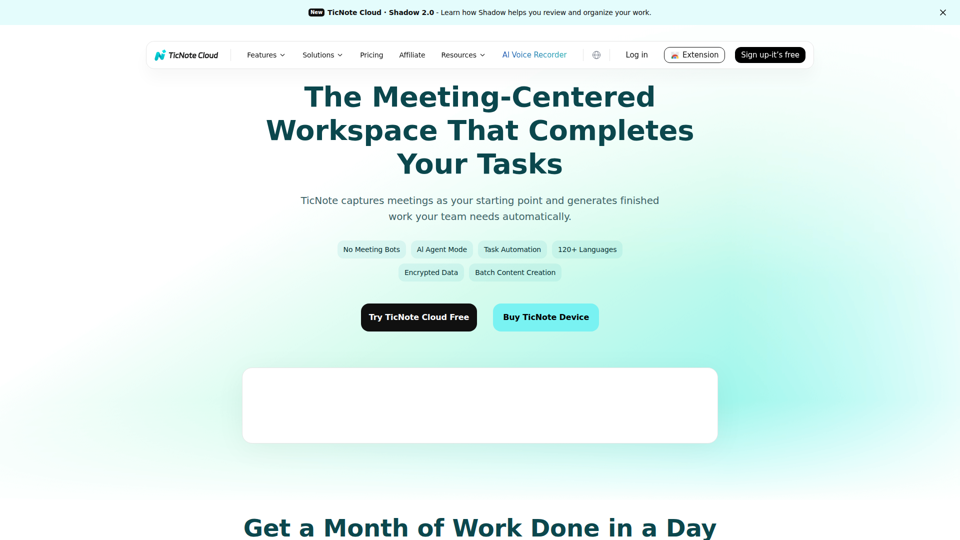
TicNote Cloud is an AI meeting workspace that records and transcribes meetings, creates summaries, action items, and files, and organizes transcripts and project materials for teams that rely on meetings to drive work. For product, operations, sales, and project management roles, it can reduce manual note-taking and speed follow-up by turning conversations into structured outputs and searchable knowledge.

Tingwu CN
通义听悟 is an AI meeting and media transcription tool that converts speech to text, provides multilingual translation, distinguishes speakers, and generates summaries such as chapter overviews and action items, mainly for people who need to capture and review meetings efficiently. For project managers and similar knowledge workers, it can reduce manual note-taking and speed up turning long discussions into usable minutes and follow-up tasks.
RowFlow - the modern AI-native form
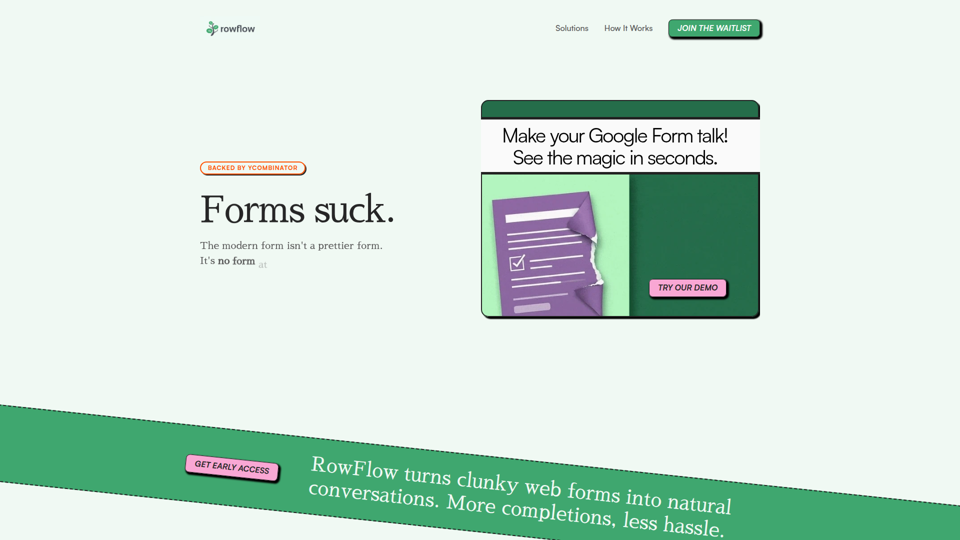
RowFlow is an AI-native form platform that turns traditional forms into conversational outreach across channels like SMS, email, Slack, WhatsApp, and phone, helping teams collect structured information faster with fewer manual follow-ups; it is mainly for operations, onboarding, research, and revenue teams. For functions such as customer onboarding, lead qualification, and internal reporting, it can reduce time spent chasing responses while producing cleaner data from messy user input.
1ClickClaw - OpenClaw Hosting | One-Click AI Bot
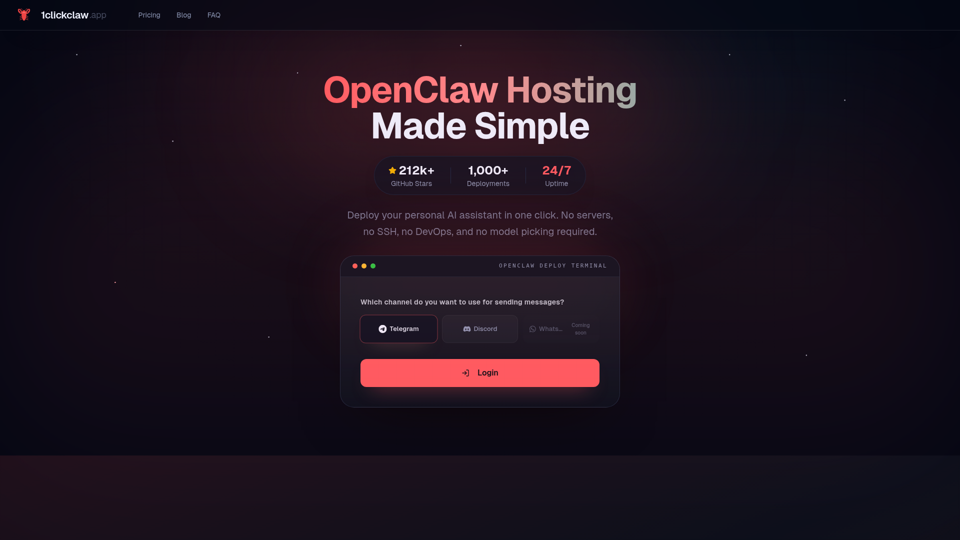
1ClickClaw is a hosting service for deploying OpenClaw as a personal AI assistant on Telegram, Discord, or WhatsApp in one click, mainly for users who want an always-on bot without managing servers, SSH, or DevOps setup. For operators, community managers, and solo builders, this can shorten deployment time and simplify AI bot maintenance so they can focus more on conversations and workflows than infrastructure.
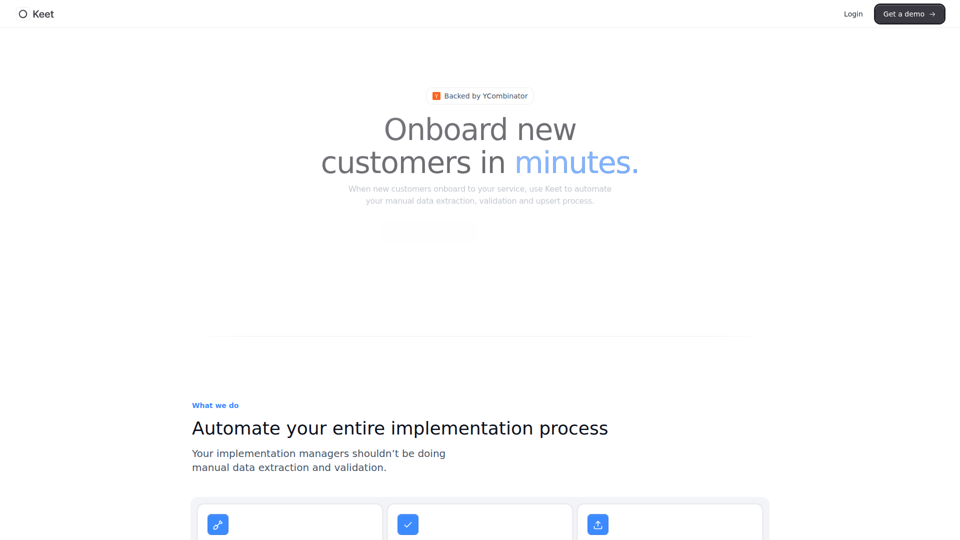
Keet - Automated enterprise onboarding
Keet is an automated enterprise onboarding tool that extracts, validates, and uploads customer migration data to help implementation managers onboard new customers faster. In AI-driven implementation workflows, it can reduce manual review and data handling so implementation and onboarding teams can focus on exception handling and customer setup quality.
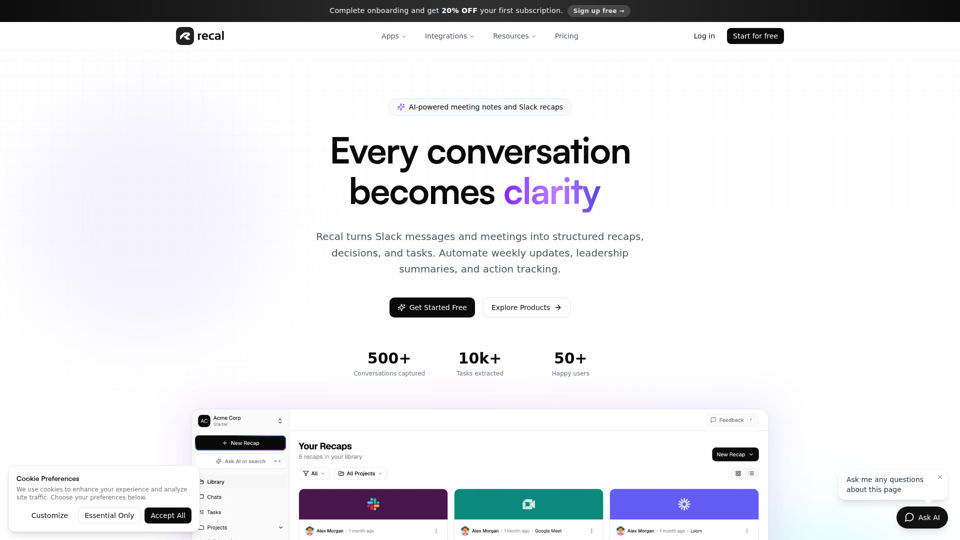
Never forget what matters | Recal
Recal is an AI-powered meeting notes and conversation memory tool that captures meetings, Slack threads, voice memos, uploads, and links, then turns them into transcripts, summaries, decisions, and tasks for teams and professionals who need reliable context and follow-through. For managers, operations leads, and product teams, it can reduce manual note-taking and improve alignment by making searchable recaps and action items available across conversations.
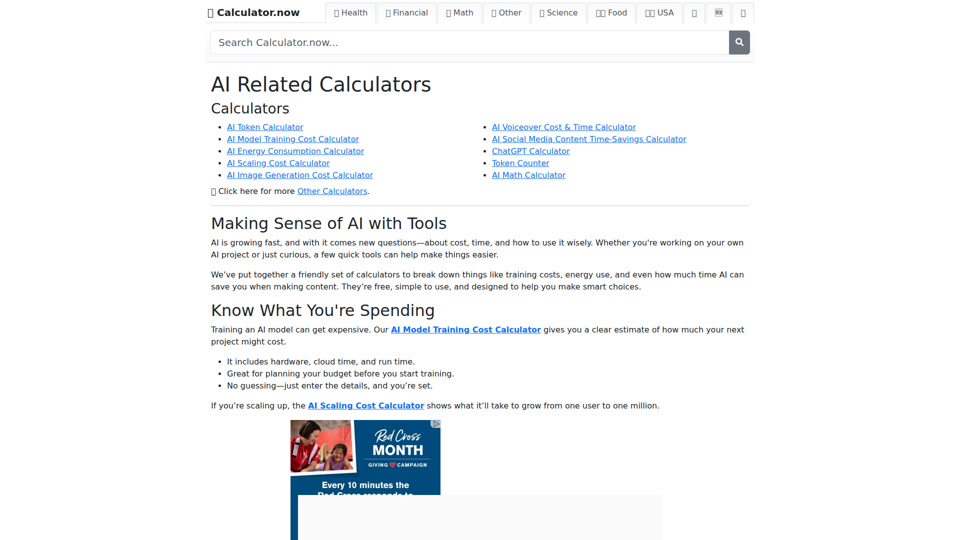
AI Related Calculators | Calculator.now
Calculator.now’s AI Related Calculators is a collection of online calculators that help users estimate token usage, model training and scaling costs, energy consumption, image generation costs, and AI workflow time savings, mainly for people planning or running AI projects. For AI developers, content teams, and project managers, these tools support faster budgeting and capacity planning by turning model and usage assumptions into clear operational estimates.
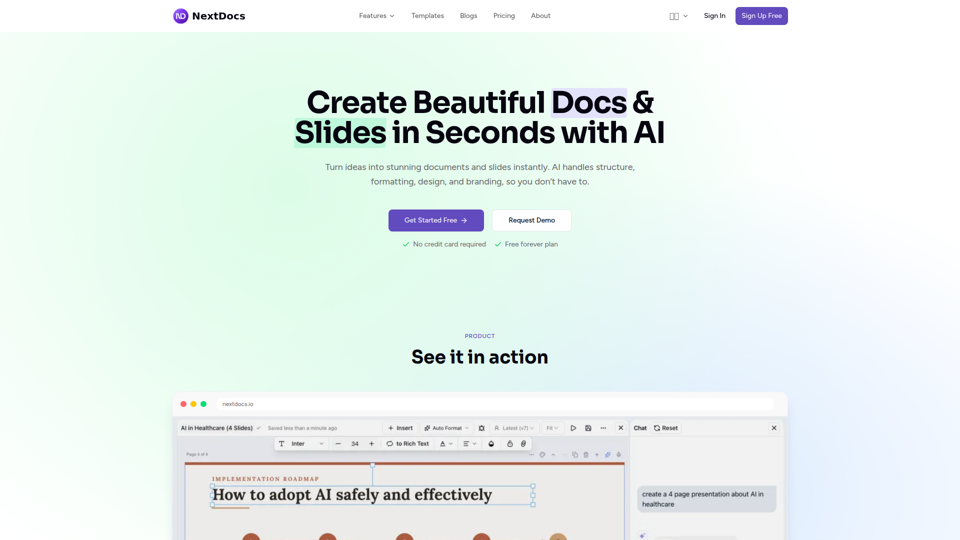
Create Beautiful Docs & Slides in Seconds with AI
NextDocs is an AI document and presentation creation tool that helps professionals and teams turn prompts into branded docs, slides, social posts, proposals, reports, and contracts with built-in editing, research, and export options. For roles like project managers, marketers, founders, and sales teams, it can reduce manual formatting and versioning work so more time goes to reviewing content and making decisions.