
Figr - AI Design Agent for Product Teams | Ship UX Faster
Rate this Tool
Average Score
Total Votes
Select your score (1-10):
Detail Information
What
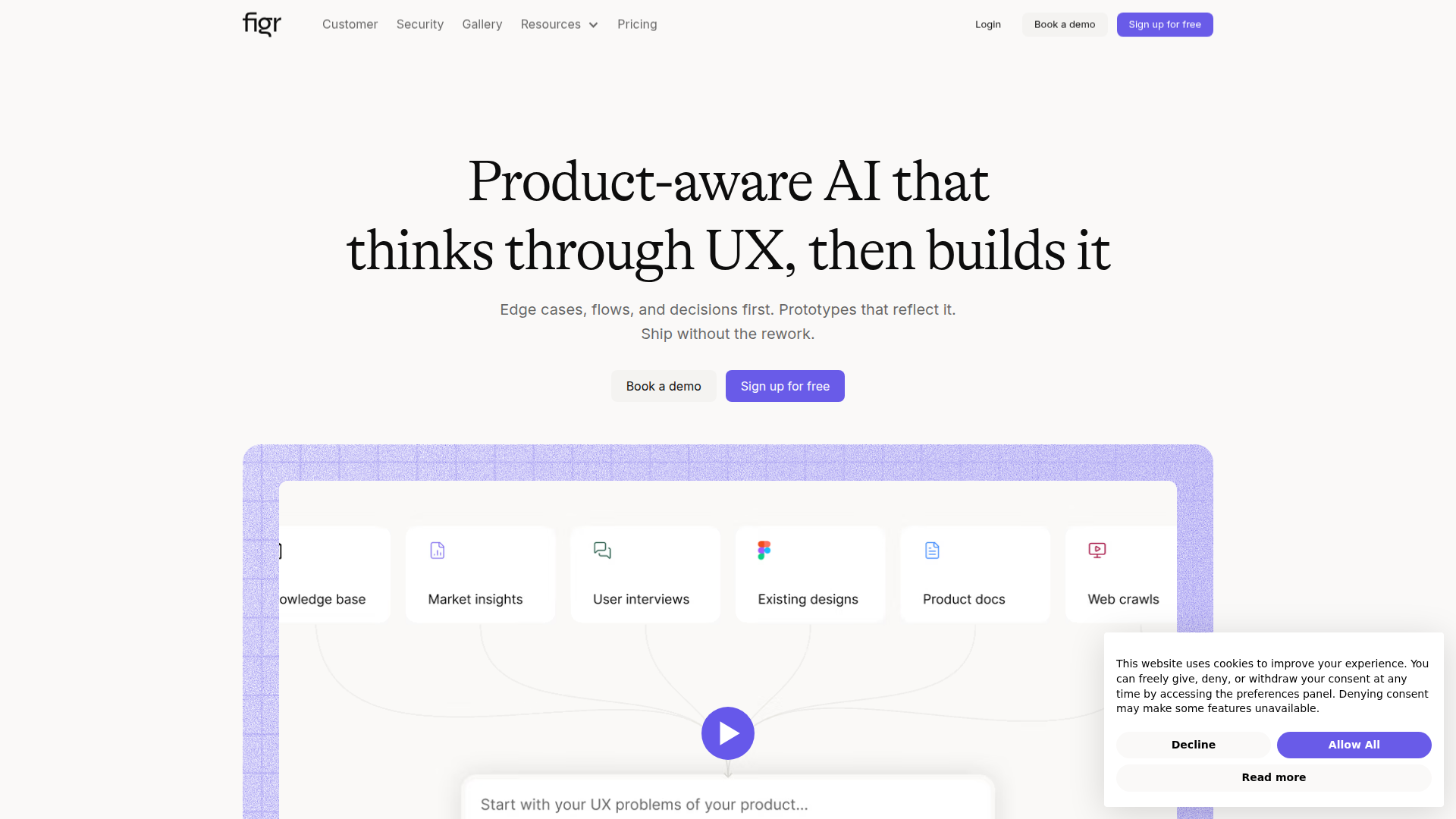
Figr is an AI design agent for product teams that focuses on product-aware UX work before interface output. The site positions it as a tool for product managers and product designers who need to think through flows, edge cases, decisions, and requirements, then turn that work into prototypes and design artifacts.
Its core workflow appears to start from product inputs such as screenshots, screen recordings, web captures, analytics CSVs, product docs, and Figma files, then uses AI actions to research, ask questions, map flows, review UX, generate PRDs or test cases, and create prototypes. Based on the page, Figr likely sits between product discovery, UX design, and pre-handoff validation rather than acting as a simple screen generator.
Features
- UX decision support: Figr helps teams think through UX choices, edge cases, and user journeys before development, which can reduce rework later in the process.
- Flow and journey mapping: It generates user flows and information architecture outputs from product inputs, giving teams a structured view of how experiences should work.
- Prototype generation: The product creates high-fidelity prototypes intended to resemble the actual product, which helps teams evaluate concepts earlier.
- PRD and specification drafting: Figr can produce PRDs and related docs from research and workflow analysis, supporting product definition alongside design work.
- Test case and edge-case generation: It can generate QA-oriented outputs from designs and feature flows, which is useful for validating states before handoff.
- Design system and accessibility support: The page states that it enforces design system tokens, offers one-click Figma export, and includes built-in accessibility checks for designs.
Helpful Tips
- Check where AI output begins and ends: For products in this category, the main value is often in structured reasoning around flows and states, so verify whether the team will rely more on analysis outputs, prototypes, or both.
- Use real product artifacts as inputs: Tools like this tend to perform better when fed screenshots, recordings, docs, analytics, and existing UI context rather than abstract prompts alone.
- Review edge-case coverage carefully: Generated flows and test cases can accelerate work, but product, design, and QA leads should still verify assumptions for business rules and unusual user states.
- Assess fit with current design workflows: If Figma export and design-system enforcement are important to your team, confirm how well those features support your existing component library and review process.
- Start with a bounded workflow: Early adoption is usually easier on contained use cases such as redesigning a single flow, auditing accessibility, or generating test cases for a known feature.
OpenClaw Skills
Figr could likely pair well with OpenClaw as a planning-and-execution layer around product design operations. Likely OpenClaw skills could ingest PRDs, screenshots, analytics exports, and recorded user journeys, then orchestrate repeatable workflows such as UX reviews, edge-case discovery, design critique, prototype generation, and QA test-case drafting. The source page does not confirm a native OpenClaw integration, so this should be treated as a plausible workflow pattern rather than a built-in capability.
In practice, this combination could support product managers, designers, and UX researchers with specialized agents such as a flow-mapping agent, accessibility audit agent, design-system conformance checker, and release-readiness reviewer. In industries with frequent product iteration, that setup could shift teams from manually stitching together research, UX reasoning, and handoff documents toward a more continuous product-thinking pipeline, where each new feature accumulates reusable context over time.
Embed Code
Share this AI tool on your website or blog by copying and pasting the code below. The embedded widget will automatically update with the latest information.
<iframe src="https://aimyflow.com/ai/figr-design/embed" width="100%" height="400" frameborder="0"></iframe>
Explore Similar Tools
Versive
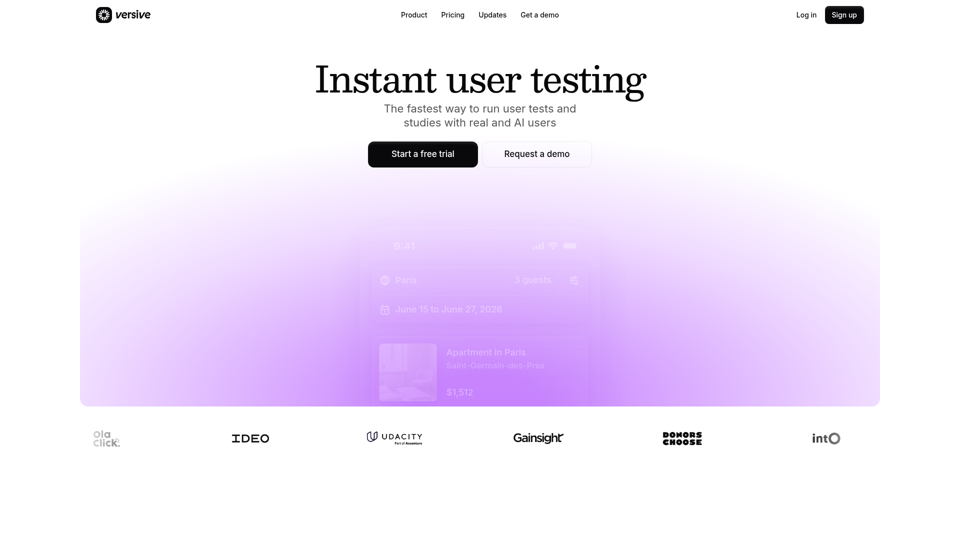
Versive is an AI-powered user research and testing platform that helps product teams design, run, and synthesize usability studies with real and simulated users, especially for product managers, UX researchers, and designers. In AI-assisted product development, it can help these teams validate interface decisions faster by generating transcripts, screenshots, summaries, and actionable recommendations in minutes.
Challenges | Test Your AI Prompting Skills
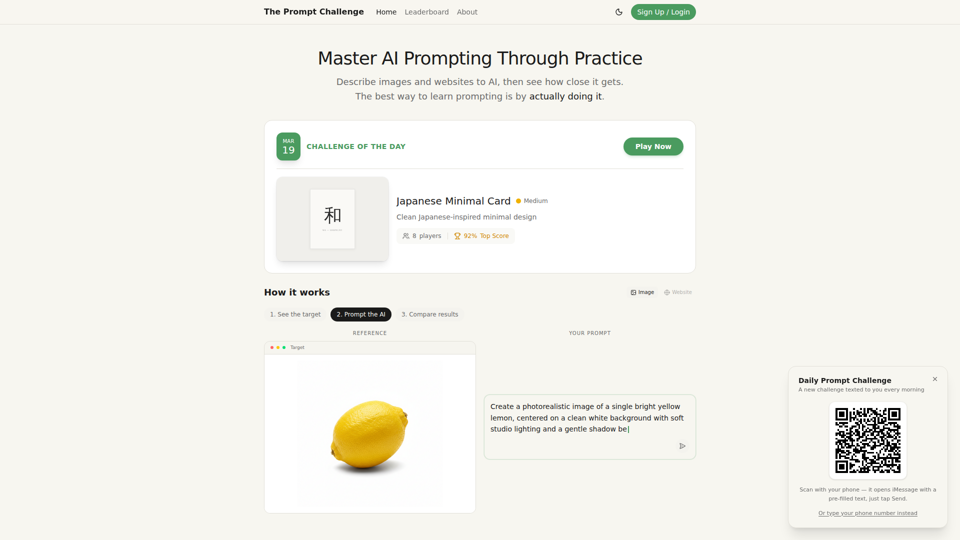
The Prompt Challenge is a practice platform that helps users improve AI prompting by describing images and websites, comparing AI-generated results to references, and competing on scores, mainly for people learning prompt engineering and hands-on AI creation. For designers, developers, and AI practitioners, this kind of repeatable prompt testing can sharpen instruction-writing skills and improve consistency when using generative tools for visual and interface work.
AI Infographic Generator
GraphicInfo is an AI infographic generator that helps users turn ideas and content into professional, customizable infographics quickly, mainly for creators and people producing website or social media content. In AI-driven content workflows, it can help marketers, content teams, and designers speed up visual asset creation while still refining text and images for specific brand needs.
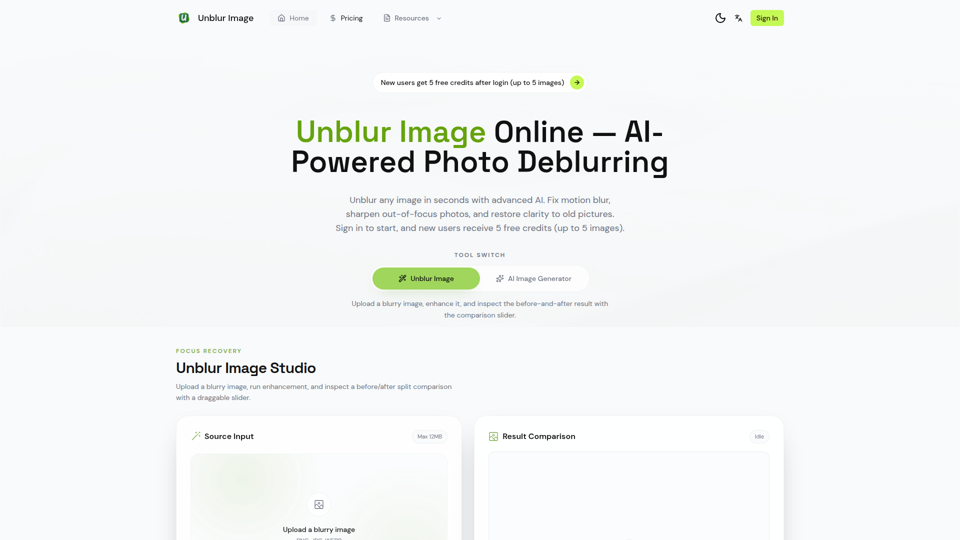
Unblur Image — Make Blurry Photos Clear with AI
Unblur Image is an AI-powered online photo deblurring tool that helps users fix motion blur, sharpen out-of-focus images, restore old photos, and improve text clarity, mainly for people who need quick image enhancement without manual editing skills. In AI-era workflows, it can help photographers, content teams, and document-heavy professionals recover usable visuals and readable assets faster from imperfect source images.
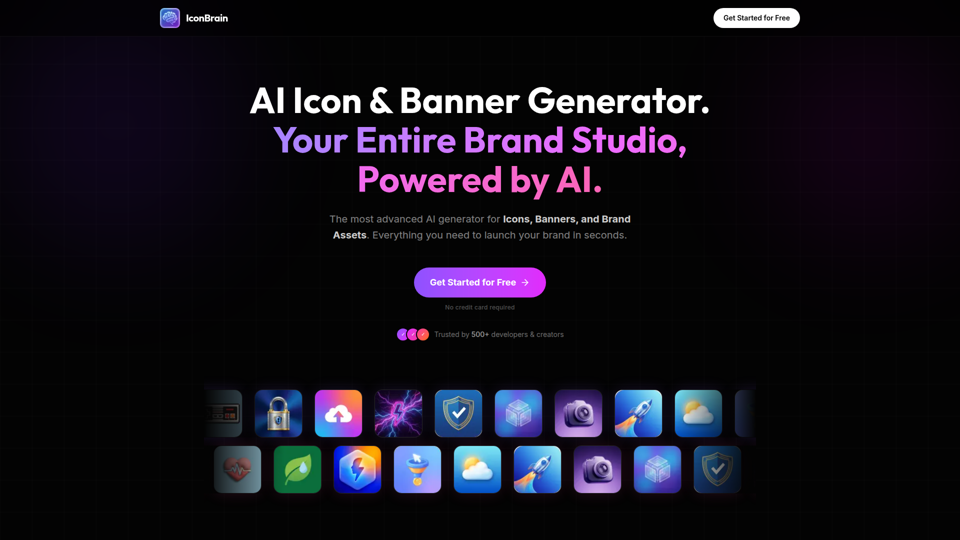
IconBrain | AI Icon Generator for Apps & Brands
IconBrain is an AI icon, banner, and brand asset generator that helps users create and edit production-ready visuals from text prompts or brand context, mainly for developers and creators launching apps or brands. For product, marketing, and design work, it can speed up early brand asset creation while helping teams keep visual styles more consistent across platforms.
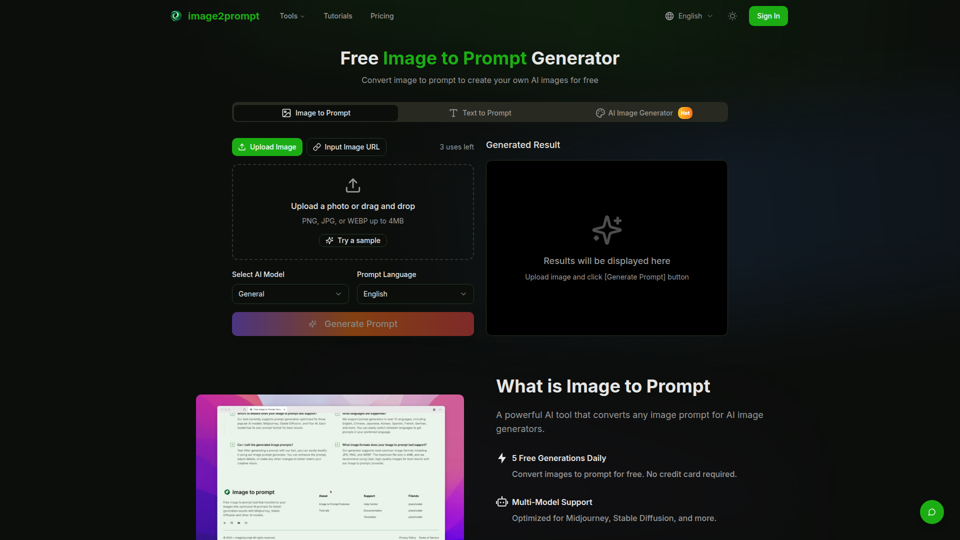
Free Image to Prompt Generator - image2prompt.net
image2prompt.net is a free AI image-to-prompt generator that analyzes uploaded images or image URLs and turns them into editable prompts for Midjourney, Stable Diffusion, Flux, and similar models, mainly for AI artists, designers, and creators. For creative professionals, it can speed prompt drafting, support style consistency, and reduce manual prompt rewriting across different image generation workflows.

UXCanvas.ai | AI UI/UX Design Agent — Describe It, Design It
UXCanvas.ai is an AI UI/UX design agent that helps users turn text prompts into production-ready interface designs, iterate through chat, and export to Figma or React code, mainly for designers and developers. For UI/UX and product teams, it can shorten the path from concept to handoff by turning rough ideas into structured specs, reusable components, and code-ready assets.
AI HD Anime: Your Ultimate Choice for Upscaling Anime Images
AI HD Anime is a free online AI image upscaling tool that enhances anime and manga images with higher clarity and restored detail, mainly for anime fans. In AI-assisted creative and archival workflows, it can help illustrators, editors, and community curators quickly improve low-resolution anime visuals for review, sharing, or preservation.