
Monitor API Quickstart - Parallel
Rate this Tool
Average Score
Total Votes
Select your score (1-10):
Detail Information
What
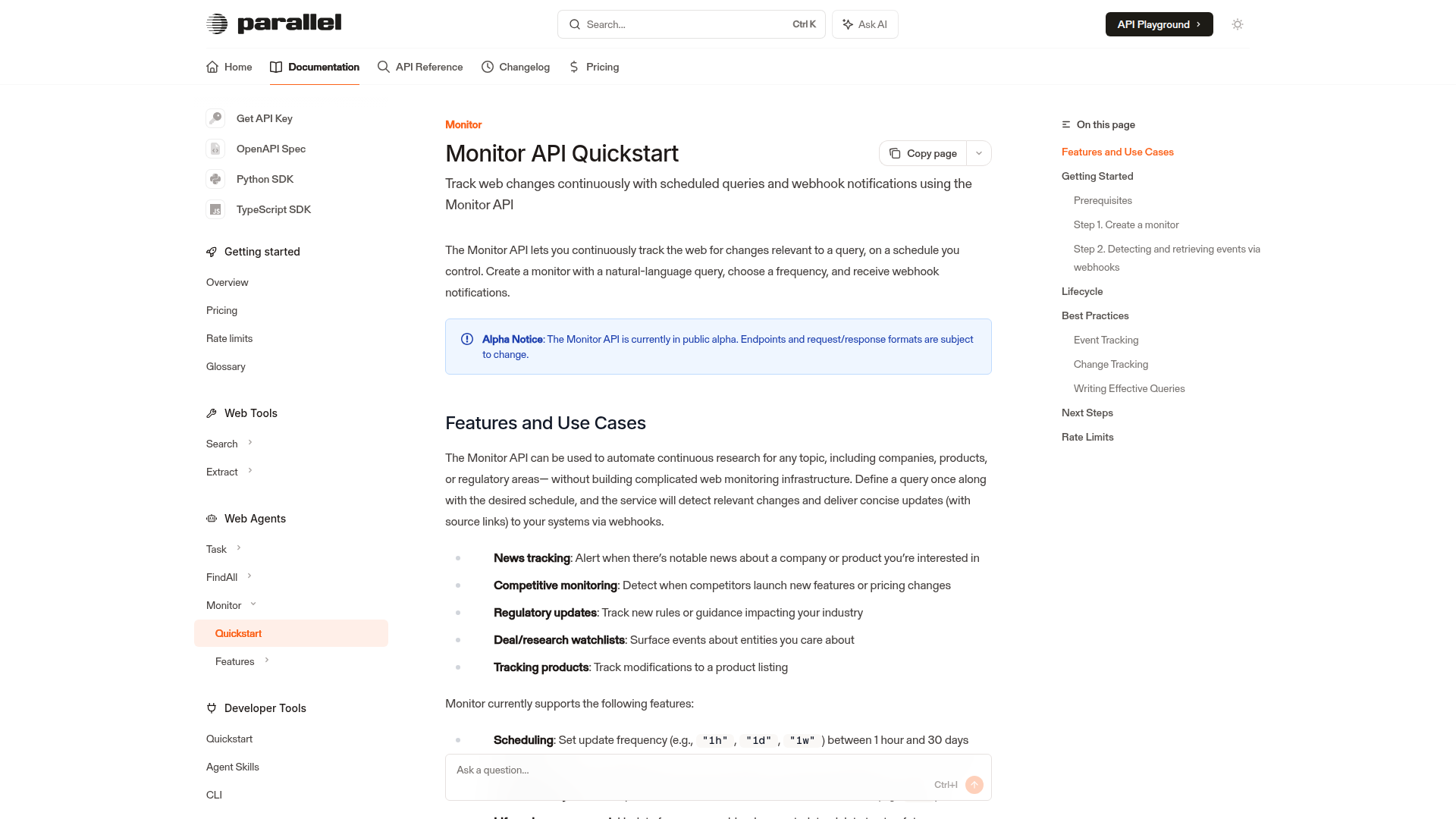
Parallel Monitor API is a web monitoring API that continuously tracks online changes based on a natural-language query and a user-defined schedule. It is designed for developers and teams that need recurring monitoring for topics such as company news, competitor activity, regulatory updates, product listings, or other web events, without building their own monitoring infrastructure.
The workflow is straightforward: create a monitor with a query, set a frequency from 1 hour to 30 days, optionally attach webhook settings and metadata, and then receive webhook notifications when events are detected. The product appears positioned as a developer-facing monitoring service within Parallel’s broader API platform, and the page clearly notes that it is currently in public alpha, so formats and endpoints may change.
Features
- Natural-language monitor creation: Users define monitoring intent in plain English, which helps capture business context instead of relying on keyword-heavy search syntax.
- Configurable scheduling: Monitors can run on intervals such as
1h,1d, or1w, with supported frequencies ranging from 1 hour to 30 days. - Webhook-based event delivery: The API sends notifications when a relevant event is detected or when a scheduled run completes, reducing the need for polling.
- Event group retrieval: Webhook payloads include an
event_group_id, which can be used to fetch the full set of related events and source URLs for downstream processing. - Recent event history access: Users can retrieve updates from recent runs or through a lookback window, which supports auditing and follow-up workflows.
- Monitor lifecycle management: Frequency, webhook configuration, and metadata can be updated, and monitors can be deleted to stop future executions.
Helpful Tips
- Write intent-focused queries: This API is described as working best when queries clearly state the monitoring goal in natural language rather than using dense Boolean syntax.
- Match frequency to topic volatility: Use shorter intervals for fast-moving news and longer intervals for slower-changing pages or policy updates to balance timeliness and usage.
- Prefer webhooks over polling: The documentation explicitly recommends webhooks to reduce latency and avoid unnecessary API calls.
- Do not treat it as historical research tooling: The page states that Monitor is for tracking new updates after creation, not for finding past events; historical research likely belongs in a different product.
- Plan for alpha-stage change: Because the API is in public alpha and high-level Python convenience methods are not yet available, implementation teams should expect some interface evolution.
OpenClaw Skills
Within an OpenClaw ecosystem, this product could likely serve as a trigger layer for web-aware agents. A practical workflow would be: Monitor detects an event, a webhook triggers an OpenClaw skill, and that skill classifies the event, summarizes impact, enriches it with internal context, and routes it into a ticket, CRM note, alert stream, or research queue. This is a likely orchestration pattern rather than a confirmed native integration based on the provided page.
For competitive intelligence, market research, procurement, legal operations, or product management teams, OpenClaw agents built around Monitor could turn raw web changes into structured decisions. Likely examples include an agent that scores competitor announcements by relevance, a regulatory analyst workflow that extracts obligations from new guidance, or a commerce workflow that tracks product listing changes and updates internal dashboards. The combination could shift these functions from manual monitoring toward event-driven operating models, with Monitor supplying external change signals and OpenClaw handling interpretation and action.
Embed Code
Share this AI tool on your website or blog by copying and pasting the code below. The embedded widget will automatically update with the latest information.
<iframe src="https://aimyflow.com/ai/docs-parallel-ai-monitor-api-monitor-quickstart/embed" width="100%" height="400" frameborder="0"></iframe>
Explore Similar Tools
Free AI Photo Editor: Edit & Generate Image Online | Pokecut
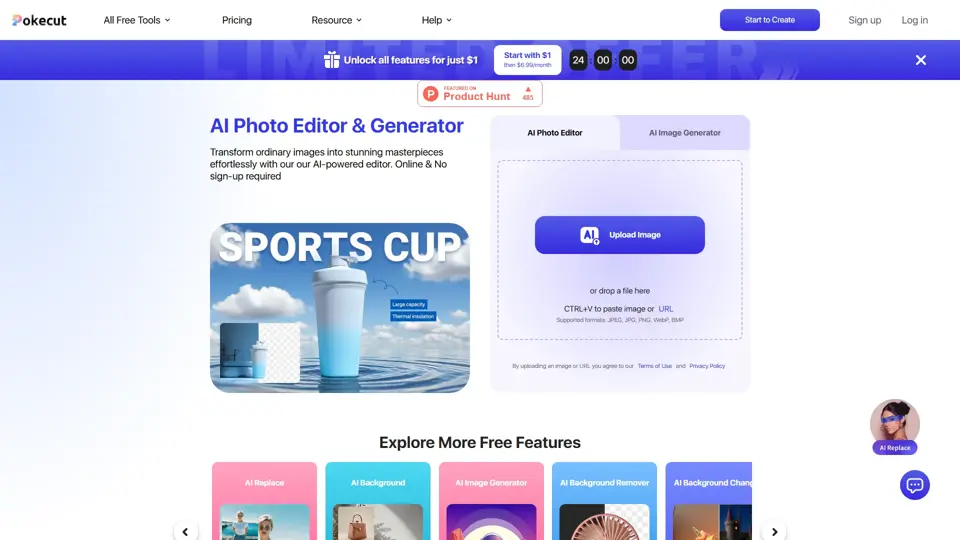
Pokecut is an AI photo editor that helps users remove backgrounds, enhance images, and generate visuals online, mainly for ecommerce sellers, marketers, and creators who need quick design-ready assets. It speeds up routine image production so visual teams can create polished content with less manual editing.
Roboflow: Computer vision tools for developers and enterprises
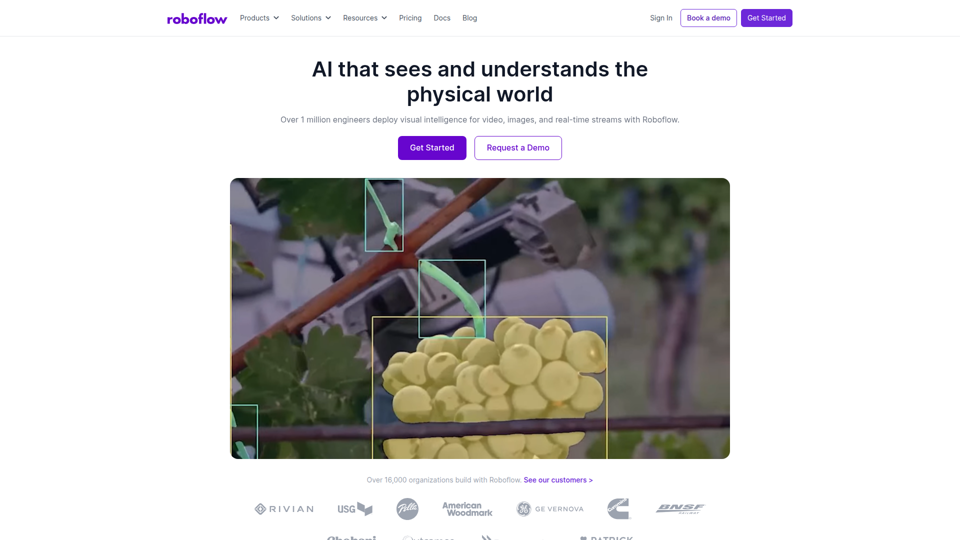
Roboflow is a computer vision platform that helps developers, machine learning engineers, and enterprises annotate data, train models, build workflows, and deploy vision AI for images, video, and real-time streams. In AI-driven operations, it can help computer vision and ML teams move faster from prototype to production by combining data labeling, model training, and deployment in one workflow.

Seedance 2.0
Seedance 2.0 is ByteDance's AI video generation model designed to create high-quality videos from prompts and multimodal inputs, mainly for creators, developers, and media teams. In the AI era, it helps visual content roles turn ideas into production-ready motion assets with far less manual editing effort.
Struct | Automate your on-call runbook
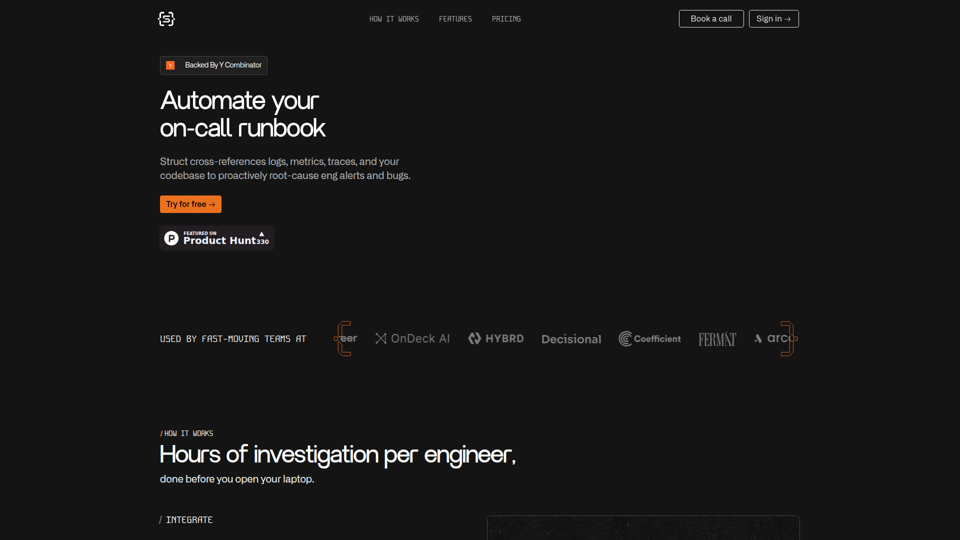
Struct is an AI on-call agent that investigates engineering alerts and bugs by analyzing logs, metrics, traces, and codebases, mainly for software engineers and SRE teams. In the AI era, it helps incident responders shorten triage time by delivering root-cause findings and suggested fixes directly in workflows.
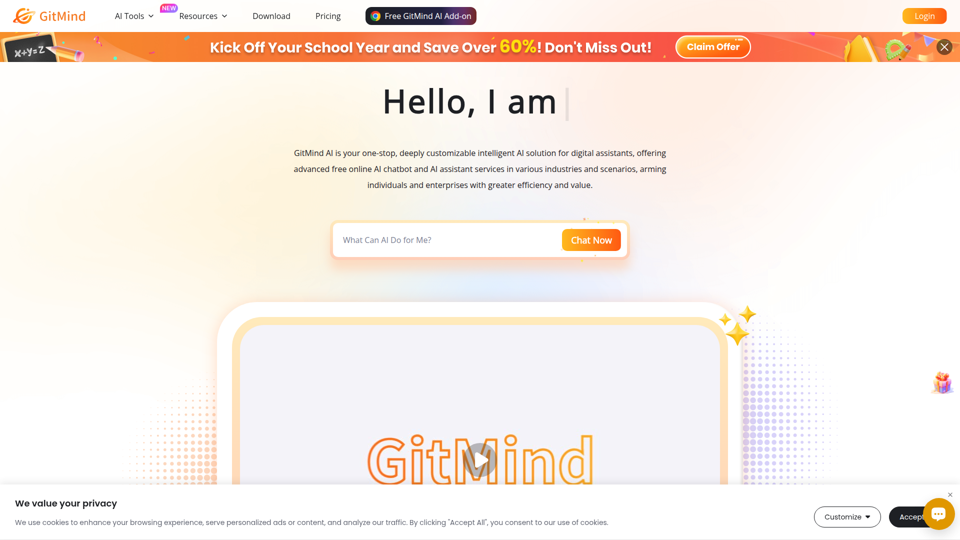
GitMind Chat - Your Best AI Assistant
GitMind Chat is an AI assistant and chatbot platform that helps individuals and enterprises handle conversations, analysis, writing, coding, translation, customer service, and custom AI agent creation through prebuilt or configurable assistants. For roles such as marketers, analysts, support teams, educators, and developers, it can streamline repetitive knowledge work by combining chat, file and link inputs, image analysis, and contextual responses in one workflow.
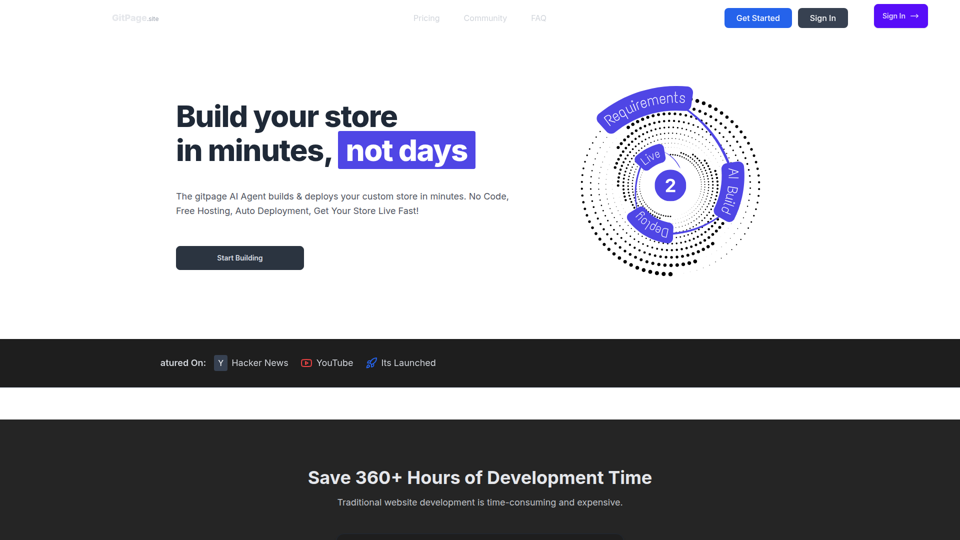
GitPage AI Website Builder | GitPage
GitPage is an AI website builder that generates and deploys websites, online stores, and landing pages from a form, mainly for freelancers, agencies, startups, and businesses that want no-code site creation with code ownership. For web professionals and client-service teams, it can reduce manual setup and content drafting by automating page generation, blog content, and deployment to GitHub or GitLab Pages.

Rohan Mehta
Rohan Mehta is a personal website for a New York–based software engineer at OpenAI, outlining his background at Meta and as a YC-backed startup founder, and highlighting his creator role behind the Subway Time NYC transit app. For software engineers and technical hiring teams, this kind of concise profile helps AI-era talent evaluation by quickly surfacing relevant build, scale, and product experience.
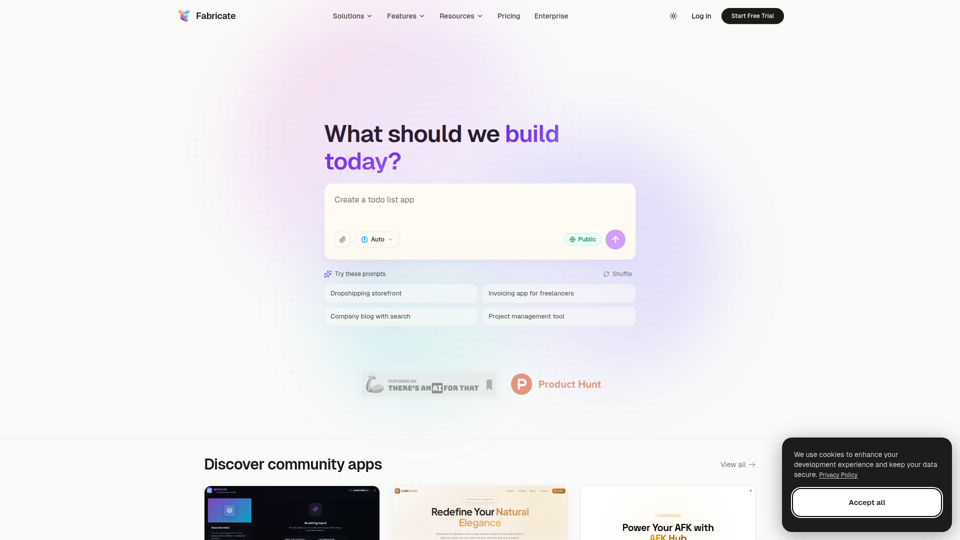
Fabricate - AI Full-Stack App Builder | Build Anything, Ship Faster
Fabricate is an AI full-stack app builder that helps users describe an app idea and generate production-ready web applications, mainly for founders, developers, designers, freelancers, agencies, and enterprises. In AI-assisted product development, it can help these teams move faster from concept to deployable React, TypeScript, and backend code with less manual setup.