
Cowork: Claude Code power for knowledge work | Claude by Anthropic
Rate this Tool
Average Score
Total Votes
Select your score (1-10):
Detail Information
What
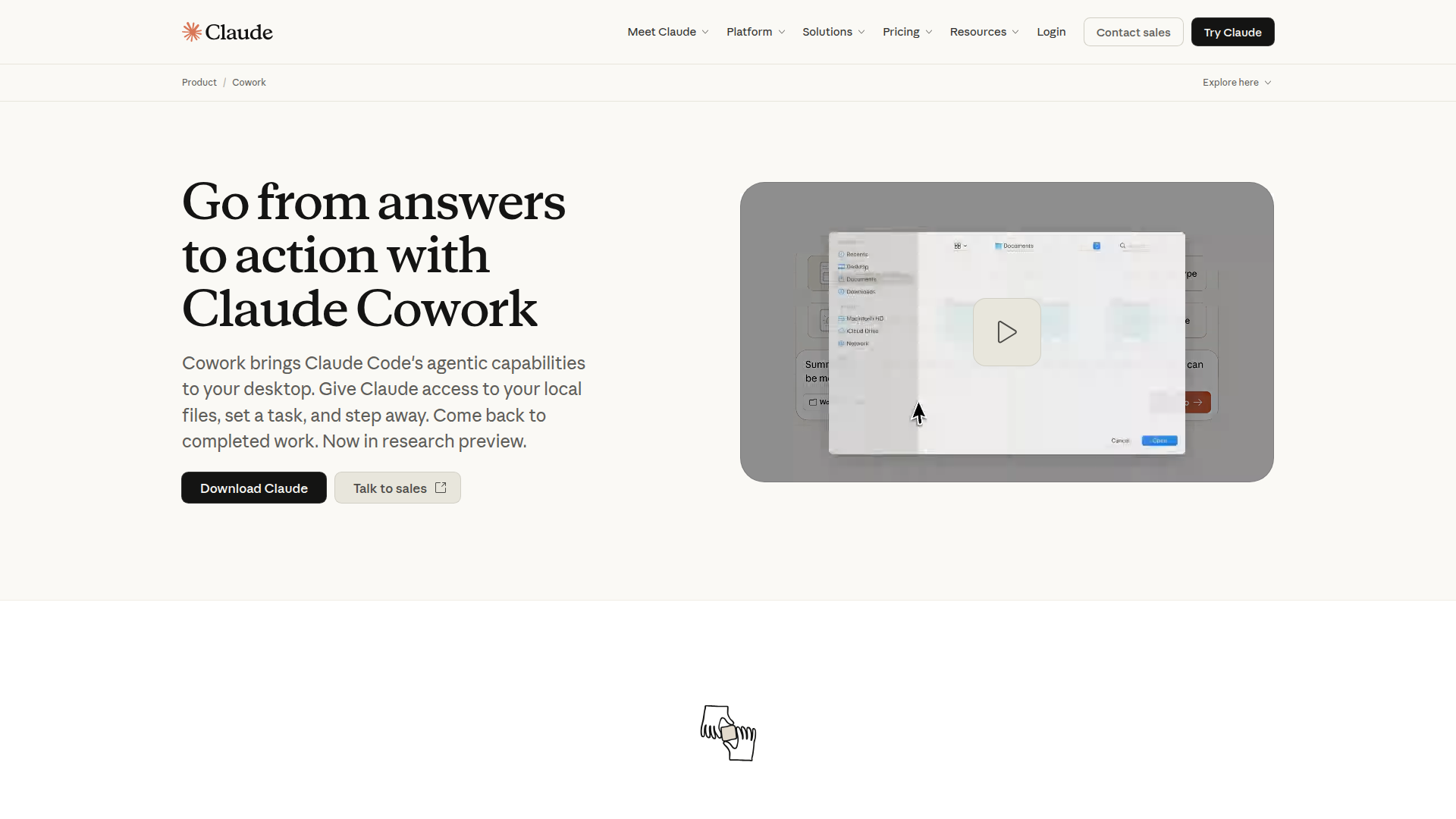
Claude Cowork is Anthropic’s desktop-based agent workspace for non-coding knowledge work. It brings the more autonomous, task-executing style associated with Claude Code into a desktop experience where Claude can work with local files, connected tools, and web context. The page presents it as a research preview available on Windows and macOS through paid Claude plans.
It is aimed at individual professionals, teams, and enterprise users who need help turning scattered files, notes, screenshots, and tool data into organized outputs such as folders, spreadsheets, reports, and presentations. The core workflow is: grant access to selected files or connectors, describe the outcome, review Claude’s proposed plan, then let it execute with approval checkpoints and optional recurring schedules.
Features
- Local file access with user-controlled scope — Claude can work on selected folders and files on the local machine, which supports tasks like organizing documents, drafting reports, and extracting data from receipts or screenshots.
- Agentic task execution for knowledge work — Instead of only replying in chat, Cowork breaks work into steps, carries out the task, and updates the user as it progresses.
- Approval-based action flow — Before significant actions, Claude shows its plan and waits for approval, which adds oversight for file changes and other work-critical tasks.
- Recurring task scheduling — A Cowork task can be set to run daily, weekly, or monthly, which is useful for repeatable reporting or document refresh workflows.
- Connector and browser context — The product can pull in context from tools such as Slack, Notion, and Figma, and can use Claude in Chrome for web research, form filling, or extracting site data.
- Plugin-based specialization — Plugins can package skills, connectors, and sub-agents so Claude can be tailored for role-specific workflows such as brand, legal, or finance work.
Helpful Tips
- Treat it as a supervised agent, not a fully autonomous system — The page explicitly says Cowork is in research preview and that agent safety is still in development, so human review should remain part of the workflow.
- Start with bounded, reversible tasks — Folder cleanup, first-draft reports, and spreadsheet preparation are better initial use cases than sensitive or irreversible operations.
- Use explicit prompts and approval gates — The examples show stronger outcomes when the user defines the desired output, naming conventions, review steps, and when execution should begin.
- Be selective with access permissions — Since Cowork can work with local files and connected tools, access should be limited to only the folders and systems needed for the task.
- Check enterprise governance fit carefully — The page notes that Cowork activity is not currently captured in audit logs, compliance APIs, or data exports, which may matter for regulated or tightly governed environments.
OpenClaw Skills
Claude Cowork is a strong candidate for OpenClaw workflows centered on desktop operations, document-heavy research, and multi-step knowledge tasks. A likely OpenClaw use case would be to wrap Cowork-oriented prompt patterns into reusable skills such as “monthly operating review builder,” “voice-of-customer synthesizer,” “receipts-to-ledger prep,” or “notes-to-executive-brief.” While the page does not describe a native OpenClaw integration, the product’s structure—files, connectors, plugins, sub-agents, and approval checkpoints—fits well with agent orchestration and skills packaging.
In practice, OpenClaw could add value by standardizing how teams deploy Cowork for repeatable work. Likely workflows include an operations agent that collects Slack and Notion context, a finance agent that converts local documents into structured spreadsheets, or a legal triage agent that organizes matter files before human review. Combined with OpenClaw, Cowork could shift professionals in operations, finance, legal, and product roles away from manual file handling and fragmented tool switching toward managed, semi-autonomous work pipelines with clearer review and handoff stages.
Embed Code
Share this AI tool on your website or blog by copying and pasting the code below. The embedded widget will automatically update with the latest information.
<iframe src="https://aimyflow.com/ai/claude-com-blog-cowork-research-preview/embed" width="100%" height="400" frameborder="0"></iframe>
Explore Similar Tools
Transcribe Meetings & Generate Files with AI on TicNote Cloud
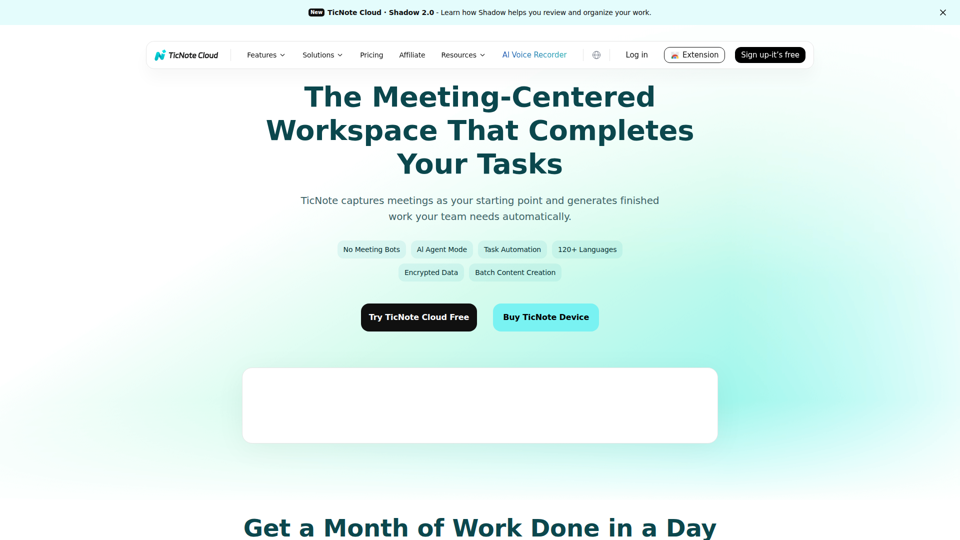
TicNote Cloud is an AI meeting workspace that records and transcribes meetings, creates summaries, action items, and files, and organizes transcripts and project materials for teams that rely on meetings to drive work. For product, operations, sales, and project management roles, it can reduce manual note-taking and speed follow-up by turning conversations into structured outputs and searchable knowledge.

Tingwu CN
通义听悟 is an AI meeting and media transcription tool that converts speech to text, provides multilingual translation, distinguishes speakers, and generates summaries such as chapter overviews and action items, mainly for people who need to capture and review meetings efficiently. For project managers and similar knowledge workers, it can reduce manual note-taking and speed up turning long discussions into usable minutes and follow-up tasks.
RowFlow - the modern AI-native form
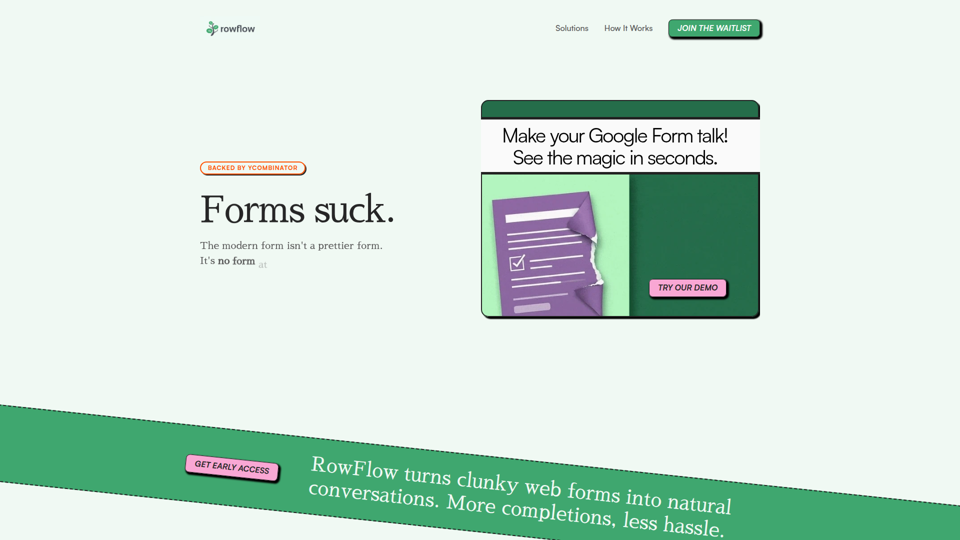
RowFlow is an AI-native form platform that turns traditional forms into conversational outreach across channels like SMS, email, Slack, WhatsApp, and phone, helping teams collect structured information faster with fewer manual follow-ups; it is mainly for operations, onboarding, research, and revenue teams. For functions such as customer onboarding, lead qualification, and internal reporting, it can reduce time spent chasing responses while producing cleaner data from messy user input.
1ClickClaw - OpenClaw Hosting | One-Click AI Bot
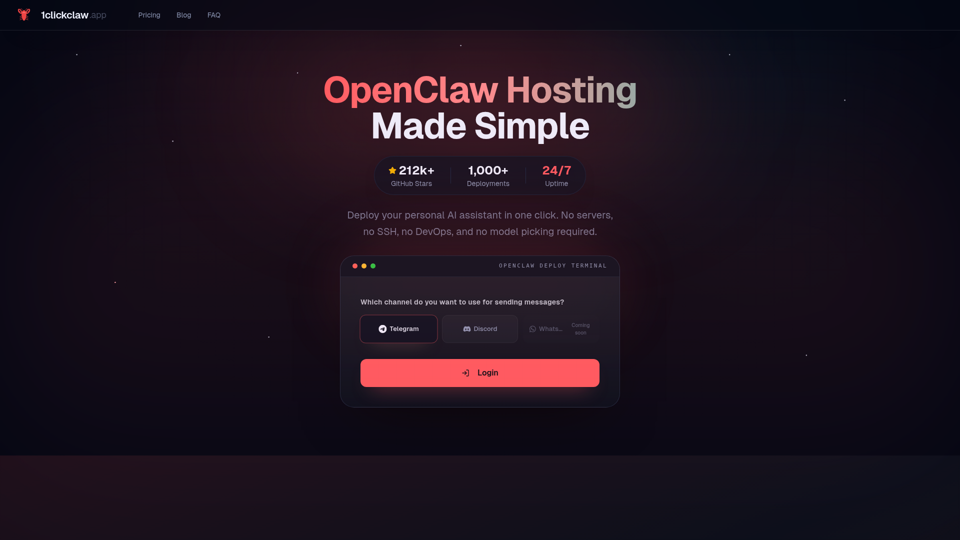
1ClickClaw is a hosting service for deploying OpenClaw as a personal AI assistant on Telegram, Discord, or WhatsApp in one click, mainly for users who want an always-on bot without managing servers, SSH, or DevOps setup. For operators, community managers, and solo builders, this can shorten deployment time and simplify AI bot maintenance so they can focus more on conversations and workflows than infrastructure.
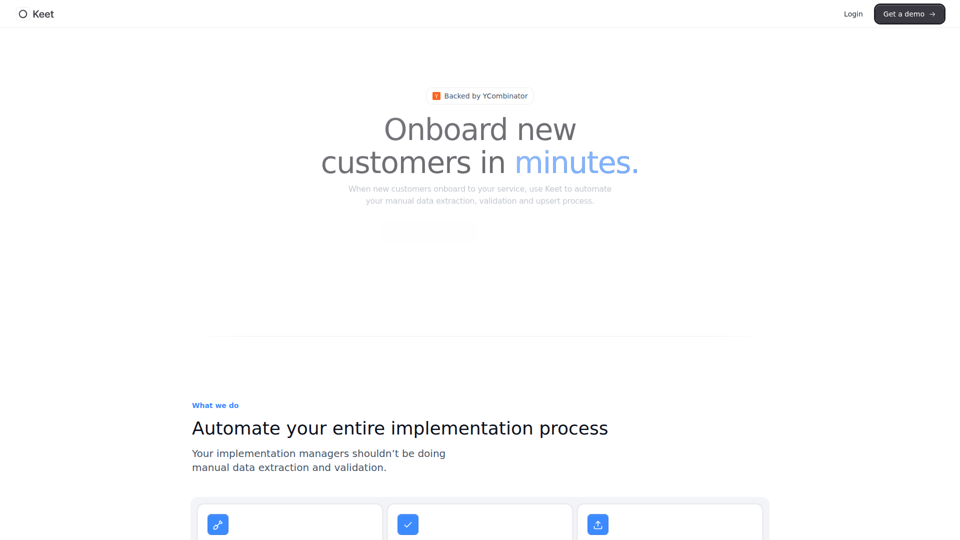
Keet - Automated enterprise onboarding
Keet is an automated enterprise onboarding tool that extracts, validates, and uploads customer migration data to help implementation managers onboard new customers faster. In AI-driven implementation workflows, it can reduce manual review and data handling so implementation and onboarding teams can focus on exception handling and customer setup quality.
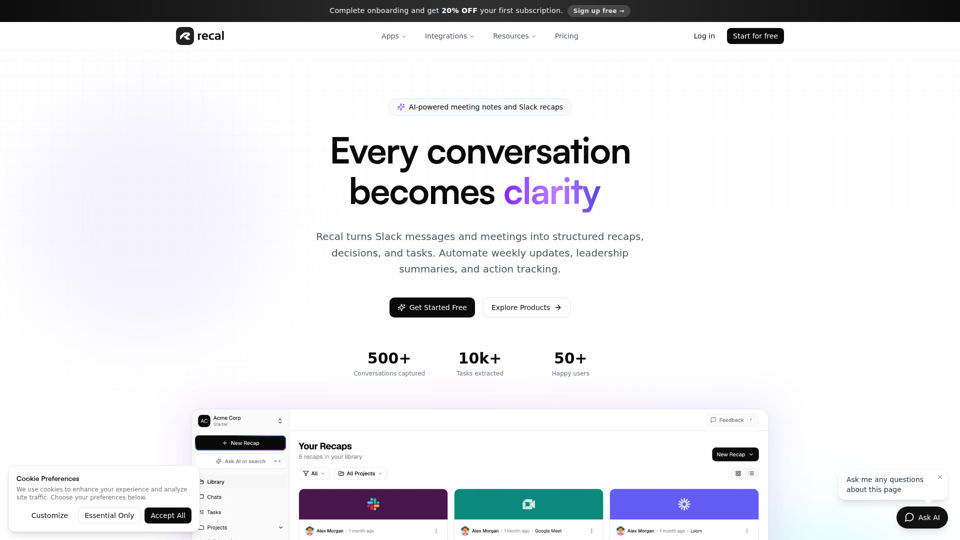
Never forget what matters | Recal
Recal is an AI-powered meeting notes and conversation memory tool that captures meetings, Slack threads, voice memos, uploads, and links, then turns them into transcripts, summaries, decisions, and tasks for teams and professionals who need reliable context and follow-through. For managers, operations leads, and product teams, it can reduce manual note-taking and improve alignment by making searchable recaps and action items available across conversations.
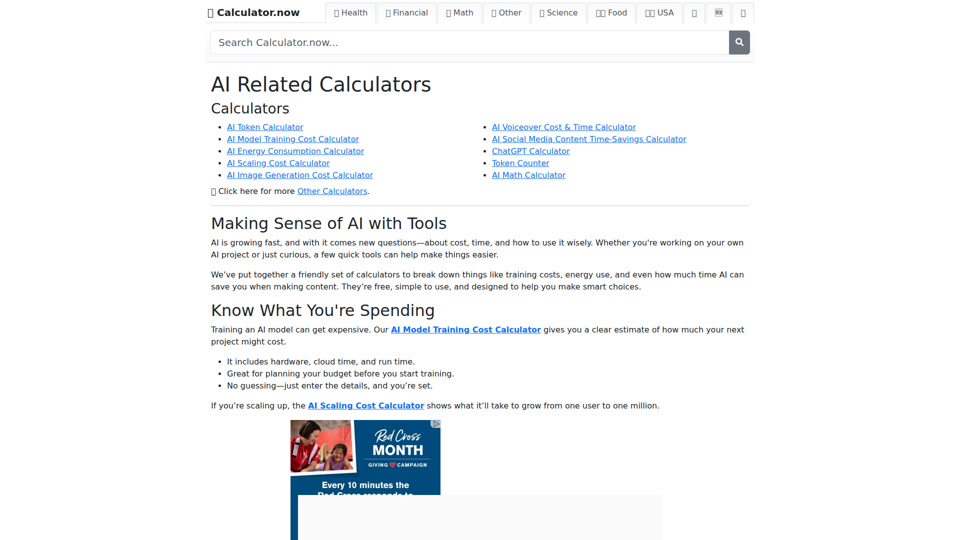
AI Related Calculators | Calculator.now
Calculator.now’s AI Related Calculators is a collection of online calculators that help users estimate token usage, model training and scaling costs, energy consumption, image generation costs, and AI workflow time savings, mainly for people planning or running AI projects. For AI developers, content teams, and project managers, these tools support faster budgeting and capacity planning by turning model and usage assumptions into clear operational estimates.
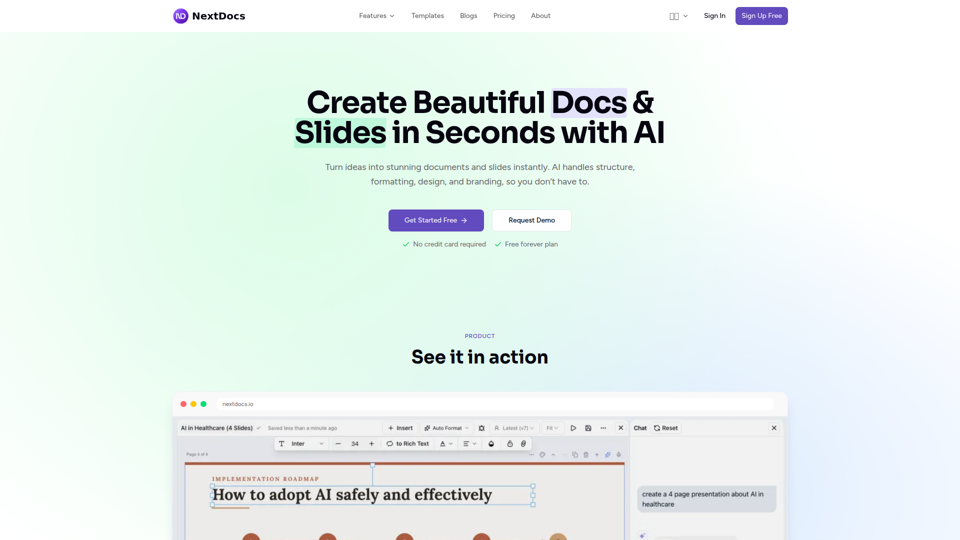
Create Beautiful Docs & Slides in Seconds with AI
NextDocs is an AI document and presentation creation tool that helps professionals and teams turn prompts into branded docs, slides, social posts, proposals, reports, and contracts with built-in editing, research, and export options. For roles like project managers, marketers, founders, and sales teams, it can reduce manual formatting and versioning work so more time goes to reviewing content and making decisions.