
Mercer: AI-Powered Tools for Fashion
Rate this Tool
Average Score
Total Votes
Select your score (1-10):
Detail Information
What
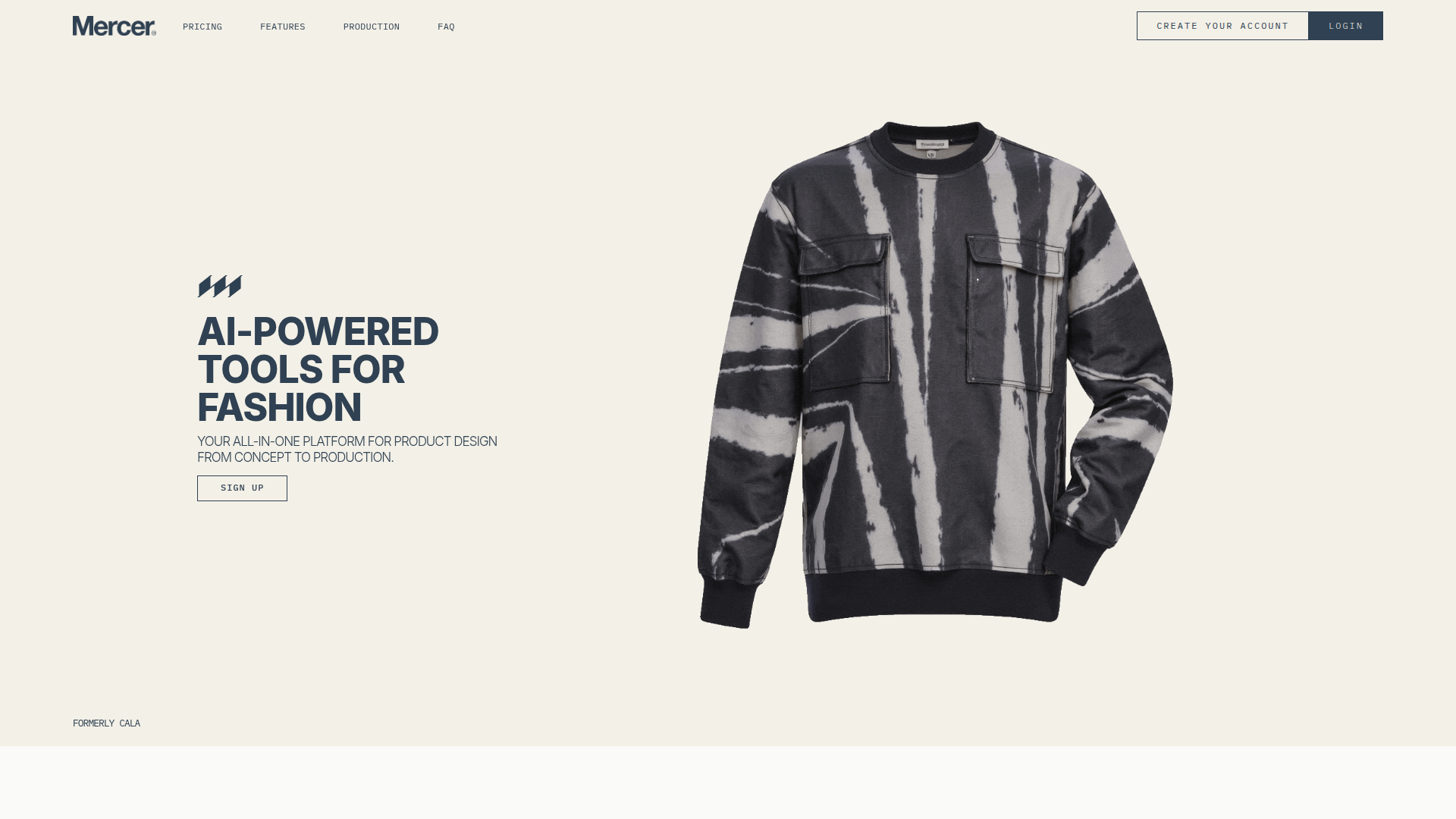
Mercer is an AI-powered product design and collaboration platform for fashion teams. It is designed for independent designers, small fashion houses, and established brands that need to manage concept development, collection assets, collaboration, and production-related communication in one place.
The platform appears positioned as an end-to-end fashion product development workspace rather than only an image-generation tool. Its core workflow covers ideation from inspiration photos, sketches, CADs, or tech packs; brand-specific AI model training; asset management; feedback and task coordination; and sharing design details with internal teams and external production partners. Production and manufacturing services are mentioned only for Enterprise subscriptions.
Features
- AI fashion design tools: Mercer supports AI-assisted ideation with text-to-image, product variations, and AI Paintbrush editing to help teams explore design directions faster.
- Brand-specific AI influences: Users can train custom fine-tuned AI models using past collections or inspiration boards to keep new development aligned with brand aesthetic.
- Centralized collection asset management: The platform stores and manages creative files such as images, video, 3D assets, and spreadsheets in one workspace to reduce fragmented design handoffs.
- In-file collaboration and annotation: Teams can add comments, notes, and measurements directly on creative and technical files, which helps make feedback more specific and easier to track.
- Task and timeline coordination: Built-in tasks, checklists, timelines, and review workflows support assignment tracking, dashboard alerts, and email notifications for team members.
- Sharing with partners: Designs and collection details can be exported to print-ready files and shared through PDFs or collection links, including with production partners who may not have an account.
Helpful Tips
- Validate fit with your operating model: If your team already has manufacturers, Mercer looks suited as a standalone design and collaboration layer; if you need production services, confirm whether Enterprise is required.
- Assess AI governance early: Mercer states that customer data is not used to train foundational models or other customers’ models, and trained models are private unless shared, so teams should still define internal rules for reference imagery and model sharing.
- Map current handoff pain points: The strongest apparent value is reducing design feedback friction across files, comments, measurements, tasks, and timelines, so adoption is likely best where teams currently rely on email and disconnected file transfer.
- Expect conservative template support: The FAQ states product templates are not yet available, so teams with template-heavy workflows should confirm how much setup will be manual.
- Check category and partner needs: Mercer references a broad manufacturing network and many apparel and accessory categories, but firms should verify category-specific production support and workflow depth based on subscription level.
OpenClaw Skills
Mercer could likely work well inside an OpenClaw environment as the system of record for fashion concept and collection development, even though the page does not describe a native integration. Likely OpenClaw skills could include design brief intake, collection milestone tracking, asset review routing, annotation summaries, task follow-up agents, and launch-readiness workflows that pull together comments, measurements, and file status across teams.
For fashion brands, agencies, and sourcing groups, that combination could enable more structured AI-assisted operations around product creation. A likely use case would be an OpenClaw agent that monitors collection progress, flags missing technical details, prepares partner-ready handoff packets, and summarizes unresolved approvals before production reviews. For independent designers and lean fashion teams, this could shift work from ad hoc creative coordination toward a more operational, repeatable product development process without requiring a full enterprise PLM-style implementation.
Embed Code
Share this AI tool on your website or blog by copying and pasting the code below. The embedded widget will automatically update with the latest information.
<iframe src="https://aimyflow.com/ai/ca-la/embed" width="100%" height="400" frameborder="0"></iframe>
Explore Similar Tools
Refabric: AI Powered Fashion Solutions
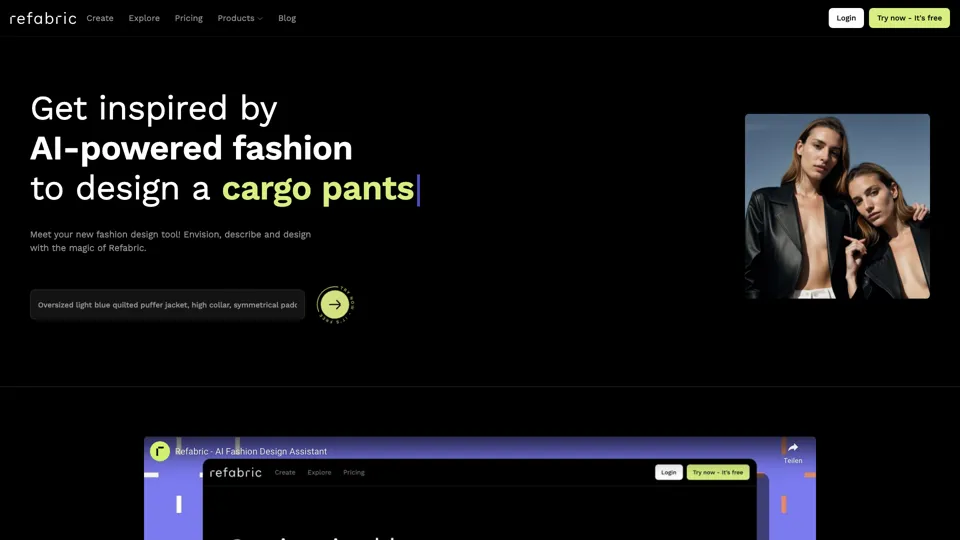
Refabric is an AI fashion platform that helps users create and refine fashion designs with data-driven support, mainly for fashion designers, brands, and product development teams. It blends creativity with automation, helping design teams explore trends and concepts more efficiently.
Outfits AI
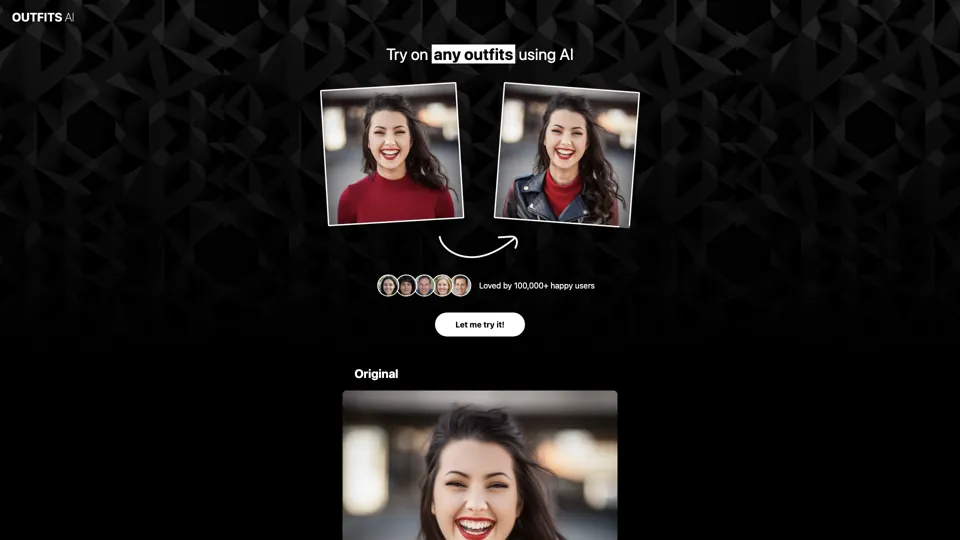
Outfits AI is an AI virtual try-on tool that lets users preview different outfits on themselves, mainly for consumers exploring personal style and shopping options. It helps shoppers and fashion brands reduce uncertainty around clothing choices through faster, more visual decision-making.

Outfit.fm — Your virtual dressing room
Outfit.fm is an AI virtual dressing room that lets users instantly try on outfit ideas digitally, mainly for shoppers, fashion creators, and style-conscious consumers. It helps fashion and ecommerce workflows shorten the path from inspiration to purchase by making visual experimentation immediate and low friction.
AIO - The Future of Fashion Design | Next-Gen AI Clothing Fashion Design Software
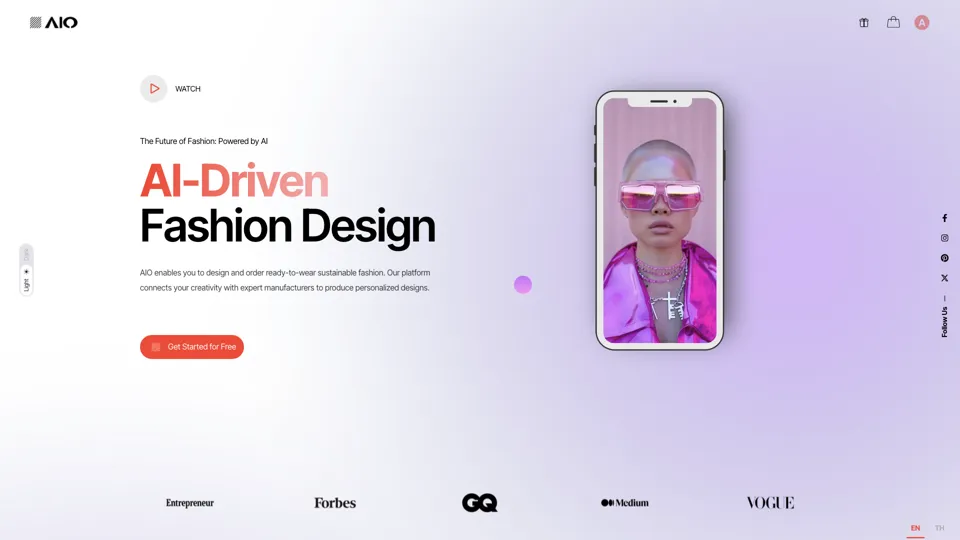
AIO is an AI fashion design platform and marketplace that helps designers and brands turn creative concepts into wearable clothing products. In the AI era, it helps fashion teams iterate faster and explore more sustainable product ideas before committing to production.
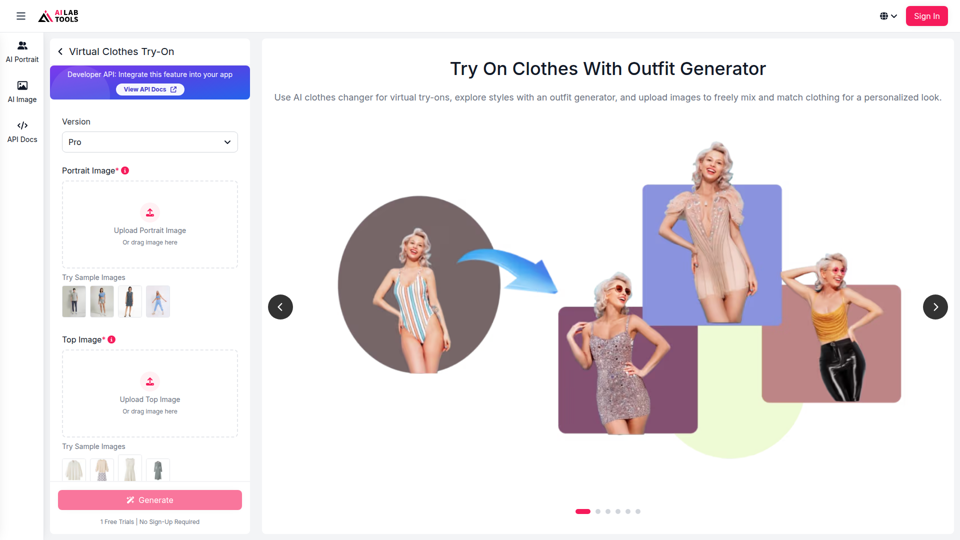
AI Outfit Generator and Clothes Changer: Your Ultimate Fashion Picker | API | AILab Tools
AILab Tools’ AI Outfit Generator and Clothes Changer is a virtual try-on tool and API that helps users upload portrait and clothing images to preview outfit combinations, mainly for shoppers, fashion brands, and developers building fashion apps. In AI-driven retail and design workflows, it can help e-commerce teams and designers create faster visual merchandising, styling previews, and custom clothing model images.
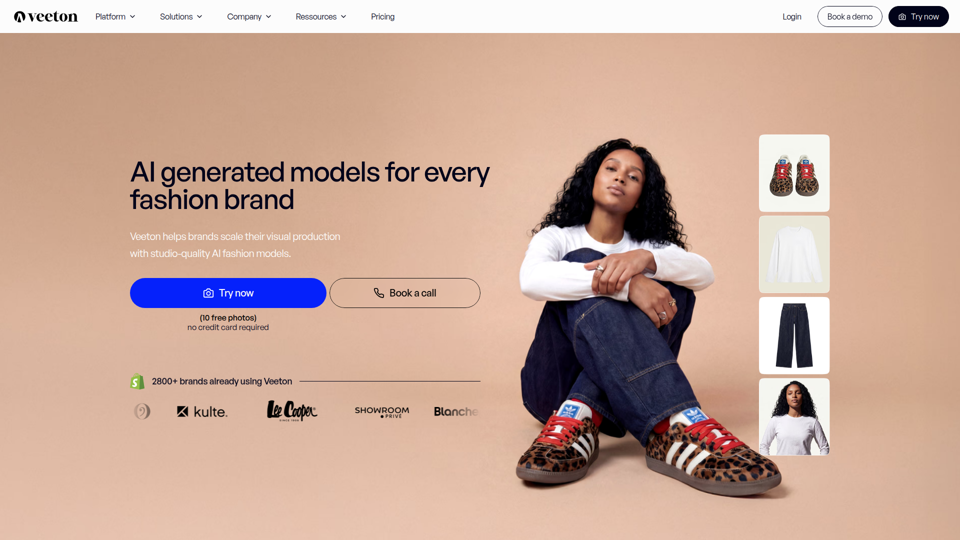
Veeton - AI Fashion models
Veeton is an AI fashion visual production platform that helps brands, e-commerce teams, and creative teams create photorealistic model images, styled outfits, and fashion videos without traditional photoshoots. For marketers, merchandisers, and content teams, it can speed collection launches by producing consistent retail visuals and testing creative variations more efficiently.
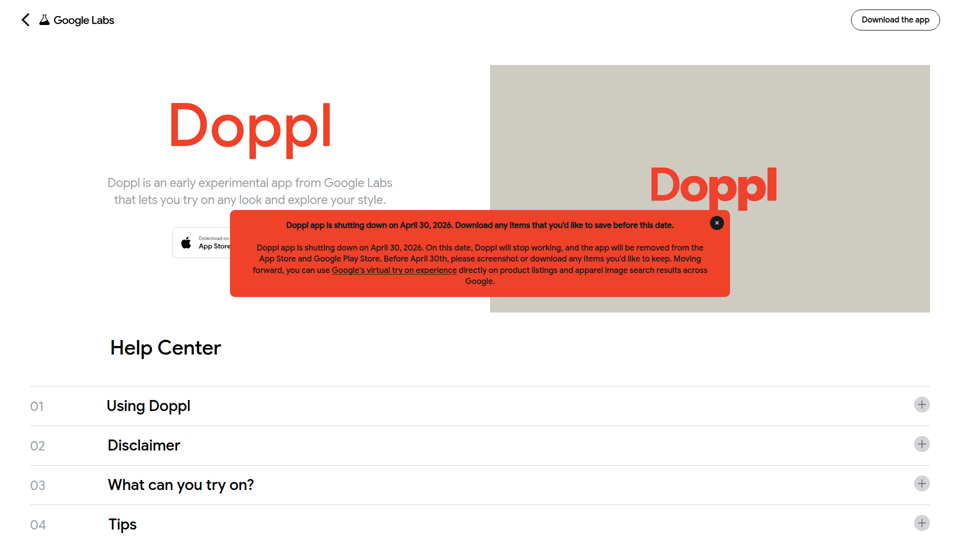
Doppl
Doppl is an experimental Google Labs app for U.S. adults that uses generative AI to help people virtually try on outfits from personal or uploaded photos, explore style options, and save or share generated looks. For fashion shoppers and stylists, it can speed visual outfit testing and inspiration, though outputs may not reflect true fit, size, or item availability.
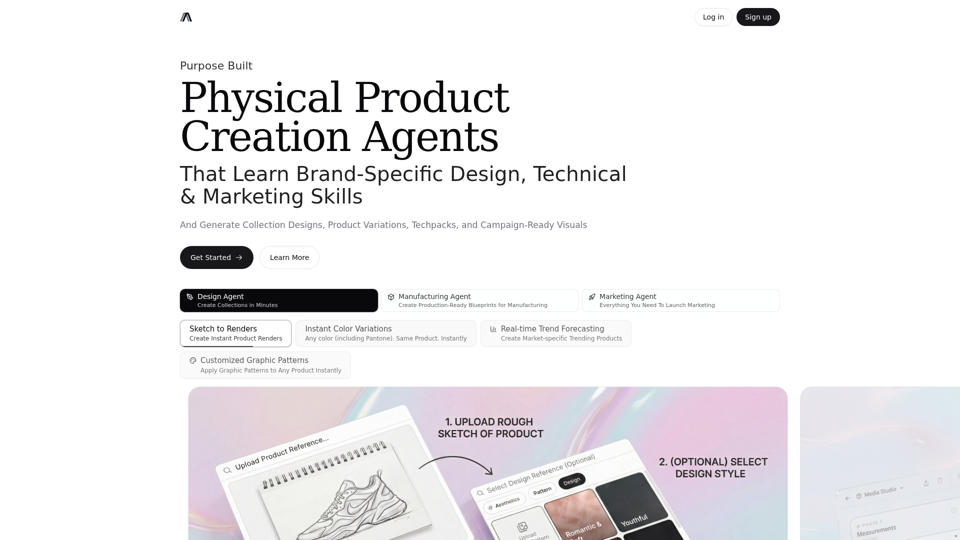
IMAI Home
IMAI is a collaborative platform for physical product teams that helps users go from product ideation to collection designs, product variations, manufacturing techpacks, and marketing-ready visuals in one workspace. For product designers, manufacturing teams, and marketers, it can shorten handoffs by using brand-specific AI agents to turn sketches and concepts into production and launch assets faster.