
#1 Unified AI-Agentic Test Management Software
Rate this Tool
Average Score
Total Votes
Select your score (1-10):
Detail Information
What
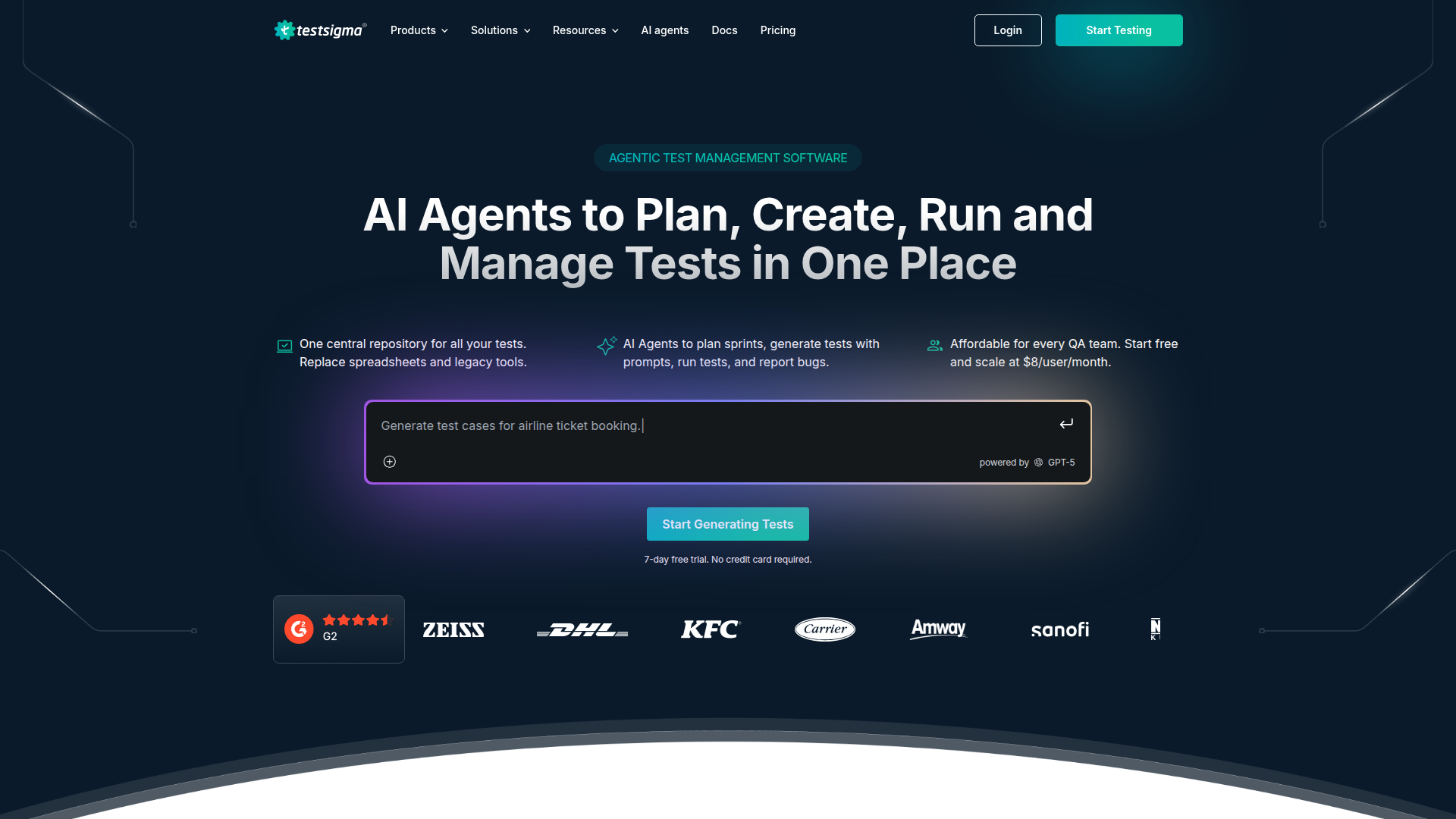
Testsigma Test Management is an AI-agentic test management platform that centralizes test planning, test case creation, execution, and bug reporting in one repository. It is aimed at QA teams that want to replace spreadsheets or older test management tools with a more integrated workflow, while keeping human review and control in the loop.
The product is positioned as a test management system with embedded AI agents, powered by an AI coworker called Atto. Its core workflow starts when a sprint begins: the platform detects sprint work, pulls stories from tools such as Jira, generates contextual test cases, supports execution from the same workspace, and creates bug reports with linked context for issue trackers.
Features
- Automatic sprint detection and planning: The Sprint Planner detects new Jira sprints and pulls stories into the platform so QA work can begin as soon as a sprint starts.
- AI-generated test cases from multiple inputs: The Generator creates test cases from Jira stories, Linear, Figma, images, videos, PRDs, and prompts, helping teams reduce manual drafting work.
- Story-to-test traceability: Generated tests are linked to source stories with steps, preconditions, and validations, improving coverage tracking and requirement mapping.
- Human-in-the-loop execution: The Runner executes tests with live browser activity, visual step logs, and generated test data while allowing users to pause, refine, or rerun tests.
- Context-rich bug reporting: Failed steps can be turned into bug reports with summaries, descriptions, and reproduction steps, with review before submission.
- Two-way workflow sync with development tools: The page states two-way Jira sync and support for Jira, Linear, and Clickup for bug logging, plus CI/CD connectivity with Jenkins, GitHub, GitLab, and Azure DevOps.
Helpful Tips
- Evaluate the product primarily on how well its AI-generated tests reflect your team’s actual acceptance criteria, since human review remains an explicit part of the workflow.
- If traceability is a major requirement, verify the depth of two-way synchronization you need across stories, tests, defects, and status updates, especially beyond Jira where the page provides less detail.
- Teams moving from spreadsheets or fragmented manual processes are likely to benefit most, because the product’s strongest positioning is centralization plus earlier sprint readiness.
- For adoption, start with one squad or sprint-based workflow and measure whether planning, execution, and defect reporting become faster without creating review overhead.
- The site mentions non-functional checks such as usability, accessibility, and visual consistency during runs, so buyers should validate how these checks work in practice for their application types and quality standards.
OpenClaw Skills
Within the OpenClaw ecosystem, this product could support several useful QA and release-management skills. Likely workflows include an agent that monitors incoming sprint scope, summarizes testing risk by story, drafts prompts for test generation, and routes generated cases to reviewers based on product area. Another likely use case is an incident-triage agent that collects failed run logs and bug reports from Testsigma, clusters similar failures, and prepares handoff summaries for engineering and product teams.
Combined with OpenClaw, Testsigma could become part of a broader software delivery control layer rather than just a standalone QA workspace. For example, a likely multi-agent setup could connect sprint planning, requirement analysis, test generation, execution monitoring, defect prioritization, and release-readiness reporting into one coordinated process. In practice, that could help QA leaders, SDETs, and product teams shift from manually managing test artifacts to supervising AI-assisted testing operations with clearer visibility across the delivery cycle.
Embed Code
Share this AI tool on your website or blog by copying and pasting the code below. The embedded widget will automatically update with the latest information.
<iframe src="https://aimyflow.com/ai/testsigma-com-test-management-software/embed" width="100%" height="400" frameborder="0"></iframe>
Explore Similar Tools
Governed Data Access for AI Agents | Secure MCP Tools
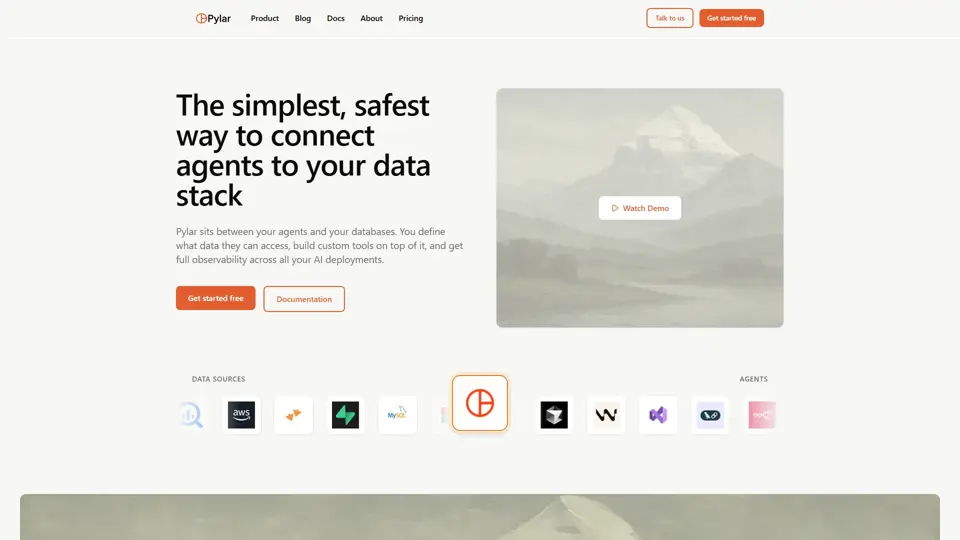
Pylar is a governed data access platform that helps users give AI agents secure access to structured data through controlled SQL views and MCP tools, mainly for data and engineering teams. It lets developers operationalize AI safely by balancing agent capability with governance and access control.
The Context Company | Understand User Behavior In Your AI Agents
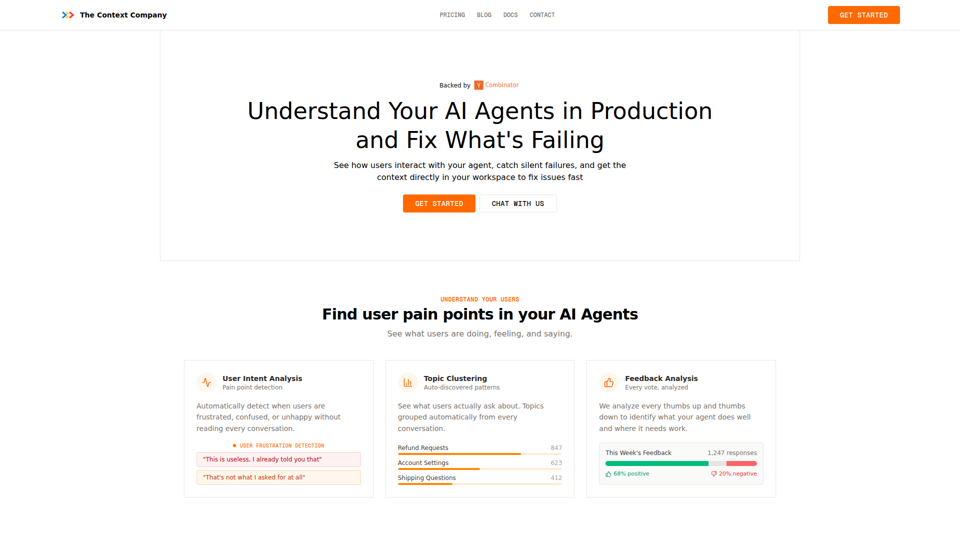
The Context Company is an observability and user behavior analysis tool for AI agents that helps teams monitor production conversations, detect frustration and silent failures, cluster topics, and review feedback, mainly for developers and product teams shipping AI agents. In AI workflows, it can help engineering, support, and product functions prioritize fixes faster by surfacing hidden failure patterns and real user pain points directly from agent runs.
AI App Builder | Vibe Code Apps & Websites with AI, Fast
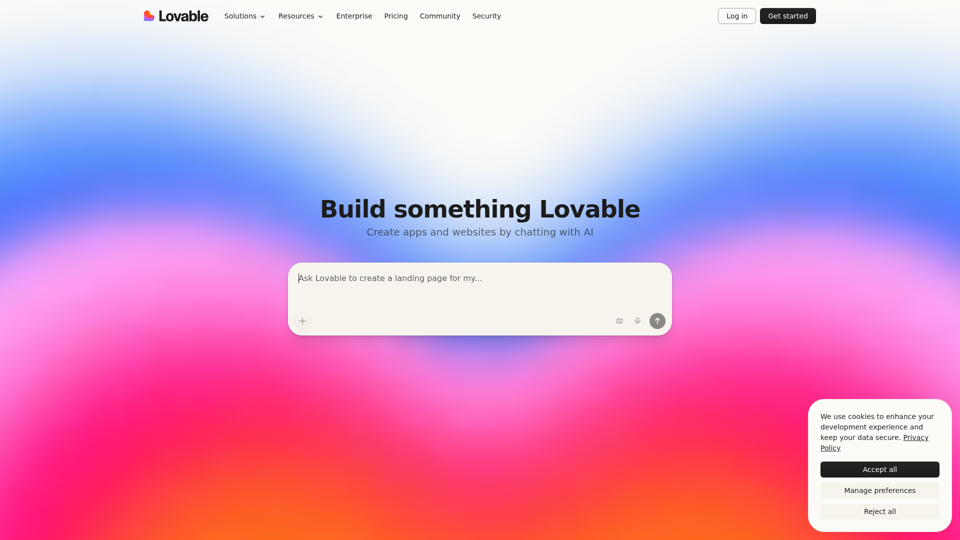
Lovable is an AI app builder that helps users create apps, websites, and digital products by describing ideas in chat, refining prototypes, and deploying them quickly, mainly for founders, product managers, designers, and marketers. In AI-driven product work, it can help these teams turn early concepts, screenshots, and feedback into working prototypes faster, reducing handoff delays between planning, design, and launch.
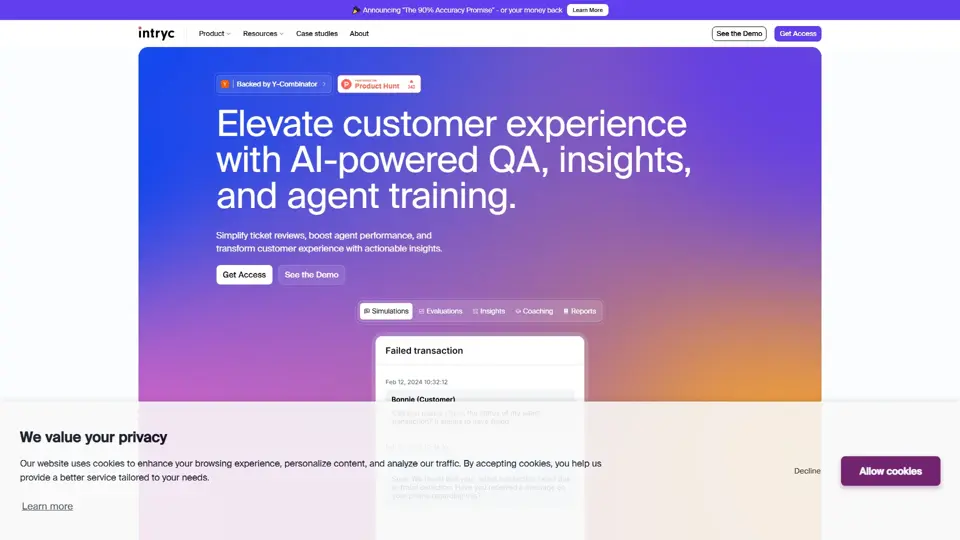
Intryc - Elevate your Customer Experience
Intryc is a customer experience platform that helps teams review support tickets, improve agent performance, and uncover actionable service insights, mainly for support and CX leaders. It gives QA and support managers a faster way to coach teams and raise service quality at scale.
VibeFlow - AI Full-Stack App Builder with Visual Backends
VibeFlow is an AI full-stack app builder that helps users create backend automations, data pipelines, dashboards, forms, and customer-facing apps through prompts and visual workflows, mainly for developers, founders, operations teams, and non-technical teams. In AI-assisted product and operations work, its editable visual backends can help teams validate, adjust, and maintain application logic more reliably than opaque code generation alone.
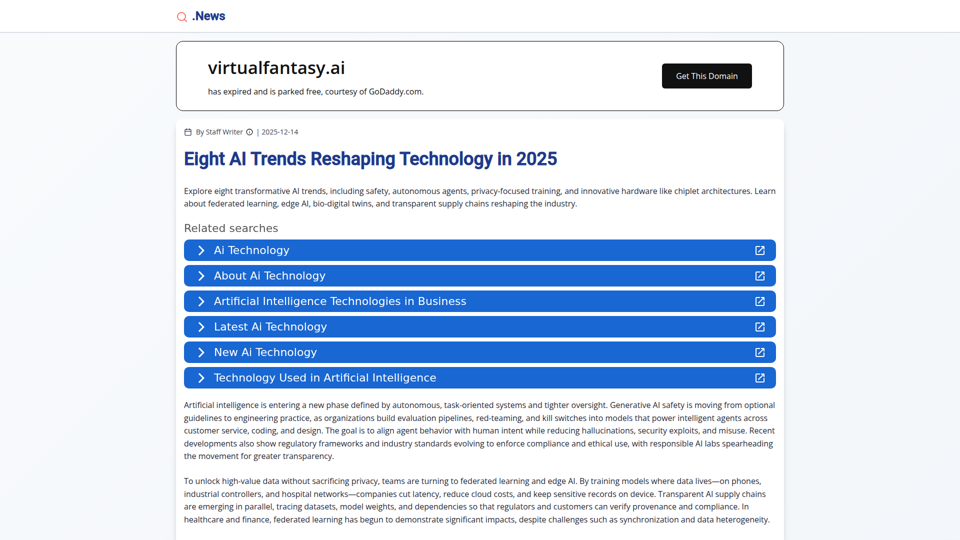
Eight AI Trends Reshaping Technology in 2025 | .News
This page is a news article outlining eight AI trends for 2025, helping technology professionals and business decision-makers understand developments such as AI safety, autonomous agents, federated learning, edge AI, and new hardware architectures. For product leaders, engineers, and compliance teams, this kind of trend overview can guide planning around safer deployment, privacy-preserving AI, and more efficient industry-specific systems.
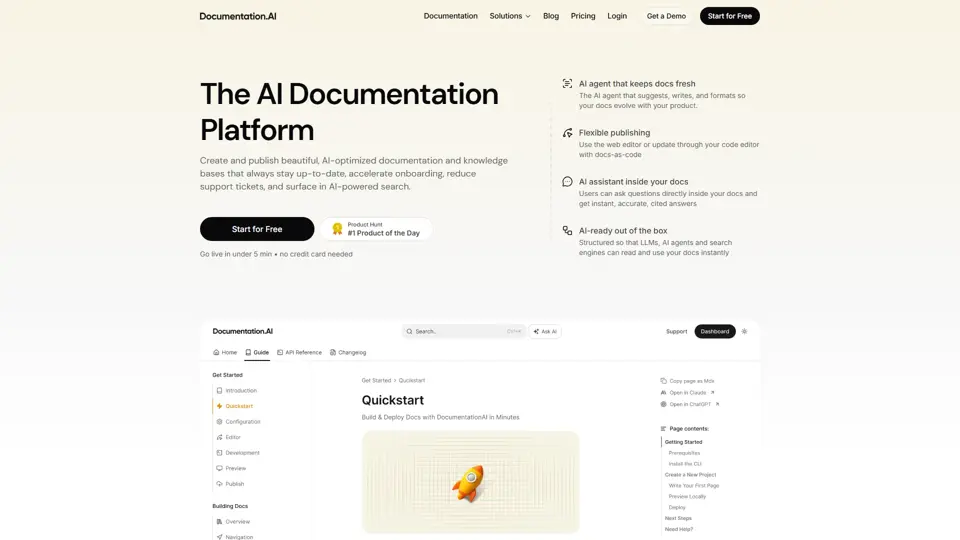
Documentation.AI – AI Documentation & Knowledge Base Software
Documentation.AI is an AI documentation and knowledge base platform that helps teams keep docs current, onboard users faster, and reduce support volume. In the AI era, it improves how support and product teams maintain institutional knowledge without constant manual rewriting.
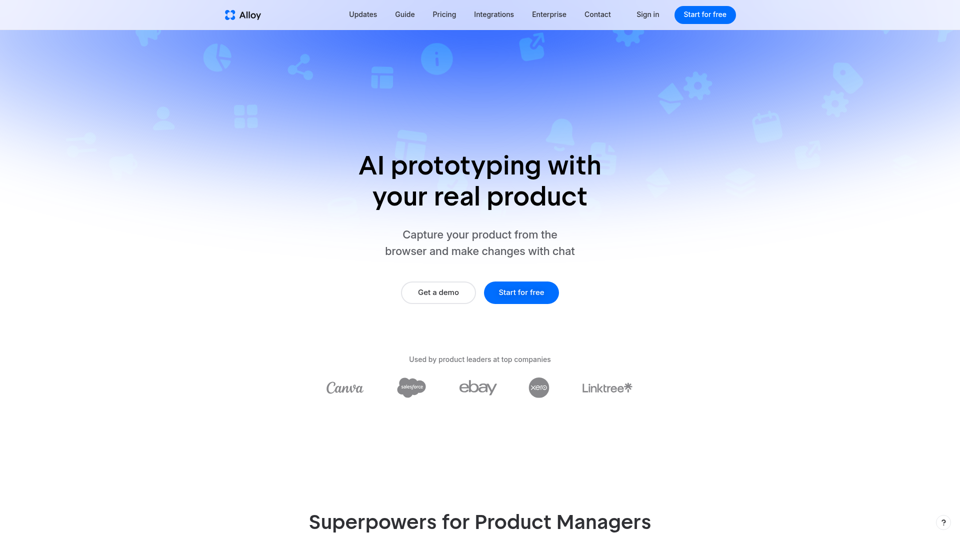
Alloy · AI prototyping with your real product
Alloy is an AI prototyping tool that captures pages from a real web app and lets product managers create interactive, on-brand prototypes with chat, mainly for professional product teams. By turning product ideas, customer requests, and team feedback into realistic prototypes quickly, it can help product managers and designers align faster and reduce time spent on manual mockups.