
Syntra - Chart & Charges Review
Rate this Tool
Average Score
Total Votes
Select your score (1-10):
Detail Information
What
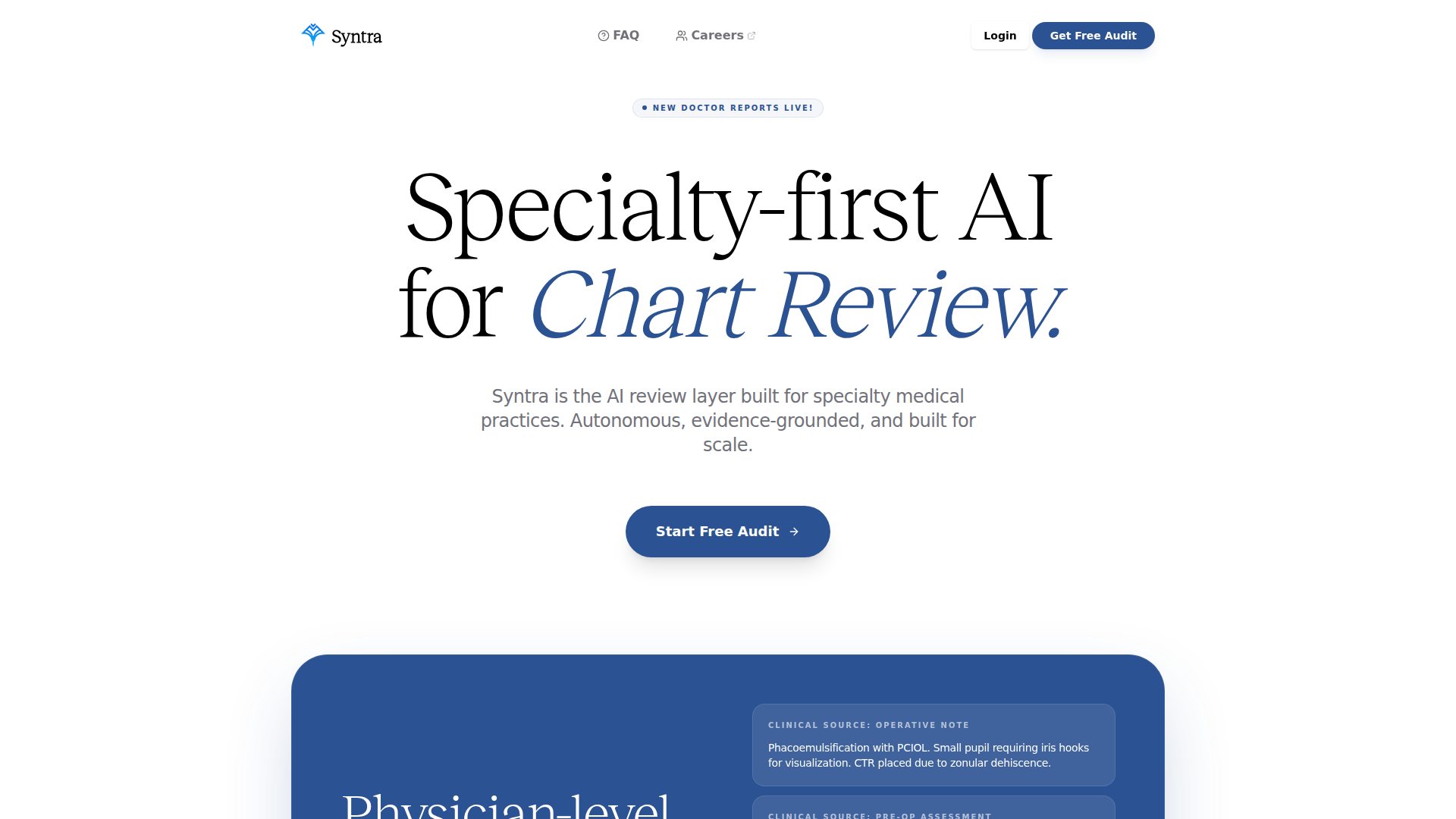
Syntra is an AI chart and charges review platform for specialty medical practices. It is positioned as a specialty-first review layer that analyzes clinical documentation and coding-related touchpoints to identify charge capture, coding, audit, and reimbursement issues before billing.
The product appears aimed at specialty clinics and healthcare systems in fields such as ophthalmology, orthopedics, optometry, and dermatology, with ophthalmology shown as a primary example. Its workflow centers on reviewing charts, reasoning over specialty-specific documentation, surfacing evidence-grounded coding recommendations, and supporting revenue integrity and compliance activities at scale.
Features
- Specialty-specific AI reasoning: Syntra is fine-tuned on specialty datasets so it can interpret nuanced clinical documentation that generic models may miss.
- Chart review for coding opportunities: The platform reviews 100% of charts to detect missed coding opportunities and support more complete charge capture.
- CPT and ICD-10 automation: It provides outpatient coding automation for CPT and ICD-10, positioned as using coder-informed logic for practical coding workflows.
- Evidence-grounded recommendation logic: Syntra shows the clinical basis for coding decisions, which can help teams validate why a more complex code may be appropriate.
- Audit and compliance coverage: It supports full chart and claim audit review without requiring additional headcount, according to the site’s positioning.
- EHR workflow connectivity: The product lists integrations with systems including ModMed, NexGen, Nextech, SIS, iMedicWare, Athena Health, eClinicalWorks, and Optivate to fit existing practice workflows.
Helpful Tips
- Validate specialty depth first: For products like this, confirm performance in the exact specialty, subspecialty, and procedure mix your organization handles, since coding nuance varies significantly.
- Review recommendation explainability: Evidence-linked reasoning is important in clinical coding review, so assess how clearly the system connects documentation to suggested CPT or ICD-10 outputs.
- Plan governance around exceptions: Even with automation, practices should define who reviews disputed recommendations, escalates edge cases, and monitors payer-specific coding patterns.
- Assess implementation around EHR data quality: The value of AI chart review depends heavily on documentation completeness and structured data access, so EHR mapping and note consistency matter.
- Treat outcome claims conservatively: The site cites revenue impact and coding accuracy positioning, but buyers should independently verify results in their own payer, specialty, and staffing environment.
OpenClaw Skills
Syntra could likely fit into the OpenClaw ecosystem as a specialized clinical revenue integrity signal source for healthcare operations workflows. Likely OpenClaw skills could include chart triage agents that route high-risk encounters to coding staff, denial-prevention workflows that compare clinical evidence against billed codes, and audit summarization agents that convert Syntra findings into work queues for revenue cycle teams. If native integration details are not documented, these should be treated as plausible workflow designs rather than confirmed product behavior.
In practice, combining Syntra with OpenClaw could help specialty practices build agents for pre-bill review, coding exception management, payer rule monitoring, and physician documentation feedback loops. For ophthalmology and similar specialties, this kind of setup could shift revenue cycle work from manual retrospective review toward more continuous, evidence-based intervention, potentially changing how coders, auditors, and practice administrators manage chart quality and reimbursement risk.
Embed Code
Share this AI tool on your website or blog by copying and pasting the code below. The embedded widget will automatically update with the latest information.
<iframe src="https://aimyflow.com/ai/syntra-com/embed" width="100%" height="400" frameborder="0"></iframe>
Explore Similar Tools
AI Medical Coding & Billing Software for Healthcare | CombineHealth
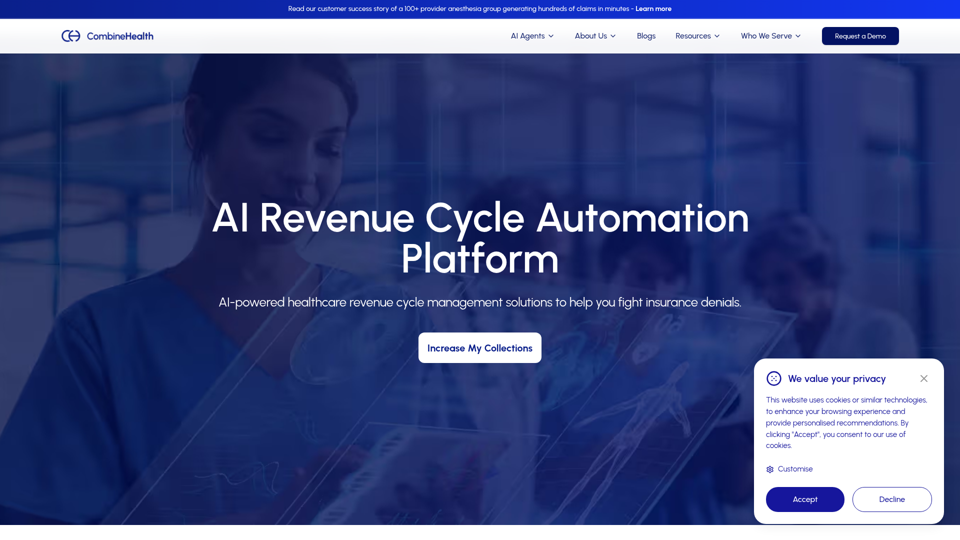
CombineHealth is an AI medical coding and billing platform that automates healthcare revenue cycle tasks such as coding, claims management, denial handling, documentation, and collections for healthcare revenue cycle teams and provider organizations. For medical coders, billers, and RCM leaders, it can improve accuracy and speed by applying payer-specific rules, real-time analytics, and explainable AI across the workflow.
Home
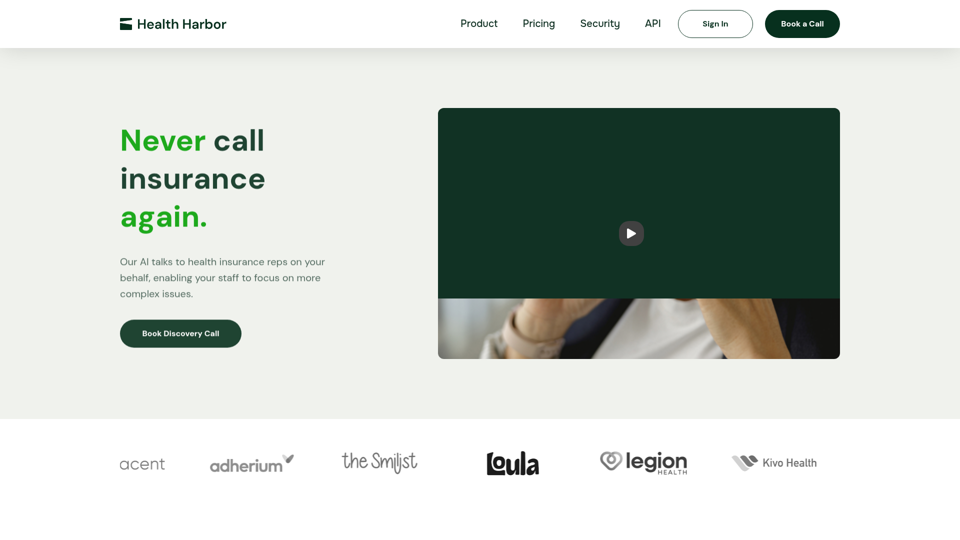
Health Harbor is an AI tool that handles health insurance phone calls for benefit verifications, prior authorizations, and claim status follow-up, mainly for healthcare provider teams and revenue cycle staff. In AI-enabled operations, it can reduce time spent on IVR navigation and hold queues so billing, authorization, and clinical operations teams can focus on resolving complex coverage and payment issues.
LunaBill | Automate Your AR Calls
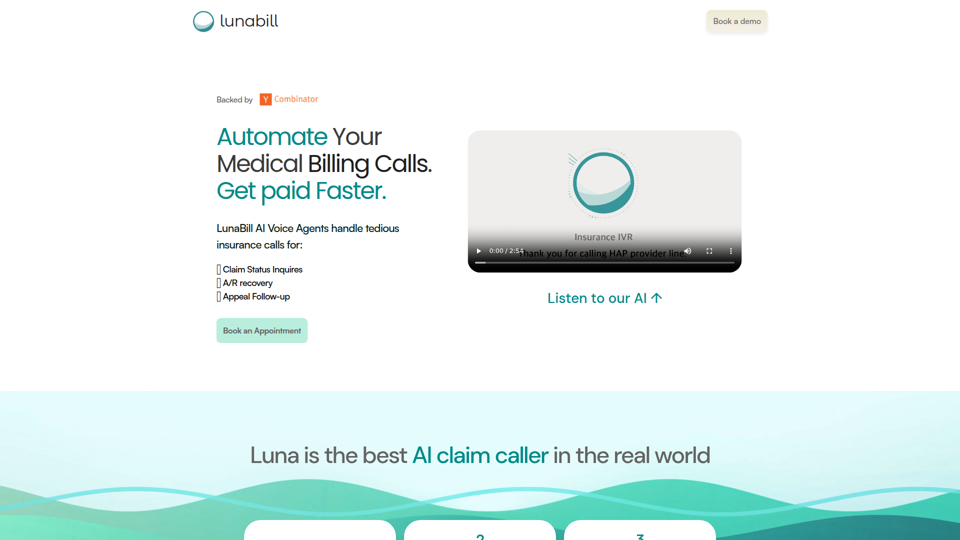
LunaBill is an AI voice agent platform that automates medical billing and accounts receivable calls, helping healthcare billing teams and practices check claim status, recover A/R, and follow up on appeals. For revenue cycle and medical billing staff, it can reduce manual insurer phone work by navigating IVRs, gathering denial details, and supporting faster claim reprocessing and escalation.
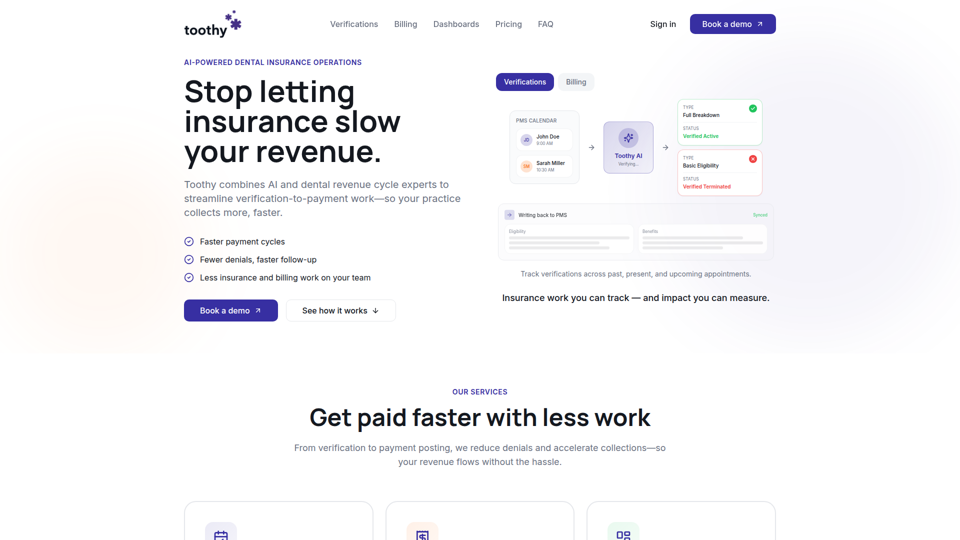
Toothy AI - AI-Powered Dental Insurance Verification & Billing
Toothy AI is an AI-powered dental insurance verification and billing platform that helps dental practices streamline work from eligibility checks to claims follow-up and payment posting, with support from dental revenue cycle professionals. For dental office managers, billers, and revenue cycle teams, it can reduce manual insurance tasks while improving visibility into denials, collections, and aging through dashboards and daily reporting.
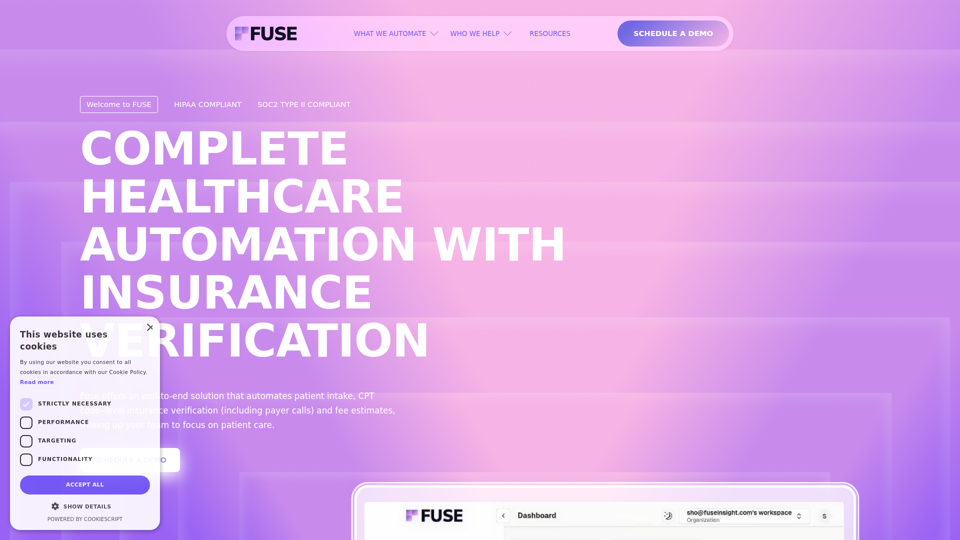
Insurance Eligibility Verification & Healthcare Automation | Fuse
Fuse is a healthcare automation platform that helps medical practices automate digital patient intake, CPT code-level insurance eligibility verification, and patient cost estimates, mainly for private practice owners, practice managers, and billing managers. In AI-assisted revenue cycle operations, it can reduce manual payer-checking work and support billing and front-office teams with faster eligibility checks and clearer pre-service pricing.
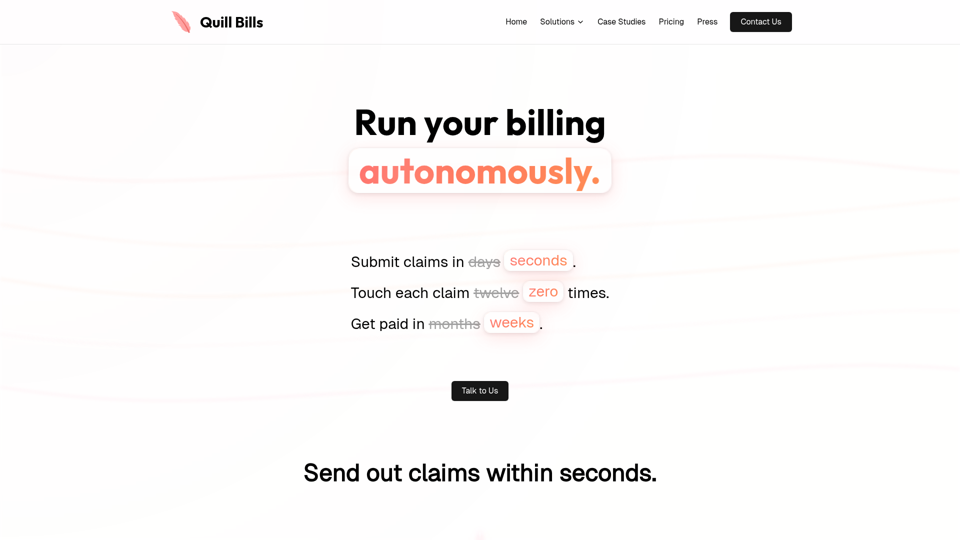
Quill Bills | Run your billing autonomously.
Quill Bills is an AI-native practice management and revenue cycle management system that automates medical billing tasks like coding, eligibility checks, claim submission, payment posting, patient billing, and insurer phone calls for independent healthcare practices. For billing teams, practice administrators, and revenue cycle staff, this can reduce manual claims work and help them focus on exceptions, denials, and cash flow oversight.
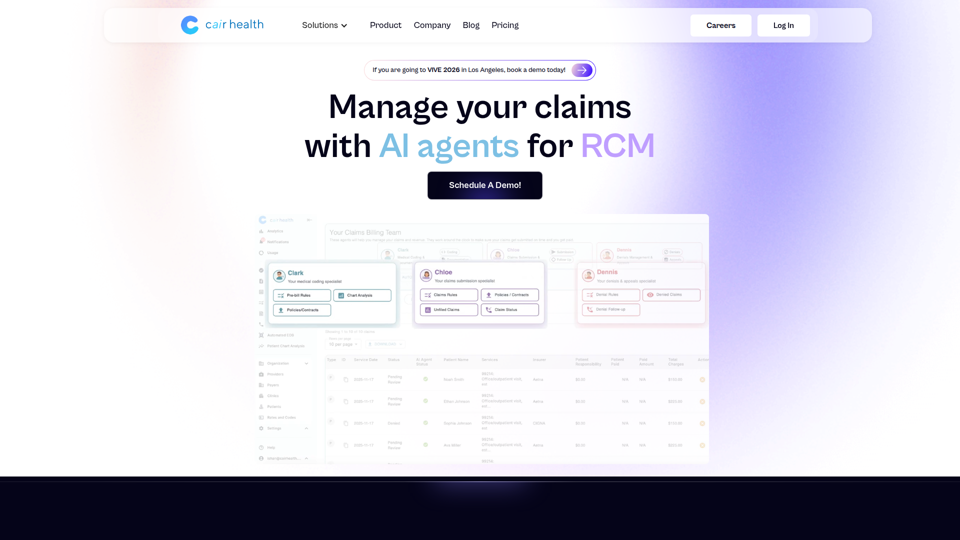
Cair Health
Cair Health is an AI revenue cycle management platform that helps healthcare billing teams automate coding, eligibility checks, claims submission, denials follow-up, payer phone calls, and EOB extraction. For revenue cycle, billing, and claims operations professionals, it can reduce manual claim handling and support faster, more consistent reimbursement workflows.